
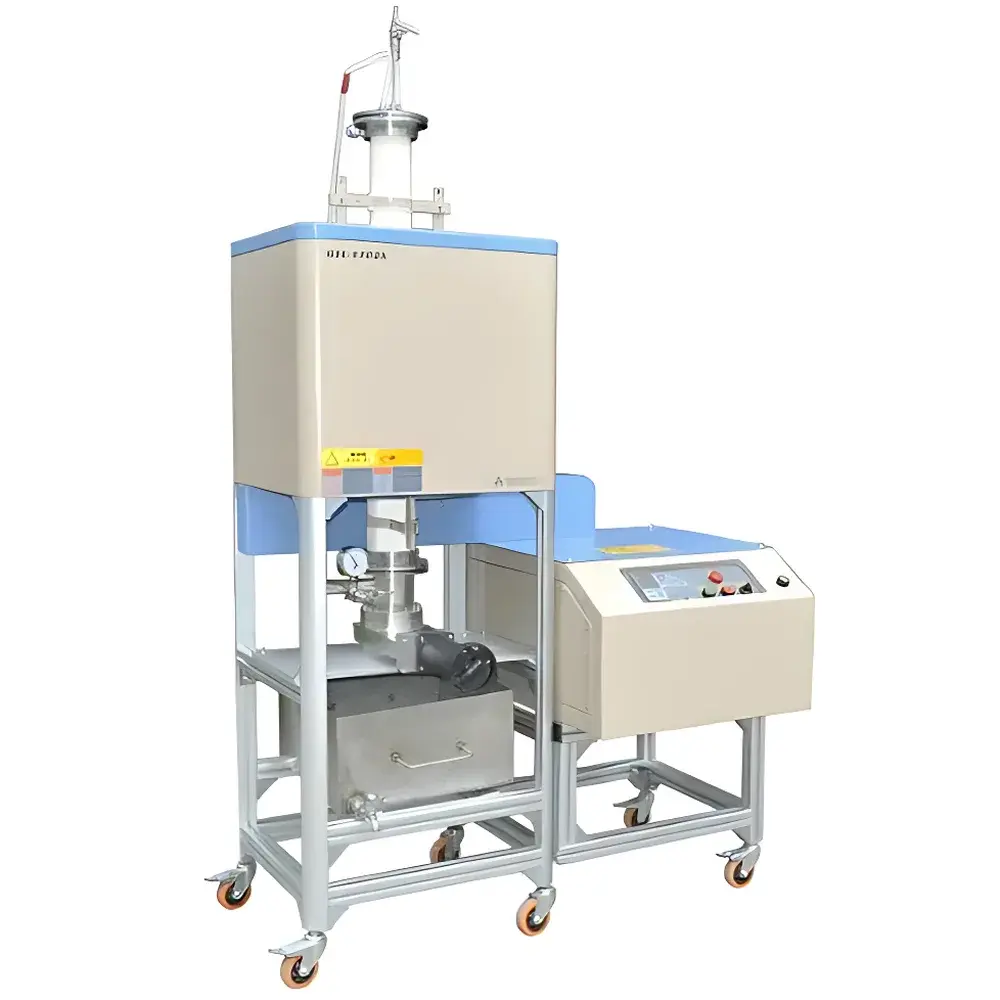
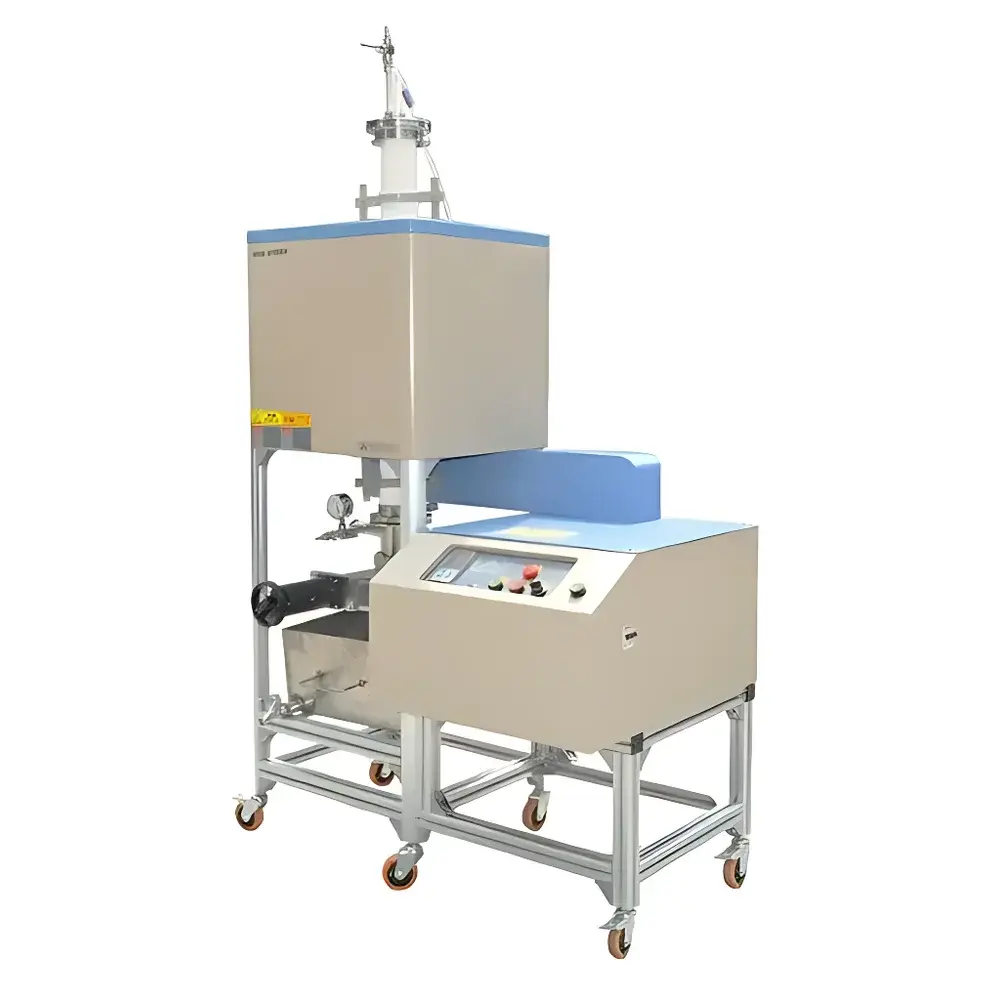
KJ GROUP GSL-1700X-80VTQ Vertical Quenching Furnace
| Brand | KJ GROUP |
|---|---|
| Origin | Liaoning, China |
| Manufacturer Type | Authorized Distributor |
| Country of Origin | China |
| Model | GSL-1700X-80 VTQ |
| Power Supply | AC 220 V, 50/60 Hz, 4 kW |
| Maximum Temperature | 1700 °C (<1 h), Continuous Range: 800–1650 °C |
| Heating Zone Length | 200 mm |
| Uniform Zone | 65 mm (±5 °C) |
| Temperature Control Accuracy | ±1 °C |
| Heating Rate | ≤10 °C/min (≤1200 °C), ≤5 °C/min (>1200 °C) |
| Vacuum Capability | 5×10⁻² torr (mechanical pump), 1×10⁻⁵ torr (turbo-molecular pump) |
| Tube Material | 99.8% Al₂O₃ ceramic, OD 80 mm, ID 74 mm, L 850 mm |
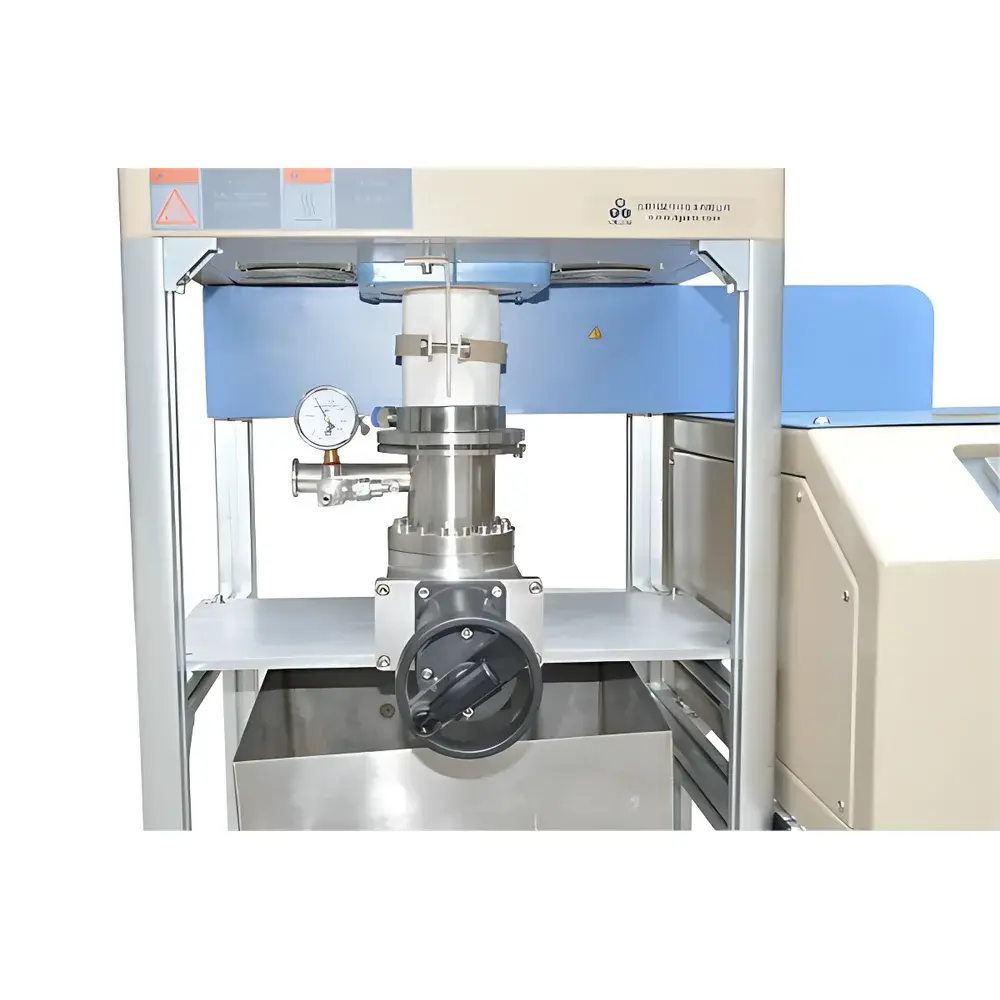
| Cooling System | Bottom-mounted quench tank (water/oil compatible) |
| Control System | Independent PID controller with 30-segment programmable ramp/soak, RS485 interface, over-temperature protection |
| Certification | CE |
| Dimensions (W×D×H) | 1080×650×1500 mm |
| Weight | 190 kg |
Overview
The KJ GROUP GSL-1700X-80VTQ is a vertically oriented high-temperature vacuum/quenching furnace engineered for controlled rapid thermal transition studies in materials science research and development. It operates on the principle of vertical drop-quenching: samples suspended at the top of a high-purity alumina tube are released under electromagnetic actuation into a lower-positioned quench medium—typically deionized water or quench oil—enabling precise kinetic arrest of high-temperature phase transformations. This architecture supports investigations into martensitic transformation, grain boundary evolution, metastable phase stabilization, and solid-state reaction pathways under non-equilibrium cooling conditions. Designed for integration into inert or reducing atmospheres (e.g., Ar, N₂, H₂/N₂ mixtures), the furnace accommodates vacuum processing down to 1×10⁻⁵ torr when paired with an optional turbo-molecular pumping station. Its operational envelope spans 800–1650 °C continuous duty, with short-term excursions to 1700 °C, making it suitable for refractory metal, advanced ceramic, and high-entropy alloy processing where microstructural fidelity post-quench is critical.
Key Features
- Vertical dual-zone architecture: Upper high-temperature zone (1700 °C capable) and lower quench reservoir enable millisecond-scale thermal interruption without manual intervention.
- High-integrity alumina tube system: 99.8% purity Al₂O₃ tube (OD 80 mm, ID 74 mm, L 850 mm) with integrated high-temperature insulation (1800 °C-rated alumina fiber) and radiation-suppressing tube plugs.
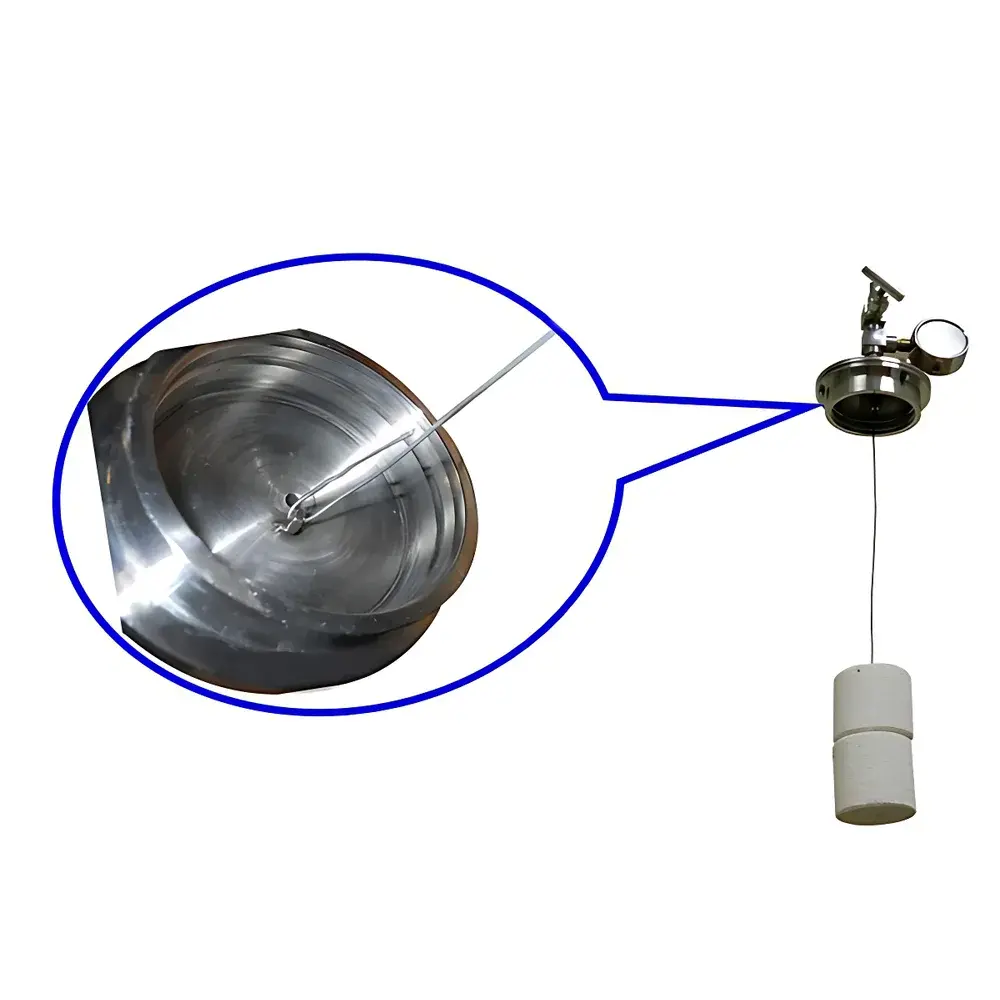
- Electromagnetically actuated sample release: Top-mounted stainless steel flange integrates a solenoid-controlled magnetic holder rated for 500 g loads; synchronized with temperature program execution via front-panel trigger or external TTL signal.
- Modular vacuum and gas handling: KF25 vacuum port, capacitance manometer, gate valve, and stainless steel sealing flange with needle valve allow seamless transition between vacuum, static gas, and dynamic flow regimes.
- Independent PID temperature controller: 30-segment programmable ramp/soak profiles, real-time deviation monitoring, hardware-based over-temperature cutoff, and RS485 serial communication for SCADA or LabVIEW integration.
- Compliance-engineered construction: Dual-layer stainless steel housing, UL/MET/CSA-certified electrical components (>24 V), and full CE marking per Machinery Directive 2006/42/EC and EMC Directive 2014/30/EU.
Sample Compatibility & Compliance
The GSL-1700X-80VTQ accommodates cylindrical or crucible-contained specimens up to Ø25 mm × 50 mm in dimension, compatible with metallic alloys (e.g., Ti-6Al-4V, Ni-based superalloys), oxide ceramics (Al₂O₃, ZrO₂), carbides (SiC, WC), and intermetallics. Sample containment options include high-purity graphite, molybdenum, or tungsten crucibles—subject to atmosphere compatibility constraints. The system meets essential requirements for GLP-compliant thermal processing workflows: audit-trail-capable temperature logging (when used with optional PC software), deterministic quench timing (<±50 ms repeatability), and documented thermal uniformity (±5 °C over 65 mm zone). Vacuum integrity conforms to ASTM E595 outgassing limits for space-grade hardware qualification when operated below 1500 °C. Gas inlet pressure regulation (≤3 psi) and mass flow control (<200 sccm) ensure reproducible atmospheric conditioning per ISO 8502-9 and USP guidance for thermal treatment validation.
Software & Data Management
An optional Windows-compatible PC control suite enables remote configuration of temperature programs, real-time thermal profiling, and synchronized quench-event timestamping. Data export is supported in CSV and HDF5 formats, facilitating traceability under FDA 21 CFR Part 11 requirements when deployed with electronic signature modules and role-based access controls. The RS485 interface supports Modbus RTU protocol for integration into centralized facility monitoring systems (e.g., Siemens Desigo, Schneider EcoStruxure). All firmware updates are digitally signed and validated prior to installation, ensuring firmware integrity per IEC 62443-3-3 SL2 security requirements.
Applications
- Phase transformation kinetics: Quantitative analysis of austenite-to-martensite, peritectic, or eutectoid reactions via interrupted quenching and subsequent TEM/XRD characterization.
- Thermal shock resistance evaluation: Accelerated cycling between 1600 °C and ambient liquid media to assess crack propagation thresholds in ceramic matrix composites.
- CVD precursor decomposition studies: In situ thermal decomposition of metal-organic precursors under controlled Ar/H₂ flow, followed by immediate quench to preserve intermediate species.
- High-temperature diffusion couple analysis: Time-resolved interdiffusion measurements in refractory binary systems (e.g., Mo–Re, Nb–Si) using compositionally graded foils.
- Calorimetric reference calibration: Generation of well-defined enthalpy states for DSC/TGA instrument validation across the 1000–1600 °C range.
FAQ
What is the maximum safe operating pressure inside the alumina tube during gas-flow operation?
The maximum allowable internal pressure is 3 psi (20.7 kPa) above ambient. Exceeding this threshold risks irreversible deformation or fracture of the ceramic tube, particularly above 1200 °C.
Why must the furnace be purged with argon before opening the gate valve?
To prevent thermal shock-induced cracking of hot alumina components and avoid oxidation of heated MoSi₂ heating elements during cooldown; argon purge establishes inert equilibrium prior to mechanical valve actuation.
Can the furnace be operated continuously at 1700 °C?
No. 1700 °C is a short-term limit (<1 hour); continuous operation is rated up to 1650 °C. Prolonged exposure above 1650 °C accelerates silicon molybdenum rod degradation and compromises thermal uniformity.
Is the quench tank compatible with oil-based media?
Yes—the tank is constructed from 304 stainless steel and rated for immersion in mineral oil, polyalkylene glycol (PAG), or aqueous polymer quenchants; users must verify flash point and thermal stability limits relative to target quench temperature.
What vacuum level is achievable with the base configuration?
Using only the included two-stage rotary vane pump, ultimate pressure is 5×10⁻² torr (6.7 Pa); addition of a turbo-molecular pump (optional) extends capability to 1×10⁻⁵ torr, enabling ultra-high-purity annealing or low-pressure CVD processes.



