
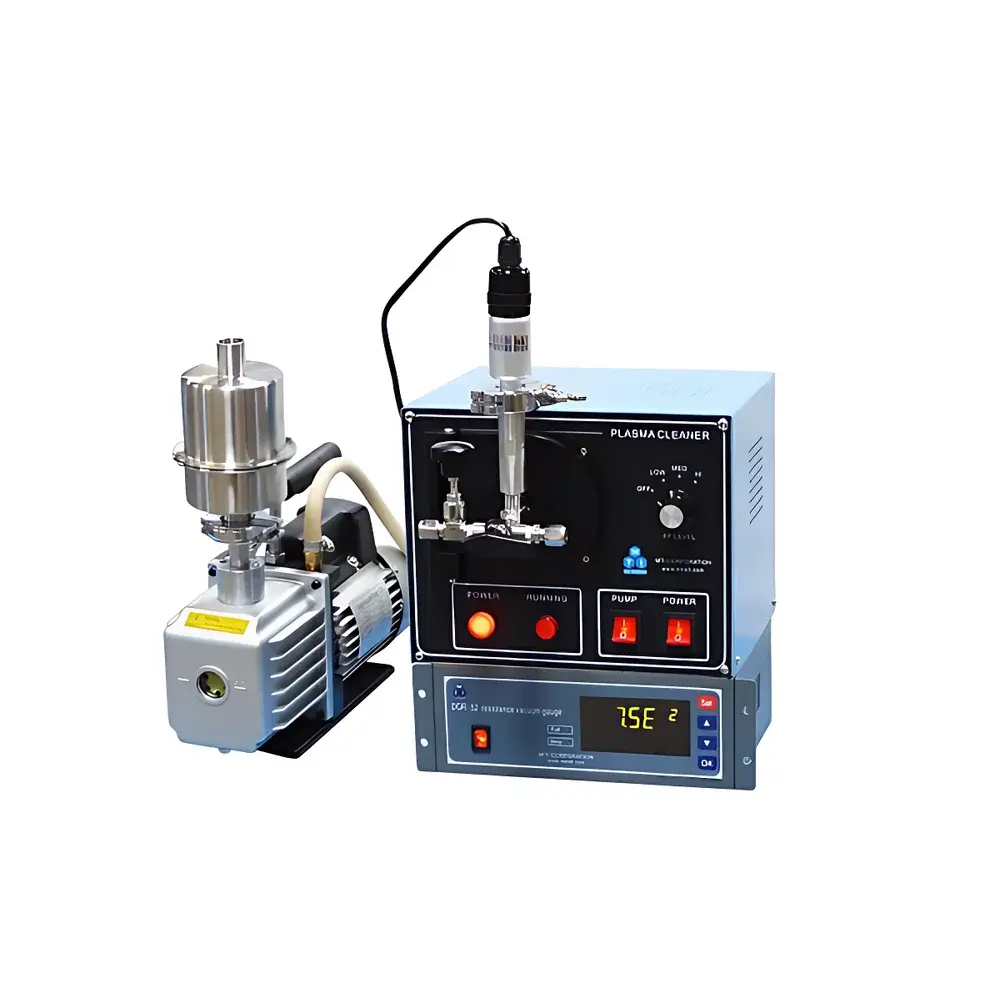
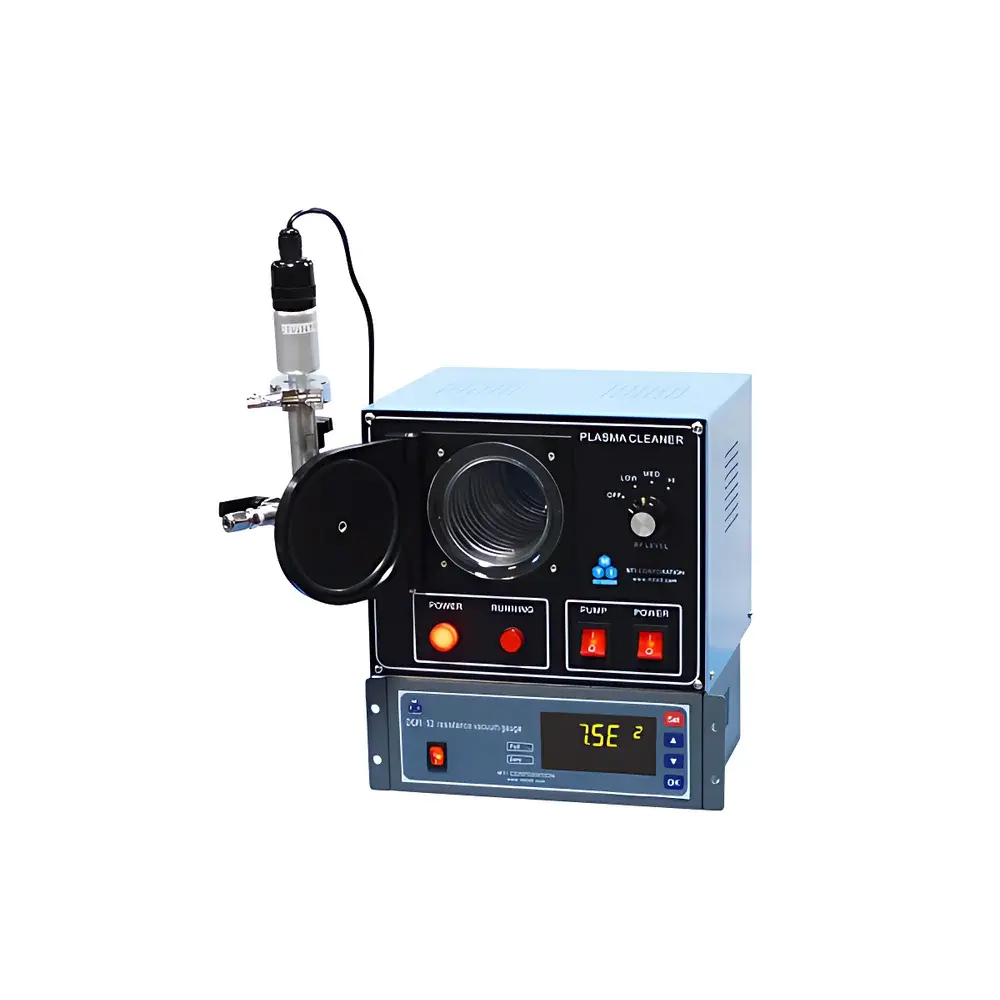
KJ GROUP PCE-3 Benchtop Plasma Cleaner
| Brand | KJ GROUP |
|---|---|
| Origin | Liaoning, China |
| Model | PCE-3 |
| RF Frequency | 13.56 MHz |
| Maximum RF Power | 18 W (adjustable in three steps: 6.8 W / 10.5 W / 18 W) |
| Chamber Dimensions | Ø75 mm × 165 mm |
| Chamber Material | Heat-resistant borosilicate glass |
| Gas Inlet | Single-channel, compatible with air, O₂, Ar, N₂, or custom gas mixtures |
| Vacuum Requirement | ≥160 L/min pumping speed, ultimate pressure ≤0.27 mbar (200 mtorr) |
| Input Voltage | 110 V / 220 V, 50 Hz / 60 Hz |
| Device Dimensions | 200 mm × 250 mm × 210 mm |
| Net Weight | 8 kg (excluding vacuum pump) |
| Control Mode | Fully automatic microprocessor-based operation |
| Safety Compliance | CE-marked design |
Overview
The KJ GROUP PCE-3 Benchtop Plasma Cleaner is a compact, laboratory-grade atmospheric-pressure and low-vacuum plasma surface treatment system engineered for precision substrate cleaning, surface activation, and functionalization prior to thin-film deposition, bonding, or microscopy analysis. Operating on the principle of capacitively coupled radiofrequency (CCP) plasma generation at 13.56 MHz — an ISM band frequency widely adopted for industrial and research plasma systems — the PCE-3 produces stable, low-temperature plasma using inert or reactive gases (e.g., argon, oxygen, or ambient air). This enables gentle yet effective removal of organic contaminants, native oxides, and hydrocarbon residues from semiconductor wafers, glass slides, metal foils, polymer substrates, and ceramic surfaces without thermal damage or ion bombardment-induced surface roughening. With a maximum DC-equivalent power output of 18 W and three discrete power settings (6.8 W, 10.5 W, 18 W), the system delivers controlled etch rates up to ~10 nm/min under optimized O₂/Ar conditions — sufficient for monolayer-level decontamination and surface energy modulation. Its sealed, removable borosilicate glass chamber (Ø75 mm × 165 mm) ensures optical transparency for process observation and facilitates rapid sample exchange and chamber cleaning.
Key Features
- Capacitively coupled 13.56 MHz RF generator with fully automatic microcontroller-based power regulation and real-time arc suppression.
- Three-step adjustable RF power output (6.8 W / 10.5 W / 18 W) enabling reproducible process tuning across diverse material classes.
- Optically transparent, chemically inert borosilicate glass plasma chamber with front-access hinged lid for safe, tool-free sample loading.
- Integrated gas control architecture supporting single-gas inlet with needle valve adjustment; compatible with O₂, Ar, N₂, synthetic air, and non-corrosive gas blends.
- Built-in interlock circuitry preventing RF ignition unless chamber is properly sealed and vacuum threshold is met — compliant with IEC 61000-6-3 EMC standards.
- Compact footprint (200 × 250 × 210 mm) and low power draw (<100 W) make it suitable for fume hood integration, glovebox coupling, or shared cleanroom bench space.
Sample Compatibility & Compliance
The PCE-3 accommodates flat or low-profile samples up to Ø70 mm in diameter and 150 mm in height. It is routinely employed for pre-deposition cleaning of Si, GaAs, sapphire, quartz, ITO-coated glass, PDMS, PET, and PI films. All wetting angle shifts, XPS-confirmed carbon removal, and AFM-verified surface roughness stability (Ra < 0.2 nm post-treatment) align with ASTM F2069-20 (Standard Guide for Plasma Cleaning of Surfaces) and ISO 14644-1 Class 5 cleanroom operational protocols. The system does not require external cooling or exhaust scrubbing when operated with non-toxic gases, and its electrical safety design conforms to UL 61010-1 and GB 4793.1 requirements. Flammable, halogenated, or corrosive gases (e.g., Cl₂, NF₃, H₂) are strictly excluded per manufacturer specification.
Software & Data Management
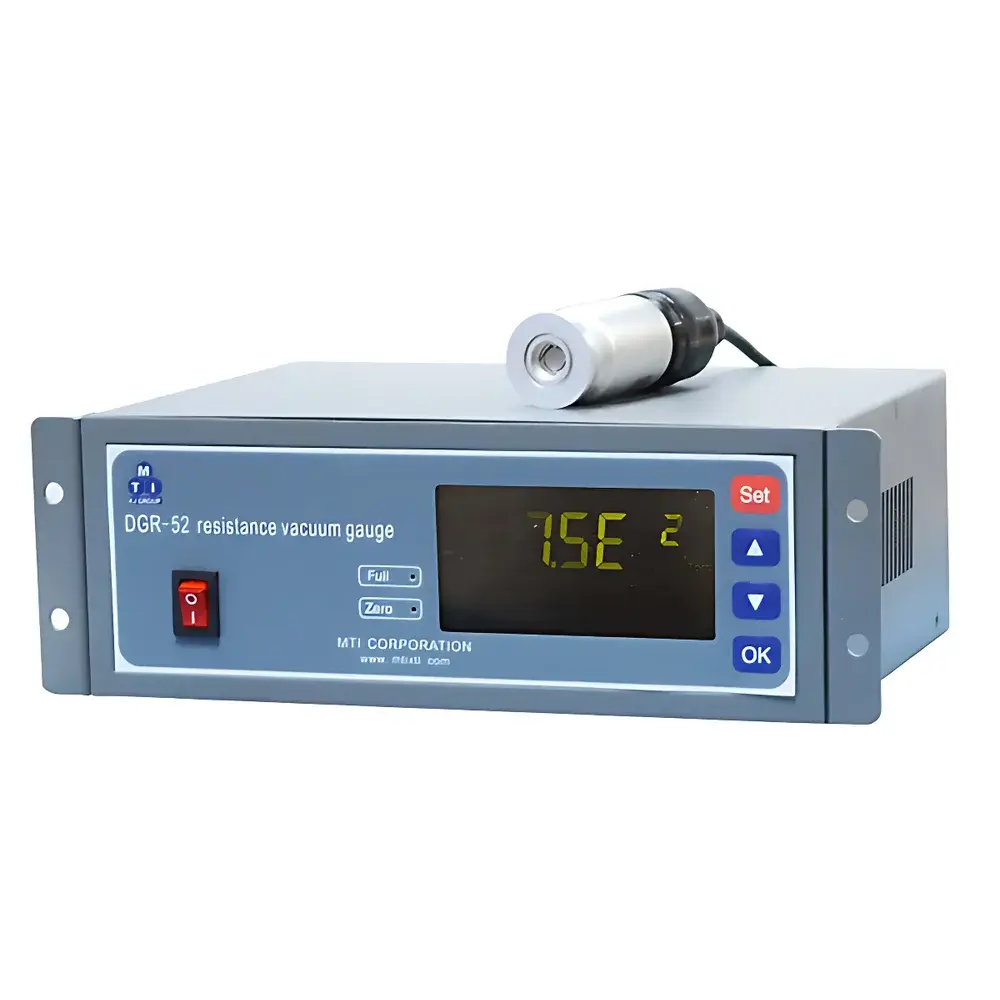
The PCE-3 operates via embedded firmware with push-button start/stop, cycle timer (0–30 min), and power-level selection — no PC interface or proprietary software required. Process parameters are retained across power cycles. Optional Pirani-type digital vacuum gauge (0.1 Pa – 10⁵ Pa range) provides traceable pressure logging for GLP-compliant recordkeeping. While the base unit lacks FDA 21 CFR Part 11 audit trail functionality, its analog control architecture supports integration into validated lab environments via external PLC-triggered sequencing and manual logbook documentation per ISO/IEC 17025 Clause 7.7.
Applications
- Pre-sputtering or pre-ALD cleaning of silicon wafers and compound semiconductor substrates.
- Surface hydrophilization of PDMS microfluidic chips for improved aqueous reagent wetting.
- Removal of photoresist residue and adventitious carbon from TEM grids and SEM stubs.
- Activation of polymer surfaces (e.g., PET, PC, PS) prior to inkjet printing or adhesive bonding.
- Inert gas plasma passivation of freshly cleaved 2D materials (graphene, MoS₂) in inert glovebox-integrated configurations.
- Low-damage oxide reduction on Cu/Ni metallization layers before wire bonding or flip-chip assembly.
FAQ
What gases are compatible with the PCE-3 plasma cleaner?
Air, oxygen (O₂), nitrogen (N₂), and argon (Ar) are fully supported. Gas mixtures (e.g., 5% O₂ in Ar) may be used with appropriate mass flow controllers. Flammable, toxic, or corrosive gases — including hydrogen, chlorine, fluorine compounds, and silane — must never be introduced.
Can the PCE-3 operate without a vacuum pump?
No. Stable plasma ignition requires base pressure ≤0.27 mbar. A dedicated vacuum pump (≥160 L/min) is mandatory and sold separately.
Is the glass chamber resistant to prolonged plasma exposure?
Yes. The borosilicate glass construction withstands continuous RF plasma operation up to 18 W for >5,000 hours without haze formation or dimensional drift, as verified per ASTM C148-18 thermal shock testing.
Does the PCE-3 support automated process recipes?
Not natively. The unit features fixed-parameter operation only. For multi-step sequences (e.g., purge → evacuate → gas fill → ignite → vent), external programmable logic controller (PLC) integration is recommended.
What maintenance is required for long-term reliability?
Routine inspection of O-rings, periodic cleaning of electrode contacts with IPA, and annual calibration of optional vacuum gauges constitute the full preventive maintenance protocol. No consumable parts (e.g., RF matching networks or cathodes) require replacement under normal use.
Related Products



