
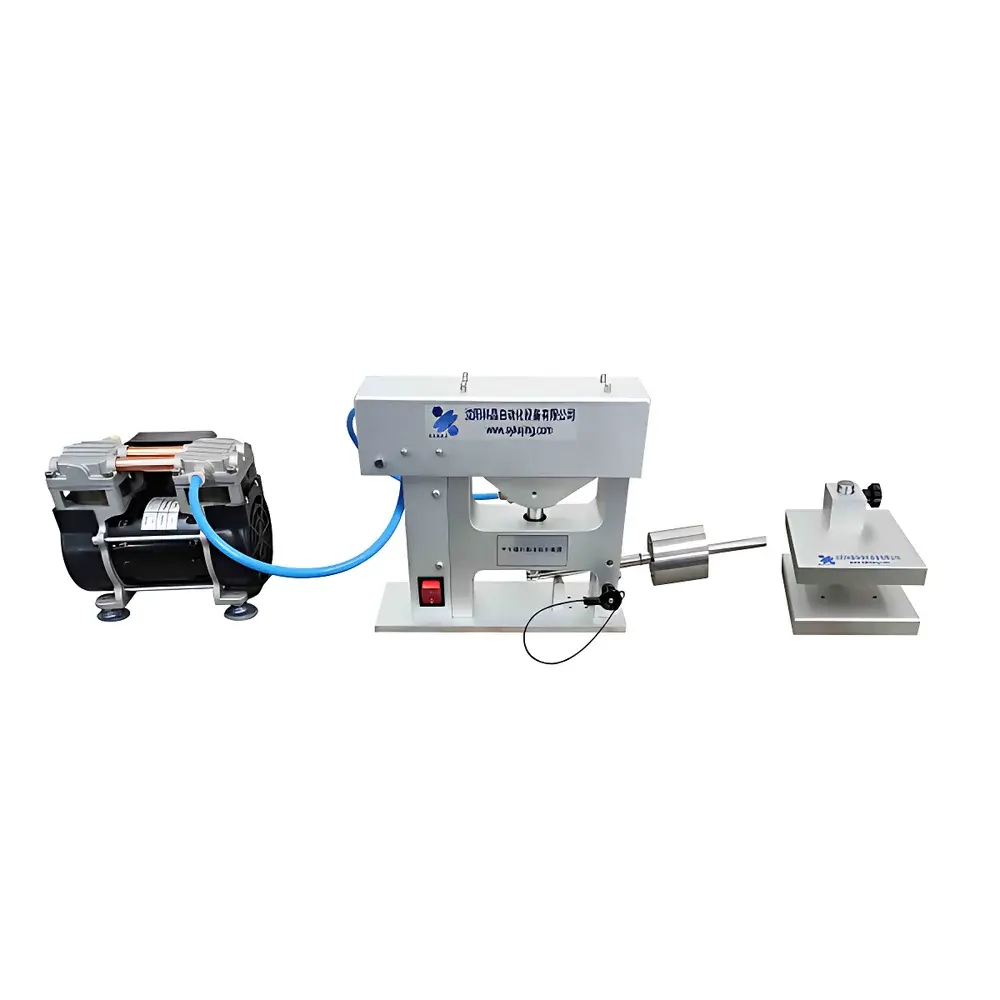
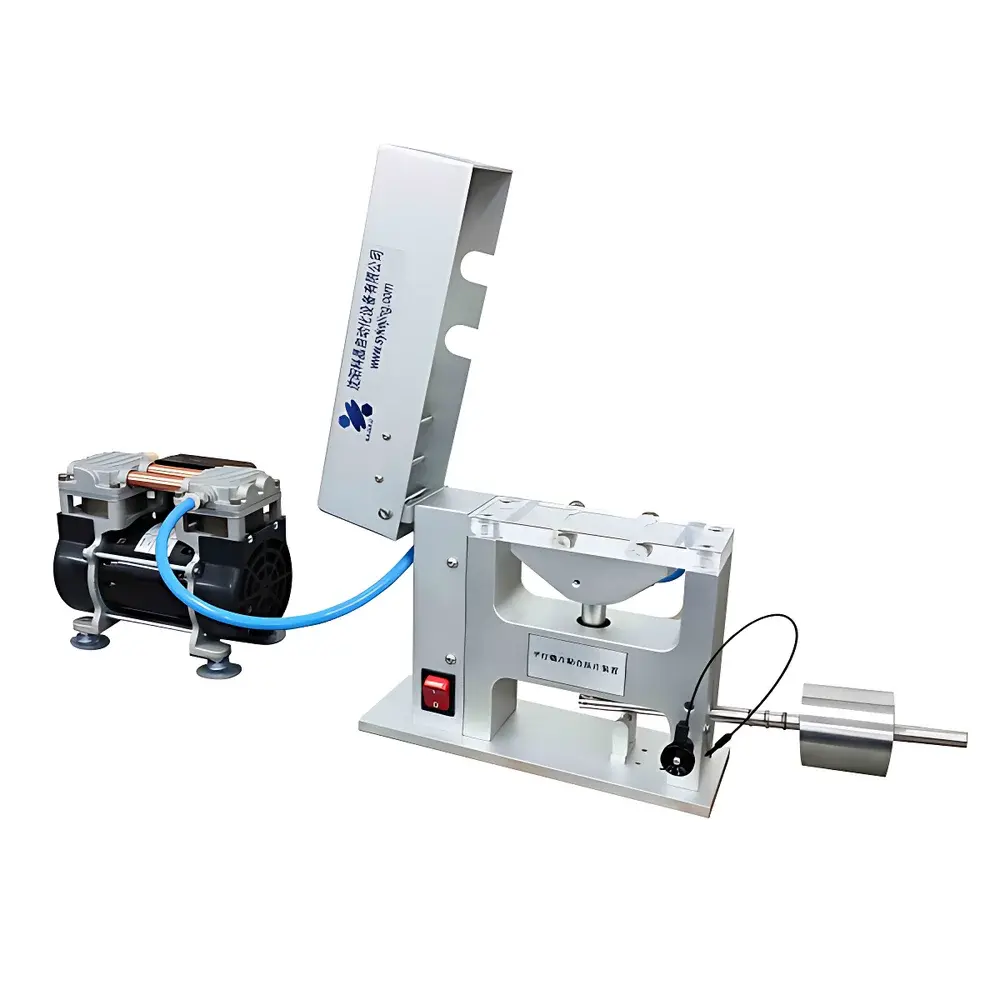
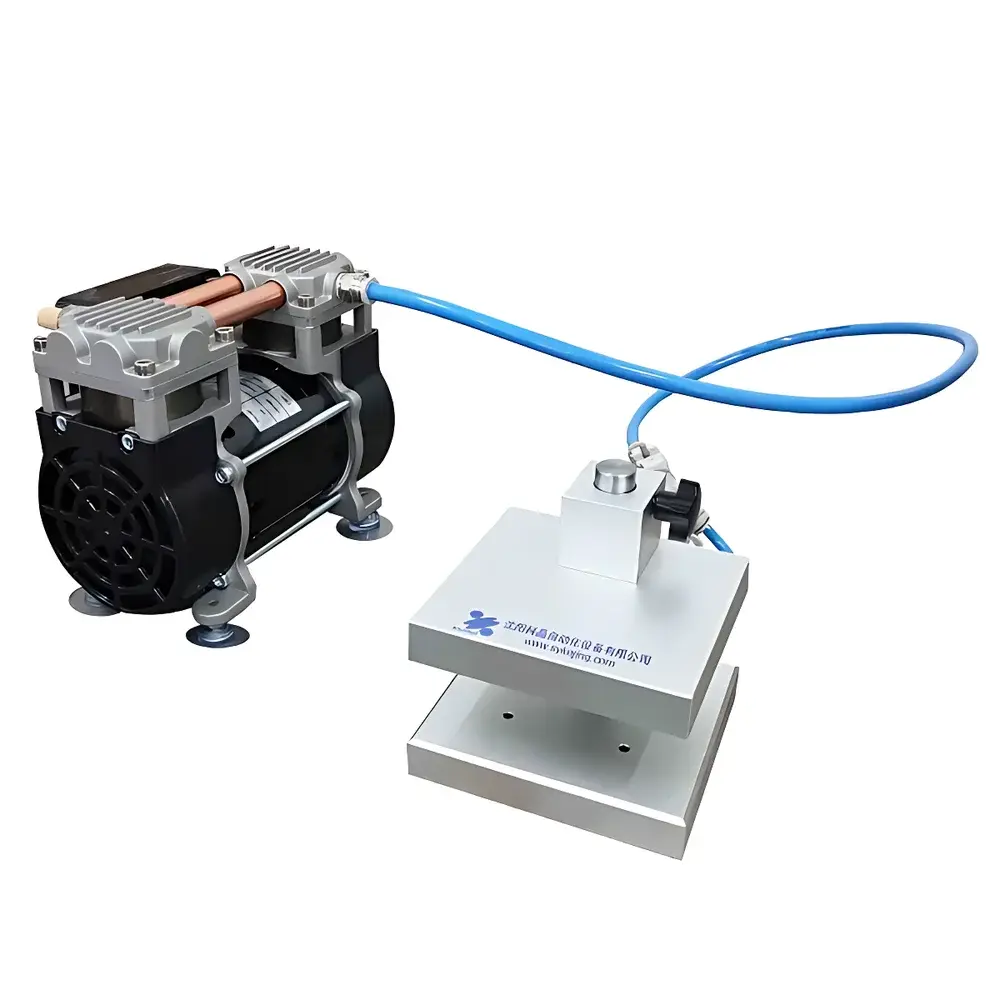
KJ GROUP YT-01 Vacuum Mounting Press Station / YT-02 Precision Alignment Bonding Stage
| Key | Brand: KJ GROUP |
|---|---|
| Origin | Liaoning, China |
| Manufacturer Type | Direct Manufacturer |
| Product Category | Domestic Scientific Instrument |
| Model | YT-01 / YT-02 |
| Vacuum Chamber Area (YT-01 & YT-02) | 100 × 50 mm |
| Vacuum Ports | YT-01 — 2 lower + 2 upper |
| UV Wavelength | 365 nm |
| UV Power Output | 8 W |
| Max Sample Height Capacity | 15 mm |
| Max Applied Clamping Force | 3.5 kg |
| Compliance | Designed for ISO 13485-aligned histology workflows and GLP-compliant hard-tissue preparation |
Overview
The KJ GROUP YT-01 Vacuum Mounting Press Station and YT-02 Precision Alignment Bonding Stage constitute an integrated, dual-stage mounting system engineered specifically for high-fidelity specimen immobilization in hard-tissue histology and materials science sample preparation. The YT-01 functions as a vacuum-based foundational mounting platform, utilizing negative pressure to secure a glass slide (typically the bottom carrier) while applying controlled mechanical force—via gravity-driven metal weights—to bond tissue or material blocks using cyanoacrylate or epoxy adhesives. The YT-02 serves as a secondary, precision alignment stage that introduces active optical curing and parallelism control: it employs a vacuum-sealed chamber to eliminate air entrapment at the adhesive interface, followed by 365 nm ultraviolet irradiation (8 W output) to initiate rapid photopolymerization of transparent, low-shrinkage bonding resins. This two-step process ensures sub-micron planarity between top and bottom carrier slides—critical for consistent section thickness, reduced chatter during microtome cutting, and minimized artifact generation in subsequent grinding or polishing steps.
Key Features
- Vacuum-assisted immobilization on both YT-01 and YT-02 stages eliminates interfacial voids and improves adhesive wetting across heterogeneous surfaces (e.g., bone, calcified cartilage, ceramic composites).
- Gravity-fed pressure application on YT-01 avoids hydraulic or pneumatic complexity while delivering repeatable 3.5 kg clamping load—optimized for shear-stable bonding without specimen deformation.
- YT-02’s dual-vacuum port configuration (upper-only) enables selective evacuation above the adhesive layer, preserving substrate integrity during UV exposure.
- UV-curable resin compatibility supports fast turnaround (≤90 s full cure under 365 nm irradiation), reducing workflow bottlenecks in high-throughput histology labs.
- 100 × 50 mm uniform working area accommodates standard microscope slide formats (76 × 26 mm) with margin for edge trimming and alignment fiducials.
- Stainless steel and anodized aluminum construction ensures long-term dimensional stability, resistance to solvent exposure (xylene, ethanol, acetone), and compatibility with cleanroom-grade handling protocols.
Sample Compatibility & Compliance
The YT-01/YT-02 system is validated for use with decalcified and non-decalcified hard tissues—including cortical bone, dentin, mineralized tendon, and bioactive ceramics—as well as brittle engineering materials such as sintered oxides and metal matrix composites. Its vacuum sealing architecture meets ASTM E2015-21 requirements for specimen mounting integrity in mechanical testing preparation. The absence of thermal input during bonding prevents thermal-induced delamination or phase transformation in heat-sensitive specimens. When operated within documented SOPs—including calibrated UV intensity monitoring and vacuum decay rate verification—the system supports audit readiness for GLP and ISO/IEC 17025-accredited laboratories. Traceability is enhanced through optional integration with lab information management systems (LIMS) via RS-232 or USB serial emulation for timestamped vacuum cycle logging and UV exposure duration records.
Software & Data Management
While the YT-01 operates as a manually actuated vacuum station, the YT-02 incorporates embedded firmware supporting programmable UV exposure timing (1–300 s resolution), real-time vacuum status feedback (via analog pressure sensor output), and fault logging (e.g., UV lamp timeout, vacuum leak detection). Optional KJ LabControl™ software (v3.2+) provides GUI-based protocol storage, batch-run sequencing, and export of metadata-rich CSV logs compliant with FDA 21 CFR Part 11 requirements—including electronic signatures, audit trails, and user access controls. All firmware updates are delivered via signed OTA packages to ensure cryptographic integrity and version rollback capability.
Applications
- Preparation of undecalcified bone sections for dynamic histomorphometry and fluorochrome labeling analysis.
- Mounting of dental implant cross-sections prior to low-speed diamond wafering and polishing.
- Fixation of brittle geological thin sections (e.g., shale, basalt) where thermal or mechanical stress must be minimized.
- Assembly of multi-layer composite specimens for nanoindentation or scratch testing requiring precise interfacial registration.
- Embedding support for serial block-face SEM (SBF-SEM) sample blocks where Z-axis alignment tolerance must remain below ±0.5 µm per 10 mm height.
FAQ
Can the YT-01/YT-02 system accommodate non-standard slide dimensions?
Yes—customizable vacuum gasket inserts are available for slide formats up to 120 × 75 mm, subject to mechanical clearance verification against the 15 mm maximum sample height limit.
Is UV exposure time adjustable on the YT-02?
Yes—exposure duration is programmable from 1 to 300 seconds in 1-second increments via front-panel keypad or remote software interface.
What adhesive types are recommended for optimal bonding performance?
UV-curable acrylates (e.g., Norland Optical Adhesive NOA61) and low-viscosity epoxy resins (e.g., EPO-TEK 301-2) demonstrate superior interfacial strength and minimal shrinkage when used with this system.
Does the system include vacuum pump and tubing?
A compact, oil-free diaphragm vacuum pump (−85 kPa @ 20 L/min) and silicone vacuum tubing are supplied as standard components with each YT-01/YT-02 kit.
How is parallelism between top and bottom slides verified post-bonding?
Users may employ a calibrated optical flat (λ/20 surface accuracy) and monochromatic interferometer; typical measured deviation is ≤1.2 µm across the full 100 × 50 mm active area when protocols are followed rigorously.



