
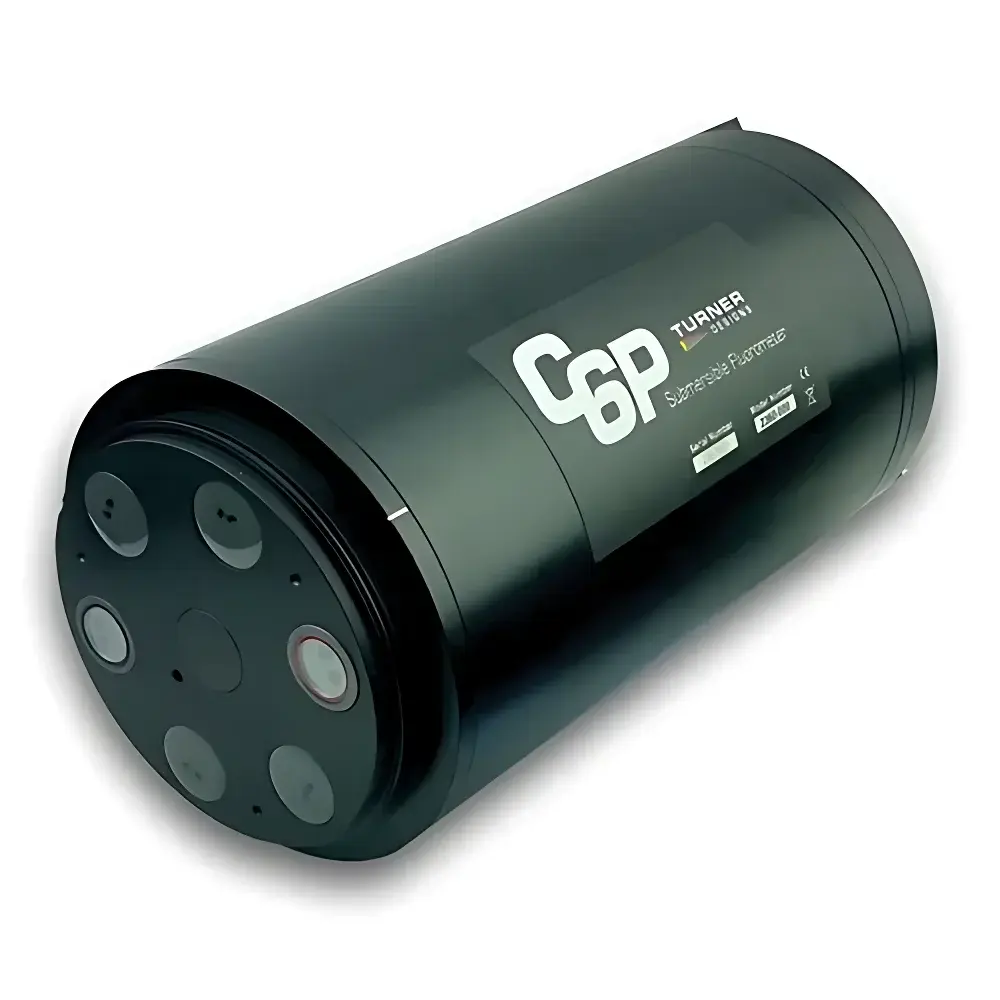
Turner Designs C6p Submersible Multi-Parameter Fluorescence Sensor Platform
| Brand | Turner Designs |
|---|---|
| Origin | USA |
| Model | C6p |
| Instrument Type | Online Water Quality Analyzer |
| Detection Parameters | Chlorophyll-a, Phycocyanin (Cyanobacteria), Oil-in-Water (Crude & Refined), Turbidity, Rhodamine WT, Fluorescein |
| Housing Material | Polyoxymethylene (POM) |
| Max Operating Depth | 600 m |
| Temperature Range | –2 to 50 °C |
| Power Supply | 8–30 VDC |
| Power Consumption | ≤5 W |
| Data Storage Capacity | >480,000 records |
| Minimum Sampling Interval | 1 s |
| Output | ASCII via RS-232 |
| Ingress Protection | IP68 |
| Dimensions | 685.75 mm (L) × 346 mm (Ø) |
| Weight (air) | 2.54 kg |
| Built-in Temperature Sensor | Yes |
| Optional Depth Sensor | Yes |
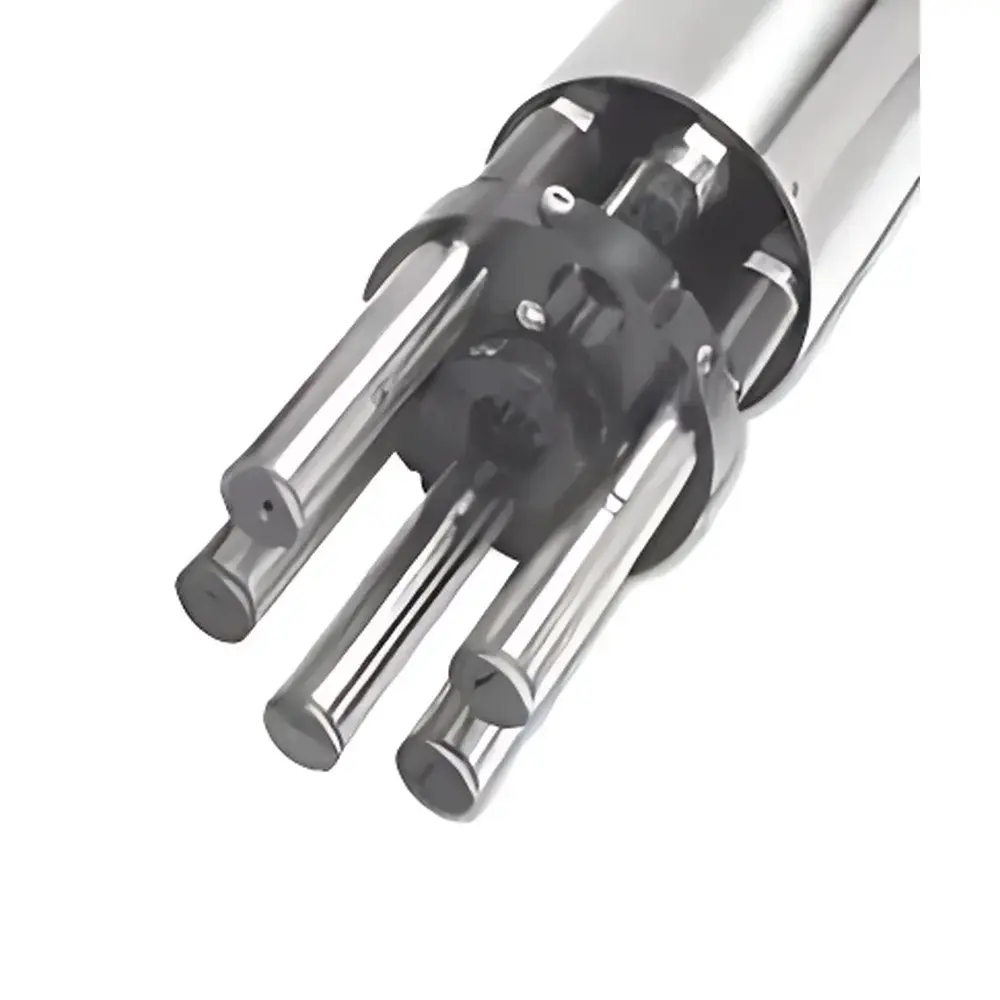
| Anti-fouling System | Copper anti-fouling band + motorized mechanical cleaning brush |
| Calibration Standards Available | Yes (for all standard fluorophores and turbidity) |
Overview
The Turner Designs C6p Submersible Multi-Parameter Fluorescence Sensor Platform is an engineered solution for continuous, in-situ aquatic monitoring of optically active water quality constituents. Designed around a modular optical architecture, the C6p employs high-stability light-emitting diodes (LEDs) and narrow-band interference filters to excite and detect fluorescence emissions across ultraviolet, visible, and near-infrared spectral regions. Its measurement principle relies on calibrated, wavelength-specific fluorometric detection—enabling quantitative analysis of chlorophyll-a (as a proxy for phytoplankton biomass), phycocyanin (indicative of cyanobacterial abundance), hydrocarbon contaminants (e.g., crude oil and refined petroleum products), synthetic tracers (Rhodamine WT and fluorescein), and light-scattering turbidity. The platform operates under rigorous physical constraints: rated to 600 m depth, sealed to IP68, and built with polyoxymethylene (POM) housing for long-term resistance to saltwater corrosion, biofouling, and mechanical abrasion. It is intended for deployment on moorings, AUVs, profiling floats, or integrated into CTD systems and third-party environmental observatories.
Key Features
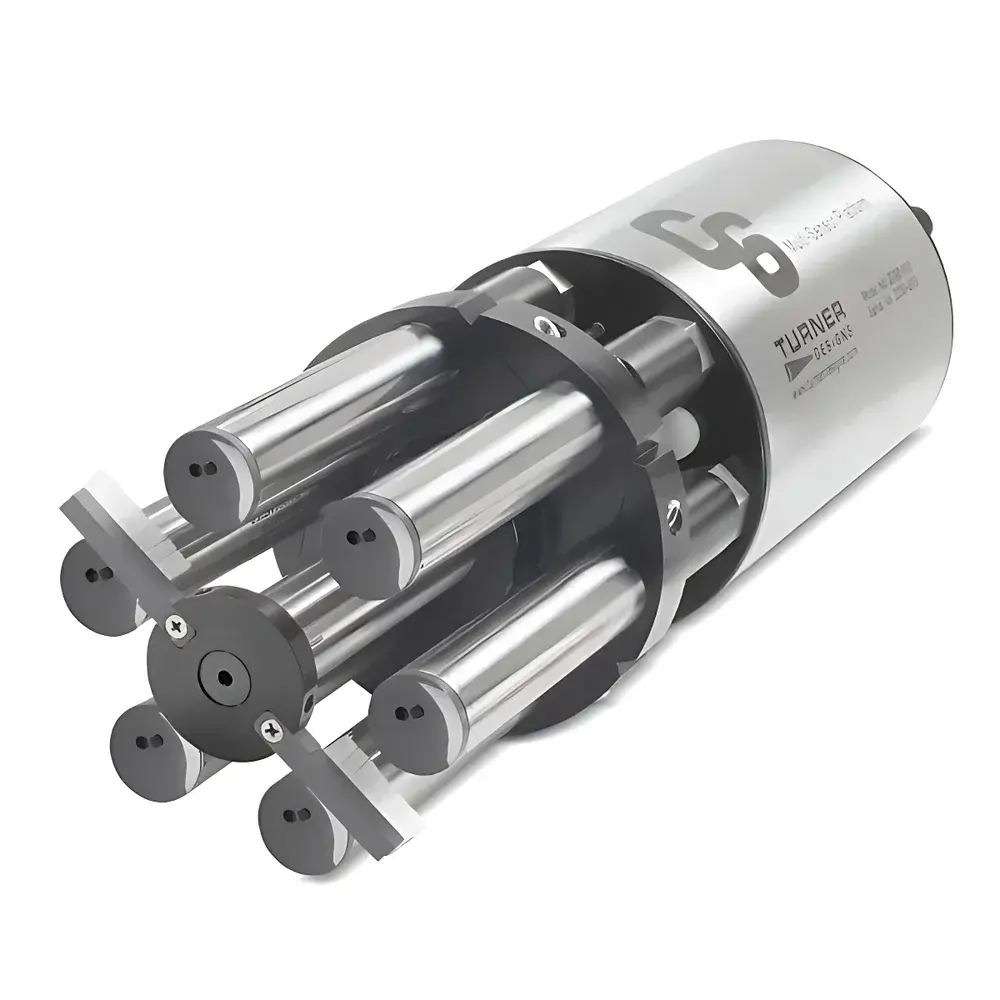
- Modular optical design supporting up to six independently configurable fluorescence and turbidity sensors—from UV (365 nm) to NIR (785 nm)—with factory-aligned optical paths and thermal stabilization.
- Integrated anti-fouling system comprising a copper alloy anti-biofouling band and programmable motor-driven mechanical cleaning brush, proven to extend maintenance intervals in eutrophic and estuarine environments.
- Onboard temperature sensor (±0.1 °C accuracy) included as standard; optional pressure/depth sensor (0–600 m, ±0.1% FS) available for hydrostatic correction and profile-based data interpretation.
- Low-power embedded electronics (480,000 timestamped records), enabling unattended operation for multi-month field deployments.
- Real-time ASCII output via RS-232 interface, compatible with industry-standard data loggers (e.g., Campbell Scientific CR series), telemetry modems, and SCADA protocols including Modbus RTU (via optional firmware).
- Firmware-upgradable architecture with field-configurable sampling schedules, trigger-based acquisition, and automatic dark-current compensation for stable baseline integrity over thermal cycles.
Sample Compatibility & Compliance
The C6p is validated for direct immersion in freshwater, brackish, and marine matrices—including high-turbidity estuaries, stratified reservoirs, and coastal upwelling zones. All optical calibrations are traceable to NIST-traceable standards (e.g., Rhodamine WT SRM 1950, fluorescein sodium reference solutions). Detection limits meet or exceed requirements outlined in ASTM D5907 (oil-in-water), ISO 10260 (turbidity), and EPA Method 445.0 (chlorophyll-a fluorescence). The platform supports GLP-compliant data acquisition when used with Turner Designs’ Windows-based HydroView software, which provides audit-trail logging, user-access controls, and electronic signature capability aligned with FDA 21 CFR Part 11 expectations for regulated environmental monitoring programs.
Software & Data Management
HydroView™ is the native Windows application for configuration, real-time visualization, and post-processing of C6p datasets. It enables automated calibration curve generation using certified standards, batch processing of time-series files, and export to CSV, NetCDF, or SQL-compatible formats. The software implements metadata tagging per IOOS (Integrated Ocean Observing System) conventions—including station ID, sensor serial number, deployment coordinates, and QA/QC flags. Firmware updates, sensor diagnostics, and memory management are performed through secure serial communication. Raw ASCII output is fully documented in the Turner Designs Communication Protocol Manual (Rev. 4.2), ensuring interoperability with custom middleware and cloud ingestion pipelines (e.g., AWS IoT Core, Azure IoT Hub).
Applications
- Harmful algal bloom (HAB) early warning systems—leveraging simultaneous chlorophyll-a and phycocyanin detection to distinguish green algae from cyanobacteria-dominated events.
- Oil spill response and remediation monitoring—quantifying dissolved hydrocarbons at sub-ppb levels in surface slicks, subsurface plumes, and sediment porewater using dual-wavelength oil sensors.
- Tracer studies and hydraulic residence time estimation—deploying Rhodamine WT or fluorescein sensors in riverine, estuarine, and wastewater outfall applications.
- Long-term ecological observatories—supporting LTER (Long Term Ecological Research) sites with year-round, depth-resolved fluorescence profiles synchronized with CTD casts.
- Regulatory compliance monitoring—meeting U.S. EPA NPDES permit requirements for effluent turbidity and hydrocarbon discharge, as well as EU WFD (Water Framework Directive) biological quality element indicators.
FAQ
Can the C6p be deployed on autonomous platforms such as gliders or AUVs?
Yes—the compact form factor, low power demand, and RS-232 ASCII output make it compatible with most oceanographic autonomous vehicles; integration kits and mounting brackets are available upon request.
Is factory calibration required before each deployment?
No—each sensor module is supplied with NIST-traceable calibration coefficients stored in non-volatile memory; field verification using standard solutions is recommended prior to critical missions.
How does the mechanical cleaning brush operate?
The brush is activated on a user-defined schedule (e.g., every 6–24 hours) or triggered by optical signal drift exceeding a configurable threshold; it sweeps the optical windows without interrupting data acquisition.
Does the C6p support synchronous multi-sensor measurements?
Yes—all installed sensors acquire data simultaneously at user-selectable intervals down to 1 second, with microsecond-level timestamp synchronization across channels.
What data security and integrity features are implemented?
HydroView enforces role-based access control, cryptographic hash validation of configuration files, and immutable audit logs recording all parameter changes, calibration events, and firmware updates.







