
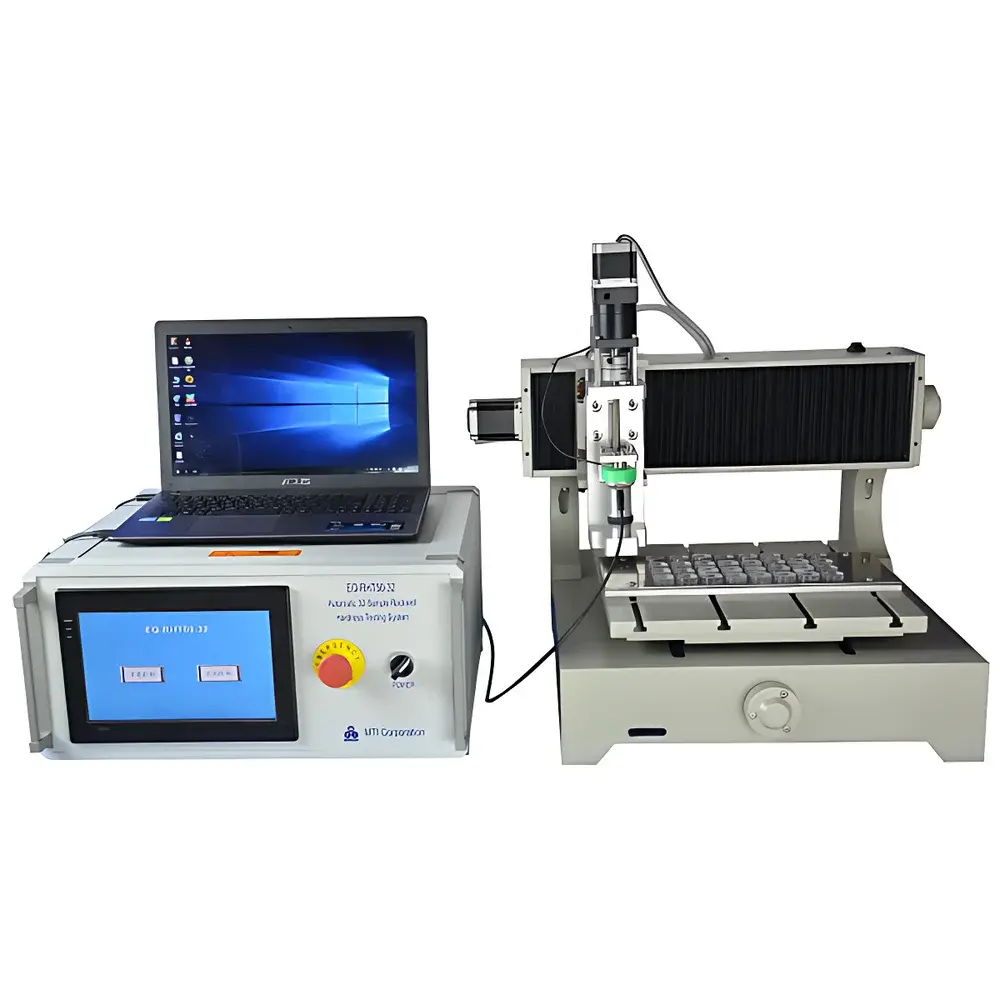
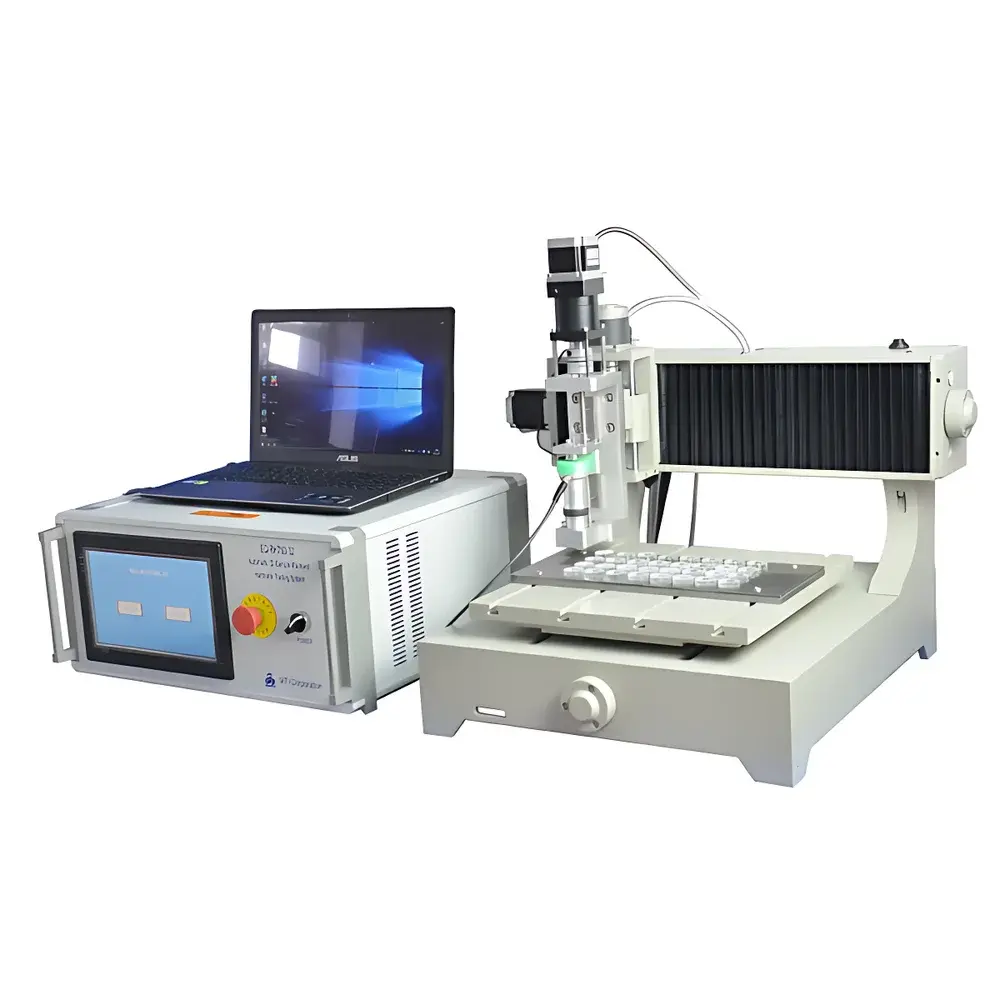
KJ GROUP RH50-32 High-Throughput Rockwell Hardness Tester
| Brand | KJ GROUP |
|---|---|
| Origin | Liaoning, China |
| Manufacturer Type | Authorized Distributor |
| Country of Origin | China |
| Model | RH50-32 |
| Pricing | Upon Request |
| Air Supply | 0.6–0.8 MPa |
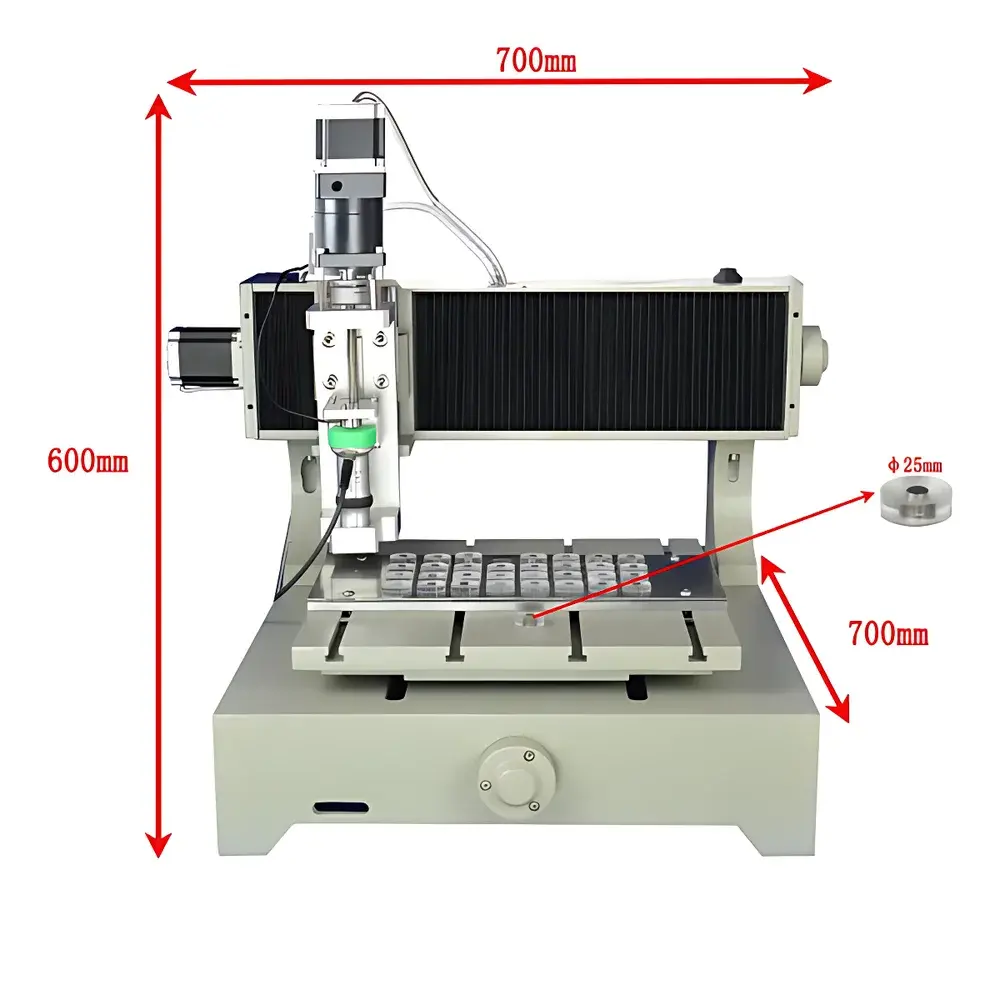
| Dimensions (Main Unit) | 720 mm (W) × 700 mm (D) × 550 mm (H) |
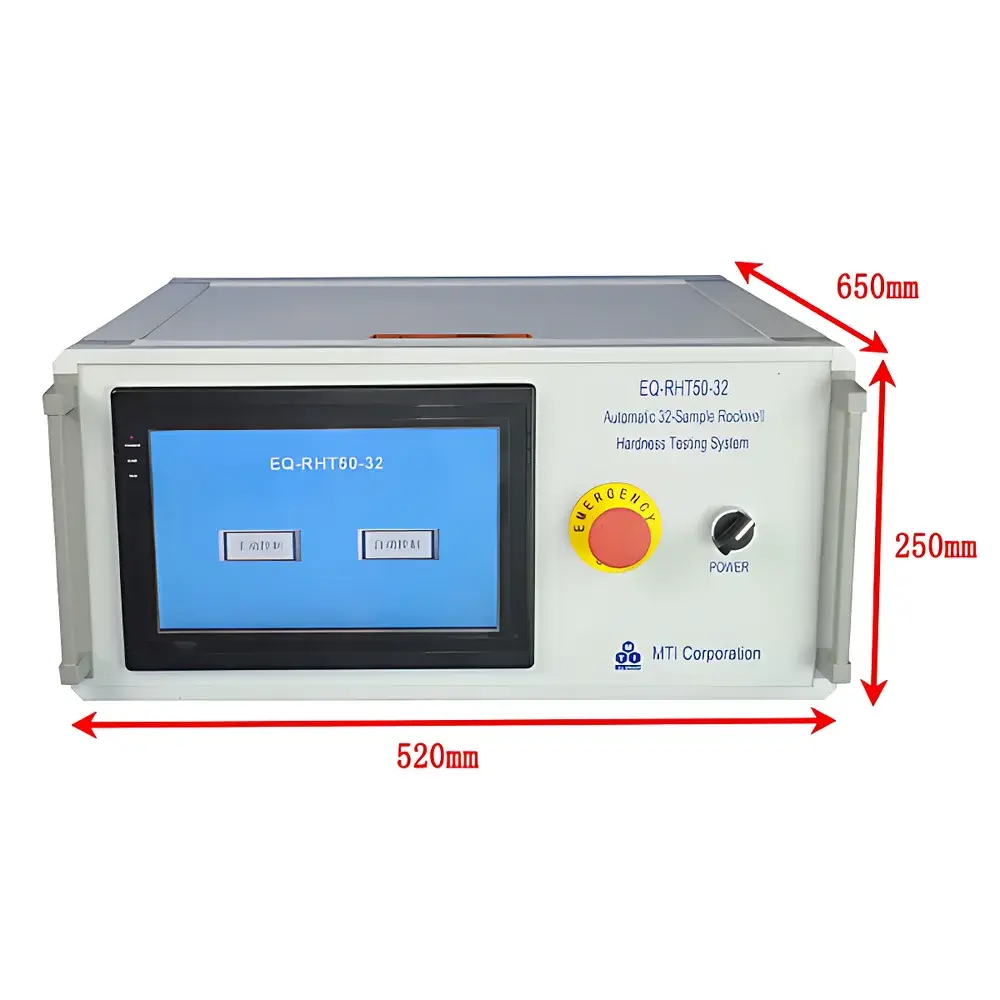
| Control Box Dimensions | 480 mm (W) × 460 mm (D) × 220 mm (H) |
| Weight | 100 kg |
| Power Supply | 220 V AC, 50/60 Hz, Single-Phase |
Overview
The KJ GROUP RH50-32 High-Throughput Rockwell Hardness Tester is an automated, industrial-grade hardness measurement system engineered for precision, repeatability, and scalability in metallurgical quality control and alloy development laboratories. It implements the standardized Rockwell hardness principle—specifically the portable Rockwell method derived from ASTM E18 and ISO 6508—where a diamond spheroconical indenter is applied under controlled major and minor loads to measure permanent plastic deformation depth. Unlike conventional handheld Rockwell testers, the RH50-32 integrates a calibrated Equotip Portable Rockwell probe with closed-loop force actuation, enabling consistent load application (typically 60 kgf minor load / 150 kgf major load per Rockwell C scale protocol) and real-time depth displacement sensing via high-resolution linear variable differential transformer (LVDT) feedback. This architecture eliminates operator-dependent variables such as loading angle, dwell time inconsistency, and manual pressure variability—critical factors that contribute to inter-operator scatter exceeding ±1.5 HRC in manual testing environments.
Key Features
- 32-position automated test station array driven by dual-axis CNC translation stage, enabling unattended sequential hardness mapping across multi-sample batches or large-area specimens.
- Pneumatically actuated indenter system with regulated air supply (0.6–0.8 MPa), ensuring stable force delivery within ±0.5% of setpoint across all cycles—compliant with force verification requirements of ASTM E18 Annex A3.
- PLC-based control architecture with 7-inch industrial touchscreen HMI, supporting programmable test parameters: load sequence, dwell duration (2–10 s adjustable), number of repeats per location, and pass/fail thresholds.
- Fixed vertical loading orientation ensures orthogonal force vector alignment relative to sample surface—minimizing cosine error and eliminating tilt-induced hardness deviation (>±0.8 HRC at 5° misalignment).
- USB 2.0 interface for direct data export to Windows-based analysis software; raw depth-vs.-time waveforms and final hardness values (HRC, HRB, HRA) are timestamped and stored with metadata (operator ID, sample ID, location coordinates).
Sample Compatibility & Compliance
The RH50-32 accommodates flat or gently curved metallic specimens up to 150 mm in diameter and 100 mm in thickness, including cast alloys, heat-treated steels, aluminum extrusions, and titanium billets. Specimen mounting uses vacuum-assisted fixturing or mechanical clamping plates with interchangeable anvil inserts (flat, V-groove, and ball types) to satisfy geometry-specific support requirements defined in ISO 6508-1:2016. All hardness measurements conform to traceable calibration protocols aligned with national metrology institutes (e.g., NIM China, NIST SP 250-92). The system supports audit-ready documentation for GLP and GMP environments: full electronic records include instrument ID, calibration certificate expiry dates, environmental logs (temperature/humidity), and user-access-controlled modification history.
Software & Data Management
Data acquisition and reporting are managed through KJ GROUP’s proprietary HardnessLink™ software (v3.2+), compatible with Windows 10/11. The software enables batch statistical analysis (mean, SD, Cp/Cpk), spatial hardness profiling (X-Y grid visualization), and automated report generation in PDF/Excel formats compliant with ISO/IEC 17025 clause 7.8. Audit trail functionality satisfies FDA 21 CFR Part 11 requirements, recording user login events, parameter changes, and result exports with digital signature timestamps. Raw datasets retain full waveform resolution (10 kHz sampling rate) for retrospective re-evaluation or third-party validation.
Applications
- High-volume incoming material inspection in automotive and aerospace Tier-1 suppliers, where >200 daily Rockwell tests per line are required.
- Heat treatment process validation—monitoring case depth uniformity across gear blanks or bearing races using automated radial scan patterns.
- Research laboratories conducting combinatorial metallurgy studies, correlating hardness gradients with microstructural features (e.g., martensite fraction, carbide dispersion) from SEM/EBSD datasets.
- Failure analysis workflows requiring hardness cross-sections across weld zones (HAZ, fusion line, base metal) with sub-millimeter positional repeatability (±0.05 mm).
- Calibration lab services offering accredited Rockwell hardness verification per ISO/IEC 17025, leveraging the RH50-32’s documented measurement uncertainty budget (< ±0.3 HRC at 95% confidence).
FAQ
Does the RH50-32 support Rockwell scales other than HRC?
Yes—it is configurable for HRB, HRA, HR15N, HR30T, and other standard Rockwell and superficial Rockwell scales via software-defined load profiles and optional indenter kits.
Can it integrate with existing LIMS or MES platforms?
Yes—HardnessLink™ provides OPC UA and CSV API interfaces for bidirectional data exchange with laboratory information management systems and manufacturing execution systems.
What maintenance intervals are recommended for pneumatic and mechanical subsystems?
Air filter elements require replacement every 6 months; linear guide rails need lubrication every 1,000 operating hours; annual force calibration verification is advised per ISO 6508-2.
Is the system suitable for use in cleanroom environments?
With optional stainless-steel enclosure upgrade and HEPA-filtered air supply, the RH50-32 meets ISO Class 7 cleanroom compatibility standards.
How is measurement traceability established?
Each unit ships with a factory calibration certificate traceable to NIM (National Institute of Metrology, China) and includes reference blocks certified to ISO 6508-3, with uncertainty budgets documented per GUM (JCGM 100:2008).



