
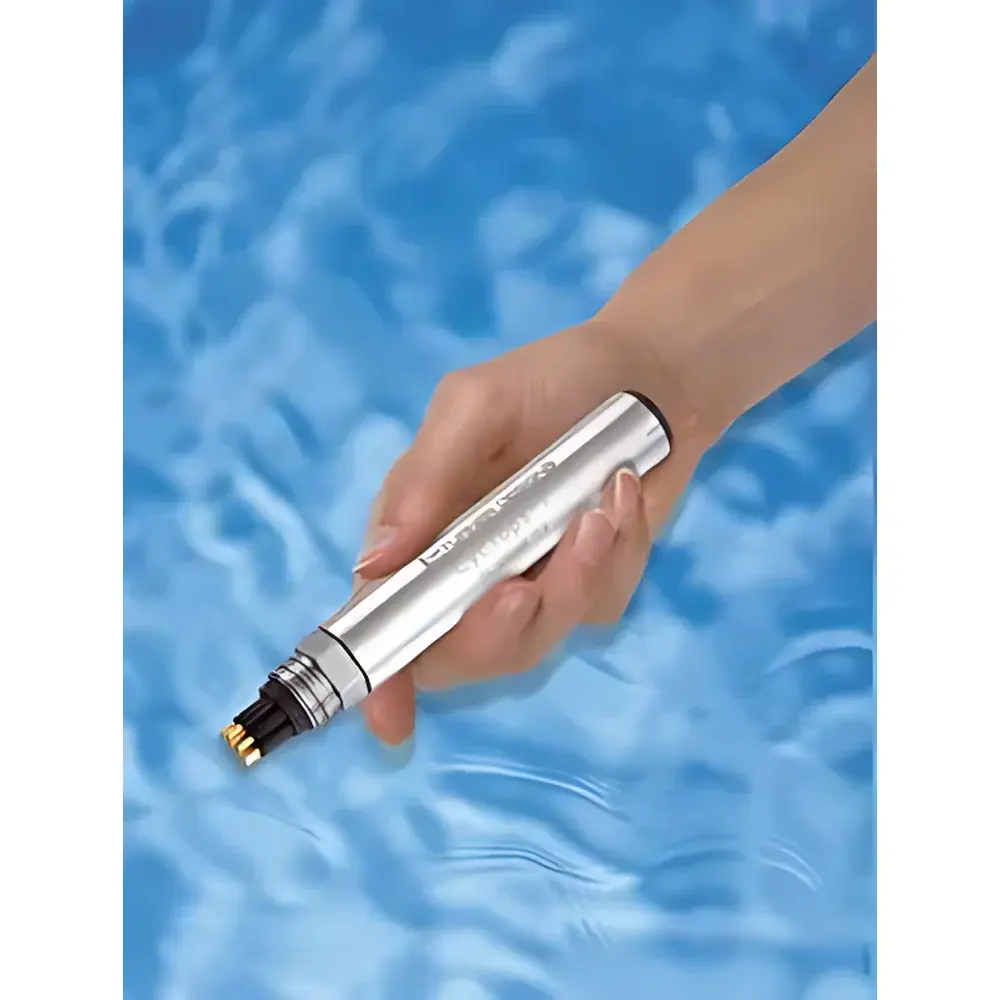
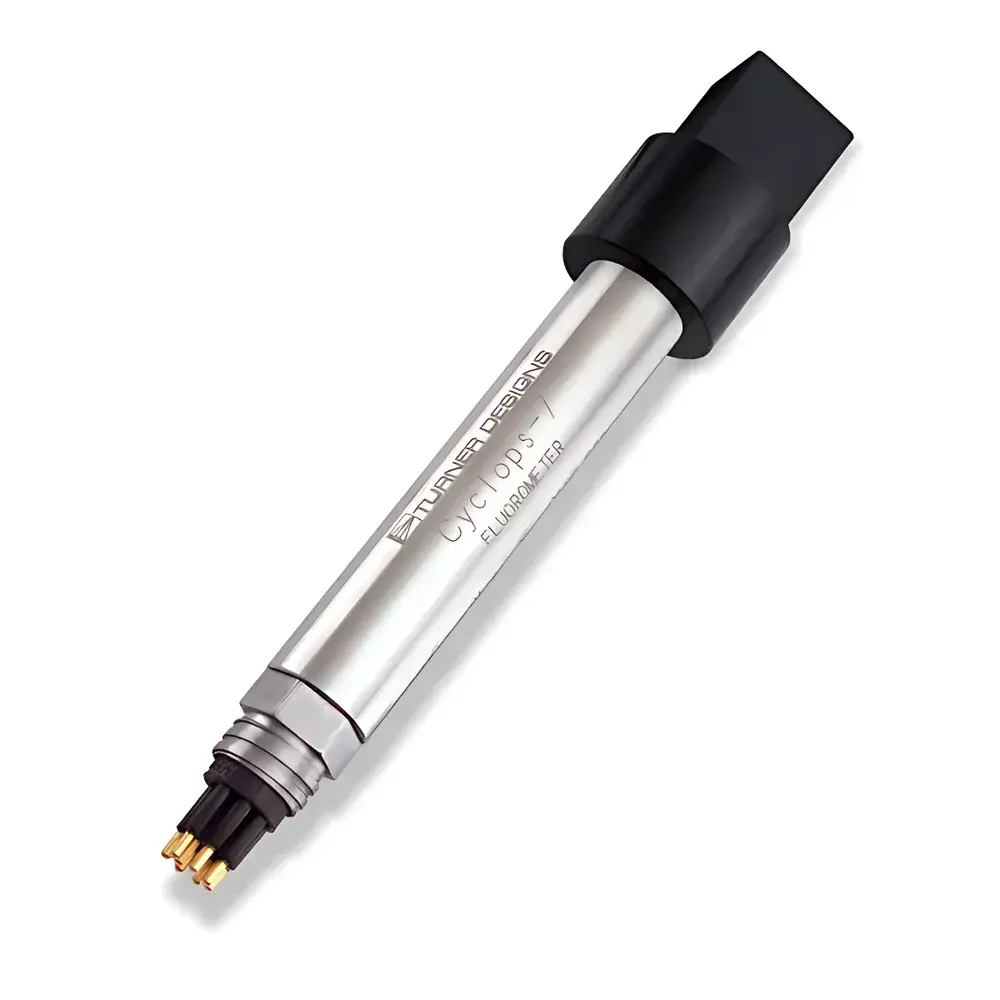
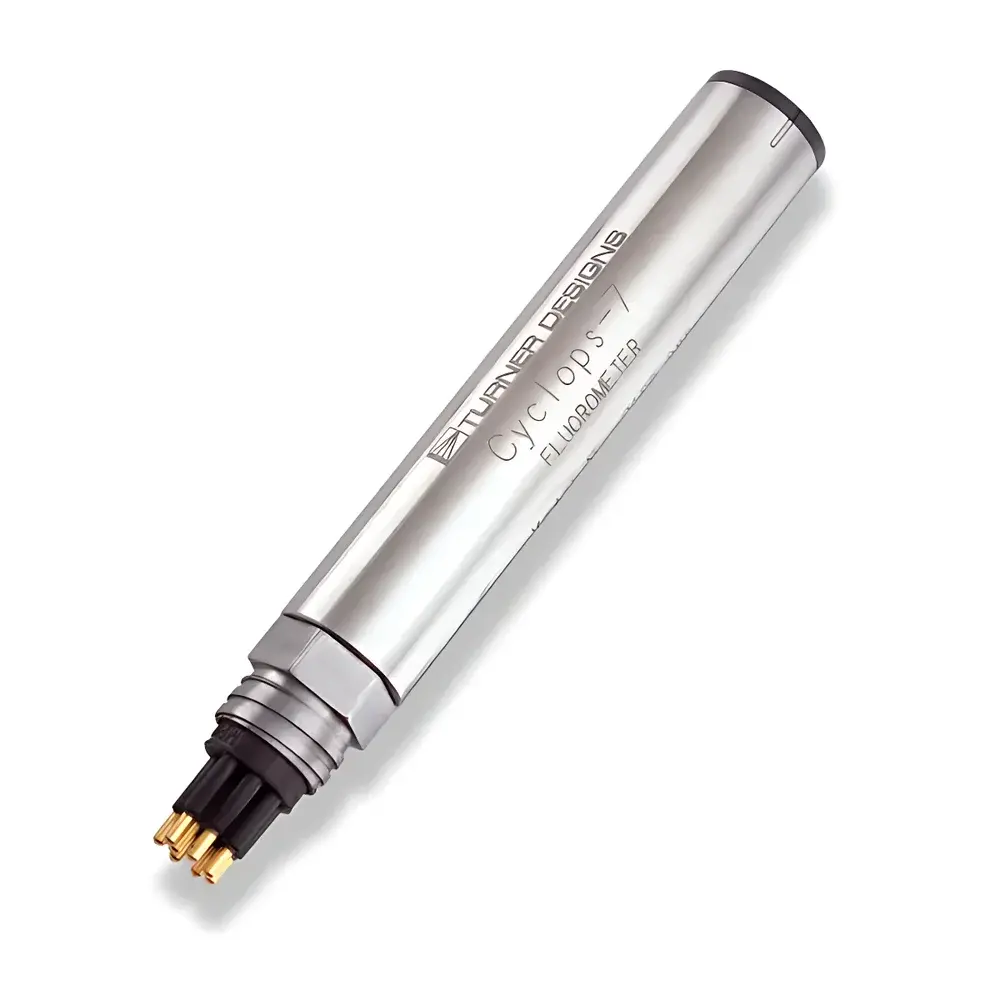
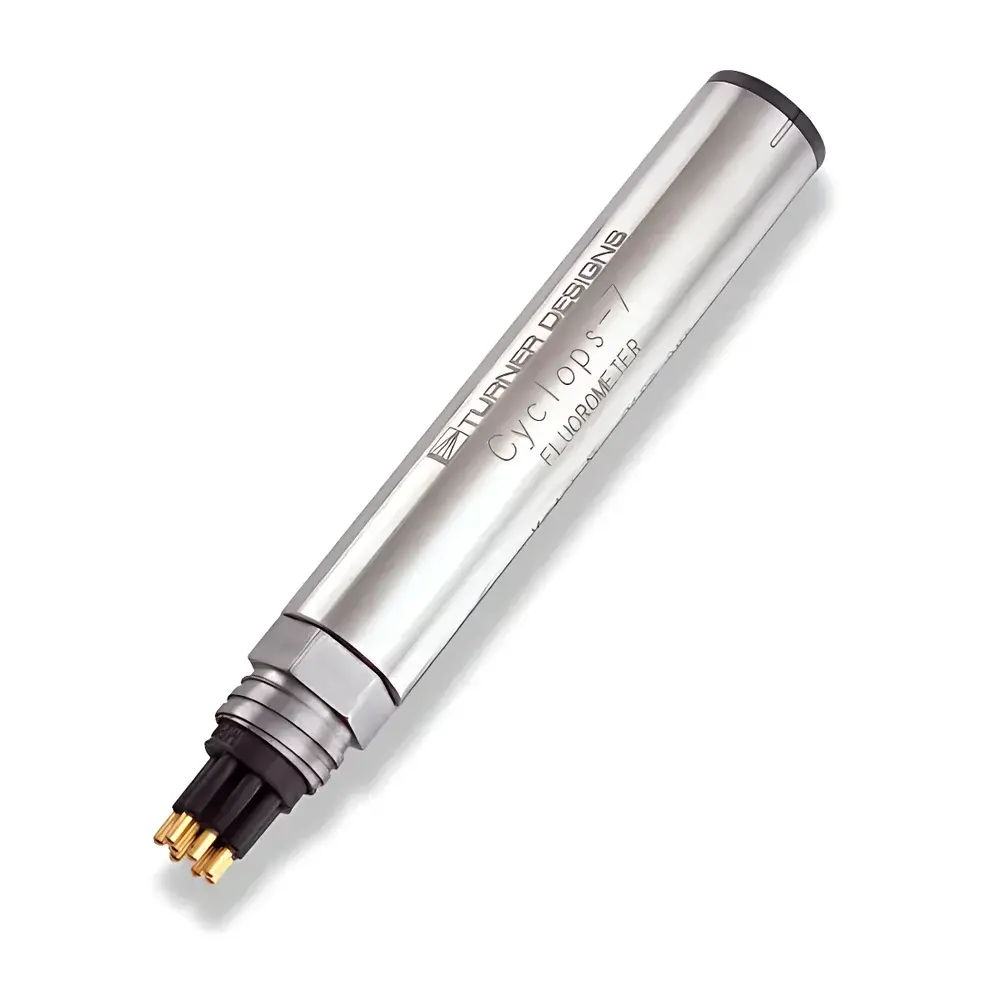
Turner Designs Cyclops-7 Submersible Fluorometer and Turbidity Sensor
| Brand | Turner Designs |
|---|---|
| Origin | USA |
| Model | Cyclops-7 |
| Instrument Type | Online Water Quality Analyzer |
| Measured Parameters | Turbidity, Chlorophyll-a, Rhodamine WT, Fluorescein, Phycocyanin, Phycoerythrin, Total Cyanobacteria, Hydrocarbon (Oil-in-Water) |
| Detection Limits | Chlorophyll-a: 0.03 µg/L |
| Rhodamine WT/Fluorescein | 0.04 ppb |
| Cyanobacteria | 150 cells/mL |
| Oil-in-Water | 0.1 ppm |
| Measurement Ranges (selectable sensitivity) | Chlorophyll-a: 0–5 / 0–50 / 0–500 µg/L |
| Rhodamine WT/Fluorescein | 0–10 / 0–100 / 0–1000 µg/L |
| Cyanobacteria | 0–20,000 / 0–200,000 / 0–2,000,000 cells/mL |
| Oil-in-Water | 0–1000 ppm |
| Linearity | R² ≥ 0.99 |
| Output Signal | 0–5 VDC |
| Operating Voltage | 3–15 VDC |
| Power Consumption | <300 mW |
Overview
The Turner Designs Cyclops-7 is a compact, submersible multi-parameter fluorometer engineered for high-fidelity in situ water quality monitoring. Unlike conventional turbidity-only sensors, the Cyclops-7 integrates dual optical detection capabilities: nephelometric turbidity measurement (via 90° scattered light detection at 850 nm LED excitation) and quantitative fluorescence spectroscopy across six independently configurable channels. Its core optical architecture employs matched excitation-emission filter sets optimized for chlorophyll-a (470/685 nm), rhodamine WT (530/580 nm), fluorescein (470/525 nm), phycocyanin (620/650 nm), phycoerythrin (480/575 nm), and hydrocarbon (365/455 nm), enabling simultaneous, interference-resolved quantification in complex aquatic matrices. Designed for deployment in freshwater lakes, reservoirs, estuarine systems, and coastal marine environments, the Cyclops-7 operates continuously under ambient pressure up to 100 m depth and maintains calibration stability across temperature gradients from 0 to 40 °C. Its low-power, analog-output architecture supports long-term unattended operation on buoy-based, moored, or autonomous platform deployments.
Key Features
- Submersible IP68-rated housing with titanium alloy end caps and optical-grade sapphire window for corrosion resistance and scratch durability
- Field-selectable gain and integration time per channel to optimize signal-to-noise ratio across wide dynamic ranges
- Real-time 0–5 VDC analog output for each measured parameter—compatible with industry-standard data loggers (e.g., Campbell Scientific CR1000X, Onset HOBO U24)
- Low power consumption (<300 mW at 12 VDC) enabling solar-battery operation for remote or off-grid sites
- Modular mounting interface (M12 threaded port) for seamless integration into multiparameter sondes (e.g., YSI EXO, In Situ Aqua TROLL, RBRconcerto)
- No moving parts or consumables—designed for maintenance-free operation over 2+ years in continuous deployment
Sample Compatibility & Compliance
The Cyclops-7 is validated for use in natural waters including oligotrophic lakes, eutrophic reservoirs, tidal rivers, and brackish estuaries. Its optical design mitigates scattering artifacts caused by suspended solids through proprietary background subtraction algorithms and dual-wavelength referencing where applicable. All fluorescence calibrations are traceable to NIST-certified standards (e.g., chlorophyll-a in acetone, rhodamine WT in deionized water). The instrument complies with ASTM D6696-21 (Standard Guide for Fluorescence-Based Field Measurements of Chlorophyll-a), ISO 10260:2022 (Water quality — Fluorometric determination of chlorophyll-a and pheopigments), and EPA Method 445.0 (Determination of Chlorophylls and Pheophytins in Marine and Fresh Waters). Its analog output architecture ensures compatibility with GLP-compliant data acquisition systems supporting audit trails and electronic signatures per FDA 21 CFR Part 11 when integrated with validated logging software.
Software & Data Management
While the Cyclops-7 operates autonomously via analog output, Turner Designs provides the free Cyclops Configuration Utility (Windows/macOS) for field calibration verification, gain adjustment, and spectral validation using reference standards. Raw voltage outputs are converted to concentration units using instrument-specific calibration coefficients stored in user-maintained lookup tables. When integrated into SCADA or IoT platforms (e.g., Ignition SCADA, ThingsBoard), the sensor’s linear 0–5 V signals support automated unit conversion, drift correction, and QA/QC flagging based on user-defined thresholds. Data streams may be archived in time-series databases compliant with ISO/IEC 17025 requirements for environmental testing laboratories.
Applications
- Real-time phytoplankton biomass monitoring (chlorophyll-a) in drinking water source protection programs
- Dye tracing studies using rhodamine WT or fluorescein to quantify groundwater-surface water exchange rates
- Cyanobacterial bloom early warning via concurrent phycocyanin (microcystis) and phycoerythrin (synechococcus) detection
- Hydrocarbon contamination surveillance in port areas, marinas, and produced water outfalls
- Long-term trophic status assessment in lake restoration projects per OECD Eutrophication Monitoring Guidelines
- Calibration and validation of satellite-derived chlorophyll-a products (e.g., Sentinel-3 OLCI, Landsat 9 OLI-2)
FAQ
Can the Cyclops-7 measure turbidity and fluorescence simultaneously?
Yes—the sensor acquires turbidity (nephelometric) and up to six fluorescence channels concurrently within a single 100-ms measurement cycle.
Is factory calibration sufficient for regulatory reporting?
Factory calibration provides baseline accuracy; however, site-specific calibration against matrix-matched standards is required for compliance with ISO 10260 or EPA 445.0.
What is the recommended recalibration interval?
Annual recalibration is advised for GLP/GMP applications; biannual verification is typical for research-grade deployments.
Does the sensor require anti-fouling measures in high-biofouling environments?
While the sapphire window resists abrasion, prolonged deployment in eutrophic or tidal zones benefits from optional copper-alloy wipers or periodic manual cleaning per Turner Designs Maintenance Protocol TD-MP-07.
How is temperature compensation handled?
An integrated PT1000 thermistor provides real-time temperature data; fluorescence quenching corrections are applied automatically in post-processing using published Q10 coefficients for each fluorophore.
Related Products







