
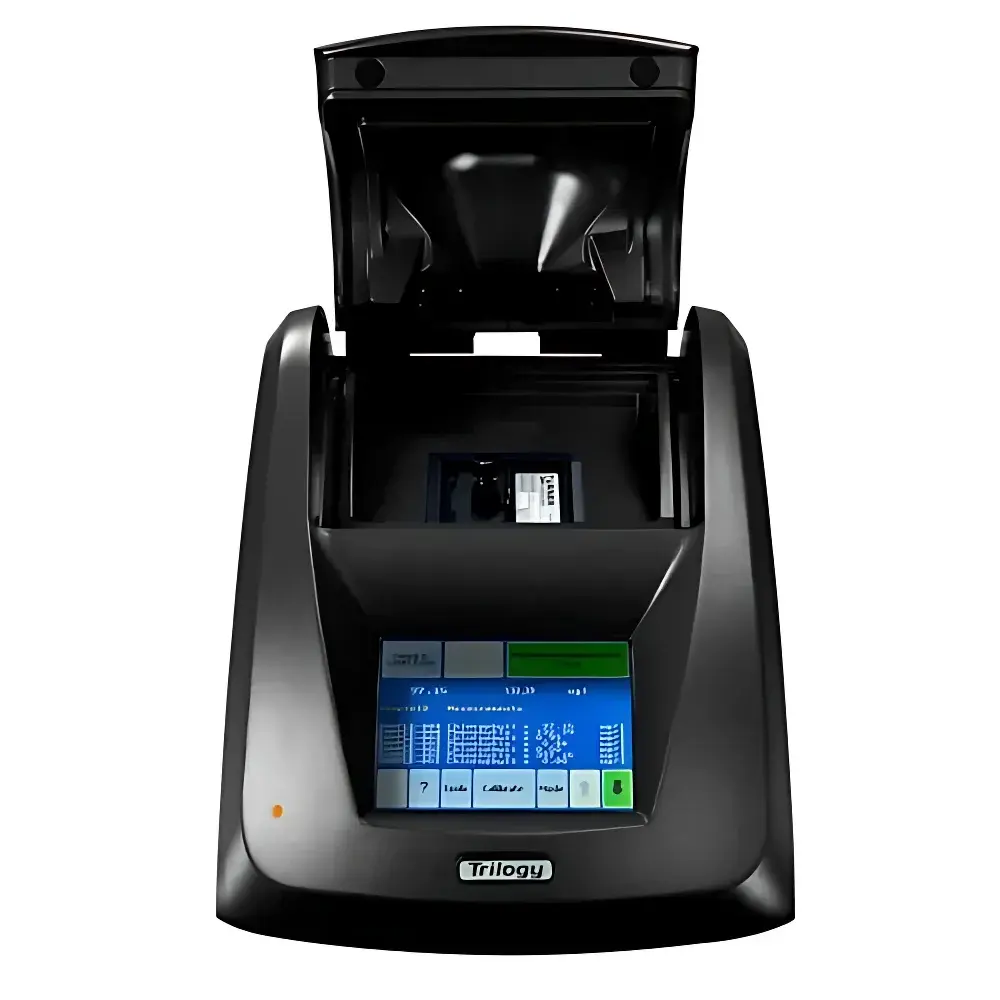
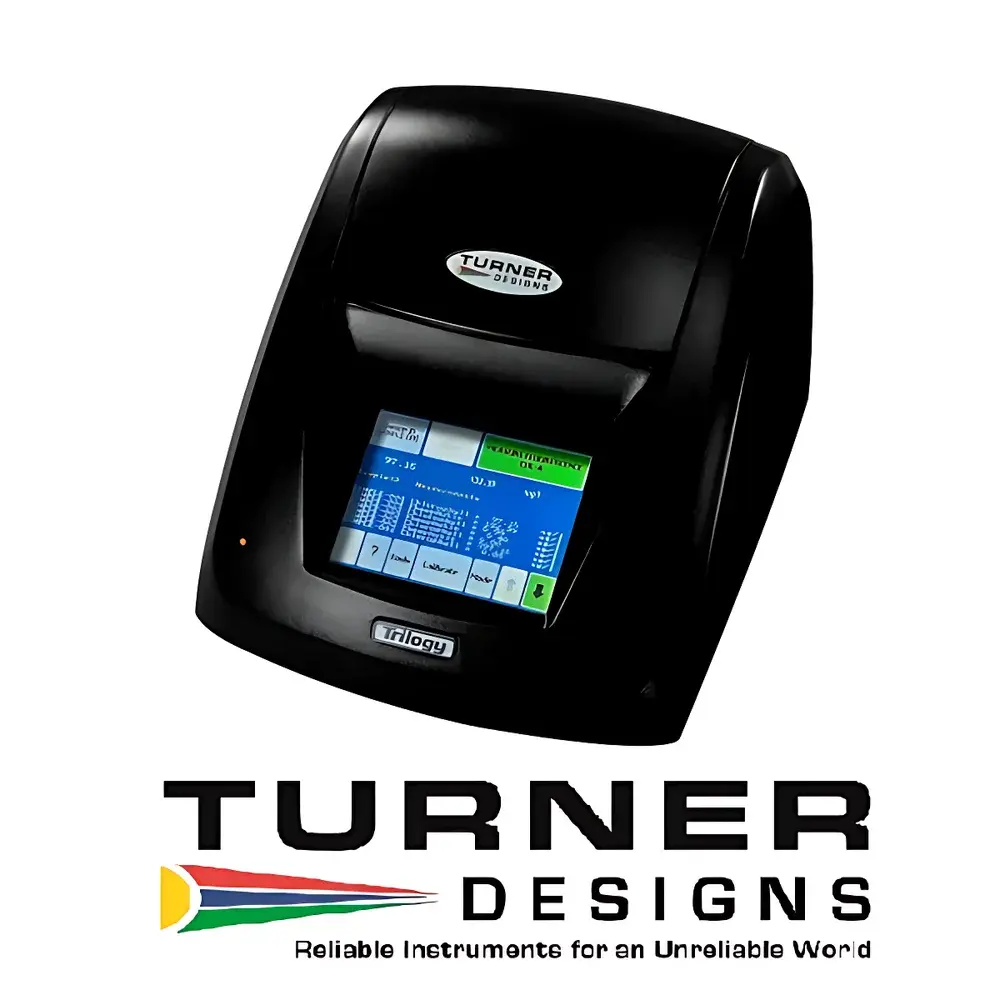
Turner Designs Trilogy Laboratory Fluorometric Oil-in-Water Analyzer
| Brand | Turner Designs |
|---|---|
| Origin | USA |
| Model | Trilogy |
| Instrument Type | Benchtop Laboratory Analyzer |
| Measurement Principle | Fluorescence Spectrophotometry |
| Detection Range | 0–2,000 ppb (crude oil in water, quinine sulfate calibration) |
| Limit of Detection (LOD) | 0.2 ppb (crude oil) / 0.25 ppb (refined oil, naphthalene calibration) |
| Accuracy | Linear response across full dynamic range |
| Resolution | 0.2 ppb |
| Operation Mode | Manual sample introduction and measurement |
Overview
The Turner Designs Trilogy Laboratory Fluorometric Oil-in-Water Analyzer is a benchtop, multi-parameter optical instrument engineered for precise quantification of hydrocarbon contaminants—including crude oil, refined petroleum products, and mineral oils—in aqueous matrices. It operates on the principle of selective fluorescence excitation and emission detection: hydrocarbon compounds absorb UV or visible light at characteristic wavelengths and re-emit energy at longer wavelengths, generating signal intensity proportional to concentration. This method provides high specificity for aromatic and polycyclic hydrocarbons commonly found in petroleum derivatives, minimizing interferences from non-fluorescent matrix components. Unlike broad-spectrum absorption techniques, fluorescence detection delivers superior sensitivity and selectivity in complex environmental water samples—such as wastewater effluents, groundwater monitoring wells, produced water from oil extraction, and surface water impacted by accidental spills.
Key Features
- Integrated triple-mode optical platform supporting fluorometry, turbidity (nephelometry), and absorbance (UV-Vis) measurements—enabling simultaneous correction for matrix effects such as suspended solids or colored dissolved organic matter (CDOM).
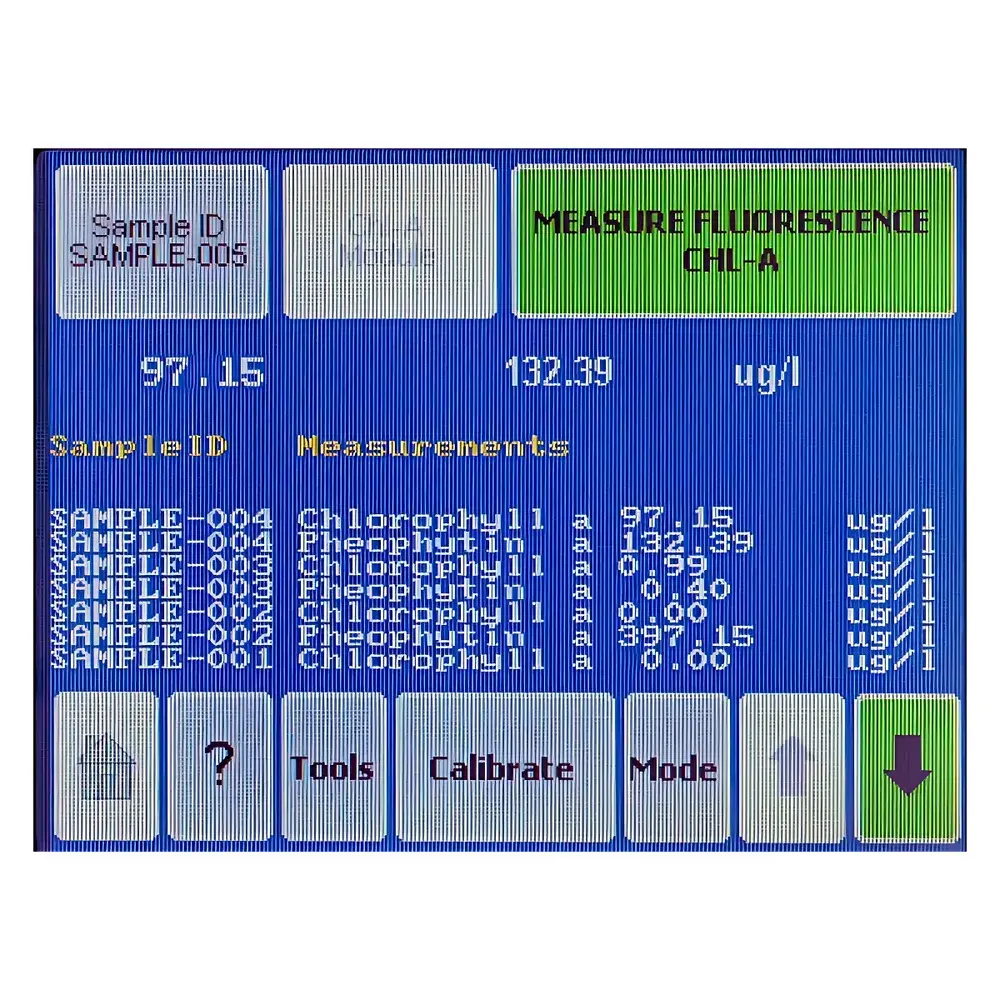
- High-resolution 7-inch capacitive touchscreen interface with intuitive icon-driven navigation, eliminating reliance on external PCs for routine operation and calibration.
- Onboard memory stores up to 18 user-named calibration curves, each configurable with slope/intercept, units, and validation timestamps—supporting method-specific protocols for different oil types (e.g., ASTM D7678-compliant crude oil assays vs. EPA Method 1664B-aligned refined oil screening).
- Modular “Snap-In” application architecture: field-upgradable optical modules allow seamless integration of new excitation/emission filters, cuvette holders, or fiber-optic probes without instrument recalibration or firmware replacement.
- Rugged aluminum chassis with IP20-rated enclosure, designed for stable performance in ISO/IEC 17025-accredited laboratory environments and compliant with IEC 61010-1 safety standards for electrical equipment.
Sample Compatibility & Compliance
The Trilogy analyzer accepts standard 10-mm square quartz or disposable plastic cuvettes (pathlength: 10 mm), accommodating both filtered and unfiltered water samples. For turbid samples, integrated dual-beam ratioing compensates for light scattering, enabling reliable oil-in-water quantification even at NTU values up to 200. The system meets requirements for regulatory compliance workflows: calibration traceability aligns with NIST-traceable quinine sulfate and naphthalene standards; data integrity features support adherence to FDA 21 CFR Part 11 when paired with optional secure software licensing; and measurement repeatability (RSD < 2.5% at 10 ppb) satisfies QA/QC criteria outlined in US EPA SW-846 Method 418.1 and ISO 9562:2021 (Petroleum hydrocarbons — Determination in water by fluorescence).
Software & Data Management
Instrument control, data logging, and report generation are managed via the embedded firmware or optionally extended through Turner Designs’ Trilogy Connect PC software (Windows 10/11 compatible). The software supports audit-trail-enabled method execution, electronic signature capture, and export of CSV, PDF, or XML files compliant with LIMS integration schemas. All measurement events—including calibration history, operator ID, timestamp, and raw fluorescence counts—are stored with immutable metadata. Optional GLP/GMP mode enforces password-protected access levels, automatic calibration verification prompts, and forced instrument qualification checks prior to analysis batches.
Applications
- Regulatory monitoring of oil discharge permits (e.g., NPDES compliance in municipal and industrial wastewater treatment plants)
- Leak detection and source tracking in groundwater remediation sites using fingerprinting-capable multi-wavelength scanning
- Quality assurance of cooling tower water and boiler feedwater where hydrocarbon ingress compromises thermal efficiency
- Research applications in marine oil spill fate-and-transport modeling, including biodegradation kinetics studies under controlled microcosm conditions
- Validation of oil-water separation technologies (e.g., API separators, coalescers, membrane filtration) via rapid pre-/post-treatment quantification
FAQ
What calibration standards are recommended for routine use?
Quinine sulfate in 0.1 M H2SO4 for crude oil equivalent calibration; naphthalene in acetone for refined oil assessment. Both are available as NIST-traceable certified reference materials (CRM) from authorized distributors.
Can the Trilogy be used for diesel or gasoline detection in water?
Yes—when configured with appropriate excitation/emission filters (e.g., 275/340 nm for gasoline-range aromatics) and calibrated against relevant CRMs. Performance must be verified per ASTM D7678 Annex A2 for volatile fuel fractions.
Is method validation documentation provided with the instrument?
Turner Designs supplies a comprehensive Instrument Qualification Package (IQ/OQ/PQ templates), including linearity verification protocols, LOD/LOQ determination worksheets, and interference testing guidelines aligned with ISO/IEC 17025 Clause 7.2.
Does the system support automated sample handling?
No—the Trilogy is a manual-introduction platform. However, its RS-232 and USB-C interfaces enable integration with third-party autosamplers via TTL-triggered measurement initiation and ASCII data streaming.
How often does the excitation source require replacement?
The solid-state UV-LED light source has a rated lifetime of ≥10,000 hours under normal operating conditions; no scheduled lamp replacement is required during typical laboratory service intervals.
Related Products







