
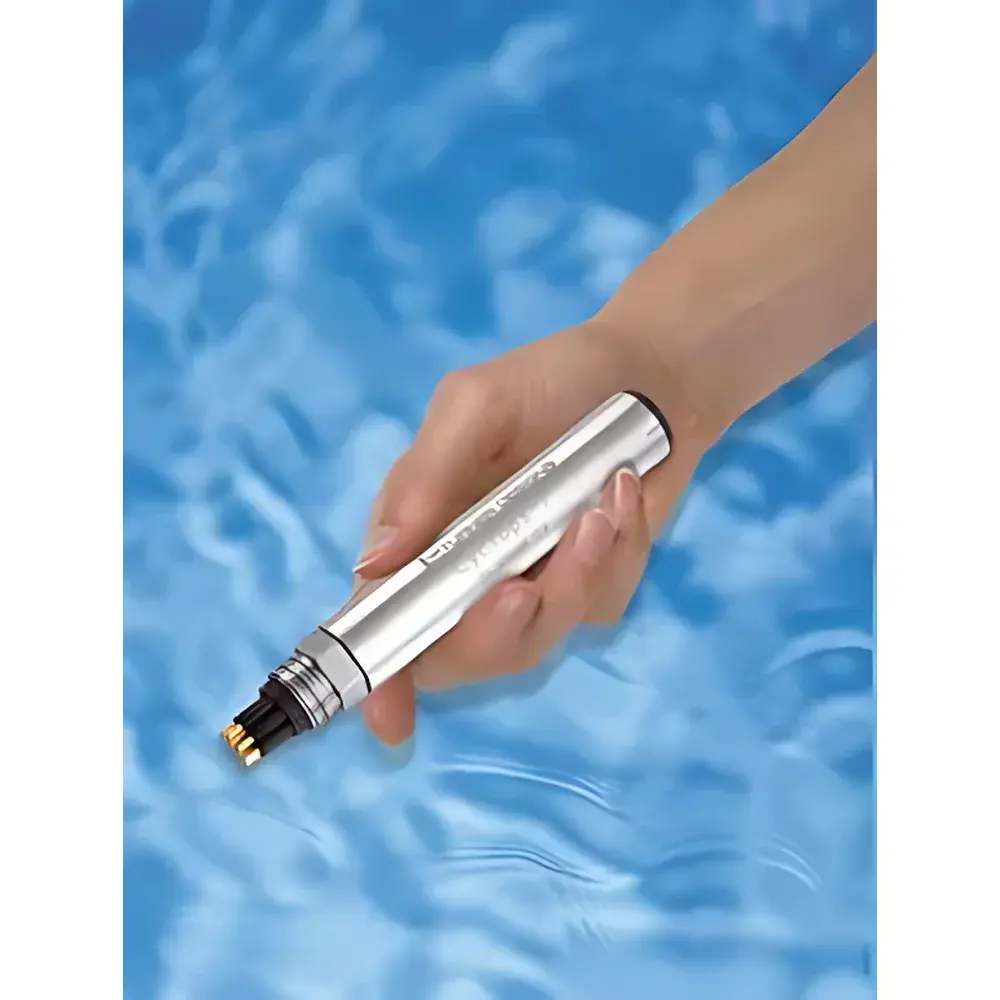
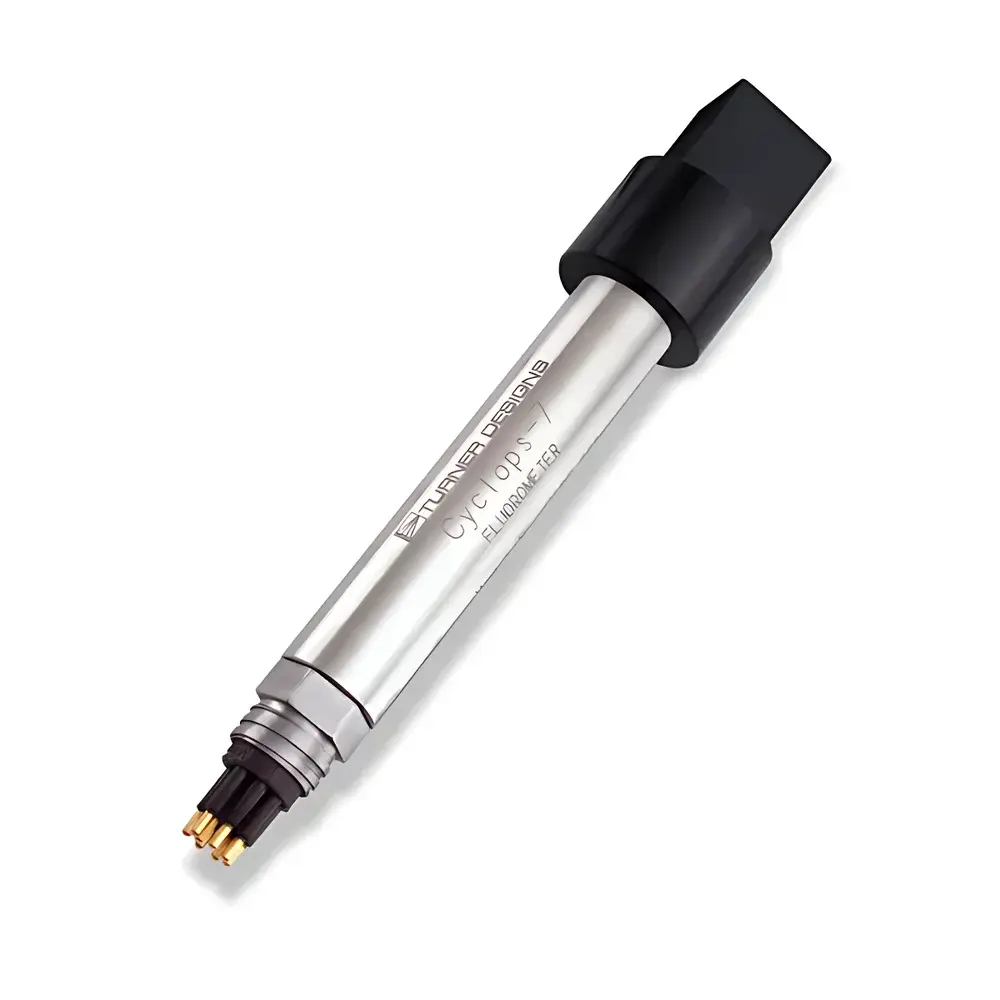
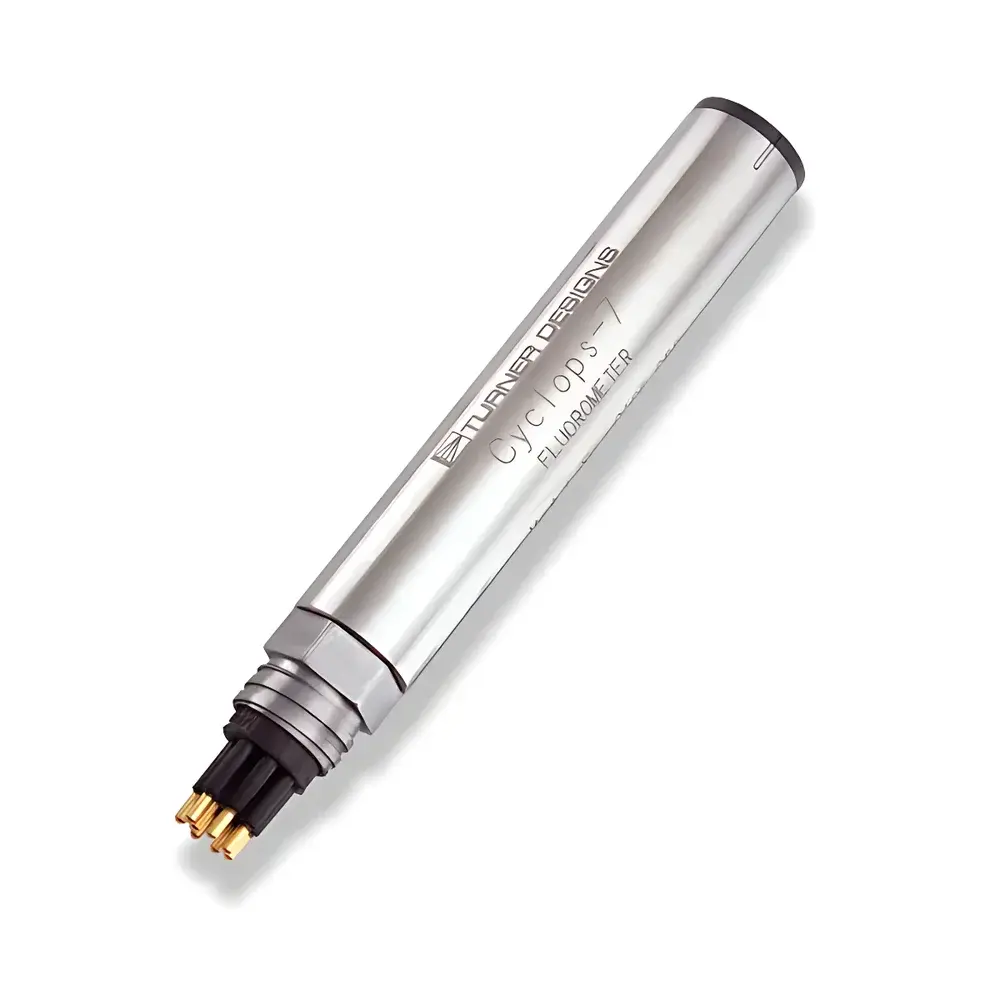
Turner Designs Cyclops-7 Oil-in-Water Sensor
| Brand | Turner Designs |
|---|---|
| Origin | USA |
| Model | C7 oil |
| Instrument Type | Portable |
| Measurement Principle | UV Fluorescence Spectrophotometry |
| Measurement Range | 0–2700 ppb (crude oil), 0–10,000 ppb (refined oil) |
| Detection Limit | 0.2 ppb (crude), 2 ppb (refined) |
| Accuracy | ±0.1 ppb |
| Resolution | 0.01 ppb |
| Measurement Frequency | 1 Hz |
| Linearity | R² ≥ 0.99 |
| Dimensions | 14.48 × 2.23 cm |
| Weight | 160 g |
| Operating Temperature | Ambient 0–50 °C, Water –2–50 °C |
| Depth Rating | 600 m |
| Output Signal | 0–5 VDC |
| Supply Voltage | 3–15 VDC |
| Power Consumption | <300 mW |
Overview
The Turner Designs Cyclops-7 Oil-in-Water Sensor is a compact, submersible fluorescence-based analyzer engineered for continuous, real-time quantification of hydrocarbon contaminants in aqueous environments. Unlike conventional UV-absorption or infrared methods, the Cyclops-7 employs selective ultraviolet excitation (typically at 254 nm or 365 nm, depending on configuration) coupled with high-sensitivity photodiode detection to measure native fluorescence emissions from aromatic hydrocarbons—including benzene, toluene, ethylbenzene, xylenes (BTEX), and polycyclic aromatic hydrocarbons (PAHs)—present in crude oil or refined fuels such as gasoline and diesel. This principle enables direct, reagent-free measurement with minimal interference from turbidity or colored dissolved organic matter (CDOM), provided spectral overlap is accounted for during calibration. Designed for deployment in raw water intakes, drinking water treatment plants, reservoirs, and industrial effluent streams, the sensor delivers rapid response (<1 second) and stable baseline performance under variable flow and temperature conditions.
Key Features
- Submersible stainless-steel housing rated to 600 meters depth, enabling long-term in-situ deployment without external enclosures
- Low-power architecture consuming less than 300 mW—optimized for solar- or battery-powered remote monitoring stations
- Modular optical path with calibrated LED excitation source and temperature-compensated photodiode detector ensuring consistent signal integrity across –2 °C to 50 °C water temperatures
- High-resolution analog output (0–5 VDC) compatible with SCADA systems, data loggers, and multi-parameter water quality sondes (e.g., YSI EXO, In-Situ Aqua TROLL)
- Factory-calibrated for two distinct hydrocarbon matrices: crude oil (using sodium naphthalene-2,6-disulfonate surrogate) and refined petroleum products (using sodium 1,5-naphthalenedisulfonate)
- Minimal maintenance requirement—no consumables, no moving parts, no optical windows requiring periodic cleaning in low-fouling applications
Sample Compatibility & Compliance
The Cyclops-7 is validated for use in freshwater, brackish, and low-salinity marine environments. Its fluorescence selectivity supports compliance with U.S. EPA Method 418.1 (for total petroleum hydrocarbons) and ASTM D7678 (standard test method for determination of hydrocarbon content in water by fluorescence). While not certified for regulatory reporting per se, its performance characteristics align with GLP-aligned field screening protocols used by municipal utilities and environmental consultants for early-warning detection of hydrocarbon intrusion events. The sensor meets IEC 60529 IP68 ingress protection standards and complies with RoHS and REACH directives. Data traceability is supported through optional time-stamped analog logging; full audit trail functionality requires integration with compliant data acquisition hardware adhering to FDA 21 CFR Part 11 requirements.
Software & Data Management
The Cyclops-7 operates as a standalone analog transducer and does not include embedded firmware or onboard data storage. Signal interpretation, calibration application, and unit conversion (ppb → mg/L) are performed externally via user-defined scaling in programmable logic controllers (PLCs), telemetry gateways, or PC-based acquisition software (e.g., LabVIEW, MATLAB, or Turner Designs’ optional Cyclops Utility Suite). Calibration coefficients—including slope, offset, and nonlinearity correction terms—are stored externally and applied during post-processing. For networked deployments, integration with MQTT- or Modbus-enabled edge devices allows seamless ingestion into cloud platforms (e.g., AWS IoT Core, Microsoft Azure IoT Hub) for visualization, threshold alerting, and historical trend analysis. All calibration documentation—including linearity verification (R² ≥ 0.99), limit-of-detection validation, and temperature drift characterization—is provided in NIST-traceable certificate format upon request.
Applications
- Early-warning monitoring at raw water intakes upstream of drinking water treatment facilities
- Leak detection in underground storage tank (UST) containment sumps and groundwater plume delineation
- Effluent compliance monitoring for petrochemical, refinery, and transportation infrastructure
- Environmental impact assessment during pipeline right-of-way surveillance or offshore platform discharge monitoring
- Integration into autonomous surface vehicles (ASVs) or moored buoy networks for spatially resolved hydrocarbon mapping
- Research-grade field validation of laboratory GC-FID or GC-MS results in situ
FAQ
What hydrocarbons does the Cyclops-7 detect?
It responds to aromatic compounds exhibiting native fluorescence under UV excitation—primarily BTEX, PAHs, and alkylated benzenes present in crude oil and refined fuels. It does not detect saturated aliphatics (e.g., n-hexane) or chlorinated solvents.
Can the sensor be used in seawater?
Yes, with demonstrated stability in salinities up to 35 ppt; however, quenching effects from dissolved organic matter may require site-specific calibration adjustments.
Is factory calibration sufficient for regulatory reporting?
No—while factory calibrations provide robust field screening performance, regulatory reporting requires method-specific validation per local jurisdiction (e.g., EPA-approved protocols) and periodic recalibration using certified reference materials.
How is temperature compensation handled?
The photodiode detector incorporates an integrated thermistor; gain and offset corrections are applied in real time via preloaded coefficients stored in the host data logger.
Does the sensor require periodic cleaning or servicing?
In low-fouling environments (e.g., filtered intake pipes), no routine cleaning is needed; in high-sediment or biofouling-prone settings, quarterly visual inspection and gentle wiping with isopropyl alcohol is recommended.
Related Products







