
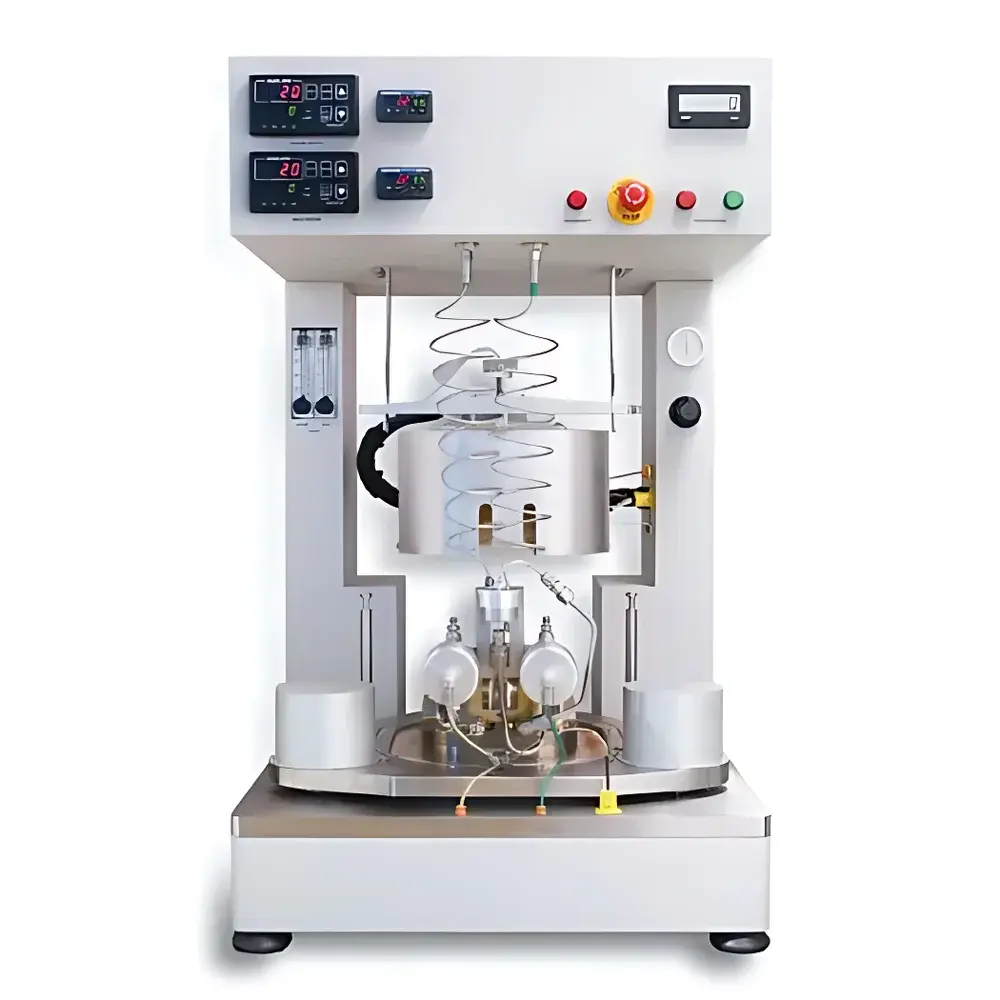
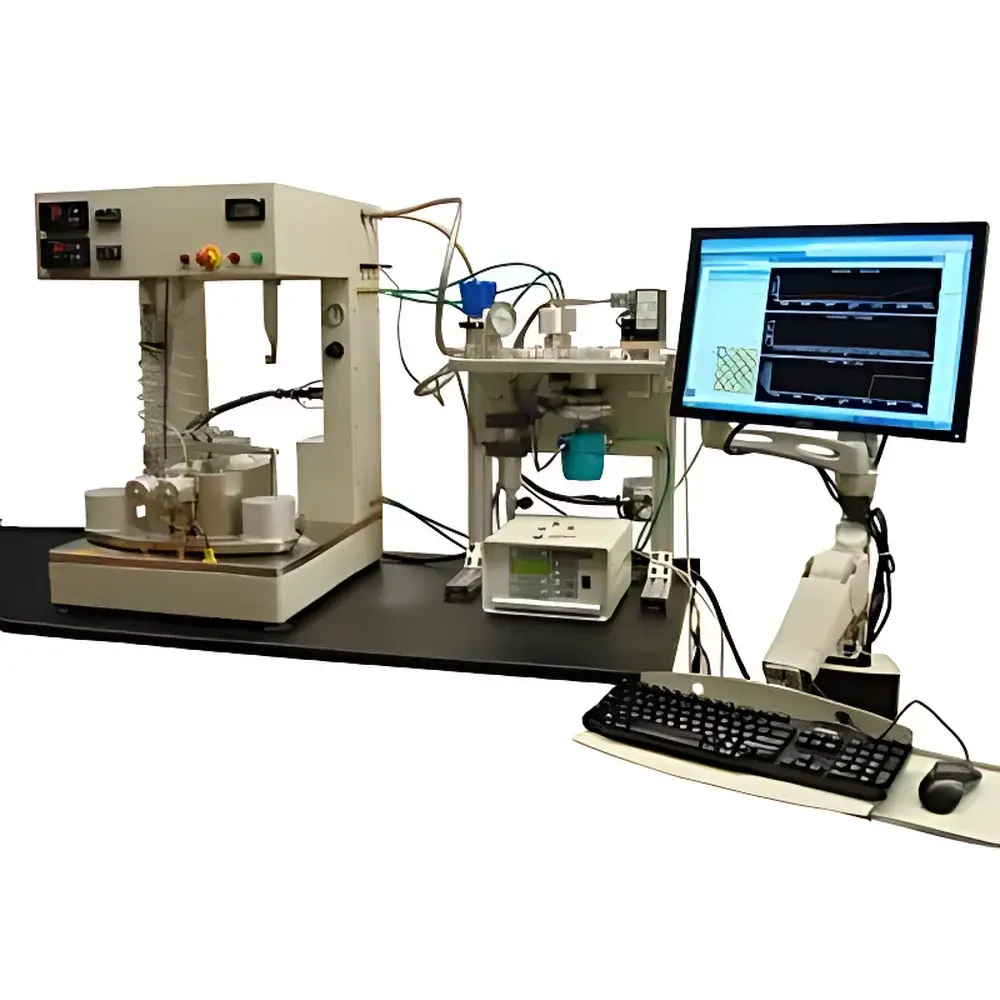
Unchained Labs Screening Pressure Reactor (SPR)
| Brand | Unchained Labs |
|---|---|
| Origin | USA |
| Model | Screening Pressure Reactor (SPR) |
| Reactor Type | High-Throughput Parallel Pressure Reactor |
| Vessel Capacity | 1–6 mL per chamber |
| Maximum Operating Pressure | 200 bar |
| Temperature Range | Ambient to 400 °C |
| Chamber Configurations | 24-, 48-, or 96-position modular array |
| Gas/Liquid Flow Control | 0–1 L/min |
| Construction Material | Electropolished Stainless Steel (316L) |
| Sealing Architecture | Single-point clamshell high-pressure seal |
| Vacuum Capability | ≤ 1 mbar (base vacuum), compatible with inert gas purging and pressurization up to 200 bar |
Overview
The Unchained Labs Screening Pressure Reactor (SPR) is an engineered high-throughput parallel reaction platform designed for systematic catalyst and process parameter screening under rigorously controlled elevated temperature and pressure conditions. Based on a modular, multi-chambered reactor architecture, the SPR implements precise Couette-type mixing combined with rapid thermal equilibration and independent pressure regulation across all reaction vessels. It operates on the principle of parallelized batch or semi-batch heterogeneous catalysis—enabling simultaneous evaluation of solid catalysts, gaseous reagents (e.g., H₂, CO, NH₃, CH₄), and liquid substrates under industrially relevant process windows (up to 400 °C and 200 bar). This system bridges the gap between discovery-phase screening and pilot-scale process development, delivering statistically robust kinetic and selectivity data while minimizing manual intervention and cross-contamination risk.
Key Features
- Modular chamber configurations supporting 24, 48, or 96 independent reaction zones—each with individual temperature, pressure, and flow monitoring
- Electropolished 316L stainless steel reaction vessels rated for continuous operation at 200 bar and cyclic thermal exposure from ambient to 400 °C
- Clamshell-style single-point sealing mechanism enabling rapid vessel loading/unloading without disassembling manifolds or recalibrating pressure transducers
- Integrated high-shear vortex mixing that ensures uniform suspension of heterogeneous catalysts and enhances interfacial mass transfer between gas, liquid, and solid phases
- Programmable reaction protocols with user-defined ramp/hold profiles for temperature, pressure, and gas/liquid flow rates—fully automatable via LEA software suite
- Real-time in-situ pressure and temperature logging with ±0.5 bar and ±1 °C accuracy, traceable to NIST-certified references
Sample Compatibility & Compliance
The SPR accommodates diverse sample formats including powdered catalysts, supported metal nanoparticles, immobilized enzymes, and slurries in organic or aqueous media. Reaction vessels accept standard 8–10 mm OD microvials (1–6 mL volume), compatible with off-the-shelf GC vials, crimp-top reactors, and custom-lined containers for corrosive chemistries. All wetted components comply with ASTM F899 (stainless steel specifications) and ASME B31.3 Process Piping Code for high-pressure service. The system supports GLP-compliant workflows through audit-trail-enabled operation logs, electronic signature support, and alignment with FDA 21 CFR Part 11 requirements when deployed with validated LEA software configuration.
Software & Data Management
The SPR is fully integrated with Unchained Labs’ LEA (Laboratory Experiment Automation) software—a secure, role-based platform for experimental design, instrument orchestration, and multivariate data analysis. LEA enables DoE (Design of Experiments) setup—including full factorial, fractional factorial, and response surface methodologies—directly mapped to hardware parameters. All sensor data (T, P, flow, time-stamped events) are time-synchronized and stored in ACID-compliant SQLite databases with optional export to CSV, HDF5, or direct integration with ELN systems (e.g., LabArchives, Benchling) via RESTful API. Raw datasets include metadata tagging for catalyst lot numbers, reagent purity grades, and environmental chamber conditions—ensuring full traceability for regulatory submissions.
Applications
- Accelerated catalyst discovery and deactivation profiling for hydrogenation, hydroformylation, Fischer–Tropsch synthesis, and ammonia oxidation
- Thermodynamic and kinetic modeling of gas–liquid–solid reactions under supercritical and near-critical conditions
- Process intensification studies for continuous-flow precursor development in pharmaceutical API synthesis
- Stability assessment of MOFs, zeolites, and single-atom catalysts under cyclic pressure/temperature stress
- Reaction optimization for CO₂ utilization pathways (e.g., methanation, reverse water–gas shift) under realistic feedstock compositions
- Supporting QbD (Quality by Design) frameworks in early-stage process development per ICH Q5, Q8, and Q11 guidelines
FAQ
What safety certifications does the SPR platform hold?
The SPR system complies with CE marking per Machinery Directive 2006/42/EC and Pressure Equipment Directive 2014/68/EU. Individual reactor modules carry PED 2014/68/EU Category IV certification for maximum allowable pressure ≥ 200 bar.
Can the SPR be integrated with inline analytics such as FTIR or Raman?
Yes—LEA software supports third-party device drivers (OPC UA, Modbus TCP) for synchronization with fiber-optic probes, micro-GC, or mass spectrometry interfaces. Custom optical access ports are available upon request.
Is remote monitoring and control supported?
All LEA deployments support TLS-encrypted remote access via browser-based interface, including live telemetry dashboards, alarm notifications, and secure file transfer for raw dataset retrieval.
How is calibration maintained across multiple chambers?
Each chamber features factory-calibrated RTD sensors and piezoresistive pressure transducers, with annual verification kits and NIST-traceable reference standards provided as part of extended service agreements.
Does Unchained Labs offer method transfer support for scale-up studies?
Yes—application scientists provide documented correlation protocols between SPR data and Parr-style autoclaves or fixed-bed microreactors, including dimensionless number matching (Re, Da, We) and residence time distribution mapping.



