
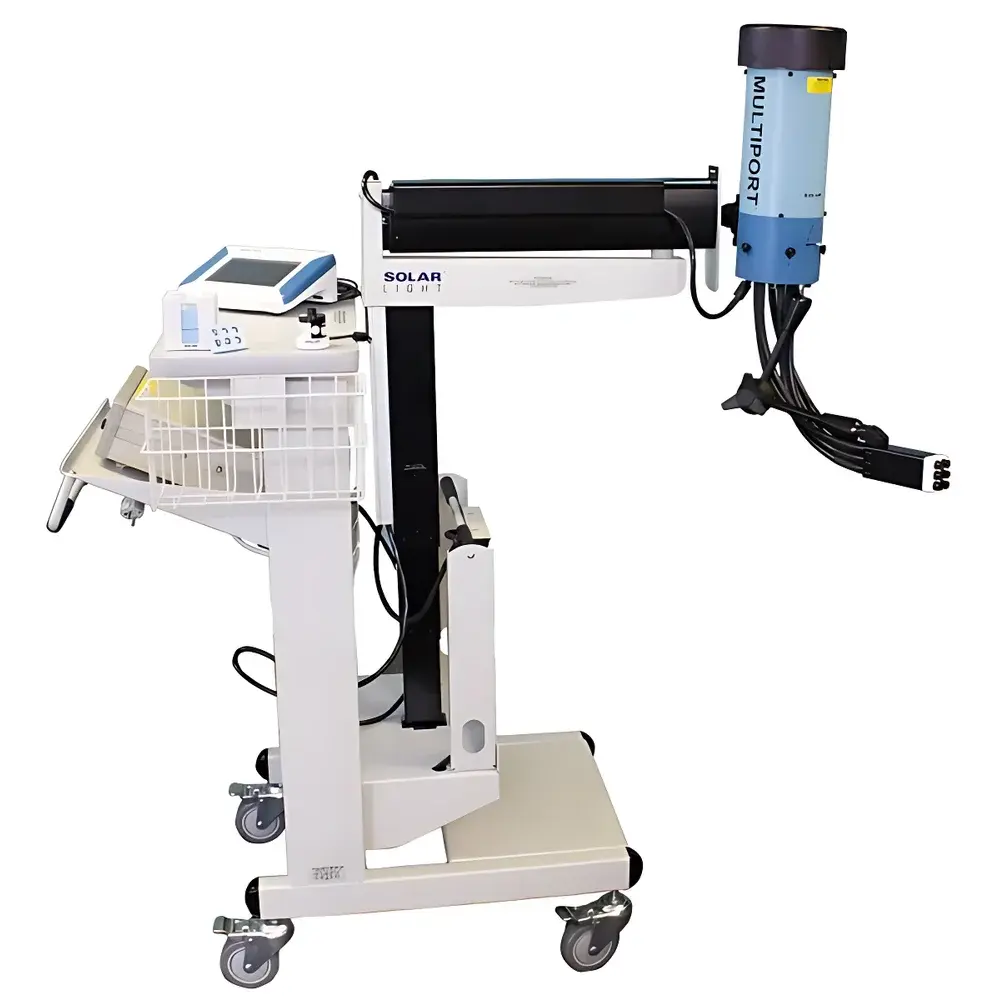
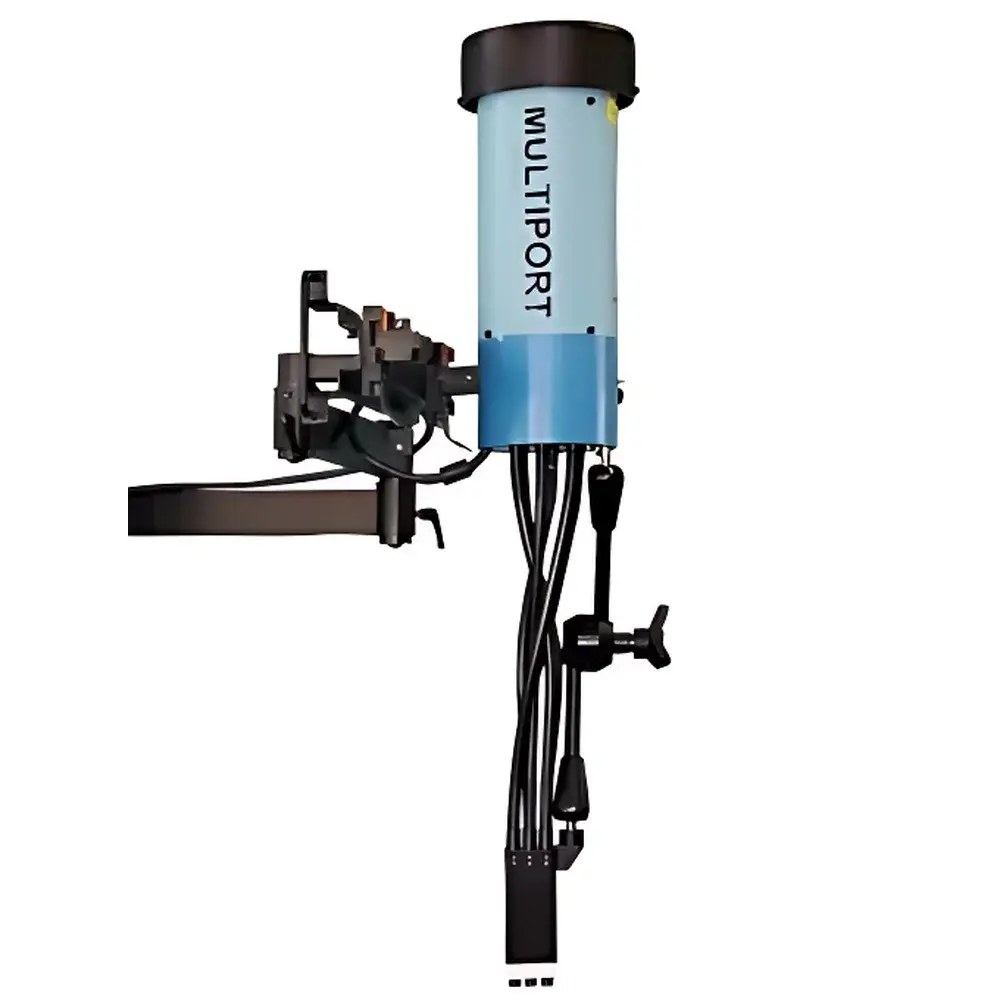
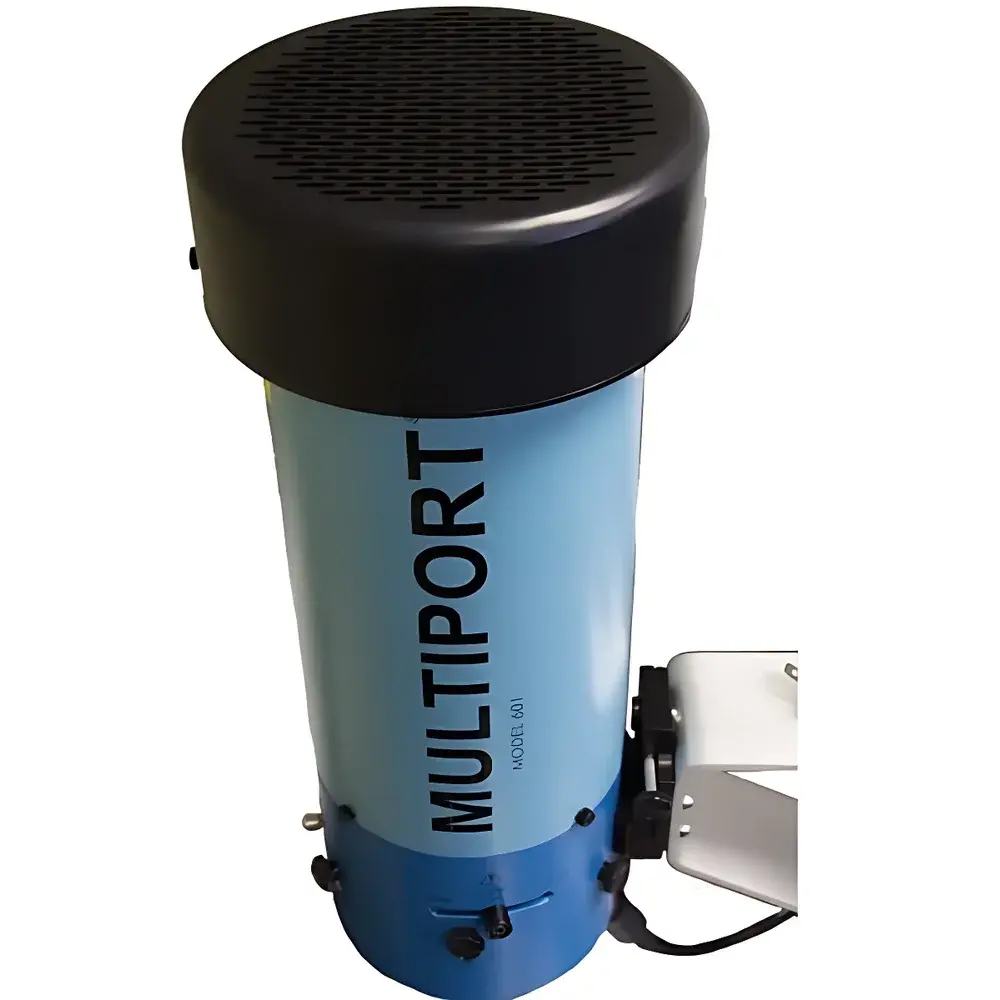
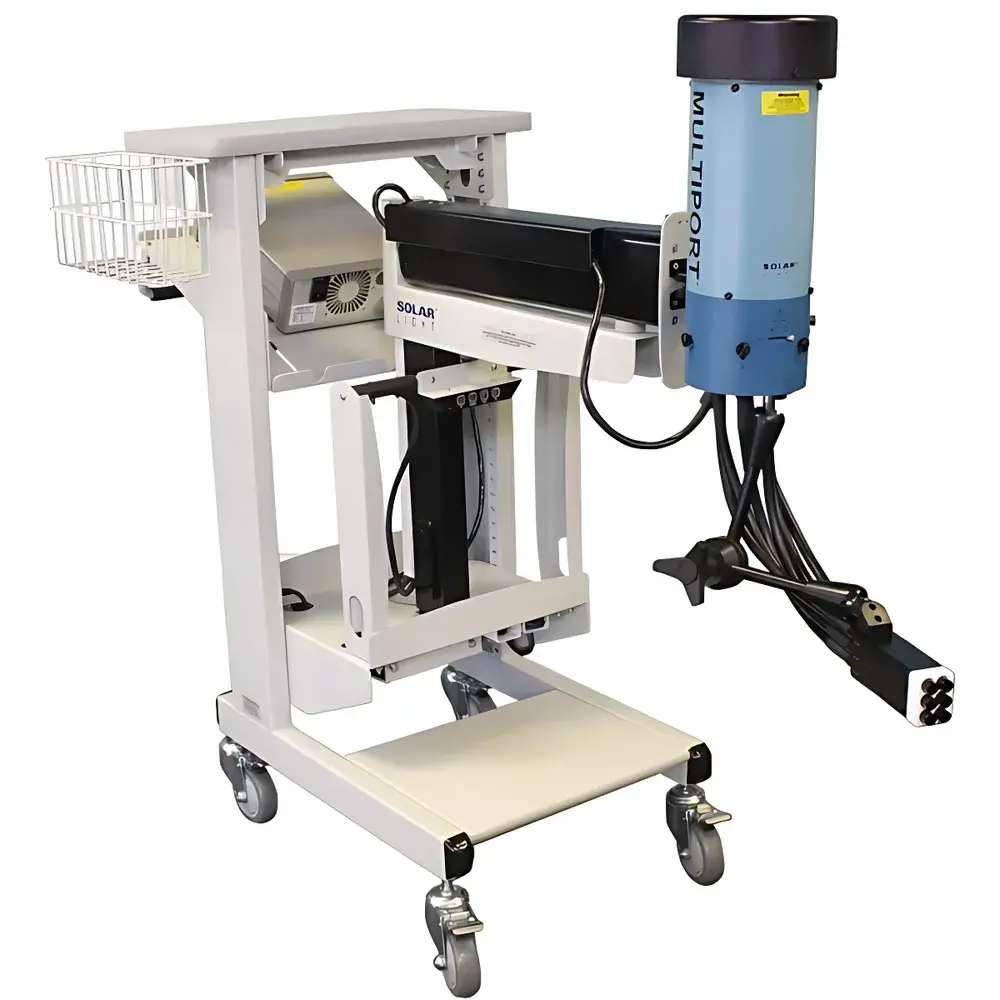
Solar Light SPF601-300 v2.5 Human-Subject UV Sun Protection Factor Analyzer
| Brand | Solar Light |
|---|---|
| Origin | USA |
| Model | 601-300 v2.5 |
| Output Channels | 6 independent 8 mm × 8 mm square ports |
| Spectral Range | 290–400 nm (UVA + UVB) |
| Max Irradiance | 4 MED/min |
| Uniformity | <±5% |
| Stability (after 15 min warm-up) | <±2% |
| Lamp | 300 W short-arc xenon |
| Cooling | Forced-air |
| Weight | 5 kg |
| Power Supply | 90–250 VAC, 4 A |
Overview
The Solar Light SPF601-300 v2.5 Human-Subject UV Sun Protection Factor Analyzer is a precision-engineered, multi-channel solar simulator designed for standardized in vivo SPF testing per ISO 24444:2019, FDA Guidance for Industry (2011), JCIA JIS T 0001:2020, and COLIPA/ISO 24442-compliant protocols. Unlike in vitro or spectrophotometric methods, this system enables quantitative, biologically relevant assessment of sunscreen efficacy by delivering controlled, spectrally accurate ultraviolet radiation to human skin under rigorously reproducible conditions. Its core optical architecture centers on a stabilized 300 W short-arc xenon lamp, coupled with quartz-coated collimating optics and six independently adjustable 8 mm × 8 mm output ports—each calibrated to replicate the solar UV spectrum (290–400 nm) with >90% spectral fidelity relative to extraterrestrial AM1.5G and terrestrial noon sun. The system operates at up to 4 MED/min irradiance—approximately 20× natural midday UV intensity—enabling rapid, statistically robust dose delivery across multiple test sites simultaneously.
Key Features
- Six independent, user-adjustable UV output ports (8 mm × 8 mm square), each with individual intensity control via front-panel knobs or integrated XPS-300 power supply interface
- Optical uniformity exceeding 98% across each output aperture, validated per ISO 24444 Annex C and NIST-traceable PMA2108/PMA2118 detector calibration
- Long-term irradiance stability of <±2% after 15-minute thermal stabilization, maintained under ±10% line voltage fluctuation
- Integrated locking jointed arm with micrometer-precision positioning, ensuring repeatable <3 mm working distance from port exit to epidermal surface
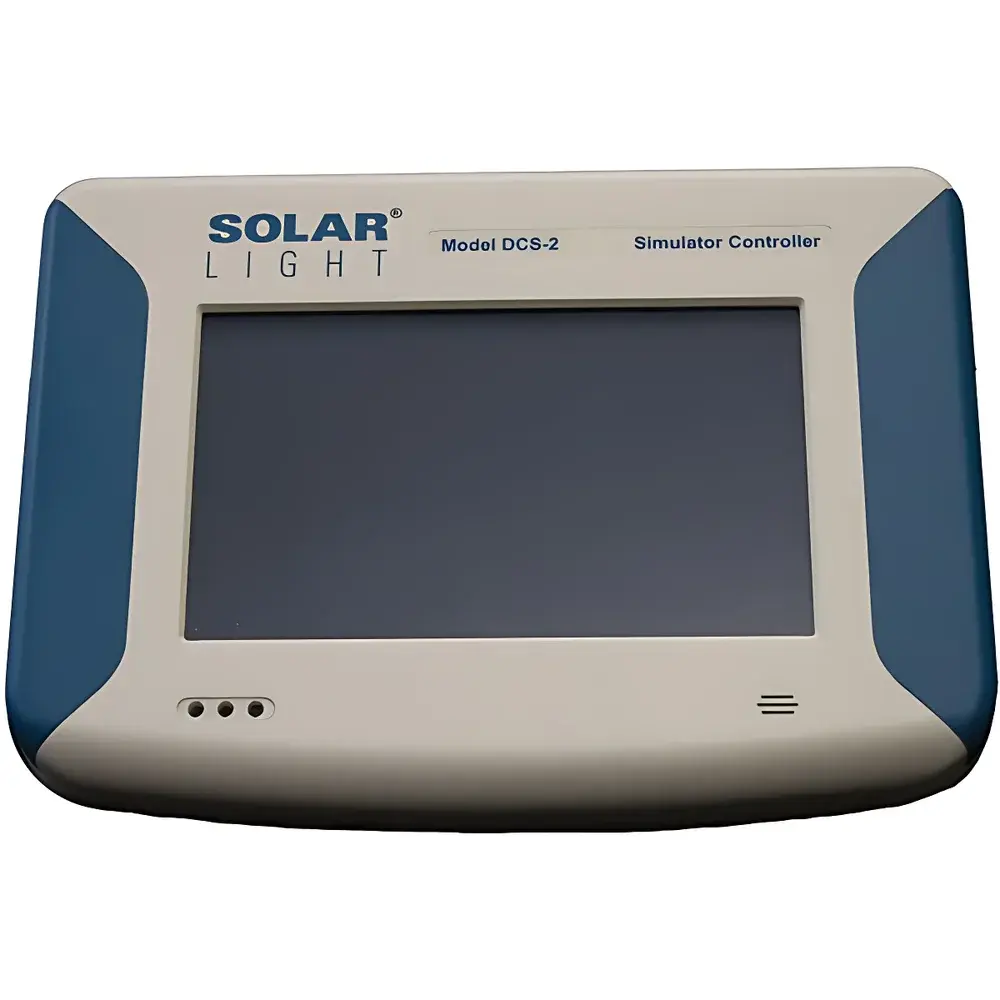
- Compliance-ready configuration: includes DCS-2 dosimetry controller, PMA2108 sunburn-weighted UV detector, PMA2118 UVA-specific detector, and full traceable validation report per ISO/IEC 17025 requirements
- Pre-configured, turnkey operation: factory-aligned optics, pre-installed safety interlocks, UV-blocking eyewear, and 100 hypoallergenic disposable skin contact pads included
Sample Compatibility & Compliance
The SPF601-300 v2.5 is purpose-built for human subject testing in accordance with internationally harmonized regulatory frameworks. It supports standard Fitzpatrick skin types I–IV under controlled ambient conditions (20–25°C, 40–60% RH) and is routinely deployed in GLP-compliant laboratories accredited to CNAS (China), UKAS (UK), and A2LA (USA). All optical output meets the spectral irradiance tolerances defined in ISO 24444:2019 Table 1 (290–400 nm), FDA’s 2011 Final Rule Appendix A, and JCIA JIS T 0001:2020 Annex B. The system’s dosimetric accuracy satisfies FDA 21 CFR Part 11 requirements when paired with the DCS-2 controller’s audit-trail-enabled software, enabling full electronic record retention for regulatory submissions and CMA/CNAS accreditation audits.
Software & Data Management
While the SPF601-300 v2.5 operates as a hardware-integrated analog system, its dosimetry workflow is fully supported by the DCS-2 Digital Control System—a standalone microprocessor-based controller with real-time MED tracking, time/dose-triggered shutter actuation, and programmable ramp profiles. The DCS-2 logs timestamped irradiance values, cumulative dose per port, operator ID, and environmental metadata (via optional external sensor inputs) into encrypted binary files compliant with ALCOA+ principles. Export formats include CSV and XML for integration into LIMS platforms. Full traceability is ensured through NIST-traceable calibration certificates for all detectors (PMA2108, PMA2118), documented annually per ISO/IEC 17025 Clause 6.6.
Applications
- In vivo SPF determination for sunscreen formulations (lotions, sprays, sticks) per ISO 24444 and FDA monograph requirements
- Photoprotection claims substantiation for cosmetic product registration in APAC, EU, and North America
- Method validation and proficiency testing for CMA-, CNAS-, and ILAC-accredited dermatological testing laboratories
- Photobiological safety assessment in dermatology and photodermatology research
- UV-induced erythema threshold mapping in clinical phototesting and photosensitivity disorder diagnosis
- Standard reference irradiation source for inter-laboratory comparison studies and round-robin trials
FAQ
Does the SPF601-300 v2.5 require annual recalibration?
Yes. Per ISO/IEC 17025 and manufacturer specifications, full optical and dosimetric recalibration—including spectral irradiance verification with PMA2108/PMA2118 detectors and uniformity mapping—is required annually or after 200 hours of lamp operation.
Can the system be used for in vitro SPF testing?
No. This instrument is engineered exclusively for human-subject (in vivo) SPF evaluation. In vitro methods require separate instrumentation such as UV transmittance analyzers compliant with ISO 24443.
Is the xenon lamp user-replaceable?
Yes. The 300 W short-arc xenon lamp is a field-serviceable component with documented replacement procedure and alignment protocol included in the technical manual.
What safety certifications does the system hold?
The analyzer complies with IEC 61000-6-3 (EMC), IEC 61000-6-4 (emissions), and IEC 62471 (photobiological safety classification: Risk Group 3 for UV exposure). Integrated hardware interlocks prevent unintended irradiation during setup.
How is dose uniformity verified across all six ports?
Uniformity is confirmed using a calibrated scanning photodiode array (e.g., Optronic OL 754) referenced to NIST SRM 2222, following the grid-point measurement method described in ISO 24444 Annex C. Each port is mapped at 1 mm resolution over the full 8 mm × 8 mm aperture.





