
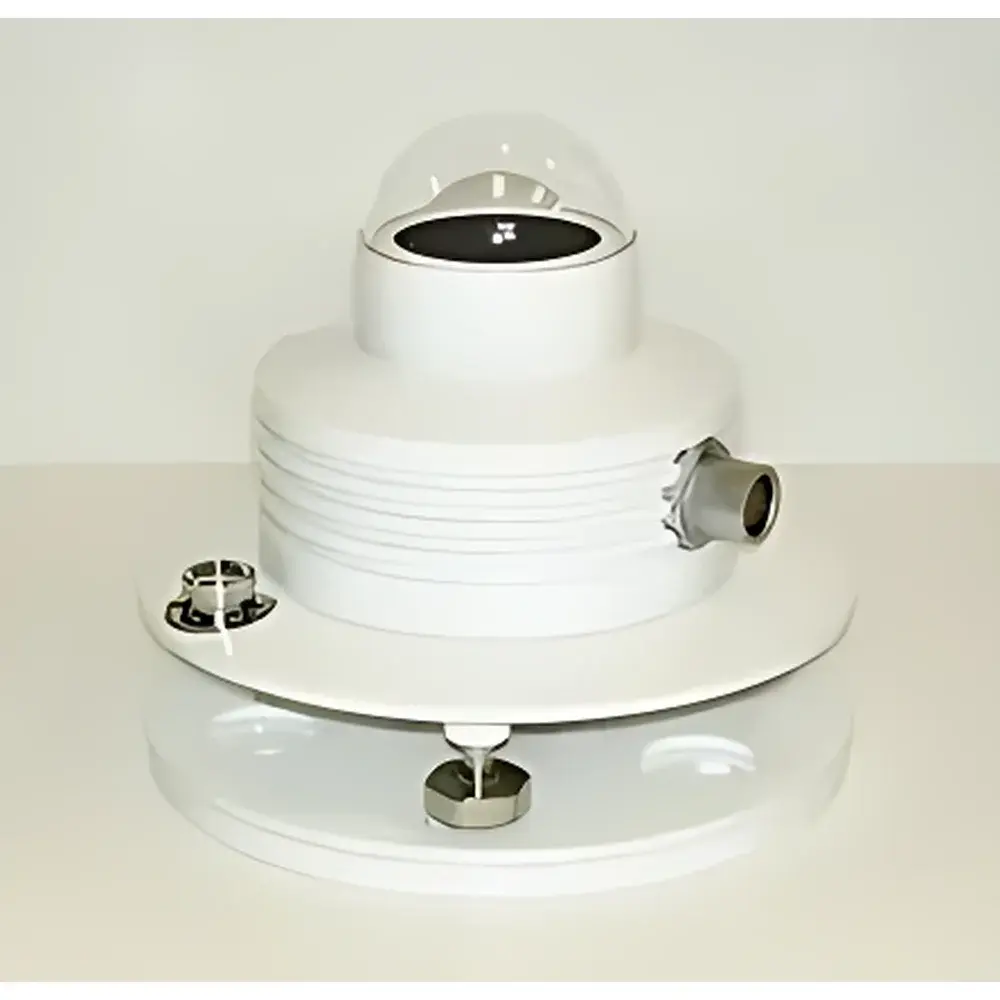
Solar Light Model 501 UVA/UVB Biologically Weighted Radiometer
| Brand | Solar Light |
|---|---|
| Origin | USA |
| Manufacturer Type | Authorized Distributor |
| Origin Category | Imported |
| Model | 501 |
| Pricing | Available Upon Request |
Overview
The Solar Light Model 501 UVA/UVB Biologically Weighted Radiometer is a meteorological-grade, NIST-traceably calibrated instrument engineered for high-accuracy, long-term field measurement of solar ultraviolet radiation across biologically relevant spectral bands. Designed in accordance with the CIE erythemal action spectrum (ISO 17166:2019 / CIE S 007/E:2020), the Model 501 integrates spectral filtering and cosine-corrected optical geometry to deliver radiometric data weighted for human skin response—enabling quantification of UV exposure risk in environmental, agricultural, marine, and public health applications. Its robust stainless-steel housing, IP68-rated submersibility (up to 5 m), and integrated thermoelectric temperature stabilization ensure stable performance under extreme ambient conditions (−40 °C to +50 °C), making it suitable for unattended deployment at weather stations, oceanographic buoys, alpine observatories, and ecological monitoring sites.
Key Features
- NIST-traceable calibration certified per ISO/IEC 17025; calibration certificate provided with each unit
- Thermally stabilized photodetector assembly with active temperature control (±0.1 °C setpoint stability), minimizing thermal drift in irradiance output
- Cosine-corrected optical diffuser achieving <5% deviation from ideal Lambertian response up to 80° incidence angle
- Dual-band capability: Standard UVA (320–400 nm) configuration; optional UVB (280–320 nm) or erythemally weighted (250–400 nm) variants available
- Integrated analog voltage output (0–2.5 V DC) linearly proportional to irradiance (mW/cm²), compatible with SCADA, dataloggers, and PLC systems
- Digital recording system includes microprocessor-controlled data logger with LCD interface, non-volatile memory, and dual-detector support
- Onboard temperature compensation algorithm compliant with ASTM E892–22 requirements for UV sensor thermal correction
- RS232 serial interface (300–9600 bps user-selectable) supporting remote configuration, real-time data streaming, and firmware updates
Sample Compatibility & Compliance
The Model 501 is optimized for continuous measurement of broadband solar UV irradiance under natural atmospheric conditions—including variable cloud cover, aerosol loading, and ozone column fluctuations. It complies with international standards governing UV monitoring infrastructure, including WMO Guide to Meteorological Instruments and Methods of Observation (CIMO Guide, Chapter 12), ISO 17166:2019 (Erythema reference action spectrum), and IEC 61724-1:2021 (Photovoltaic system performance monitoring). Its spectral responsivity closely matches the CIE erythemal action curve (RAF >1 at 30° solar zenith angle, 0.27 cm ozone column), ensuring physiologically meaningful dose integration. The instrument meets IP68 ingress protection rating (IEC 60529) and MIL-STD-810G environmental durability criteria for shock, vibration, and humidity resistance.
Software & Data Management
The Model 501 digital system employs embedded firmware with GLP-aligned data integrity protocols: all measurements are timestamped, sensor temperature-stamped, and stored in battery-backed non-volatile memory (EEPROM). The internal logger supports configurable integration periods (1 minute to 1 hour), retains up to 6 months of hourly-dose records for two simultaneous detectors, and applies automatic thermal correction when ambient temperature exceeds operational limits. Data export is supported via RS232 to Windows/Linux-based acquisition software (Solar Light UVSoft v5.x), which provides spectral weighting validation, dose summation (J/m²), trend analysis, and CSV/Excel-compatible reporting. Audit trails, user-access logs, and electronic signatures align with FDA 21 CFR Part 11 requirements for regulated research environments.
Applications
- Long-term UV climatology studies at national weather services and WMO Global Atmosphere Watch (GAW) stations
- Marine ecosystem monitoring: quantifying UV-B impact on phytoplankton productivity, coral bleaching thresholds, and larval development
- Agricultural photobiology: assessing UV stress effects on crop physiology, flavonoid synthesis, and pest resistance mechanisms
- Public health surveillance: generating real-time UV Index forecasts for media dissemination and sun-safety education programs
- Validation of satellite-derived UV products (e.g., NASA OMI, ESA TROPOMI) through ground-truthing campaigns
- Calibration transfer and intercomparison studies among UV monitoring networks (e.g., USDA UV-B Monitoring and Research Program)
FAQ
What spectral band does the standard Model 501 measure?
The base configuration measures UVA radiation (320–400 nm) with spectral weighting aligned to the CIE erythemal action spectrum. UVB (280–320 nm) and full-erythemal (250–400 nm) variants are available upon request.
Is the instrument suitable for underwater deployment?
Yes—the detector head is rated IP68 and certified for continuous operation at depths up to 5 meters (15 feet) in freshwater or seawater.
How is calibration traceability maintained over time?
Each unit ships with a NIST-traceable calibration certificate valid for 12 months. Recalibration services are offered annually by Solar Light’s ISO/IEC 17025-accredited laboratory, including spectral responsivity verification and cosine error characterization.
Can the Model 501 be integrated into existing SCADA or IoT infrastructure?
Yes—its 0–2.5 V analog output and RS232 digital interface support seamless integration with industrial controllers, cloud-based telemetry platforms (e.g., AWS IoT Core, Azure IoT Hub), and custom Python/Matlab acquisition scripts.
What power options are supported for remote installations?
The data logger accepts universal AC input (90–250 VAC, 50–60 Hz) or 12 VDC, enabling compatibility with solar-charged battery banks and off-grid power systems.
Related Products







