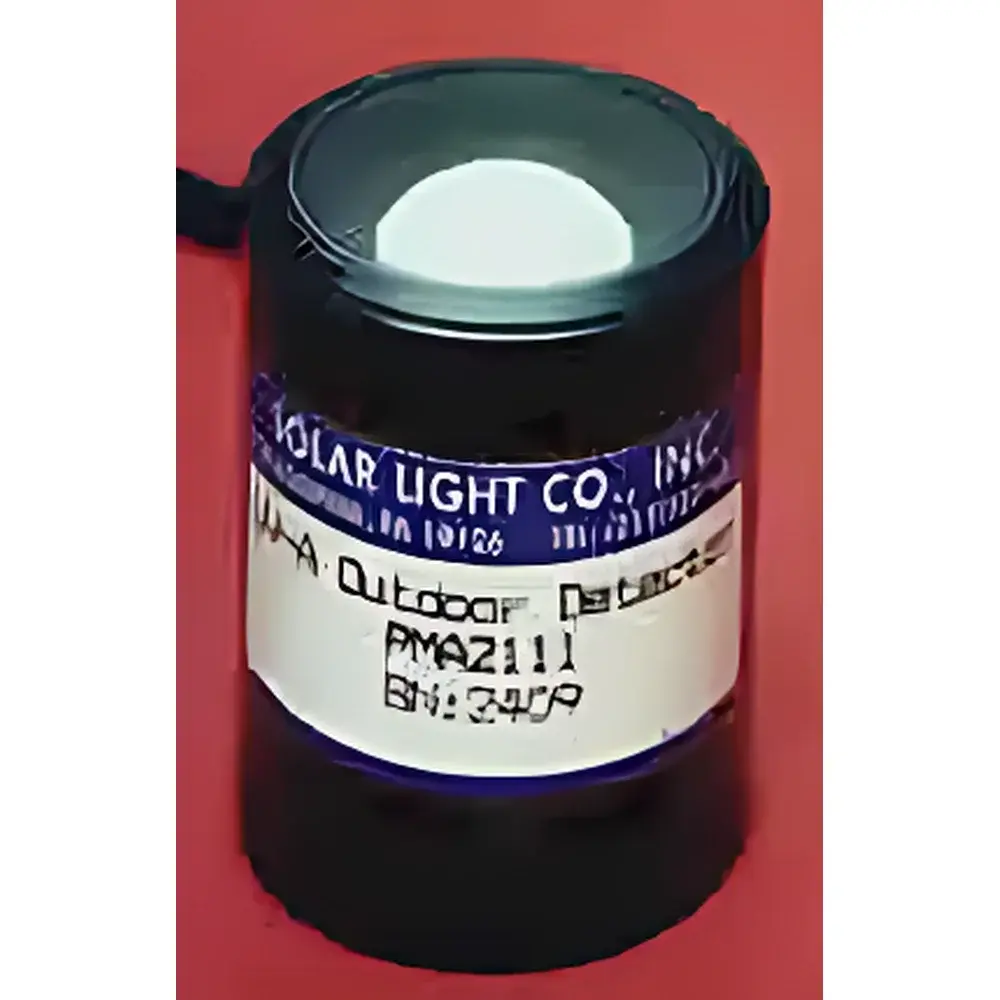
Solar Light PMA2111 UVA Outdoor Radiometer
| Brand | Solar Light |
|---|---|
| Origin | USA |
| Model | PMA2111 |
| Spectral Range | 320–400 nm |
| Cosine Response Error | ≤5% for incidence angles <60° |
| Full-Scale Irradiance Range | 200 mW/cm² (2000 W/m²) |
| Resolution | 0.001 mW/cm² / 0.01 W/m² |
| Operating Temperature | −40 to +50 °C |
| Temperature Coefficient | <0.1 %/°C |
| Cable Length | 50 ft (15.2 m) |
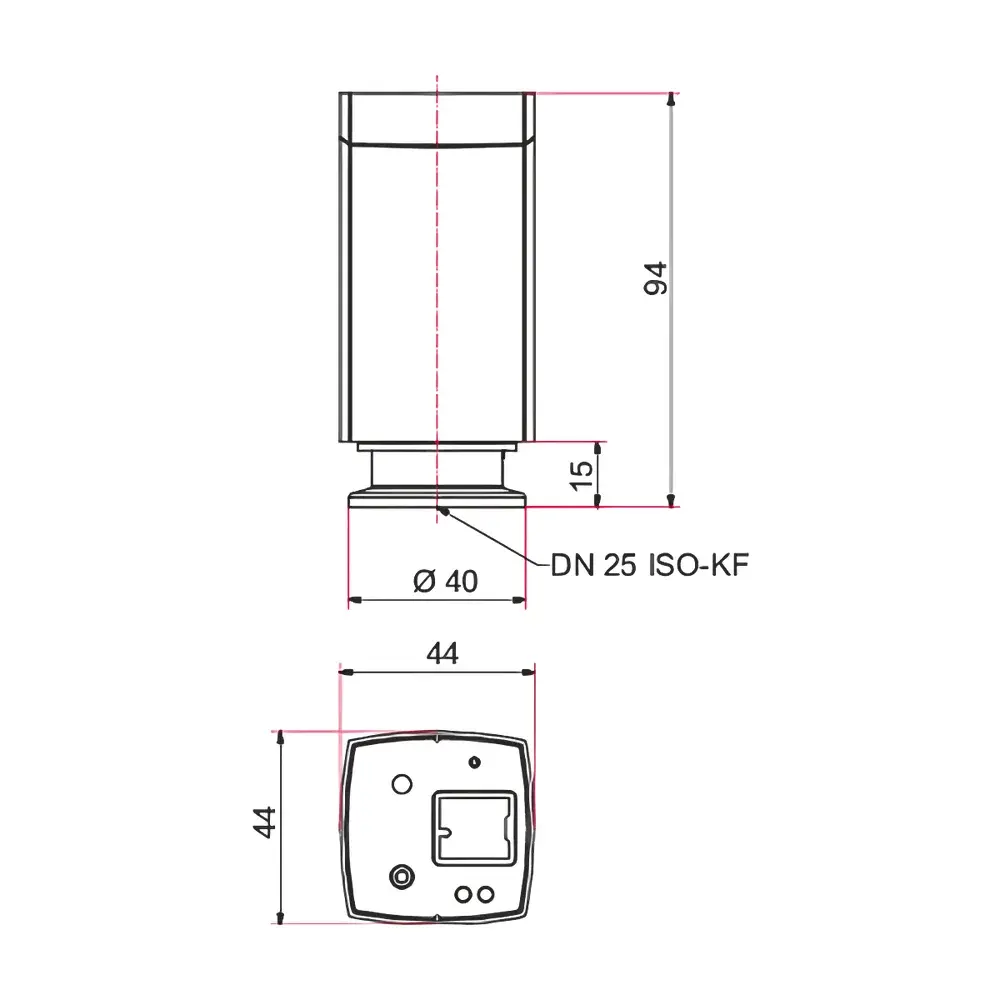
| Diameter | 40.6 mm |
| Height | 45.8 mm |
| Weight | 200 g |
| Calibration | NIST-traceable |
Overview
The Solar Light PMA2111 UVA Outdoor Radiometer is a precision photodetector engineered for quantitative measurement of ultraviolet-A (UVA) irradiance under real-world environmental conditions. Based on silicon carbide (SiC) or UV-enhanced silicon photodiode technology—optimized for spectral responsivity across 320–400 nm—the instrument operates on the fundamental principle of photoelectric conversion, where incident UVA photons generate a proportional photocurrent linearly traceable to absolute irradiance units. Its hermetically sealed, anodized aluminum housing provides IP67-level ingress protection against dust and water immersion, enabling continuous deployment in unsheltered outdoor locations—including rooftop solar monitoring stations, UV curing validation sites, and atmospheric research platforms. Unlike broadband UV sensors with uncorrected spectral drift, the PMA2111 integrates factory-applied cosine correction via a diffuser dome engineered to minimize angular response deviation (<5% up to ±60°), ensuring metrologically valid measurements across variable solar zenith angles and non-normal illumination geometries.
Key Features
- Optimized UVA spectral responsivity (320–400 nm) with minimal out-of-band sensitivity to UVB or visible light
- Hermetically sealed, corrosion-resistant enclosure rated for sustained operation from −40 °C to +50 °C
- Integrated cosine-corrected optical diffuser achieving <5% angular response error within ±60° field of view
- NIST-traceable calibration certificate supplied with each unit, including uncertainty budget per ISO/IEC 17025 guidelines
- Dual-unit display capability: simultaneous readout in mW/cm² and W/m² with resolution of 0.001 mW/cm² / 0.01 W/m²
- Low temperature coefficient (<0.1 %/°C) minimizing thermal drift during diurnal ambient fluctuations
- 15.2-meter low-noise coaxial cable with strain relief and UV-stabilized jacket for long-term field integrity
Sample Compatibility & Compliance
The PMA2111 is compatible with all common UVA-emitting sources used in industrial, environmental, and biomedical applications—including low-pressure fluorescent lamps (e.g., F20T12/UVA), medium-pressure mercury vapor lamps, metal halide arc lamps, xenon-arc solar simulators, and natural daylight. It complies with ASTM E772–22 (Standard Terminology of Solar Energy) and supports adherence to ISO 17025:2017 requirements when integrated into accredited laboratory quality systems. While not intrinsically certified for hazardous locations, its passive design and absence of internal electronics render it suitable for installation in Class I, Division 2 environments when mounted per NEC Article 501. The detector’s calibration is maintained per Solar Light’s documented re-calibration interval of 12 months—consistent with GLP-recommended practices for radiometric instrumentation used in regulatory-compliant UV exposure studies.
Software & Data Management
The PMA2111 functions as an analog output sensor and is designed for integration with third-party data acquisition systems (e.g., Campbell Scientific CR1000X, National Instruments DAQmx platforms) or Solar Light’s proprietary PMA2100 series meters. Its 0–2 V or 4–20 mA output signal enables time-synchronized logging at user-defined intervals (1 Hz to 1 kHz sampling supported). When paired with validated software such as LoggerNet or LabVIEW-based custom modules, the system supports audit-trail-enabled data capture compliant with FDA 21 CFR Part 11 requirements—including electronic signatures, metadata stamping (timestamp, sensor ID, calibration expiry), and immutable storage protocols. Raw voltage outputs are convertible to irradiance using the unit-specific calibration factor (provided in µV/(mW/cm²)) published on the NIST-traceable certificate.
Applications
- Outdoor UV index monitoring and solar spectral irradiance validation in meteorological networks
- Process control and dose verification in UVA-curable ink, coating, and adhesive manufacturing lines
- Photostability testing per ICH Q1B and ISO 11341 for pharmaceutical packaging and polymer degradation studies
- Calibration transfer and field verification of reference-grade spectroradiometers
- UV lamp aging assessment in disinfection systems utilizing UVA-emitting LEDs or amalgam lamps
- Ecological UV exposure modeling for plant photomorphogenesis and coral bleaching research
FAQ
Is the PMA2111 suitable for underwater UVA measurements?
No. Although sealed against rain and humidity, the unit is not rated for submersion and lacks pressure compensation for aquatic deployment.
Can the PMA2111 be used with a handheld meter not manufactured by Solar Light?
Yes, provided the meter accepts 0–2 V analog input and supports configurable scaling with known calibration factors.
What is the recommended recalibration frequency?
Annual recalibration is recommended; extended intervals require documented risk assessment per ISO/IEC 17025 Clause 7.8.3.
Does the detector require zeroing or dark-current compensation before use?
No. The sensor exhibits negligible dark current at ambient temperatures and is factory-zeroed; no user adjustment is necessary.
How is cosine error characterized and verified?
Cosine response is measured per CIE S 023/E-2013 using a collimated beam at discrete incidence angles from 0° to 80°, with deviation reported in the calibration certificate.