
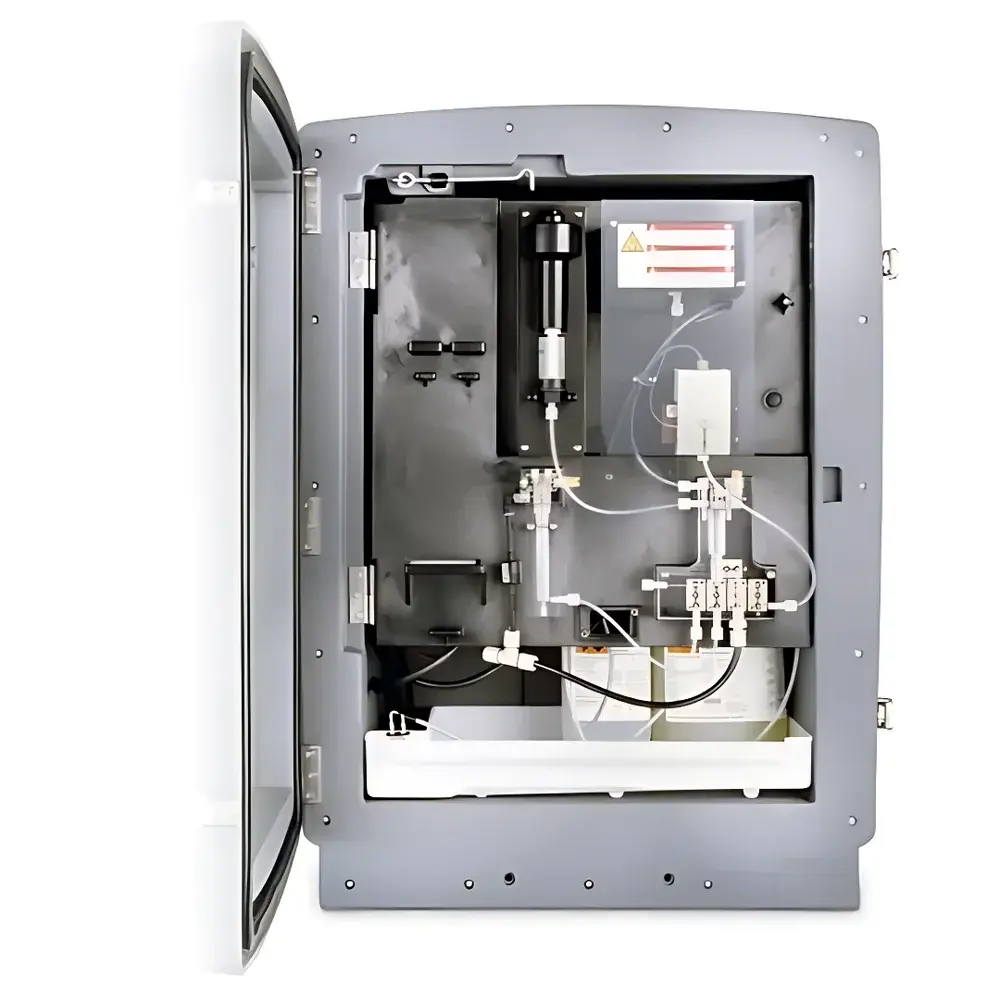
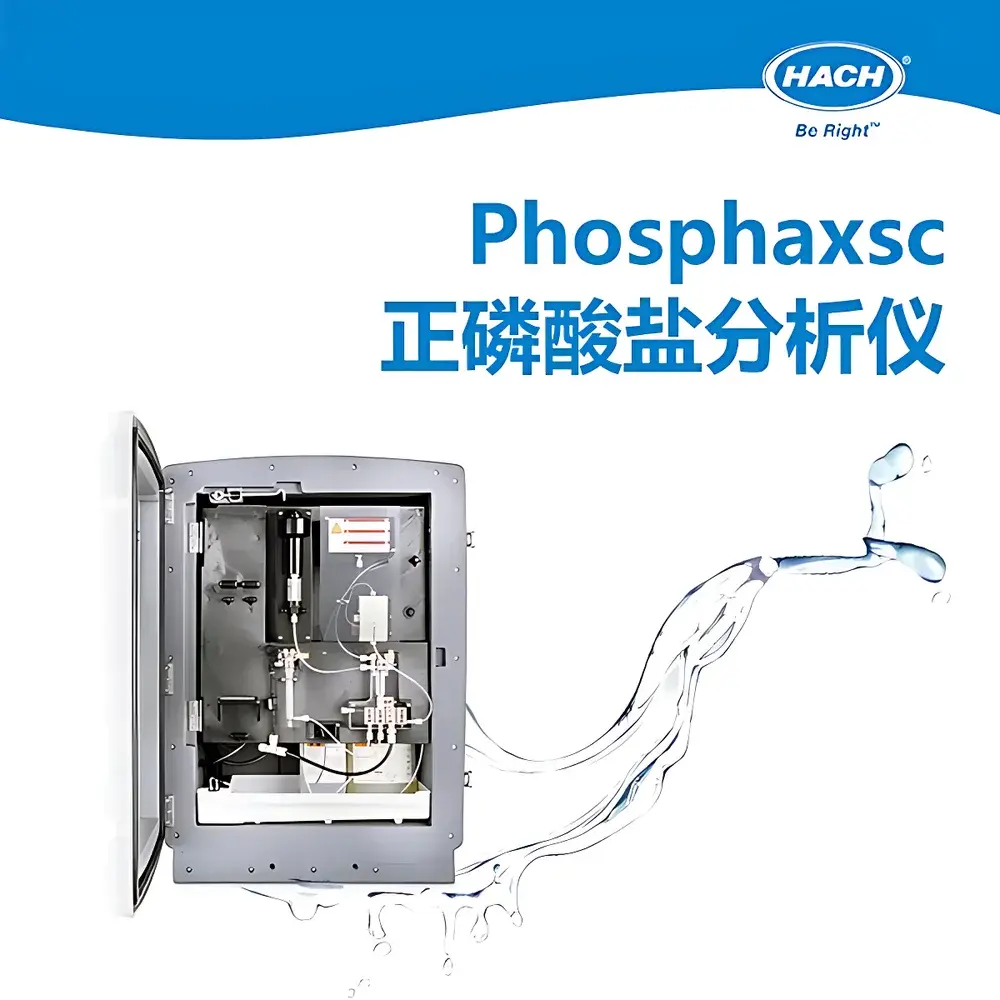
HACH Phosphax sc Orthophosphate Analyzer
| Brand | HACH |
|---|---|
| Origin | Imported |
| Manufacturer Type | Manufacturer |
| Model | Phosphax sc |
| Instrument Type | Online Analyzer |
| Measurement Principle | Photometric Colorimetry (Vanadomolybdate Yellow Method) |
| Range | 0.05–15.0 mg/L PO₄–P (Range 1) |
| Detection Limit | 0.05 mg/L PO₄–P (Range 1) |
| Installation | In-situ or flow-through configuration |
| Controller Interface | Digital, plug-and-play sc-series controller |
| Optional Pre-treatment | Filterprobe sc |
Overview
The HACH Phosphax sc Orthophosphate Analyzer is an industrial-grade online photometric analyzer engineered for continuous, real-time monitoring of orthophosphate (PO₄–P) in municipal and industrial wastewater streams. It operates on the standardized vanadomolybdate yellow colorimetric method—fully compliant with EPA Method 365.4, ISO 6878, and ASTM D515-89—ensuring regulatory traceability and analytical consistency across operational environments. Designed specifically for integration into biological nutrient removal (BNR) and tertiary phosphorus removal processes, the Phosphax sc delivers stable, interference-resistant measurements under variable pH, turbidity, and suspended solids conditions typical of activated sludge effluents, membrane bioreactor (MBR) filtrates, and final disinfection basins. Its robust optical path design, temperature-compensated LED light source, and dual-range auto-switching capability enable reliable quantification across both low-concentration polishing stages (e.g., <0.1 mg/L PO₄–P) and high-load influent monitoring points.
Key Features
- Two programmable measurement ranges: 0.05–15.0 mg/L PO₄–P (low range) and 1.00–50.0 mg/L PO₄–P (high range), with automatic range selection based on sample concentration
- Detection limit of 0.05 mg/L PO₄–P (as phosphorus) in low-range mode—validated per IUPAC detection limit protocols
- Integrated digital sc-series controller with intuitive web-based interface, supporting Modbus TCP, Profibus DP, and 4–20 mA analog output
- Minimal reagent consumption: ≤2.5 mL per analysis cycle; reagent kits certified for 30 days stability at ambient storage conditions
- Self-diagnostic system with real-time status reporting for lamp intensity, cuvette cleanliness, reagent depletion, and flow integrity
- Modular architecture enabling field-replaceable optical modules and fluidic manifolds without recalibration
- IP66-rated enclosure with NEMA 4X compatibility for outdoor or wet-process-area deployment
Sample Compatibility & Compliance
The Phosphax sc accepts raw or filtered liquid samples within a temperature range of 5–40 °C and conductivity up to 20 mS/cm. It is compatible with influent, mixed liquor, secondary clarifier effluent, and tertiary filtration streams—provided particulate load does not exceed 100 mg/L TSS without optional pre-filtration. When paired with the HACH Filterprobe sc, the system achieves continuous particle removal down to 10 µm, extending maintenance intervals and preserving optical path integrity. Regulatory compliance includes adherence to EN 14181 (QAL1/QAL2), US EPA Effluent Guidelines for Phosphorus Discharge Monitoring, and EU Urban Wastewater Treatment Directive (91/271/EEC) Annex I requirements. Data logging meets GLP/GMP audit-trail standards with time-stamped event records, user-access logs, and electronic signature support per FDA 21 CFR Part 11 when configured with secure authentication.
Software & Data Management
The embedded sc Controller firmware supports HACH’s Unified Communications Protocol (UCP), enabling seamless integration with SCADA, DCS, and cloud-based asset management platforms such as HACH Asset Insight or third-party IIoT infrastructures. All measurement data—including raw absorbance values, calibration history, diagnostic flags, and QC check results—are timestamped and stored locally for ≥90 days. Remote configuration, firmware updates, and alarm threshold adjustments are performed via HTTPS-secured web interface or HACH Link desktop software. Audit trails record every parameter change, calibration event, and manual override with operator ID and UTC timestamp—ensuring full data provenance for regulatory submissions and internal QA reviews.
Applications
- Real-time feedback control of metal salt dosing (e.g., FeCl₃, Al₂(SO₄)₃) in tertiary phosphorus precipitation systems
- Performance verification of enhanced biological phosphorus removal (EBPR) processes in A²/O or UCT configurations
- Compliance monitoring at NPDES discharge points and consent decree reporting endpoints
- Trend analysis of phosphorus mass balance across primary, secondary, and tertiary treatment units
- Early detection of phosphorus breakthrough in constructed wetlands or phosphorus-removing filter media
- Supporting ISO 5667-3 sampling program validation through synchronized grab-sample correlation studies
FAQ
What sample pretreatment is required for accurate operation?
No pretreatment is mandatory for clarified or low-turbidity effluents (<20 NTU). For raw or high-solids streams, integration with the Filterprobe sc is recommended to maintain optical clarity and extend service intervals.
Does the Phosphax sc comply with US EPA Method 365.4?
Yes—the instrument implements the vanadomolybdate yellow reaction under strictly controlled reagent stoichiometry, reaction time (120 s), and temperature (37 °C ± 0.5 °C), satisfying all critical parameters defined in Method 365.4.
Can the analyzer be calibrated using NIST-traceable phosphate standards?
Absolutely. The system accepts certified reference materials (CRMs) from NIST, LGC, or HACH’s own traceable standard solutions (e.g., PO₄–P Standard Set, Cat. No. 2629600), with calibration verification logs exportable in CSV format.
How frequently does the system require scheduled maintenance?
With standard operation and clean influent, routine maintenance (reagent replacement, optical window cleaning, and leak check) is required every 30 days; extended-interval kits support up to 90-day cycles when paired with Filterprobe sc and low-conductivity reagents.
Is remote diagnostics supported over cellular or satellite networks?
Yes—when deployed with HACH’s sc Cellular Gateway or third-party LTE/5G edge routers, full remote access—including live diagnostics, historical trend review, and firmware update—can be established without on-site IT infrastructure.







