
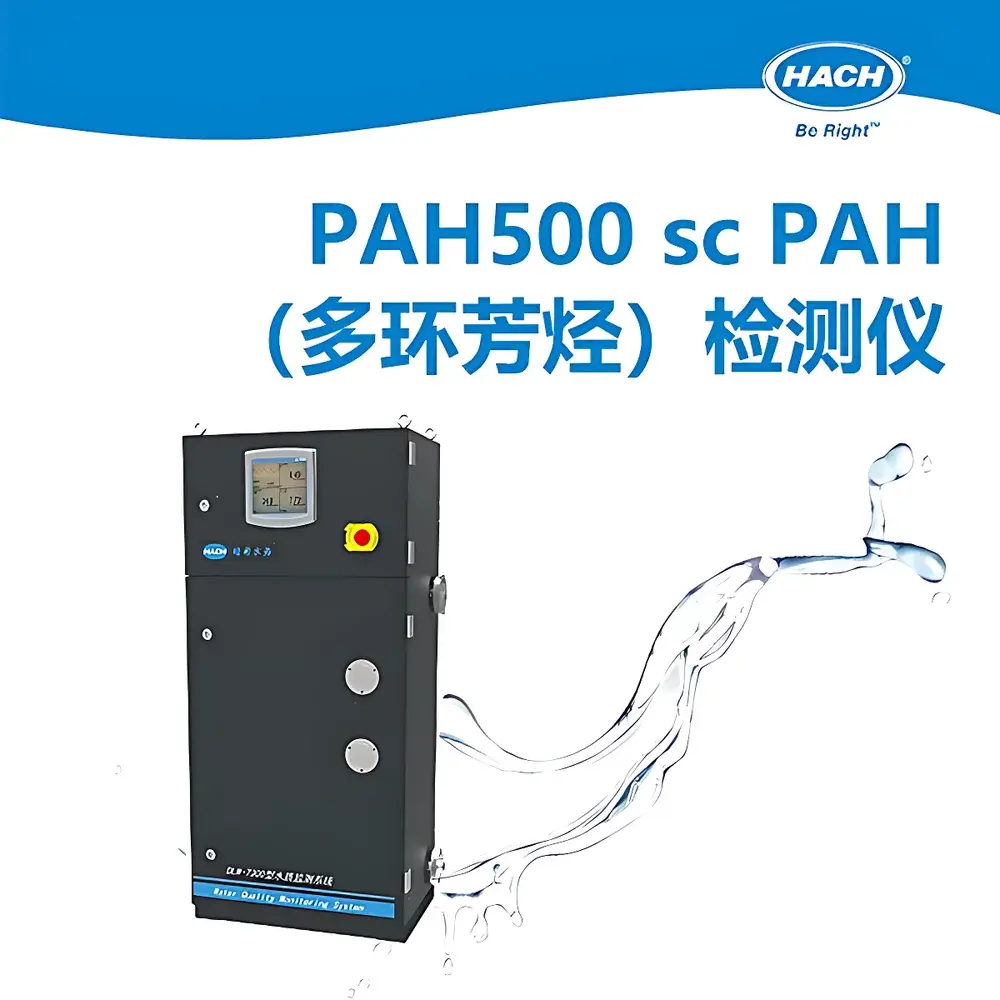
HACH PAH500 sc Online Polycyclic Aromatic Hydrocarbons (PAH) Analyzer for Water
| Brand | HACH |
|---|---|
| Origin | Imported |
| Manufacturer | HACH Company |
| Model Numbers | LXV541.99.1001H, LXV541.99.2001H |
| Instrument Type | Online Analyzer |
| Measurement Principle | Ultraviolet Fluorescence (UVF) |
| Measurement Range | 0–900 µg/L as PAH-PHE (Phenanthrene Equivalent) |
| Limit of Detection (LOD) | 3 µg/L PAH |
| Accuracy | ±5% or ±5 µg/L (whichever is greater) under constant temperature and flow conditions |
| Excitation Wavelength | 370 nm |
| Measurement Interval | Every 20 seconds |
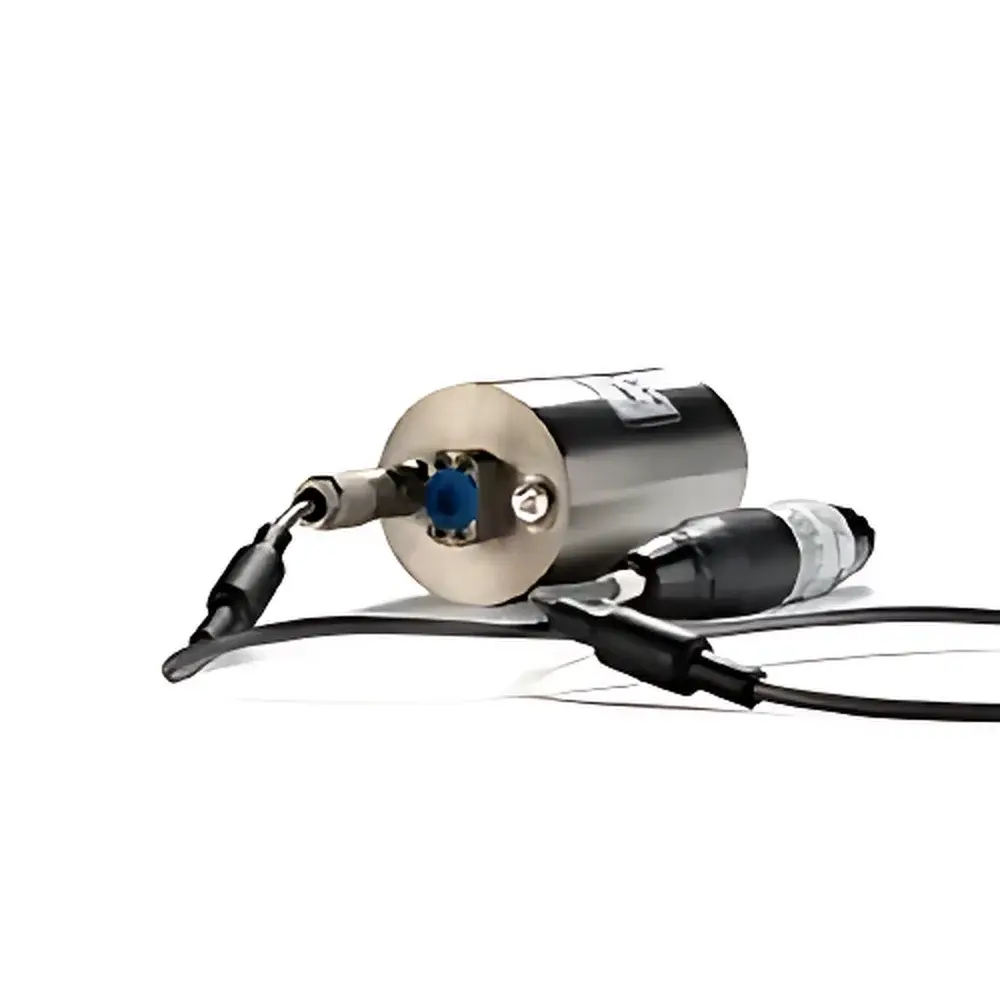
| Material | Titanium Alloy Housing |
| Turbidity Compensation | Yes |
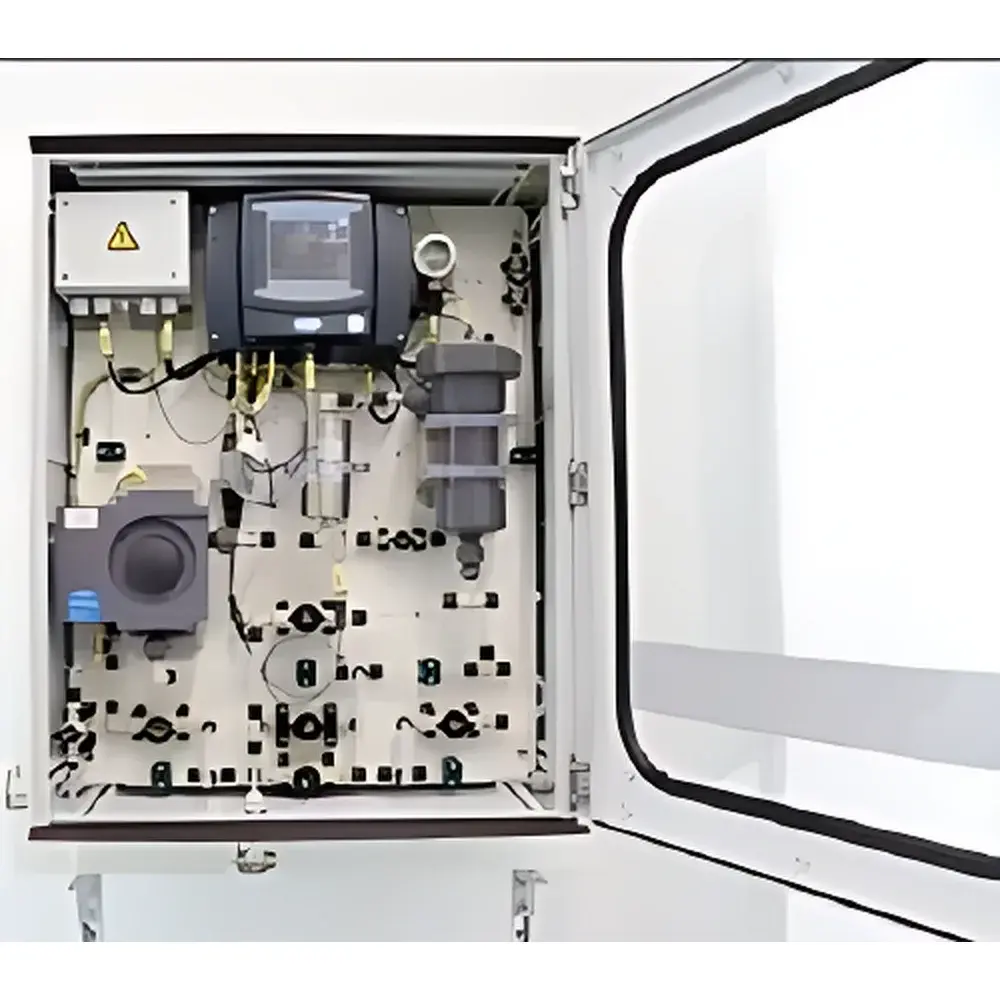
| Controller Integration | Compatible with HACH sc Series Controllers |
Overview
The HACH PAH500 sc is a dedicated online analyzer engineered for continuous, real-time quantification of polycyclic aromatic hydrocarbons (PAHs) in aqueous matrices—primarily as an ultra-sensitive surrogate indicator for petroleum-derived hydrocarbon contamination. Unlike conventional oil-in-water measurement techniques based on infrared absorption or light scattering, the PAH500 sc leverages the intrinsic molecular fluorescence of PAH compounds. Upon excitation at 370 nm via a stable UV LED source, PAH molecules emit characteristic fluorescence in the visible range; the intensity of this emission is linearly proportional to analyte concentration over the operational range (0–900 µg/L as phenanthrene equivalent). This ultraviolet fluorescence (UVF) methodology delivers significantly higher selectivity and sensitivity compared to broadband absorbance methods—enabling reliable detection of trace-level PAH contamination down to 3 µg/L, even in complex, high-salinity, or turbid water streams such as ballast water, bilge discharge, produced water, or industrial effluents.
Key Features
- Titanium alloy wetted components ensure long-term corrosion resistance in seawater, brackish water, and aggressive industrial wastewater—eliminating drift from chloride-induced sensor degradation.
- Integrated turbidity compensation algorithm corrects for optical interference caused by suspended solids, ensuring robust performance across variable particulate loads without manual recalibration.
- Fixed-wavelength UV excitation at 370 nm optimizes signal-to-noise ratio for key low-molecular-weight PAHs (e.g., naphthalene, phenanthrene, anthracene), enhancing specificity for petroleum hydrocarbon fingerprinting.
- True online operation with a 20-second measurement cycle supports rapid process feedback and early-warning capability for oil breakthrough events in monitoring applications.
- Designed for seamless integration into HACH sc platform architecture—supporting Modbus RTU/ASCII, 4–20 mA analog output, and digital communication via Ethernet/IP or Profibus DP (with appropriate sc controller firmware).
Sample Compatibility & Compliance
The PAH500 sc is validated for direct analysis of unfiltered, unpreserved grab or continuous flow samples across pH 5–9 and conductivity up to 50 mS/cm. Its titanium construction and sealed optical path meet ISO 14687-2 requirements for marine environmental monitoring equipment. While not a certified method per se, its UVF-based quantification aligns with the analytical rationale underlying ASTM D7622 (Standard Test Method for Determination of Polycyclic Aromatic Hydrocarbons in Water by Fluorescence Spectrophotometry) and supports compliance with MARPOL Annex I discharge limits when deployed as part of a verified oil-in-water monitoring system. Data integrity is reinforced through time-stamped measurements, internal diagnostic logging, and audit-ready event history—all accessible via sc controller interfaces compliant with GLP data handling expectations.
Software & Data Management
When connected to a HACH sc200, sc1000, or sc300 controller, the PAH500 sc enables multi-point calibration (zero, span, and optional mid-range verification), automatic drift correction, and configurable alarm thresholds with relay outputs. All measurement data—including raw fluorescence intensity, compensated PAH concentration, temperature, flow status, and instrument health flags—are stored locally with timestamp resolution to 1 second. Export options include CSV via USB, SD card, or network transfer. The controller’s embedded web interface supports remote configuration, historical trend visualization (up to 30 days of 1-minute averaged data), and export-compatible reports aligned with internal QA/QC documentation standards. Audit trails record all parameter changes, calibration events, and maintenance actions—facilitating regulatory readiness under ISO/IEC 17025 or EPA Method 1664-aligned quality systems.
Applications
- Maritime: Continuous monitoring of shipboard bilge water and ballast water treatment system effluent to verify compliance with IMO MEPC.107(49) and USCG Type Approval requirements.
- O&G: Produced water surveillance in offshore platforms and onshore separation trains to detect upstream hydrocarbon carryover prior to reinjection or discharge.
- Industrial Wastewater: Real-time tracking of PAH leakage from metalworking fluids, lubricant storage areas, or refinery cooling circuits.
- Municipal Infrastructure: Early detection of illicit hydrocarbon discharges into combined sewer overflows or stormwater retention basins.
- Environmental Remediation: Long-term groundwater plume monitoring at brownfield sites where PAHs serve as conservative tracers for residual petroleum contamination.
FAQ
Does the PAH500 sc measure total petroleum hydrocarbons (TPH) or only PAHs?
It specifically quantifies fluorescent PAH compounds—primarily 2–4 ring structures such as naphthalene, phenanthrene, and fluoranthene—as a highly selective proxy for mineral oil contamination. It does not report TPH by GC-FID or IR methods.
Can it be used in freshwater lakes or rivers?
Yes—though its primary design intent is for regulated discharge points and industrial process streams. For ambient surface water monitoring, method detection limits and matrix interferences should be evaluated per site-specific validation protocols.
Is field calibration required?
Zero and span calibrations are performed using certified PAH standard solutions (e.g., phenanthrene in methanol/water matrix); frequency depends on application criticality—typically weekly for compliance-critical installations, monthly for screening applications.
What maintenance intervals are recommended?
Optical window cleaning every 3–6 months (depending on fouling potential), annual verification of UV source intensity and detector response, and replacement of consumable quartz flow cell every 24 months under continuous operation.
Does it comply with FDA 21 CFR Part 11?
The PAH500 sc itself is not a Part 11–regulated device; however, when integrated with an sc controller running validated firmware and paired with appropriate electronic signature and audit trail configurations, the overall system may support Part 11–aligned data governance in pharmaceutical or food-processing water reuse applications.
Related Products







