
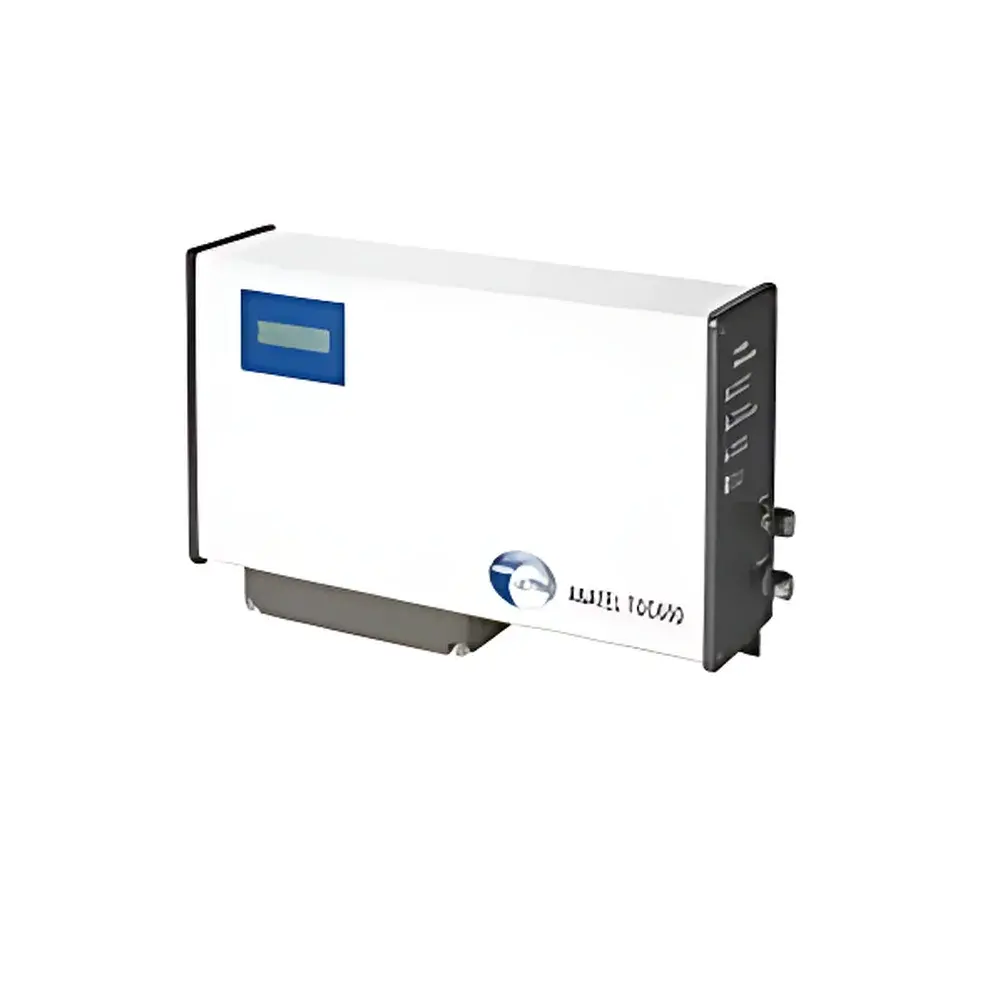
HACH Anatel TOC600 Online Total Organic Carbon Analyzer
| Brand | HACH |
|---|---|
| Origin | Imported |
| Manufacturer Type | Manufacturer |
| Model | TOC600 |
| Instrument Type | Online TOC Analyzer |
| Detection Principle | Direct Conductivity Method |
| Oxidation Method | UV Photolysis |
| Measurement Range | 1–1000 ppb C |
| Accuracy | ±2% (10–40 °C), ±5% (40–50 °C) |
| Resolution | 1 ppb C |
| Repeatability | ±1% or ±1 ppb (whichever is greater) |
| Inlet Conductivity Range | 0.05–150 mS/cm |
| Inlet Pressure | 10–100 psig (69–690 kPa) |
| Flow Rate | 60–300 mL/min |
| Output Options | 4–20 mA, RS-232/RS-485 |
| Operating Environment | Ambient ≤70 °C (heat sink required above 70 °C) |
Overview
The HACH Anatel TOC600 Online Total Organic Carbon Analyzer is an industrial-grade, real-time monitoring instrument engineered for continuous measurement of total organic carbon in ultrapure water (UPW) systems used across semiconductor manufacturing, pharmaceutical production, and biotechnology facilities. It employs direct conductivity detection following low-pressure ultraviolet (UV) photolysis at 185 nm—enabling complete oxidation of non-purgeable organic compounds to CO2, which dissolves in water to form carbonate ions and increases solution conductivity proportionally to carbon concentration. Unlike combustion-based or NDIR-detected TOC analyzers, the TOC600 eliminates consumables, catalysts, carrier gases, or chemical reagents, delivering inherently stable baseline performance with minimal maintenance overhead. Its design adheres to critical purity requirements defined in ASTM D5127, USP , and EP 2.2.44, supporting compliance with ISO 14644 cleanroom water specifications and FDA 21 CFR Part 11–aligned data integrity protocols when integrated with validated C80 controllers.
Key Features
- Reagent-free operation: UV photolysis (185 nm) ensures complete oxidation without persulfate, acid, or catalysts—reducing operational risk and cost of ownership.
- Dual-mode automation: Configurable Auto-TOC mode for routine monitoring and Auto-Clean mode for periodic system purging to prevent biofilm accumulation or adsorptive fouling.
- High-resolution detection: 1 ppb resolution across three user-selectable display ranges (0–100 ppb, 0–500 ppb, 0–1000 ppb), optimized for both UPW polishing loop surveillance and feedwater trending.
- Robust inlet conditioning: Accepts conductive water streams from 0.05 to 150 mS/cm—compatible with reverse osmosis permeate, electrodeionization (EDI) output, and recirculating UPW loops without external dilution.
- Integrated environmental resilience: Designed for installation in equipment skids or utility corridors; optional heat sink accessory enables deployment in ambient environments up to 70 °C.
- Modular I/O architecture: Standard 4–20 mA analog output plus RS-232/RS-485 serial interface supports connection to DCS, SCADA, or LIMS platforms without intermediary gateways.
Sample Compatibility & Compliance
The TOC600 is validated for use with Type I ultrapure water per ISO 3696 and ASTM D1193, including waters containing low-level ionic species common in UPW distribution systems (e.g., silicates, ammonium, trace metals). It meets the sensitivity and reproducibility thresholds required by semiconductor fab SOPs for sub-5 ppb TOC control in 300 mm wafer rinse applications. Regulatory alignment includes support for ALCOA+ principles (Attributable, Legible, Contemporaneous, Original, Accurate, Complete, Consistent, Enduring, Available) when paired with C80 controller audit-trail logging. No calibration drift compensation algorithms are applied; accuracy is maintained via factory-traceable conductivity cell characterization and temperature-compensated UV lamp intensity monitoring.
Software & Data Management
Data acquisition and configuration are managed either locally via the optional C80 Display and Control Module—or remotely through ASCII protocol over RS-485. The C80 provides GLP-compliant event logging (including mode transitions, cleaning cycles, and sensor diagnostics), user-access level controls (Operator/Engineer/Administrator), and configurable alarm thresholds with relay outputs. All timestamps are synchronized to NTP servers when connected to enterprise networks. Raw conductivity values, temperature-corrected TOC results, lamp energy metrics, and flow validation flags are available via Modbus RTU mapping for integration into MES or quality analytics dashboards. Data export formats include CSV and PDF reports compliant with internal QA documentation standards.
Applications
- Real-time TOC surveillance in semiconductor UPW polishing loops (pre- and post-UV reactors, final filters)
- Pharmaceutical water-for-injection (WFI) and purified water (PW) system validation and routine monitoring per USP
- Biotech process water distribution networks where microbial metabolite detection is critical
- Monitoring of EDI and mixed-bed polisher effluent to detect early-stage resin exhaustion or organic breakthrough
- Supporting PQ (Performance Qualification) and ongoing verification under EU GMP Annex 1 and FDA Process Validation Guidance
FAQ
Does the TOC600 require daily calibration?
No. The analyzer uses a fixed-conductivity cell geometry and factory-characterized UV lamp output; calibration is performed during annual service using certified TOC standard solutions traceable to NIST SRM 990c.
Can it measure TOC in high-conductivity feedwater (e.g., RO permeate with >50 mS/cm)?
No—the specified inlet conductivity range is 0.05–150 mS/cm, but optimal accuracy is achieved below 100 mS/cm. Samples exceeding 100 mS/cm may require inline dilution or pre-treatment to avoid conductivity saturation effects.
Is the UV lamp life monitored internally?
Yes. The system continuously tracks lamp operating hours and UV intensity decay; alerts trigger at 8,000 hours or upon 20% intensity loss relative to initial baseline.
What cybersecurity safeguards are implemented for remote communication?
RS-485 communication is unencrypted by default; secure data transmission requires network-layer segmentation and firewall policies aligned with ISA/IEC 62443 Level 1. No web server or TLS functionality is embedded in the TOC600 or C80.
How does the Auto-Clean cycle prevent carryover between measurements?
The Auto-Clean mode initiates a 90-second high-flow flush (≥300 mL/min) followed by UV exposure without sample introduction, thermally desorbing residual organics from the reaction chamber walls and quartz sleeve surface.
Related Products







