
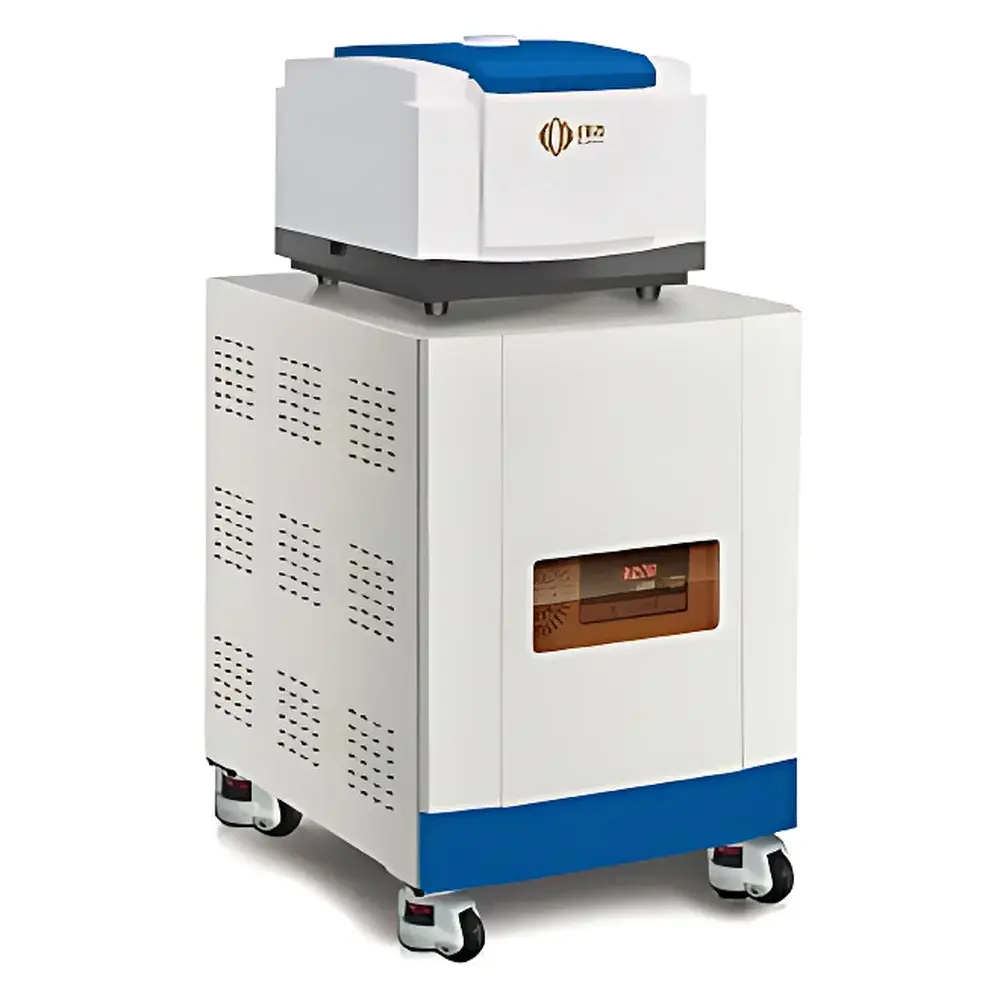
NIUMAG PQ001-3 Benchtop Low-Field NMR Analyzer for Seed Oil & Moisture Content Measurement
| Brand | NIUMAG |
|---|---|
| Origin | Jiangsu, China |
| Manufacturer Type | Authorized Distributor |
| Country of Origin | China |
| Model | PQ001-3 |
| Pricing | Available Upon Request |
| Magnet Type | Permanent Magnet |
| Magnetic Field Strength | 0.5 ± 0.08 T |
| Larmor Frequency | 21.3 MHz |
| Probe Coil Diameter | 25 mm |
Overview
The NIUMAG PQ001-3 is a compact, benchtop low-field nuclear magnetic resonance (LF-NMR) analyzer engineered specifically for non-destructive, quantitative determination of oil and moisture content in intact plant seeds and agricultural biomass. Based on the fundamental principle of proton spin relaxation (T₂ decay), the instrument measures the signal intensity and relaxation behavior of hydrogen nuclei (¹H) in triglyceride (oil) and bound/free water phases—enabling simultaneous, calibration-free quantification without chemical extraction or sample destruction. Introduced in 2008 and refined through over 15 years of field deployment, the PQ001-3 employs a robust permanent magnet system operating at 0.5 T (21.3 MHz), delivering high reproducibility (<1.5% RSD for repeated measurements on homogeneous seed batches) and thermal stability under ambient laboratory conditions. Its all-in-one enclosure design integrates magnet, RF probe, spectrometer electronics, and control interface into a single footprint—eliminating external cryogens, shielding rooms, or complex infrastructure. This architecture makes it suitable for routine QC labs, breeding stations, grain elevators, and academic plant science facilities where rapid, operator-independent analysis is required.
Key Features
- Non-invasive, non-destructive analysis: Preserves seed viability and structural integrity—critical for germplasm evaluation and pre-germination screening.
- Simultaneous dual-parameter output: Quantifies both oil content (wt%) and moisture content (wt%) from a single 2–4 minute acquisition, with optional T₂ distribution analysis to resolve water mobility states (e.g., bound vs. free water).
- Self-locking frequency tuning: Patented auto-resonance tracking eliminates manual shimming and frequency adjustment—ensuring consistent excitation across variable sample geometries and temperature drifts.
- Modular configuration support: Optional add-ons include automated sample changers, temperature-controlled probe inserts (±5–60°C), and custom calibration libraries for species-specific models (e.g., peanut, soybean, rapeseed, sunflower, sesame).
- Electromagnetic interference resilience: Operates reliably in industrial environments with standard AC power and no Faraday cage requirement—validated per IEC 61326-1 for EMC compliance.
- Regulatory-ready data handling: Audit trail logging, user access levels, and electronic signature support align with GLP and GMP documentation requirements; raw FID and processed T₂ spectra are exportable in ASCII/CSV for third-party statistical validation.
Sample Compatibility & Compliance
The PQ001-3 accepts whole, halved, or ground seeds (max. diameter ≤25 mm) in standard 15–20 mm OD glass or plastic NMR tubes. It has been validated for use with >30 agronomically significant species—including Arachis hypogaea (peanut), Glycine max (soybean), Brassica napus (rapeseed), Zea mays (maize), Helianthus annuus (sunflower), and Sesamum indicum (sesame). Method equivalence studies demonstrate strong correlation (R² ≥ 0.992) with reference ASTM D6304 (Karl Fischer titration for moisture) and AOCS Am 5-04 / ISO 10520 (Soxhlet extraction for oil), satisfying method transfer requirements under FDA 21 CFR Part 11 and ISO/IEC 17025:2017. All firmware and software comply with IEC 62304 for medical device software safety classification (Class B), and hardware meets CE marking directives for electromagnetic compatibility and low-voltage operation.
Software & Data Management
The embedded NIUMAG NMR Analysis Suite v4.x provides intuitive workflow-driven operation: automatic sample recognition via barcode scanning, real-time signal-to-noise monitoring, and one-click report generation compliant with ISO 10012 (measurement management systems). Raw time-domain data (FID) and inverse Laplace-transformed T₂ distributions are stored with full metadata (operator ID, timestamp, instrument serial, calibration status). Data export supports CSV, TXT, and MATLAB (.mat) formats. For enterprise integration, optional OPC UA and REST API modules enable bidirectional communication with LIMS (e.g., LabWare, Thermo SampleManager) and MES platforms. All audit trails—including parameter changes, calibration events, and user logins—are immutable and time-stamped to meet ALCOA+ principles.
Applications
- Seed quality control in breeding programs: Rapid screening of oil/moisture traits across thousands of lines during phenotyping pipelines.
- Grain trade certification: On-site verification of contractual oil content specifications prior to bulk shipment or storage.
- Post-harvest physiology research: Tracking dynamic changes in water phase distribution during drying, conditioning, or accelerated aging protocols.
- Food safety monitoring: Detection of adulteration (e.g., oil dilution) via anomalous T₂ relaxation signatures inconsistent with authentic cultivars.
- Biorefinery feedstock assessment: Pre-processing evaluation of oilseed crops for biodiesel yield prediction and process optimization.
FAQ
How does the PQ001-3 differentiate between oil and water signals?
It exploits differences in transverse relaxation times (T₂): triglyceride protons exhibit significantly shorter T₂ (0.1–10 ms) than bulk water protons (50–500 ms); multi-exponential fitting of the decay curve separates these components quantitatively.
Can the instrument be calibrated for new seed species not in the default library?
Yes—users may generate custom calibration curves using reference samples analyzed by validated wet chemistry methods (e.g., AOCS official methods); the software supports linear, polynomial, and PLS regression models.
Is regulatory validation support available for method transfer to QC laboratories?
NIUMAG provides IQ/OQ documentation templates, uncertainty budget worksheets per GUM (JCGM 100:2008), and technical assistance for 21 CFR Part 11 compliance implementation.
What maintenance is required beyond routine calibration checks?
No consumables or cryogens are used; annual verification of field homogeneity and RF pulse fidelity is recommended—performed onsite by certified service engineers using traceable NIST-matched phantoms.
Does the system support remote diagnostics or firmware updates?
Yes—secure SSH-based remote access (with customer authorization) enables real-time performance diagnostics, log file retrieval, and over-the-air firmware upgrades aligned with ISO/IEC 27001 information security controls.




