
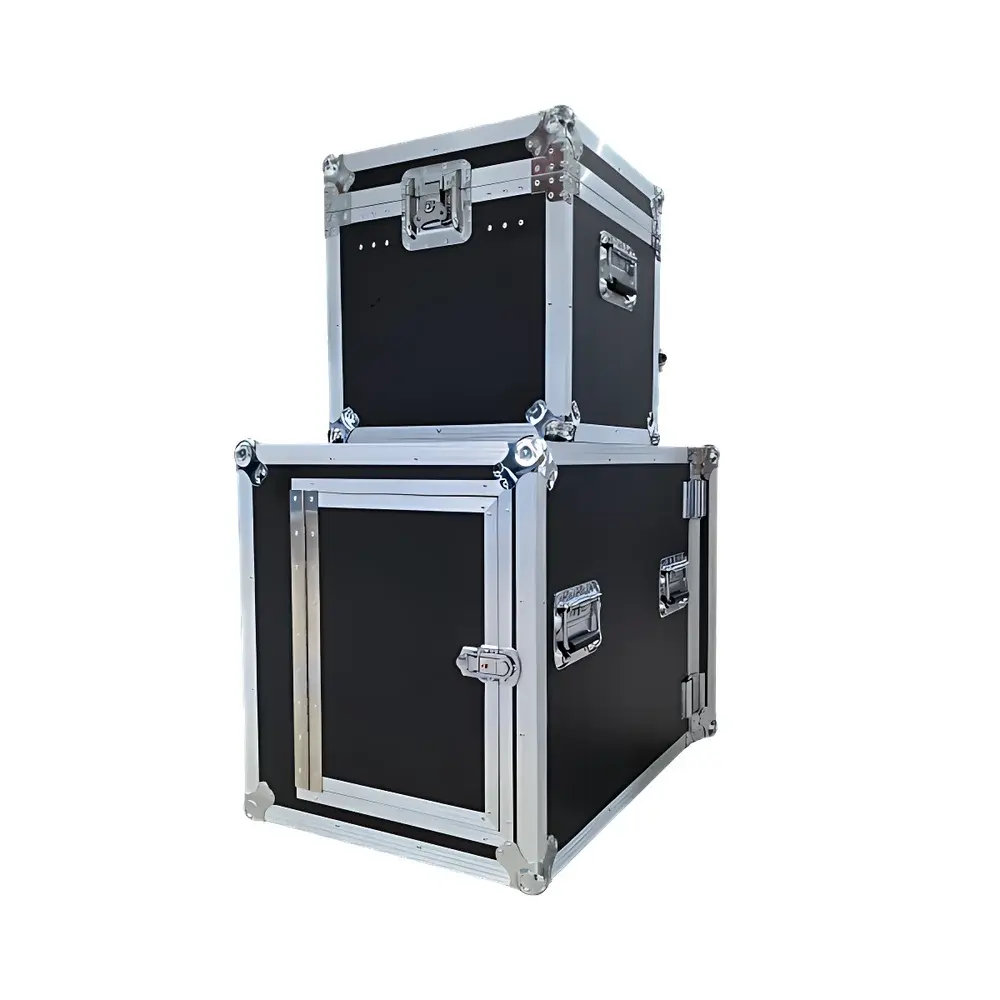
NIUMAG MicroMR06-040V-P2 Portable Low-Field NMR Logging Analyzer
| Brand | NIUMAG |
|---|---|
| Origin | Jiangsu, China |
| Manufacturer Type | Authorized Distributor |
| Regional Classification | Domestic (China) |
| Model | MicroMR06-040V-P2 |
| Instrument Type | Low-Field Nuclear Magnetic Resonance Analyzer |
| Sample Compatibility | Solid-Liquid Dual-Phase Samples |
| Magnet Type | Permanent Magnet |
| Operating Larmor Frequency | 6.17 MHz ± 0.2 MHz |
| Sample Cavity Dimensions | 550 mm (L) × 550 mm (D) × 700 mm (H) |
| Homogeneous Zone | Ø38.1 mm × H80 mm |
Overview
The NIUMAG MicroMR06-040V-P2 is a purpose-built portable low-field nuclear magnetic resonance (LF-NMR) logging analyzer engineered for real-time, non-destructive petrophysical evaluation in oil and gas exploration workflows. Unlike high-field superconducting NMR spectrometers confined to controlled laboratory environments, this instrument leverages permanent magnet technology and optimized RF pulse sequences to deliver quantitative NMR measurements—such as T1, T2, and diffusion-weighted relaxation—directly at the wellsite. Its core measurement principle relies on detecting spin echo decay signals induced by pulsed radiofrequency excitation in a stable, homogeneous static magnetic field. The resulting relaxation time distributions are intrinsically linked to pore structure, fluid mobility, saturation state, and hydrocarbon phase behavior—enabling direct derivation of porosity, permeability, bound vs. movable fluid saturation, and pore size distribution without sample destruction or chemical alteration.
Key Features
- True field-deployable architecture: Weighing under 120 kg and configured in modular aviation-grade transport cases, the system supports rapid setup (<15 min) and operation in mobile labs, rig vans, core sheds, or remote field camps.
- Optimized permanent magnet design: Delivers stable 6.17 MHz Larmor frequency with <±0.2 MHz drift over 8-hour continuous operation, eliminating cryogen dependency and reducing infrastructure requirements.
- Dual-mode RF probe compatibility: Supports both standard rock core probes (for 25 mm and 38 mm diameter plugs) and custom-designed loose-cuttings adapters—enabling consistent quantification across heterogeneous sample morphologies.
- Integrated second-generation LF-NMR console: Features FPGA-based pulse generation, high-dynamic-range digitization (16-bit, 100 MS/s), and real-time signal averaging to ensure robust signal-to-noise ratio (SNR) even under variable ambient temperature (5–40 °C) and electromagnetic conditions.
- Thermal management system: Active air-cooled magnet housing maintains field homogeneity within specification across extended acquisition cycles (>24 h), critical for longitudinal T1 mapping and multi-echo CPMG train stability.
Sample Compatibility & Compliance
The MicroMR06-040V-P2 accommodates intact core plugs (up to 100 mm length), split cores, drill cuttings (dry or saturated), shale chips, and unconsolidated sands—without preprocessing or centrifugation. Its large sample cavity (550 × 550 × 700 mm) allows batch screening of multiple samples simultaneously using indexed trays. All hardware and firmware comply with IEC 61000-6-3 (EMI emission) and IEC 61000-6-2 (immunity) standards. Data acquisition protocols align with ASTM D7171-19 (Standard Test Method for Determination of Pore Size Distribution of Rock Core Using Low-Field NMR) and ISO 17892-12 (Geotechnical investigation and testing — Laboratory testing of soil — Part 12: Determination of water content, density and porosity). Audit trails, user access controls, and electronic signature support meet GLP/GMP documentation requirements per FDA 21 CFR Part 11 when configured with optional secure software modules.
Software & Data Management
Controlled via NIUMAG’s proprietary MesoMR™ v4.2 platform, the system provides intuitive workflow-driven acquisition, real-time spectral preview, and automated post-processing pipelines. Key modules include: (i) T2 inversion using non-negative least squares (NNLS) with regularization; (ii) 2D T1–T2 and D–T2 correlation analysis via SVD-based joint inversion; (iii) petrophysical parameter estimation calibrated against reference core flooding data; and (iv) customizable reporting templates compliant with internal reservoir evaluation standards. Raw FID and processed spectra are stored in HDF5 format with embedded metadata (sample ID, operator, timestamp, pulse sequence parameters). Export options include CSV, ASCII, and XML for integration with Petrel, Techlog, or internal reservoir simulation workflows. Data integrity is ensured through SHA-256 hashing and version-controlled project archives.
Applications
- Wireline and LWD-supported logging-while-drilling (LWD) support: Rapid assessment of cuttings for lithology discrimination, hydrocarbon indication, and preliminary permeability ranking prior to core retrieval.
- Core analysis laboratories: High-throughput screening of preserved core inventory, quality control during routine porosity/permeability testing, and dynamic monitoring of imbibition/drainage experiments.
- Rock physics modeling: Generation of T2 cutoffs, capillary pressure curves, and wettability indices used in upscaling workflows for reservoir simulators.
- Unconventional resource characterization: Quantitative differentiation of organic matter-hosted pores vs. mineral matrix pores in shale via diffusion-relaxation coupling; identification of kerogen-bound vs. free hydrocarbon phases.
- Educational and method development: Used in petroleum engineering curricula and NMR methodology research due to its accessible operating frequency, open pulse programming interface, and reproducible calibration standards.
FAQ
What sample preparation is required for cuttings analysis?
No drying, crushing, or saturation conditioning is mandatory. Cuttings may be analyzed as-received (with native fluid), after brief air-drying to remove free mud, or fully saturated with brine/oil. Standardized protocols are provided for each condition.
Can the system perform real-time T2 mapping during core flooding experiments?
Yes—using external trigger synchronization and programmable acquisition intervals, the system supports time-resolved T2 imaging with temporal resolution down to 30 seconds per slice, enabling dynamic tracking of fluid front migration and saturation changes.
Is hardware calibration traceable to international standards?
Magnet field strength is verified annually using a NIST-traceable Hall probe; RF amplitude and timing accuracy are validated against IEEE Std 1677-2018 using calibrated signal generators and oscilloscopes.
Does the system support remote diagnostics and firmware updates?
Yes—via encrypted TLS-secured connection, engineers can remotely monitor system health, diagnose RF chain performance, and deploy validated firmware patches without onsite intervention.
What training resources are available for new users?
NIUMAG offers instructor-led workshops (in-person and virtual), on-demand video modules covering acquisition, inversion, and interpretation, plus a public-facing “NMR Research Hub” portal with application notes, benchmark datasets, and community forums.
Related Products




