
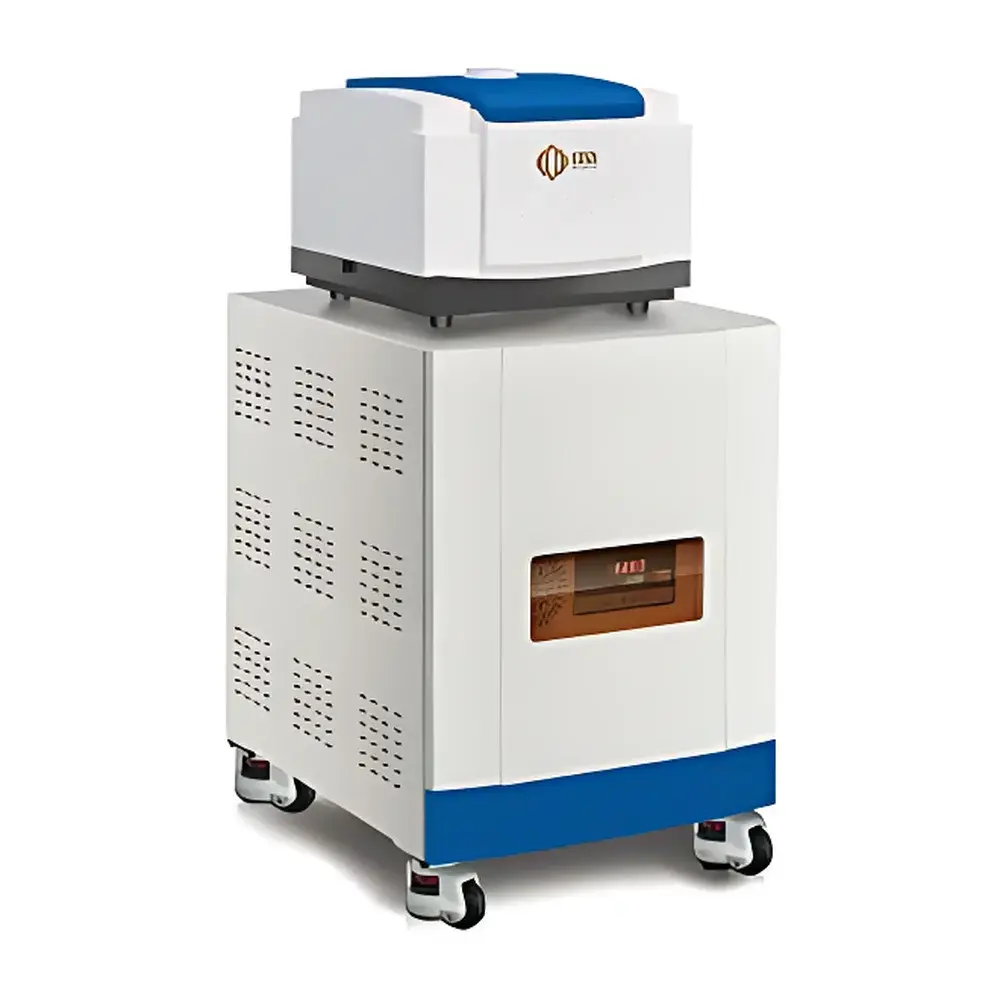
NIUMAG PQ001 Low-Field Nuclear Magnetic Resonance Relaxometer
| Brand | NIUMAG |
|---|---|
| Origin | Jiangsu, China |
| Manufacturer Type | Authorized Distributor |
| Product Category | Domestic |
| Model | PQ001 |
| Instrument Type | Low-Field NMR Relaxometer |
| Sample Compatibility | Solid-Liquid Dual-Mode |
| Magnetic Field Strength | 0.5 T |
| RF Coil | Solenoid-Type Transmit/Receive |
| Signal Processing | Fully Digital Architecture with FPGA-Based Pulse Sequencing and Industrial PC Control |
| Software Platform | Delphi-Based GUI with Stepwise Test Wizard and Exportable Relaxation Parameter Output (T₁, T₂, r₁, r₂) |
Overview
The NIUMAG PQ001 is a dedicated low-field nuclear magnetic resonance (NMR) relaxometer engineered for quantitative measurement of longitudinal (T₁) and transverse (T₂) relaxation times in contrast agent solutions and biological specimens. Unlike clinical MRI systems—where relaxation parameters are inferred indirectly from image contrast—the PQ001 employs direct time-domain NMR detection via pulsed field gradient spin-echo and inversion-recovery sequences. This approach eliminates imaging-related artifacts and enables high reproducibility in relaxivity (r₁, r₂) determination under standardized conditions. Operating at a stable 0.5 Tesla permanent magnet field, the instrument delivers sufficient signal-to-noise ratio (SNR) for routine characterization of paramagnetic and superparamagnetic contrast agents while maintaining compact footprint and operational simplicity suitable for QC labs and academic core facilities.
Key Features
- 0.5 T Permanent Magnet System: Engineered for long-term field homogeneity (< ±5 ppm over 20 mm DSV) and thermal stability (< 0.01 ppm/°C drift), eliminating cryogen dependency and enabling benchtop deployment.
- Solenoid RF Architecture: Dual-purpose transmit/receive solenoid coil ensures uniform B₁ excitation and high sensitivity across standard 10–15 mm OD sample tubes; optimized for aqueous and semi-solid matrices.
- Low-Noise Signal Chain: Integrated preamplifier located within the probe head minimizes cable-induced attenuation and electromagnetic interference, preserving decay fidelity for accurate multi-exponential T₂ fitting.
- FPGA-Controlled Digital Spectrometer: Real-time pulse generation, phase cycling, and digitization at ≥25 MHz sampling rate support standardized sequences including CPMG, IR-CPMG, and saturation recovery—fully compliant with ISO/IEC 17025 traceability requirements for relaxation time measurement.
- Industrial-Grade Control System: Embedded industrial PC with deterministic real-time OS ensures sequence timing accuracy < 100 ns and robust data acquisition even during extended batch runs.
Sample Compatibility & Compliance
The PQ001 supports both liquid-phase contrast agent solutions (e.g., Gd-DTPA, MnCl₂, Fe₃O₄ colloids) and heterogeneous biological samples—including ex vivo tumor tissues and cell suspensions—without requiring cryopreservation or sectioning. Its solid-liquid dual-mode capability accommodates viscosity ranges from 1000 cP (hydrogels or tissue homogenates). All hardware and software components comply with IEC 61000-6-3 (EMC emission limits) and IEC 61000-6-2 (immunity standards). Data integrity meets GLP/GMP-aligned audit trail requirements: software enforces user authentication, electronic signatures, and immutable raw FID storage per ASTM E2500-18 guidelines.
Software & Data Management
The Delphi-based control interface implements a guided workflow—from sample loading and parameter selection to automatic curve fitting and report generation. Core algorithms apply non-linear least-squares fitting to mono- and bi-exponential decay models, with optional singular value decomposition (SVD) for T₂ distribution analysis. Export formats include CSV, TXT, and XML (with metadata tags for sample ID, temperature, pulse sequence, and acquisition date). Raw FID files retain full phase and amplitude information for third-party reprocessing (e.g., in MATLAB or Python using NMRTK libraries). Audit logs record all operator actions, parameter modifications, and calibration events in accordance with FDA 21 CFR Part 11 requirements for electronic records.
Applications
- Quantitative relaxivity (r₁, r₂) profiling of gadolinium-, manganese-, and iron-based contrast agents per USP and ISO 10993-18 standards.
- Batch-to-batch consistency testing in pharmaceutical manufacturing environments.
- Correlation studies between nanoparticle size, surface coating, and T₁/T₂ shortening efficiency.
- Ex vivo assessment of tumor tissue relaxation properties as biomarkers for necrosis or fibrosis.
- Cellular uptake kinetics evaluation via time-resolved T₂ measurements in labeled cell suspensions.
- Stability monitoring of contrast agents under accelerated aging conditions (e.g., 40°C/75% RH).
FAQ
What relaxation parameters does the PQ001 directly output?
T₁ (spin-lattice), T₂ (spin-spin), and derived relaxivities (r₁ = ΔR₁/[agent], r₂ = ΔR₂/[agent])—all calculated from raw FID or echo train data without image reconstruction.
Can the PQ001 measure samples with high ionic strength or magnetic susceptibility gradients?
Yes—its robust CPMG implementation includes built-in compensation for stimulated echoes and eddy current effects, validated for saline-based formulations up to 150 mM NaCl.
Is method validation support available for regulatory submissions?
NIUMAG provides IQ/OQ documentation templates aligned with ASTM E2500-18 and ISO/IEC 17025, including linearity, repeatability, and intermediate precision test protocols.
Does the system require external cooling or shielding?
No—permanent magnet design operates passively at ambient temperatures (15–30°C); optional RF-shielded enclosure available for electromagnetically noisy environments.
How is temperature controlled during measurement?
An integrated Peltier stage maintains sample temperature from 5°C to 45°C ±0.5°C, with real-time logging synchronized to acquisition timestamps.






