
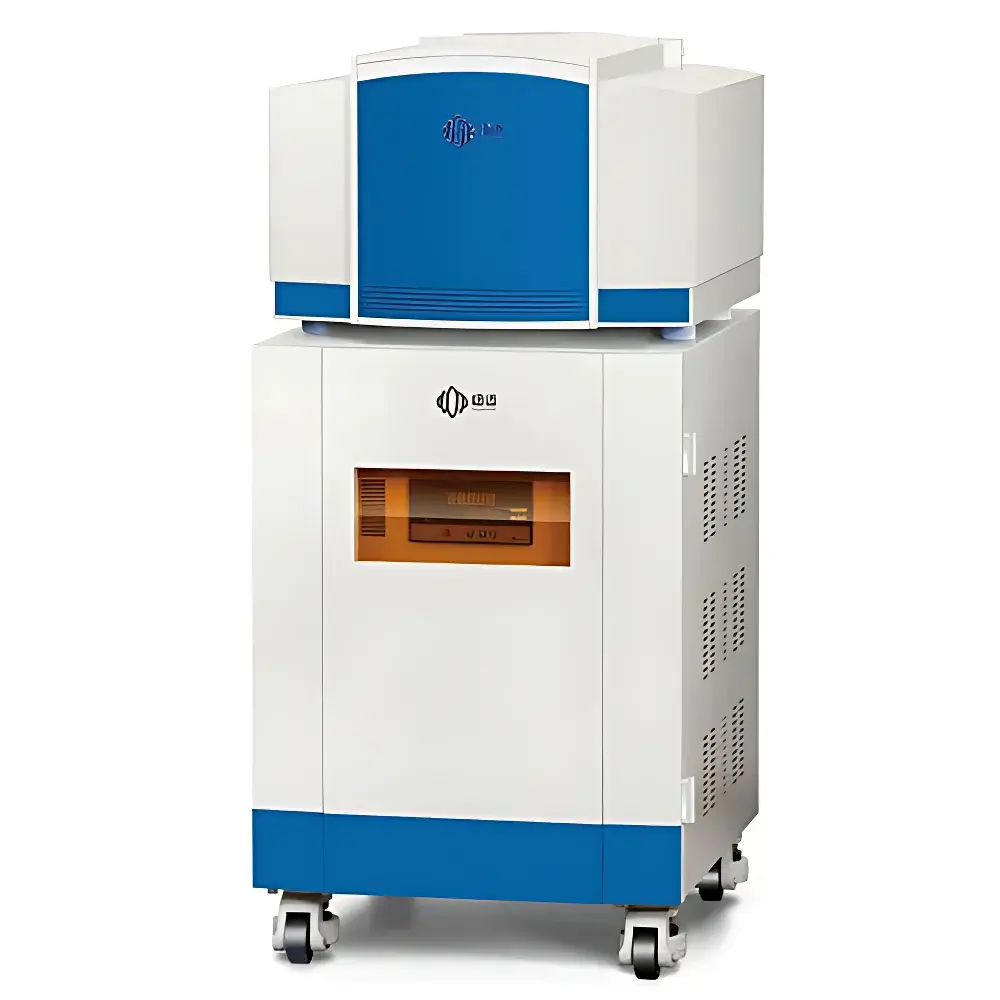
NIUMAG NMI20-015V-I Low-Field Nuclear Magnetic Resonance Imaging Analyzer for Food & Agricultural Applications
| Brand | NIUMAG |
|---|---|
| Origin | Shanghai, China |
| Manufacturer Type | Authorized Distributor |
| Regional Classification | Domestic (China) |
| Model | NMI20-015V-I |
| Pricing | Upon Request |
Overview
The NIUMAG NMI20-015V-I is a benchtop low-field nuclear magnetic resonance (LF-NMR) imaging and relaxometry analyzer engineered specifically for food science, agricultural research, and post-harvest quality assessment. Operating at a static magnetic field strength of approximately 0.5 Tesla—generated by high-stability rare-earth permanent magnets—the system leverages the physical principles of proton spin relaxation (T1, T2, and T2*) and spatial encoding via gradient-based pulse sequences to non-invasively quantify and spatially resolve water and oil distributions within heterogeneous biological matrices. Unlike high-field MRI systems requiring cryogenic cooling and RF shielding, the NMI20-015V-I employs a compact, self-shielded magnet architecture with zero helium consumption or routine magnet maintenance, making it suitable for routine use in QC laboratories, university core facilities, and R&D centers without dedicated infrastructure. Its modular hardware design integrates both time-domain relaxometry and 2D slice-selective imaging capabilities into a single platform, enabling correlative analysis of bulk composition (e.g., moisture/oil content) and microstructural heterogeneity (e.g., phase separation, migration kinetics, freezing behavior) under native conditions.
Key Features
- Permanent magnet system with <0.05 ppm/h field drift, eliminating cryogen dependency and long-term operational costs
- Dual-mode operation: quantitative multi-exponential T2 relaxometry and 2D spin-echo MRI with user-defined slice orientation (axial, sagittal, coronal), thickness (0.5–10 mm), and position
- Self-optimizing acquisition protocol: automated parameter tuning (RF pulse amplitude, duration, gradient strength) reduces operator dependency
- Three-step imaging workflow: sample loading → sequence selection → scan initiation—no prior NMR expertise required
- Compact footprint (W × D × H ≈ 600 × 750 × 650 mm) with integrated casters for lab mobility and flexible placement
- Temperature-controlled sample chamber (optional) supporting studies from −40 °C to +80 °C for freezing point, unfrozen water, and thermal stability analysis
Sample Compatibility & Compliance
The NMI20-015V-I accommodates solid, semi-solid, liquid, and powdered samples with maximum dimensions of Ø ≤ 12.5 mm and height ≤ 20 mm—compatible with standard 10–15 mm OD glass tubes. It supports regulatory-compliant testing per ISO 10565:1995 (oilseed moisture/oil content), ISO 8292 (solid fat content in oils), AOCS Cd 16b-93, and GB/T 15690–1995. While not certified for GLP/GMP production environments, its software audit trail functionality—including timestamped acquisition logs, user ID tracking, and raw FID/data export—meets foundational data integrity requirements for method validation under FDA 21 CFR Part 11 when deployed with appropriate procedural controls. The system is routinely used in academic and industrial settings for method development aligned with USP Analytical Instrument Qualification guidelines.
Software & Data Management
The proprietary NIUMAG Spectroscopy & Imaging Suite (v4.2+) provides unified control for both relaxometry and MRI modes. In “Data Acquisition”, users select from over 12 pre-validated pulse sequences—including CPMG, IR-CPMG, SGE, and STIR—to extract T1, T2, diffusion-weighted, or inversion-recovery contrast. All raw time-domain data are stored in vendor-neutral HDF5 format with embedded metadata (pulse parameters, temperature, date/time, operator). The “Data Processing” module performs inverse Laplace transformation (non-negative least squares algorithm), peak deconvolution, and multi-component fitting with uncertainty estimation. MRI reconstruction uses filtered back-projection or iterative SENSE-based algorithms; reconstructed images support DICOM export for cross-platform visualization. Audit-ready reports include full acquisition history, processing steps, and statistical summaries—exportable as PDF, CSV, or Excel.
Applications
- Quantitative determination of oil/water content in seeds, nuts, and oleaginous fruits without solvent extraction
- Time-resolved monitoring of water migration during drying, frying, marination, or freeze-thaw cycling in meat, fish, and plant tissues
- Non-destructive assessment of seed viability, embryo development stage, and germination potential via T2 distribution mapping
- Characterization of solid fat content (SFC) profiles across temperature ramps in edible oils and dairy fats
- In-situ detection of freezing point depression and quantification of unfrozen water fraction in frozen foods and cryopreserved biomaterials
- Mapping of proton density and T2-weighted contrast to identify spoilage zones, microbial contamination foci, or structural degradation in minimally processed produce
- Supporting formulation optimization for encapsulated nutrients, emulsions, and hydrogels through relaxation time correlation with molecular mobility
FAQ
What sample preparation is required before NMR measurement?
No chemical treatment, grinding, or drying is necessary. Samples are placed directly into standard glass tubes; surface moisture should be gently blotted to avoid meniscus artifacts.
Can the system distinguish between bound and free water in food matrices?
Yes—multi-exponential T2 decay analysis resolves at least three water populations (e.g., immobilized, intermediate, free) based on characteristic relaxation times, validated against differential scanning calorimetry (DSC) and sorption isotherm data.
Is remote technical support available for instrument calibration and troubleshooting?
NIUMAG provides secure remote desktop access for firmware updates, pulse sequence verification, and diagnostic log review by certified application engineers.
Does the system comply with ISO/IEC 17025 for accredited testing laboratories?
While the hardware meets metrological traceability requirements, formal ISO/IEC 17025 accreditation depends on site-specific validation protocols, uncertainty budgeting, and documented SOPs—not inherent to the instrument alone.
What is the typical measurement time per sample?
Relaxometry: 30 seconds to 5 minutes depending on SNR requirements; MRI: 2–8 minutes per 2D slice, scalable via parallel imaging acceleration.




