
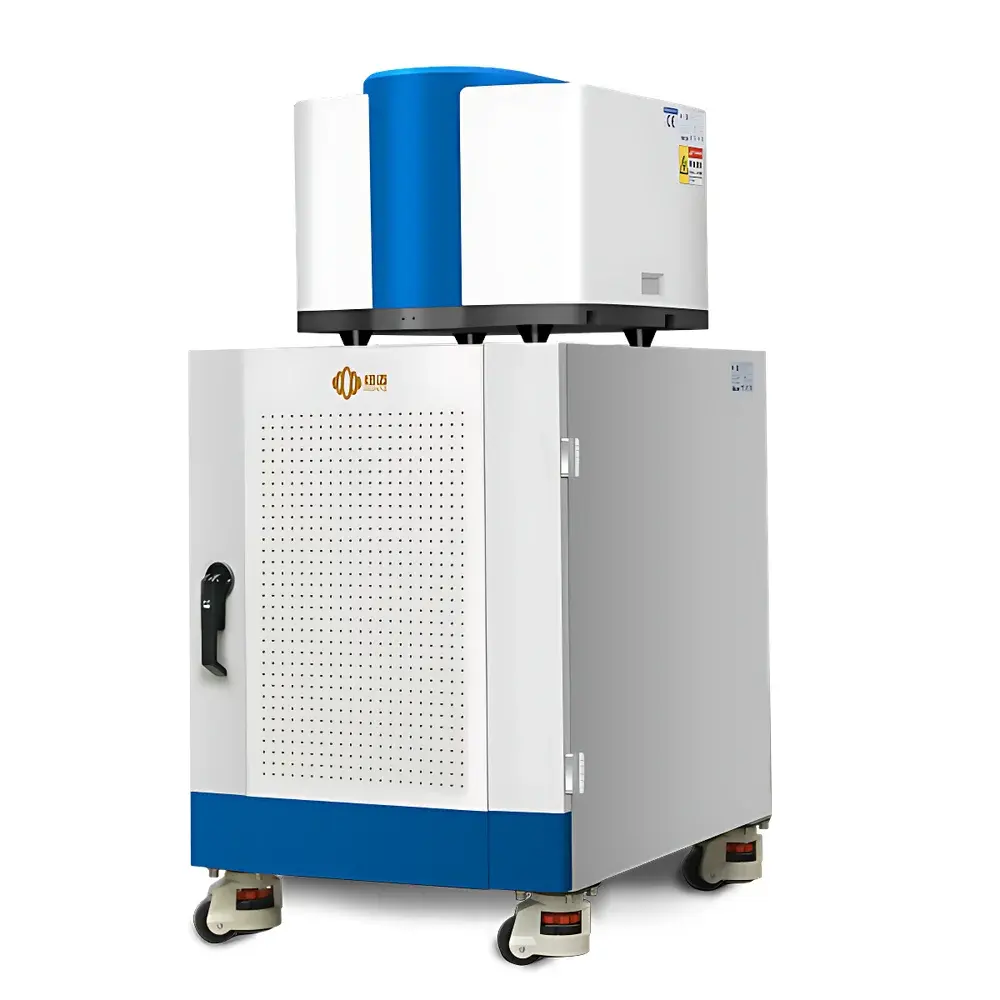
NIUMAG PQ001-18 Low-Field Nuclear Magnetic Resonance Analyzer for Hydrogen Content Determination in Jet Fuels
| Brand | NIUMAG |
|---|---|
| Origin | Jiangsu, China |
| Model | PQ001-18 |
| Instrument Type | Low-Field NMR Analyzer |
| Sample Compatibility | Solid-Liquid Dual-Mode |
| Magnetic Field Strength | 0.5 T ± 0.03 T |
| Magnet Uniformity | ≤30 ppm |
| Compliant Standards | ASTM D3701, SH/T 0658–1998 |
Overview
The NIUMAG PQ001-18 is a purpose-engineered low-field nuclear magnetic resonance (LF-NMR) analyzer designed specifically for rapid, non-destructive quantification of hydrogen mass fraction in jet fuels and related hydrocarbon-based aviation fuels. Unlike conventional elemental analysis techniques—such as combustion-based CHNS analyzers or wet-chemistry methods—the PQ001-18 leverages the intrinsic magnetic moment of 1H nuclei to deliver direct, physics-based measurement of total hydrogen content. In jet fuel, hydrogen constitutes approximately 13–14 wt% of the molecular composition; small deviations significantly affect net heat of combustion, smoke point, thermal stability, and combustion efficiency. The instrument operates on the principle of pulsed NMR relaxation: when placed in a stable 0.5 T permanent magnetic field, hydrogen protons align with the field vector; a precisely tuned radiofrequency (RF) pulse excites these spins, and the subsequent free induction decay (FID) signal amplitude is linearly proportional to the number of detectable hydrogen nuclei in the sample volume. Calibration against certified reference materials enables traceable, quantitative reporting of hydrogen content (wt%) without chemical derivatization, solvent extraction, or sample degradation.
Key Features
- Non-invasive & time-efficient analysis: No sample preparation—liquid fuels are introduced directly into the standard 18 mm glass tube; typical measurement duration is 30–90 seconds per run, enabling high-throughput QC in refinery labs and fuel depots.
- Robust permanent magnet architecture: Stable 0.5 T field generated by temperature-compensated NdFeB magnets; field homogeneity ≤30 ppm over a 20 mm DSV ensures consistent signal fidelity across repeated measurements.
- Traceable calibration framework: Supports multi-point calibration using NIST-traceable jet fuel standards compliant with ASTM D3701; built-in validation routines verify system performance prior to each analytical batch.
- Regulatory-ready data integrity: Software enforces ALCOA+ principles (Attributable, Legible, Contemporaneous, Original, Accurate); audit trails, electronic signatures, and user-access controls align with FDA 21 CFR Part 11 and ISO/IEC 17025 requirements for accredited testing laboratories.
- Low operational overhead: No consumables, gases, or hazardous reagents required; minimal maintenance intervals (annual magnet shimming and RF coil inspection recommended); power consumption <300 W.
Sample Compatibility & Compliance
The PQ001-18 accepts liquid samples ranging from light naphthas to vacuum gas oils, including Jet A, Jet A-1, JP-5, and JP-8 specifications. It accommodates samples with viscosity up to 15 cSt at 20 °C and handles minor water contamination (<0.1 vol%) without signal interference. Solid-phase compatibility extends to waxy distillates and paraffinic blends when heated to maintain fluidity during measurement. All methodology adheres strictly to ASTM D3701 “Standard Test Method for Hydrogen Content of Aviation Turbine Fuels by Low-Field Pulsed Nuclear Magnetic Resonance Spectroscopy” and its Chinese counterpart SH/T 0658–1998. Instrument design meets IEC 61000-6-3 (EMC emissions) and IEC 61000-6-2 (immunity) for industrial laboratory environments.
Software & Data Management
Control and analysis are performed via NIUMAG’s proprietary NMIQ software suite, featuring intuitive workflow-driven interface, automated peak integration, and customizable report templates (PDF/CSV/XLSX export). Raw FID data is stored in vendor-neutral HDF5 format, supporting third-party spectral processing (e.g., MATLAB, Python SciPy). The system supports network deployment under Windows Server environments and integrates with LIMS via ODBC-compliant database connectors. Full audit trail logs include operator ID, timestamp, calibration history, raw signal metadata, and result revision records—enabling full GLP/GMP compliance during internal audits or regulatory inspections.
Applications
- Real-time hydrogen content verification during jet fuel blending operations
- Batch release testing in refinery final product tanks per ASTM D1655 specification limits
- Stability monitoring of stored fuels over extended periods (oxidation-induced H-loss detection)
- Research into alternative aviation fuels (SAFs), including hydroprocessed esters and fatty acids (HEFA), Fischer–Tropsch synthetics, and alcohol-to-jet pathways
- Supporting ASTM D7566 Annexes for hydrogen balance validation in synthetic fuel certification
FAQ
Does the PQ001-18 require cryogens or superconducting magnets?
No. It utilizes a passively stabilized permanent magnet system operating at ambient temperature—eliminating helium dependency, quench risk, and associated infrastructure costs.
Can it differentiate between hydrogen bound in aliphatic vs. aromatic structures?
No. The instrument reports total hydrogen mass fraction only. Molecular speciation requires high-field NMR or complementary techniques such as GC×GC-TOFMS.
Is temperature control available during measurement?
Yes. An optional Peltier-controlled sample chamber maintains temperatures from 5 °C to 60 °C with ±0.5 °C stability, critical for viscosity-sensitive or thermally labile formulations.
How often must the instrument be recalibrated?
Calibration verification is recommended before each analytical session using a check standard; full multi-point calibration is advised every 30 days or after hardware service events.
What sample volume is required?
Minimum fill volume is 1.5 mL in a standard 18 mm OD borosilicate NMR tube; optimal signal-to-noise is achieved with 2.5–3.0 mL.





