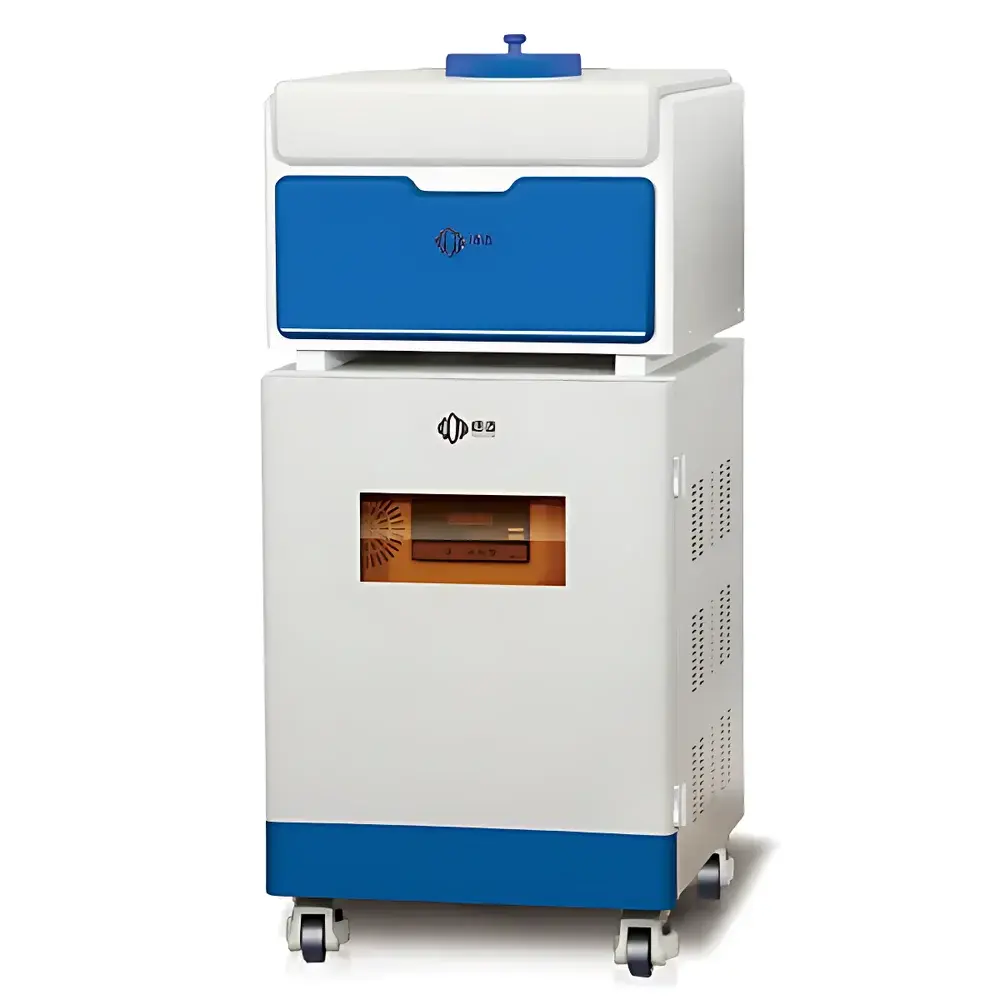
NIUMAG NMI20 Food Shelf-Life Analyzer – Benchtop Low-Field NMR System
| Brand | NIUMAG |
|---|---|
| Origin | Jiangsu, China |
| Model | NMI20 |
| Magnet Type | Permanent Magnet |
| Field Strength | 0.5 ± 0.08 T |
| Probe Coil Diameter | 15 mm / 40 mm |
| Measurement Capabilities | Water Phase Quantification, T₁/T₂/T₂* Relaxometry, Proton Density & Weighted Imaging, Spatial Water Distribution Mapping |
Overview
The NIUMAG NMI20 Food Shelf-Life Analyzer is a compact, benchtop low-field nuclear magnetic resonance (NMR) system engineered for non-invasive, quantitative analysis of water dynamics in food matrices. Unlike destructive or indirect methods (e.g., gravimetric drying or Karl Fischer titration), the NMI20 leverages the intrinsic magnetic properties of hydrogen nuclei (¹H) in water and lipid protons to probe molecular mobility, phase distribution, and microstructural changes in real time—without sample preparation, chemical reagents, or physical disruption. Its operating principle relies on pulsed NMR relaxometry (primarily spin–spin T₂ and spin–lattice T₁ relaxation) and basic imaging sequences (e.g., CPMG, IR, and gradient-echo), enabling direct correlation between relaxation decay profiles and physicochemical states of water—bound, immobilized, or free—as well as fat crystallinity and solid fat content (SFC). Designed specifically for food science laboratories, the NMI20 supports shelf-life prediction by tracking moisture migration during storage, freezing/thawing cycles, drying, and packaging aging—critical parameters governed by water activity (aw), glass transition (Tg), and phase separation kinetics.
Key Features
- Benchtop permanent magnet architecture (0.5 ± 0.08 T) ensuring long-term field stability and minimal cryogen dependency
- Dual-probe configuration with interchangeable 15 mm and 40 mm diameter RF coils—optimized for small-volume samples (e.g., fruit slices, meat cubes, dairy gels) and larger heterogeneous specimens (e.g., whole baked goods, packaged snacks)
- Integrated temperature-controlled sample chamber (range: −20 °C to +60 °C) for dynamic studies of refrigeration, freezing, and accelerated aging protocols
- High signal-to-noise ratio (SNR) acquisition engine supporting sub-minute T₂ decay measurements with reproducibility < ±1.5% RSD across repeated runs
- Modular pulse sequence library compliant with standard NMR food science workflows—including multi-exponential T₂ inversion, saturation recovery T₁ mapping, and basic 1D/2D spatial encoding
- Rugged mechanical design with electromagnetic shielding and vibration-damping base—suitable for QC labs and pilot-scale R&D environments
Sample Compatibility & Compliance
The NMI20 accommodates a broad spectrum of food materials in native or minimally processed form: fruits (e.g., jujubes, apples, berries), meats and seafood, dairy products (cheese, yogurt, butter), baked goods, confectionery, cereals, and oil-rich seeds. Samples require no homogenization, dehydration, or labeling—preserving structural integrity for longitudinal monitoring. The system adheres to fundamental principles outlined in ISO 10565 (oil and water content in oilseeds), AOAC Official Method 985.24 (fat/water in meat), and ASTM D7372 (standard guide for low-field NMR applications in materials science). While not certified for regulated GMP environments, its data structure supports GLP-aligned documentation practices—including user-defined metadata tagging, audit-ready acquisition logs, and timestamped raw FID storage—facilitating traceability in internal quality assurance and academic research settings.
Software & Data Management
The NMI20 operates via NIUMAG’s proprietary MesoMR software platform (v5.x), providing intuitive workflow-driven interfaces for experiment setup, real-time visualization, and post-processing. Core modules include: (1) RelaxoFit™ for automated multi-component T₂ spectral deconvolution using NNLS and SVD algorithms; (2) ImageLab™ for qualitative and semi-quantitative 1D projection and 2D slice reconstruction; (3) ShelfLifeTracker™—a dedicated module that correlates T₂ component ratios (e.g., bound/free water peak area %) with empirical shelf-life endpoints (e.g., texture loss, lipid oxidation onset, microbial threshold). All datasets are exported in HDF5 and CSV formats, compatible with MATLAB, Python (NumPy/Pandas), and industry-standard statistical packages (JMP, SAS). Software supports user-level access control, electronic signatures, and exportable PDF reports meeting internal SOP requirements.
Applications
- Predictive modeling of shelf life in fresh produce (e.g., jujube softening, apple browning) via T₂ evolution during ambient/controlled-atmosphere storage
- Quantifying ice crystal growth and recrystallization kinetics during frozen storage of fish fillets and ice cream
- Evaluating moisture barrier efficacy of edible films and multilayer packaging through time-resolved water diffusion profiling
- Monitoring starch retrogradation and gluten network degradation in bread staling studies
- Assessing solid fat content (SFC) and polymorphic transitions in cocoa butter and margarine using combined T₂ and temperature-ramped relaxometry
- Validating freeze-drying endpoint detection by tracking residual mobile water fraction in pharmaceutical-grade nutraceutical powders
FAQ
What sample size is required for reliable T₂ quantification?
For the 15 mm probe: minimum volume 0.5 mL (e.g., 1 cm³ gel or paste); for the 40 mm probe: 5–10 mL (e.g., whole fruit segment or sliced cheese block). Homogeneity within the sensitive volume is critical for accurate multi-component fitting.
Can the NMI20 distinguish between water and oil signals in emulsions?
Yes—through differential T₂ relaxation times and optional Carr–Purcell–Meiboom–Gill (CPMG) echo train analysis. Oil components typically exhibit longer T₂ (>100 ms) than bound water (<10 ms), enabling robust spectral separation without chemical shift resolution.
Is calibration required before each measurement?
No routine recalibration is needed due to permanent magnet stability; however, daily SNR verification using a standardized reference sample (e.g., doped water phantom) is recommended per ISO/IEC 17025-aligned lab practice.
Does the system comply with FDA 21 CFR Part 11?
The NMI20 software does not natively support Part 11 compliance (e.g., electronic signatures, audit trails with immutable logs); however, raw data files and metadata can be integrated into validated LIMS or ELN systems meeting regulatory requirements.
What maintenance is required beyond routine cleaning?
Annual field homogeneity check and RF coil impedance verification are advised. No liquid nitrogen, helium, or vacuum pump servicing is necessary—consistent with low-field permanent magnet design philosophy.