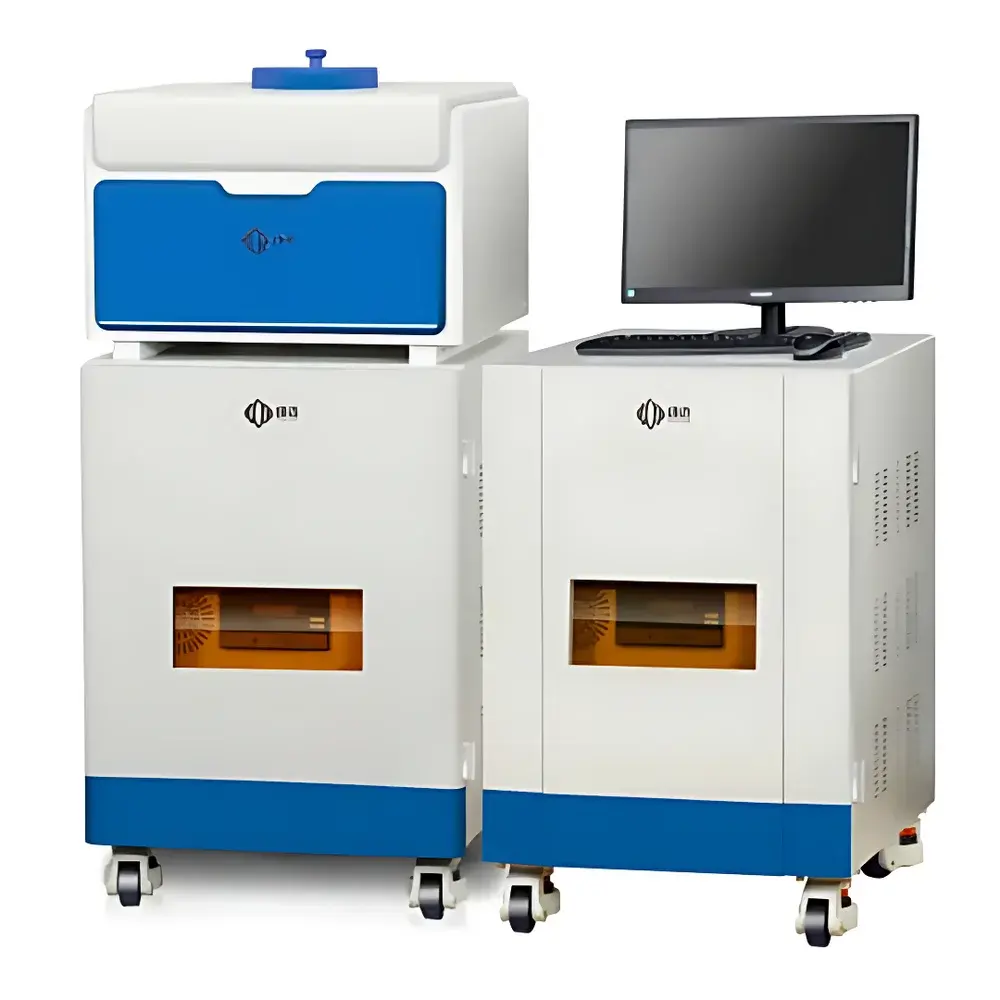
NIUMAG VTMR Carbon/Carbon Composite Resin Content Analyzer
| Brand | NIUMAG |
|---|---|
| Origin | Jiangsu, China |
| Manufacturer Type | Authorized Distributor |
| Country of Origin | China |
| Model | VTMR |
| Pricing | Available Upon Request |
| Magnet Type | Permanent Magnet |
| Magnetic Field Strength | 0.5 ± 0.05 T |
| Standard Temperature Range | Ambient to 130 °C |
| Optional Cryo/High-Temp Module | −100 °C to 200 °C |
| Measurement Time | ≤2 min per sample |
| Core Technology | Low-Field NMR (T₁/T₂ Relaxometry + MRI) |
| Key Innovation | FLAT Pulse Sequence for Short-T₂/Weak-Signal Acquisition |
| Sample Types | Solutions, Gels, Solids, Powders, Fiber Preforms |
Overview
The NIUMAG VTMR Carbon/Carbon Composite Resin Content Analyzer is a benchtop low-field nuclear magnetic resonance (NMR) instrument engineered for quantitative, non-invasive determination of resin content in carbon/carbon (C/C) composites and related polymer-matrix composites. Unlike gravimetric or solvent-extraction methods—which are destructive, time-intensive, and prone to operator bias—the VTMR leverages the intrinsic magnetic relaxation behavior of hydrogen nuclei (¹H) in organic resin phases versus inert carbon fiber matrices. By acquiring and modeling transverse (T₂) and longitudinal (T₁) relaxation decay curves under controlled temperature conditions, the system delivers absolute resin mass fraction with traceable repeatability. Its permanent magnet design (0.5 ± 0.05 T) ensures stable field homogeneity and long-term operational reliability without cryogen consumption. The integrated online variable-temperature module enables real-time monitoring of resin curing kinetics, crosslinking progression, and thermal aging—critical for aerospace-grade C/C component qualification and process validation.
Key Features
- FLAT (Fast Low-Artifact T₂) acquisition protocol optimized for short-T₂ signals (<1 ms) typical of highly crosslinked resins and constrained polymer chains in carbon fiber interphases.
- Simultaneous T₁ and T₂ relaxometry with multi-exponential fitting algorithms to deconvolve overlapping proton populations (e.g., mobile resin vs. bound interface layer).
- Standard temperature control from ambient to 130 °C; optional extended-range module supporting −100 °C to 200 °C for deep-cure characterization and glass transition mapping.
- Integrated NMR imaging (MRI) capability for spatially resolved resin distribution analysis—enabling detection of resin-rich zones, voids, and interfacial delamination in laminates.
- Modular probe design compatible with standard 10–25 mm OD sample tubes; accommodates solid preforms, chopped fibers, and molded test coupons without sectioning.
- Zero-reagent operation: eliminates solvent waste, regulatory handling requirements, and measurement-induced degradation.
Sample Compatibility & Compliance
The VTMR supports heterogeneous solid-state samples including carbon fiber fabrics impregnated with phenolic, epoxy, or silicone-based resins; pitch-derived carbon matrices; and hybrid C/C–SiC systems. It complies with ASTM D7904–21 (Standard Practice for Low-Field NMR Analysis of Polymer Composites) and aligns with ISO 17855:2016 (Plastics — Determination of Crosslink Density by NMR). Data integrity meets GLP and GMP documentation standards: audit trails, user access controls, electronic signatures, and raw FID export conform to FDA 21 CFR Part 11 requirements. All calibration protocols reference NIST-traceable polymeric standards (e.g., crosslinked polystyrene reference gels).
Software & Data Management
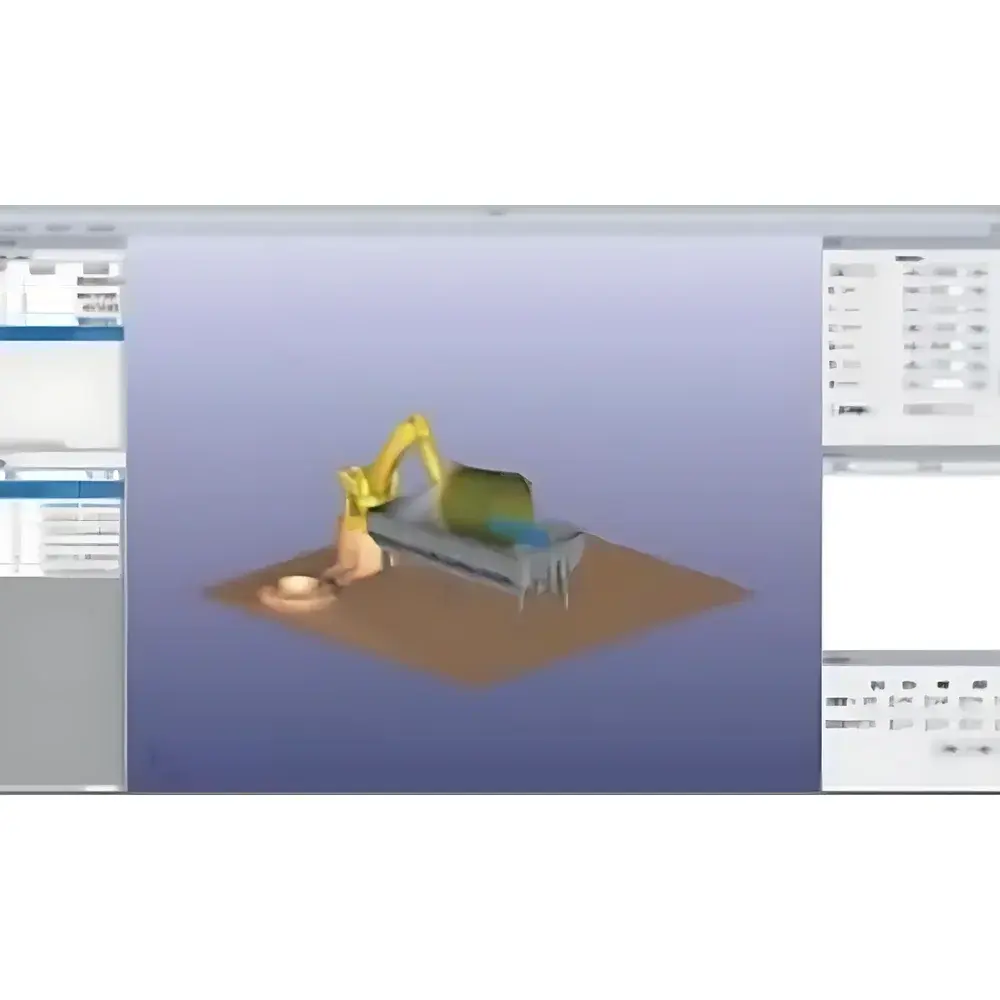
Controlled via NIUMAG’s proprietary MesoMR Studio v5.x platform, the VTMR provides intuitive workflow-driven acquisition, automated baseline correction, constrained non-negative least-squares (NNLS) T₂ inversion, and customizable reporting templates. Raw time-domain data (FID), processed spectra, and MRI reconstructions are stored in HDF5 format with embedded metadata (temperature, pulse sequence, field drift compensation logs). Batch processing supports statistical comparison across production lots; trend analysis tools generate Shewhart control charts for resin content stability monitoring. Export modules support CSV, MATLAB .mat, and Bruker ParaVision-compatible formats for third-party modeling (e.g., Arrhenius curing kinetics, diffusion-controlled network formation).
Applications
- Resin content quantification in C/C brake discs, throat inserts, and re-entry vehicle heat shields—validating ±0.5 wt% tolerance against aerospace material specifications (e.g., SAE AMS2750, NASA MSFC-SPEC-250).
- In-process monitoring of resin infusion cycles: detecting gel point onset, vitrification, and post-cure shrinkage via real-time T₂ shift tracking.
- Comparative evaluation of resin formulations (e.g., novolac vs. resole phenolics) under identical thermal ramp profiles to rank cure efficiency and network density.
- Interface characterization: distinguishing interphase-bound protons (short T₂) from bulk resin (longer T₂) to assess fiber–matrix adhesion quality.
- Aging studies: correlating T₁ recovery time constants with oxidative chain scission in high-temperature service environments (>800 °C simulated via accelerated isothermal holds).
FAQ
How does the VTMR differentiate resin signal from carbon fiber background?
The carbon fiber matrix contains negligible mobile ¹H nuclei; only the resin phase contributes measurable NMR signal. Signal amplitude is directly proportional to proton density—and thus resin mass—under calibrated conditions.
Can the VTMR analyze cured composites with >90% carbon volume fraction?
Yes. FLAT sequence sensitivity and optimized RF coil geometry enable robust detection even at proton densities as low as 10¹⁸ spins/cm³, typical of highly graphitized, low-resin C/C systems.
Is method validation required before regulatory submission?
NIUMAG provides IQ/OQ/PQ documentation packages and assists in developing ASTM-compliant validation protocols—including precision, accuracy, LOD/LOQ, and ruggedness testing per ICH Q2(R2).
Does the system support automated sample changers for high-throughput QC?
A robotic 24-position autosampler (optional) integrates seamlessly with MesoMR Studio for unattended batch analysis under defined thermal setpoints.
What maintenance is required for the permanent magnet?
None beyond annual field homogeneity verification using built-in shimming routines and ambient temperature stabilization checks. No cryogens, vacuum pumps, or RF amplifier recalibration are needed.