
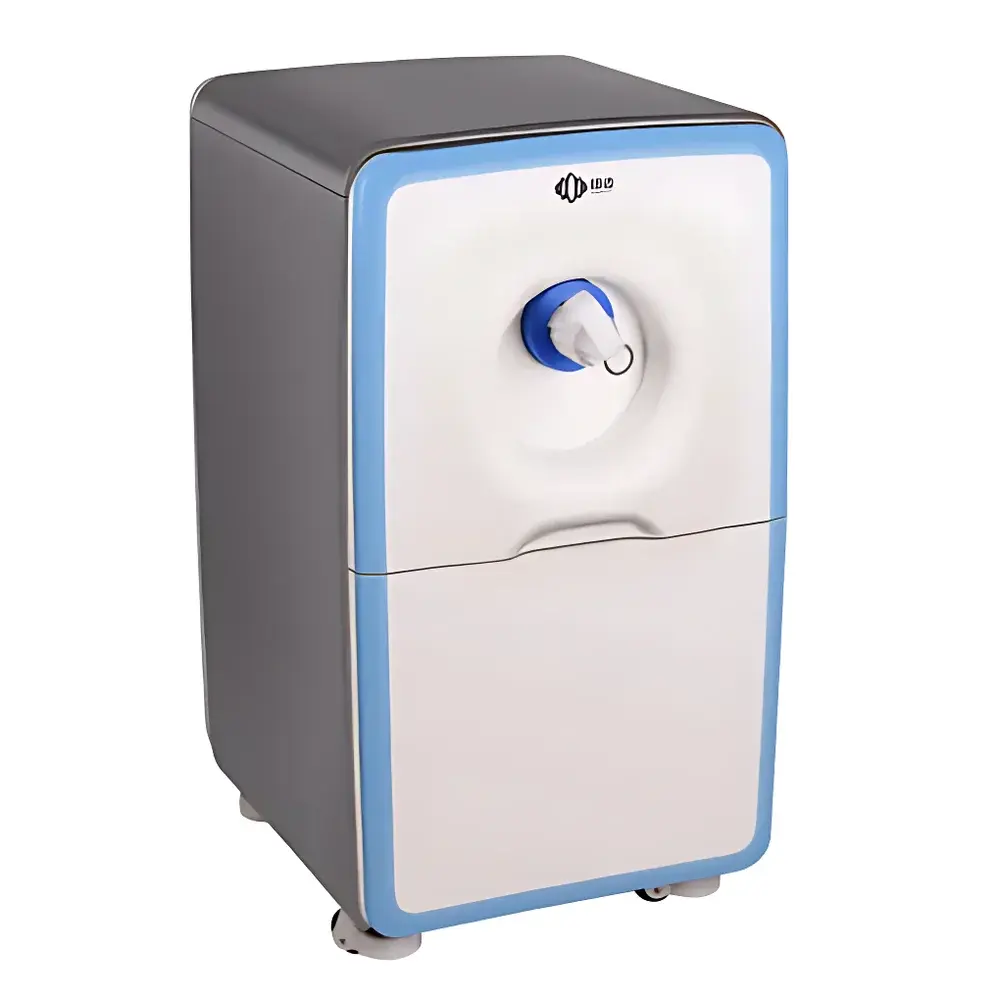
NIUMAG QMR1 Low-Field NMR Body Composition Analyzer for ob/ob Mouse Metabolic Studies
| Brand | NIUMAG |
|---|---|
| Origin | Jiangsu, China |
| Manufacturer Type | Authorized Distributor |
| Country of Origin | China |
| Model | QMR1 |
| Instrument Type | Research-Grade Small Animal (Mouse) Body Composition Analyzer |
| Measurement Principle | Low-Field Nuclear Magnetic Resonance (LF-NMR) Relaxometry |
| Sample State | Conscious, Non-Invasive, Anesthesia-Free |
| Typical Scan Time | 60–180 s per mouse |
| Output Parameters | Fat Mass (g), Lean Mass (g), Total Water Mass (g), %Fat, %Lean, %Water |
| Magnet System | Permanent Magnet (0.3–0.5 T typical range) |
| RF Probe | Dedicated Quadrature Mouse-Sized RF Coil |
| Software | NIUMAG Small Animal Body Composition Analysis Suite (v4.x+) |
| Regulatory Compliance | Designed for GLP-aligned workflows |
Overview
The NIUMAG QMR1 is a dedicated low-field nuclear magnetic resonance (LF-NMR) body composition analyzer engineered for quantitative, non-invasive assessment of fat mass, lean body mass, and total body water in conscious, unrestrained small laboratory animals—primarily C57BL/6J ob/ob mice. Unlike destructive chemical extraction (e.g., Soxhlet) or ionizing radiation-based modalities (e.g., dual-energy X-ray absorptiometry, DXA), the QMR1 leverages intrinsic differences in transverse (T₂) and longitudinal (T₁) relaxation times between adipose tissue, skeletal muscle, and free/bound water compartments. This physical contrast enables robust signal discrimination without contrast agents, sedation, or radiation exposure. The system operates at a stable, homogeneous field strength generated by a permanent magnet assembly, optimized for high signal-to-noise ratio (SNR) in the 10–30 MHz 1H Larmor frequency range. Its design prioritizes experimental continuity: repeated longitudinal measurements on the same cohort are feasible with minimal handling stress, supporting rigorous metabolic phenotyping in obesity, diabetes, and pharmacodynamic intervention studies.
Key Features
- Non-invasive, anesthesia-free operation: Enables serial monitoring of individual ob/ob mice across treatment timelines without physiological confounders introduced by sedation or restraint-induced stress.
- Sub-minute acquisition: Standard single-animal scan completes in ≤90 seconds, facilitating high-throughput screening of cohorts (e.g., >20 mice/hour with automated positioning).
- Dedicated hardware architecture: Includes a temperature-stabilized permanent magnet, custom-built quadrature RF coil optimized for murine torso geometry, and shielded gradient-free detection to maximize T₂ contrast fidelity.
- Quantitative output suite: Delivers absolute mass (g) and relative composition (%) for fat, lean tissue, and total water—calibrated against reference phantoms and validated via gravimetric correlation studies.
- Robust environmental tolerance: Operates stably under standard vivarium conditions (20–25°C, 40–60% RH); no cryogens, RF shielding room, or dedicated power conditioning required.
Sample Compatibility & Compliance
The QMR1 accommodates live, conscious mice (15–45 g), rats (100–300 g), and rabbits (<1.5 kg) within its ergonomic animal cradle. Weight and size limits are defined by RF coil geometry and magnet bore diameter—not by software constraints. All protocols comply with institutional animal care and use committee (IACUC) guidelines for minimally invasive longitudinal imaging. Data integrity aligns with Good Laboratory Practice (GLP) frameworks: raw FID data, processed spectra, and final compositional reports are timestamped, user-logged, and stored with immutable metadata. Optional configuration supports 21 CFR Part 11 compliance—including electronic signatures, role-based access control, and full audit trail generation—for preclinical contract research organizations (CROs) and pharmaceutical development labs.
Software & Data Management
NIUMAG’s proprietary Small Animal Body Composition Analysis Suite (v4.3+) provides end-to-end workflow automation—from auto-detection of animal position and signal quality validation to multi-parameter regression modeling. The software implements multivariate curve resolution (MCR) algorithms trained on ex vivo reference datasets to deconvolve overlapping T₂ decay components. Export formats include CSV, Excel, and HDF5 for integration with MATLAB, Python (NumPy/Pandas), or commercial statistical platforms (e.g., GraphPad Prism, SAS). Batch processing mode allows retrospective re-analysis of archived scans using updated calibration models. All user actions—parameter changes, manual corrections, report generation—are logged in a tamper-evident audit trail meeting GLP documentation standards.
Applications
- Longitudinal evaluation of anti-obesity therapeutics in ob/ob and diet-induced obese (DIO) mouse models, tracking fat mass reduction kinetics independent of acute weight loss artifacts.
- Metabolic phenotyping of genetically modified strains (e.g., db/db, KKay) to quantify ectopic lipid deposition in liver and muscle compartments.
- Assessment of sarcopenia progression in aging models via lean mass trajectory analysis.
- Validation of dietary interventions (e.g., high-fat vs. ketogenic diets) on compartment-specific hydration status and adipose remodeling.
- Supporting mechanistic studies linking gut microbiota modulation to host energy partitioning through serial body composition mapping.
FAQ
Does the QMR1 require animal sedation or anesthesia?
No. The system is explicitly designed for awake, unrestrained measurement. Animals are gently placed in a padded cradle and remain fully conscious throughout the 60–180 second scan.
How is calibration maintained across extended study periods?
Calibration is performed using standardized polymer–oil–water phantoms traceable to NIST-certified reference materials. Daily system suitability checks verify SNR, T₂ reproducibility, and mass accuracy before experimental runs.
Can the QMR1 distinguish visceral from subcutaneous fat?
No. As a whole-body relaxometry platform, it reports total fat mass. Spatial localization requires MRI-based approaches. However, longitudinal shifts in fat/lean ratio strongly correlate with visceral adiposity in ob/ob models validated histologically.
Is training provided for instrument operation and data interpretation?
Yes. NIUMAG offers on-site or remote operator certification covering hardware safety, protocol setup, quality control procedures, and advanced troubleshooting—delivered by application scientists with PhD-level expertise in rodent metabolism and NMR physics.
What maintenance schedule is recommended?
Annual magnet homogeneity verification and RF coil performance testing are advised. No routine consumables or cryogen refills are required. The permanent magnet system has an operational lifetime exceeding 15 years under normal usage conditions.





