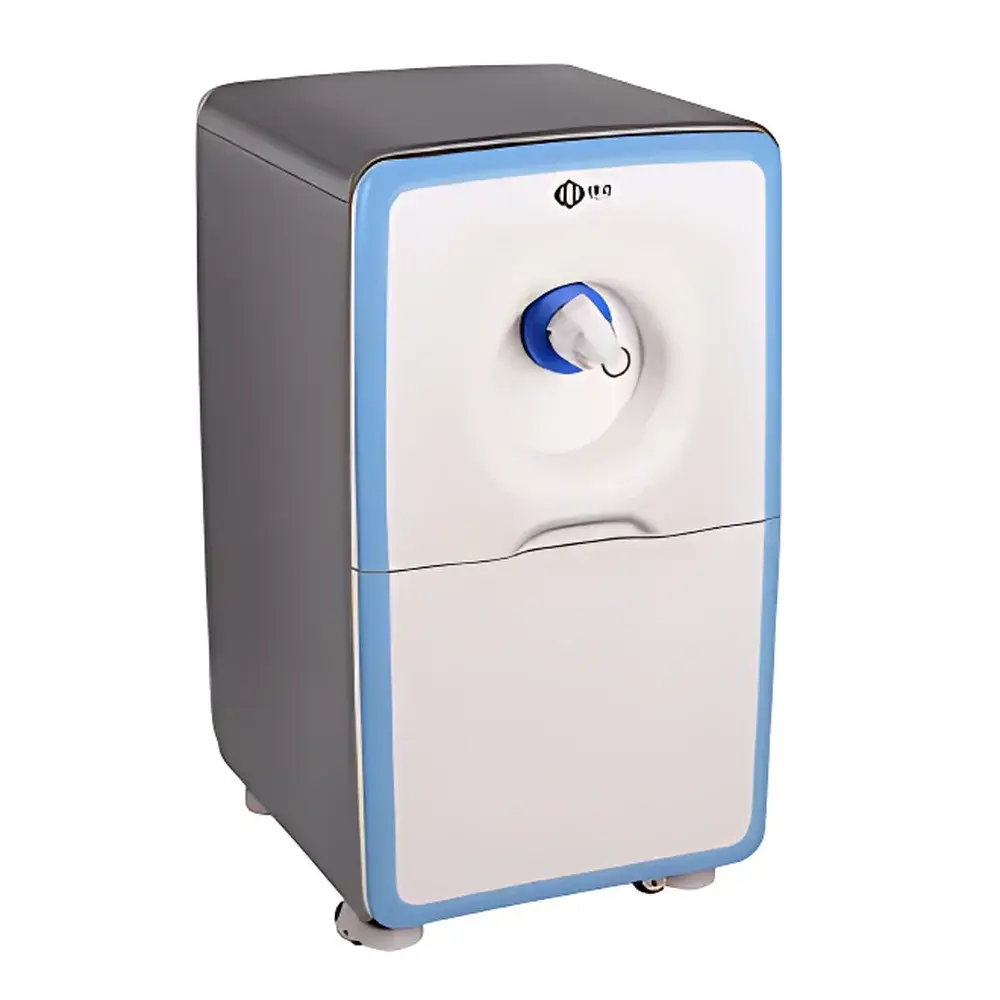
NIUMAG QMR06-090H-PRO Small Animal Body Composition Analyzer
| Brand | NIUMAG |
|---|---|
| Origin | Jiangsu, China |
| Manufacturer Type | Authorized Distributor |
| Country of Origin | China |
| Model | QMR06-090H |
| Instrument Type | Research-Grade Small Rodent Analyzer (Mouse/Rat) |
| Magnet Type | Permanent Magnet |
| Measurement Time | < 60 s per animal |
| Sample Requirement | Live, conscious, unrestrained |
| Measured Parameters | Fat Mass, Lean Body Mass, Free Water Content |
| Species Compatibility | Mus musculus, Rattus norvegicus, Oryctolagus cuniculus |
| Regulatory Context | Designed for GLP-compliant preclinical research environments |
Overview
The NIUMAG QMR06-090H-PRO is a dedicated low-field nuclear magnetic resonance (LF-NMR) analyzer engineered for non-invasive, quantitative assessment of body composition in live small laboratory animals. Unlike destructive or radiological methods, this system leverages the intrinsic magnetic properties of hydrogen nuclei (¹H) in adipose tissue and lean mass to differentiate fat, lean tissue, and free water compartments based on T₂ relaxation time discrimination. Operating at a stable, homogeneous permanent magnet field (~0.05–0.1 T), the instrument applies optimized pulse sequences—including CPMG (Carr–Purcell–Meiboom–Gill)—to acquire decay signals from mobile proton pools. Signal amplitude and relaxation kinetics are translated into absolute mass estimates (grams) using factory-calibrated, species-specific regression models validated against chemical carcass analysis (e.g., ether extraction, nitrogen determination). The system is purpose-built for longitudinal metabolic phenotyping in rodent models of obesity, diabetes, sarcopenia, cachexia, and drug intervention studies—where repeated, stress-free measurements are essential for data integrity.
Key Features
- Non-invasive & stress-minimized workflow: Animals remain fully conscious and unrestrained during measurement; no anesthesia, fasting, sedation, or physical restraint required—eliminating confounding physiological artifacts.
- Sub-minute acquisition: Single-animal scan completed in under 60 seconds, enabling high-throughput screening of cohorts without compromising animal welfare or experimental timelines.
- Quantitative multi-compartment output: Delivers three primary outputs per scan: total fat mass (g), lean body mass (g), and free water mass (g), each traceable to NIST-traceable reference standards via embedded calibration protocols.
- Robust permanent magnet architecture: Zero helium consumption, no cryogenic maintenance, and minimal site infrastructure requirements (standard AC power, ambient temperature operation).
- Modular animal handling interface: Interchangeable, MRI-compatible cradles accommodate mice (15–40 g), rats (100–500 g), and rabbits (< 2.5 kg); integrated weight sensor synchronizes mass input with NMR signal processing.
Sample Compatibility & Compliance
The QMR06-090H-PRO supports live, conscious subjects across common preclinical species: C57BL/6 and BALB/c mice, Sprague-Dawley and Wistar rats, and New Zealand White rabbits. It complies with international animal welfare guidelines including AAALAC International standards and EU Directive 2010/63/EU. Data acquisition and storage adhere to principles aligned with Good Laboratory Practice (GLP): audit trails record operator ID, timestamp, animal ID, scan parameters, and raw FID data; software enforces user-level access control and electronic signature capability. While not FDA 21 CFR Part 11 certified out-of-the-box, the system architecture supports validation documentation packages required for regulated toxicology or pharmacokinetic studies.
Software & Data Management
The proprietary QMR-Studio v4.2 software provides an intuitive, menu-driven interface compliant with ISO/IEC 17025:2017 software validation expectations. Key modules include: (1) Scan Setup Wizard, guiding users through animal ID entry, species selection, and weight input; (2) Real-time Signal Monitor, displaying raw echo train and fitted T₂ decay curves; (3) Batch Analysis Engine, enabling group-wise statistical comparison (ANOVA, t-test) with export to CSV, Excel, or MATLAB formats; and (4) Report Generator, producing PDF summaries with metadata, QC flags, and trend charts. All raw data (.qmr files) and processed results are stored in a relational SQLite database with SHA-256 checksum integrity verification.
Applications
This analyzer is routinely deployed in academic and industrial research settings for: longitudinal monitoring of diet-induced obesity progression; evaluation of anti-obesity therapeutics targeting adipogenesis or lipolysis; characterization of muscle wasting in cancer cachexia models; assessment of lean mass preservation during caloric restriction or exercise interventions; validation of genetic knockouts affecting lipid metabolism (e.g., leptin-deficient ob/ob mice); and cross-study harmonization of body composition endpoints in multi-center preclinical trials. Its reproducibility (CV < 2.1% for fat mass in same-day repeated scans, n=12 C57BL/6 mice) makes it suitable for endpoint-sensitive study designs requiring high intra- and inter-operator consistency.
FAQ
Is anesthesia required for scanning?
No. The system is designed for awake, freely breathing animals placed in a quiet, padded cradle. Acoustic noise is below 65 dB(A), minimizing stress responses.
Can the instrument distinguish brown adipose tissue (BAT) from white adipose tissue (WAT)?
Not directly. The QMR06-090H-PRO quantifies total fat mass based on bulk ¹H signal intensity and T₂ relaxation; BAT/WAT differentiation requires complementary modalities such as PET-CT or histomorphometry.
What is the minimum and maximum animal weight supported?
Validated range: 12 g (neonatal mice) to 2,500 g (large rabbits). Accuracy degrades outside these bounds due to RF coil sensitivity profile limitations.
How is calibration maintained over time?
Daily automated shimming and reference phantom scans (provided with system) verify field homogeneity and signal stability. Annual recalibration by NIUMAG-certified engineers includes T₂ standard verification using glycerol/water phantoms.
Is remote operation or integration with LIMS possible?
Yes. The software exposes RESTful API endpoints for automated job submission and result retrieval. LIMS integration has been implemented at multiple EU-based contract research organizations using HL7 v2.x messaging profiles.