
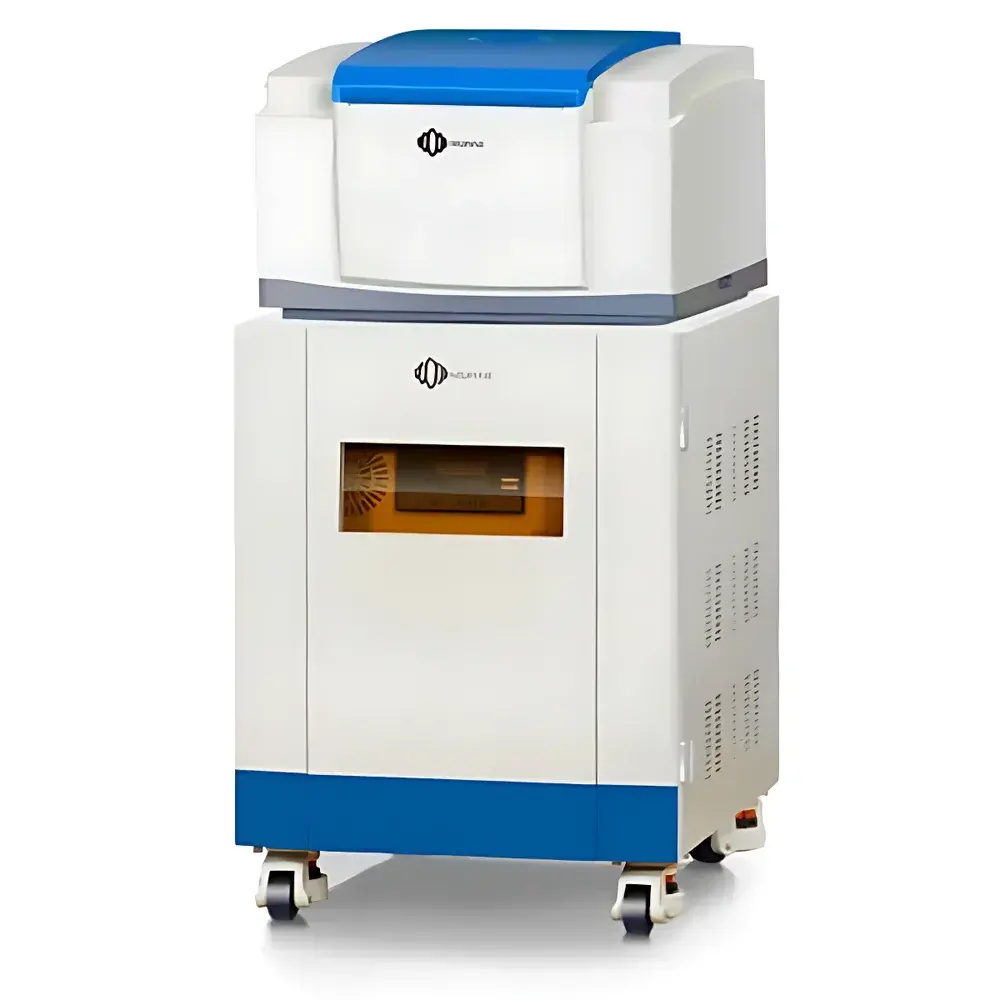
NIUMAG PQ001 Low-Field Nuclear Magnetic Resonance Analyzer for Hydrogen Content in Fuels
| Brand | NIUMAG |
|---|---|
| Origin | Jiangsu, China |
| Instrument Type | Low-Field NMR Spectrometer |
| Magnet Type | Permanent Magnet |
| Magnetic Field Strength | 0.5 ± 0.08 T |
| Probe Coil Diameter | 18 mm |
| Sample Compatibility | Solid-Liquid Dual-Mode |
| Calibration Methods | Pure Hydrocarbon Standard (e.g., Dodecane) or User-Provided Reference Samples with Known H-Content |
| Compliant Standards | ASTM D7171, ASTM D3701, ASTM D4808 |
Overview
The NIUMAG PQ001 is a dedicated low-field nuclear magnetic resonance (LF-NMR) analyzer engineered for rapid, non-destructive quantification of hydrogen content in petroleum-based fuels—including aviation turbine fuel, diesel, kerosene, and distillate oils. Operating on the fundamental principle of pulsed NMR spectroscopy, the instrument detects the transverse relaxation decay (T2) of 1H nuclei following a 90°–180° spin-echo pulse sequence. Since hydrogen density directly correlates with hydrocarbon saturation and molecular structure, the integrated NMR signal amplitude provides a robust, physics-based proxy for total hydrogen mass fraction. Unlike combustion-based or chromatographic methods, LF-NMR requires no chemical reagents, sample digestion, or hazardous gas handling—making it ideal for routine quality control in refinery labs, blending facilities, and third-party testing centers. Its permanent magnet architecture ensures stable field homogeneity over time without cryogenic maintenance, while the 0.5 T field strength balances sensitivity, cost-efficiency, and industrial ruggedness.
Key Features
- Permanent magnet system delivering stable 0.5 ± 0.08 T field—zero helium consumption, minimal thermal drift, and operational readiness within minutes after power-on
- 18 mm diameter radiofrequency probe optimized for small-volume fuel samples (0.5–5 mL liquid or 0.2–2 g solid), accommodating irregular geometries including powders, granules, films, and bulk solids
- Compliance with ASTM D7171 (Standard Test Method for Hydrogen Content of Middle Distillate Fuels by Low-Field Pulsed NMR), with validated traceability to primary reference materials
- Support for dual calibration protocols: (1) absolute quantification using certified pure hydrocarbons (e.g., n-dodecane), or (2) empirical calibration via user-supplied reference samples with certified hydrogen content
- Non-invasive, non-destructive measurement—samples retain integrity for downstream analysis or archival; repeat measurements on identical specimens demonstrate intra-day RSD < 0.8% (n = 6)
- Minimal sample preparation: no drying, filtration, or derivatization required; compatible with as-received fuel samples, including those containing dissolved water or particulates
- Embedded temperature stabilization (±0.2 °C) to mitigate relaxation-time variability across ambient lab conditions (15–30 °C)
Sample Compatibility & Compliance
The PQ001 accepts heterogeneous fuel matrices without discrimination—its RF penetration depth and volumetric signal averaging eliminate surface effects, color dependence, or opacity limitations inherent in optical or IR techniques. It is validated for use with aviation turbine fuels per ASTM D3701, light/intermediate distillates and diesel per ASTM D4808, and residual fuel oils where hydrogen index correlates with ignition quality and emissions potential. The system architecture supports GLP-compliant workflows: audit trails record operator ID, timestamp, calibration history, pulse sequence parameters, and raw FID data. Full compliance with FDA 21 CFR Part 11 requirements is achievable via optional software licensing, enabling electronic signatures, role-based access control, and immutable data archiving.
Software & Data Management
Bundled NMIQ v3.2 acquisition and analysis software provides intuitive workflow templates for hydrogen quantification, T2 distribution mapping, and multi-component deconvolution (e.g., distinguishing bound vs. free hydrogen in emulsified fuels). All spectra and processed results export in CSV, TXT, and vendor-neutral JCAMP-DX formats. Integrated calibration management logs standard lot numbers, expiration dates, and uncertainty budgets. For enterprise integration, the instrument supports OPC UA and Modbus TCP protocols—enabling direct data ingestion into LIMS (e.g., LabWare, Thermo SampleManager) or MES platforms without manual transcription.
Applications
- Routine QC of hydrogen content in jet fuel batches prior to certification (ASTM D1655 Annex A1)
- Monitoring hydrogen loss during hydrotreating or catalytic cracking processes
- Differentiation of bio-derived hydrocarbons (e.g., HVO, FT-diesel) from fossil counterparts based on H/C ratio trends
- Quantification of water contamination in diesel (down to 50 ppm w/w) and lubricating oils
- Hydrogen index determination for coal and biomass feedstocks in co-processing evaluations
- Stability assessment of fuel emulsions via longitudinal (T1) and transverse (T2) relaxation kinetics
FAQ
Does the PQ001 require cryogens or external cooling systems?
No—the permanent magnet operates at ambient temperature and requires only standard AC power (100–240 VAC, 50/60 Hz). No liquid nitrogen or helium is needed.
Can the instrument measure hydrogen content in highly viscous or waxy fuels?
Yes—LF-NMR signal generation depends on proton mobility, not viscosity alone. The PQ001 has been validated for Biodiesel (B100), heavy fuel oil (HFO), and cold-soaked diesel down to −20 °C using optional temperature-controlled probe accessories.
How often must the system be recalibrated?
Calibration stability exceeds 6 months under typical lab conditions. Annual verification against traceable reference standards is recommended per ISO/IEC 17025 accreditation requirements.
Is method validation support available for regulatory submissions?
Yes—NIUMAG provides IQ/OQ documentation packages, ASTM D7171 validation reports, and technical assistance for method transfer to client laboratories.
What sample containers are compatible?
Standard 10 mm or 18 mm OD glass NMR tubes; polypropylene vials with flat bottoms; and custom-machined aluminum holders for solid samples. All containers are non-magnetic and RF-transparent.





