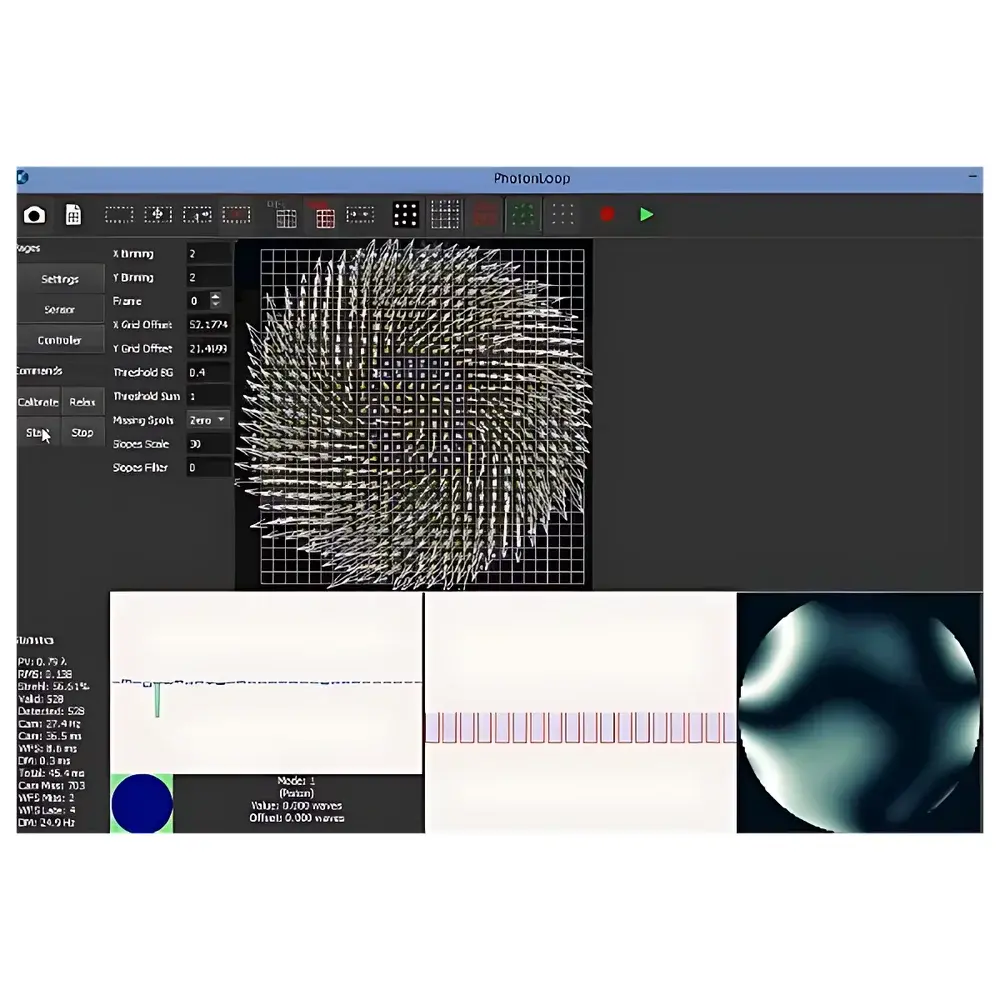
ProOpto DO High-Speed Hartmann-Shack Wavefront Sensor
| Brand | ProOpto |
|---|---|
| Origin | Germany |
| Manufacturer Type | Authorized Distributor |
| Import Status | Imported |
| Model | DO |
| Pricing | Upon Request |
| Lenslet Pitch | 150 µm |
| Lenslet Focal Length | 5.2 mm (customizable) |
| Dynamic Range | ≥30 µm |
| Sensitivity | λ/100 @ 633 nm |
| Measurement Accuracy | <10 nm RMS |
| Repeatability | λ/200 @ 633 nm |
| Sensor Active Area | 11.3 mm × 7.12 mm |
| Pixel Resolution | 1920 × 1200 |
| Spectral Response | 400–1000 nm |
| Frame Rate | up to 700 fps |
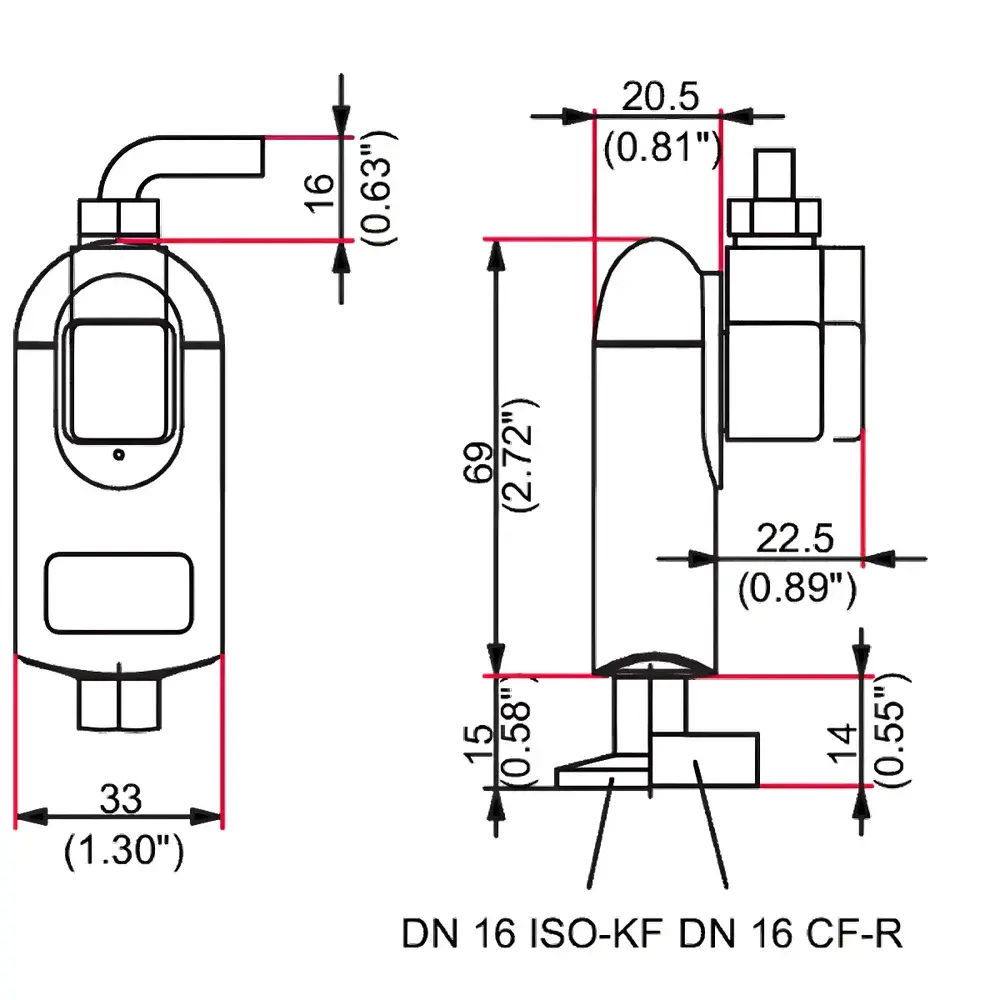
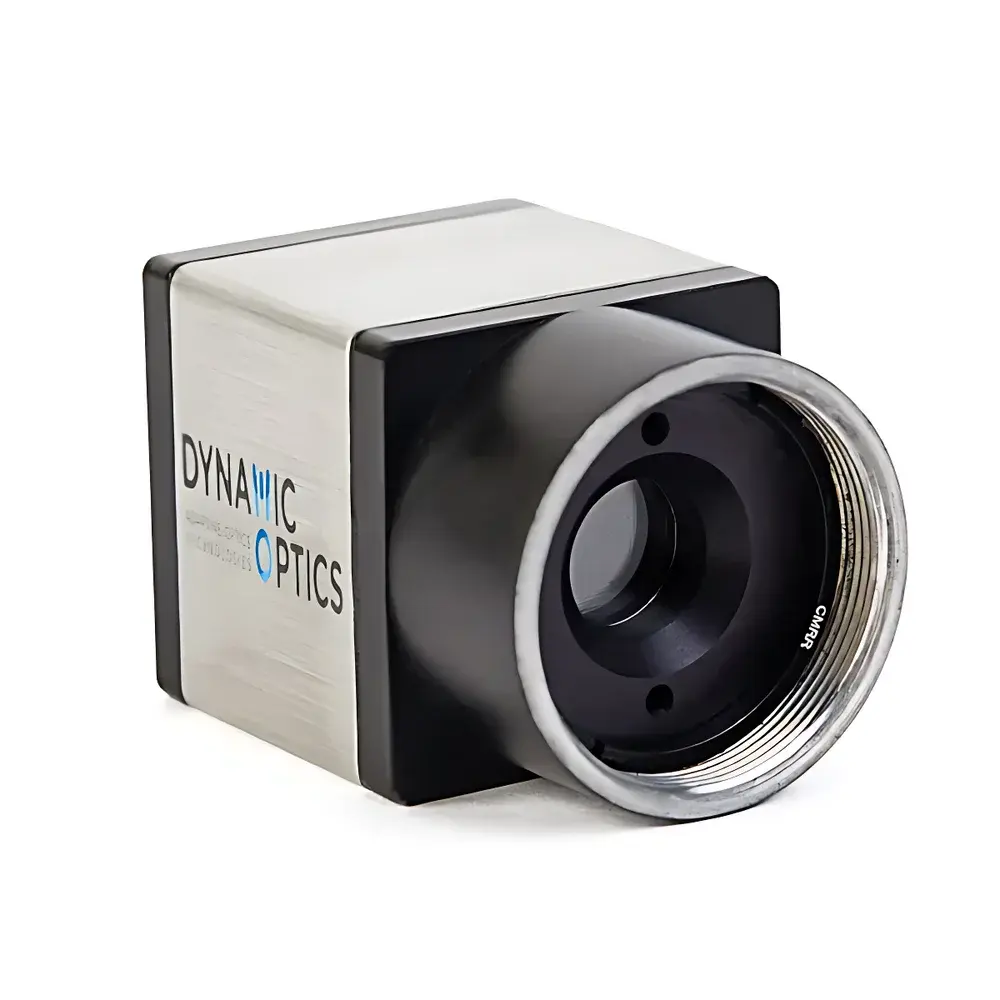
| Physical Dimensions | 42.6 mm × 29 mm × 29 mm |
| Supported Camera Interfaces | 20+ industrial camera types |
| Compliance | ISO 11146, ISO 13694, ISO 11670, ISO 15367 |
Overview
The ProOpto DO High-Speed Hartmann-Shack Wavefront Sensor is an engineered metrology instrument designed for real-time, single-shot wavefront characterization of laser and broadband optical beams. Based on the Hartmann-Shack principle, it employs a precision micro-lens array to partition the incident wavefront into an array of sub-apertures; each lenslet focuses its portion of the beam onto a high-resolution CMOS sensor. The lateral displacement of each focal spot relative to its reference position is measured with sub-pixel accuracy, enabling full two-dimensional reconstruction of the optical phase distribution and intensity profile in a single acquisition. This principle delivers deterministic, non-iterative wavefront retrieval without reliance on iterative phase unwrapping or assumptions about beam coherence—making it especially suitable for pulsed lasers, rapidly varying thermal distortions, and dynamic optical systems where temporal fidelity is critical. Its spectral coverage from 400 nm to 1000 nm supports applications across visible, near-infrared, and ultrafast Ti:sapphire and Yb-doped fiber laser systems.
Key Features
- Real-time wavefront sensing at up to 700 frames per second—enabling closed-loop adaptive optics control with latency under 1.5 ms
- High spatial resolution: 1920 × 1200 active pixels over a 11.3 mm × 7.12 mm sensor area, supporting fine-grained aberration detection
- Measurement accuracy better than 10 nm RMS and repeatability of λ/200 @ 633 nm—validated against NIST-traceable interferometric references
- Micro-lens array with 150 µm pitch and 5.2 mm focal length (standard); custom arrays available for optimized dynamic range or sensitivity trade-offs
- Dynamic wavefront range ≥30 µm PV—sufficient for characterizing high-power laser thermal lensing and large-stroke deformable mirror actuation
- Native support for over 20 industrial camera interfaces (including USB3 Vision, GigE Vision, and Camera Link), ensuring seamless integration into existing test benches
Sample Compatibility & Compliance
The DO sensor accommodates collimated or mildly convergent/divergent beams with diameters ranging from 1 mm to 12 mm (with optional beam expanders or reduction optics). It is compatible with continuous-wave (CW), quasi-CW, and nanosecond-to-picosecond pulsed sources—provided pulse energy remains within camera damage thresholds. All beam parameter calculations—including beam diameter, divergence, M² factor, pointing stability, and phase distribution—are computed in strict accordance with international standards: ISO 11146 (laser beam widths and divergences), ISO 13694 (beam profile measurements), ISO 11670 (pointing stability), and ISO 15367 (wavefront measurement methodology). The system architecture supports audit-ready data logging and timestamped metadata capture, aligning with GLP-compliant optical testing workflows.
Software & Data Management
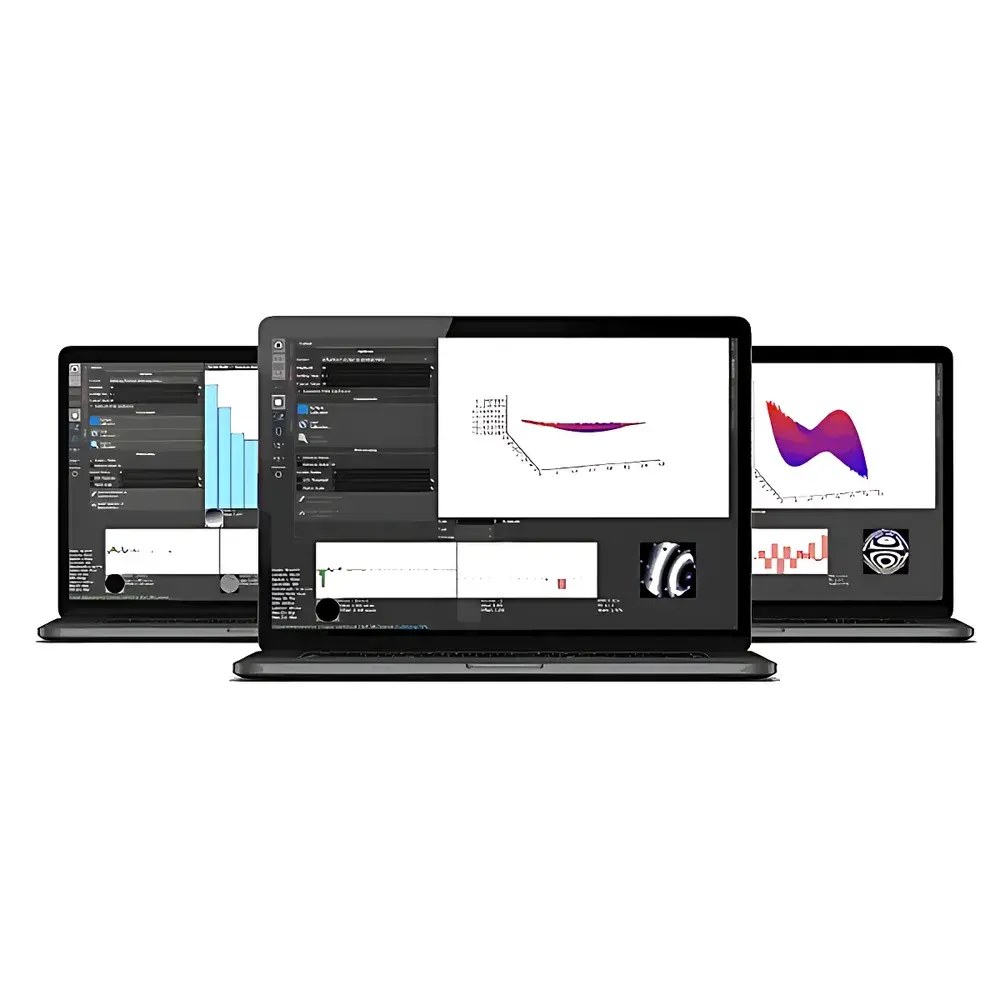
The included WaveSense™ software provides a modular, API-accessible platform for both standalone operation and OEM integration. It features real-time Zernike and Legendre polynomial decomposition, customizable region-of-interest (ROI) analysis, and export of raw spot coordinates, reconstructed phase maps (in FITS and HDF5 formats), and ISO-compliant summary reports. The software supports 21 CFR Part 11–compliant user access controls, electronic signatures, and immutable audit trails—essential for regulated environments such as medical laser validation and aerospace optical subsystem qualification. A documented C++/Python SDK enables direct integration with MATLAB, LabVIEW, and Python-based control frameworks for adaptive optics loop implementation.
Applications
- Real-time wavefront correction in astronomical adaptive optics and laser guide star systems
- Quality assurance of high-NA objective lenses, laser crystals, and coated optical components
- M² and beam propagation analysis in laser manufacturing and fiber-optic amplifier development
- Thermal distortion monitoring in high-power laser cavities and solid-state gain media
- Phase-resolved diagnostics of ultrafast laser pulses via spectral shearing interferometry coupling
- Validation of spatial light modulators (SLMs) and MEMS-based deformable mirrors
FAQ
What is the minimum measurable wavefront error?
The sensor achieves a sensitivity of λ/100 @ 633 nm—equivalent to ~6.3 nm RMS phase error under ideal illumination and calibration conditions.
Can the DO sensor be used with femtosecond lasers?
Yes, provided the pulse energy per frame remains below the camera’s saturation and damage thresholds; synchronization via external TTL trigger is supported.
Is custom micro-lens array design available?
Yes—ProOpto offers tailored lenslet pitches (75–300 µm), focal lengths (2–20 mm), and substrate materials (fused silica, CaF₂) for UV or IR optimization.
Does the system support automated ISO-compliant reporting?
Yes—WaveSense™ generates fully traceable, PDF-embedded reports including uncertainty budgets, calibration certificates, and ISO standard cross-references.
How is calibration performed and maintained?
Factory calibration includes flat-wavefront verification using a high-precision reference flat and wavelength-specific focus calibration; field recalibration tools are included for periodic verification.