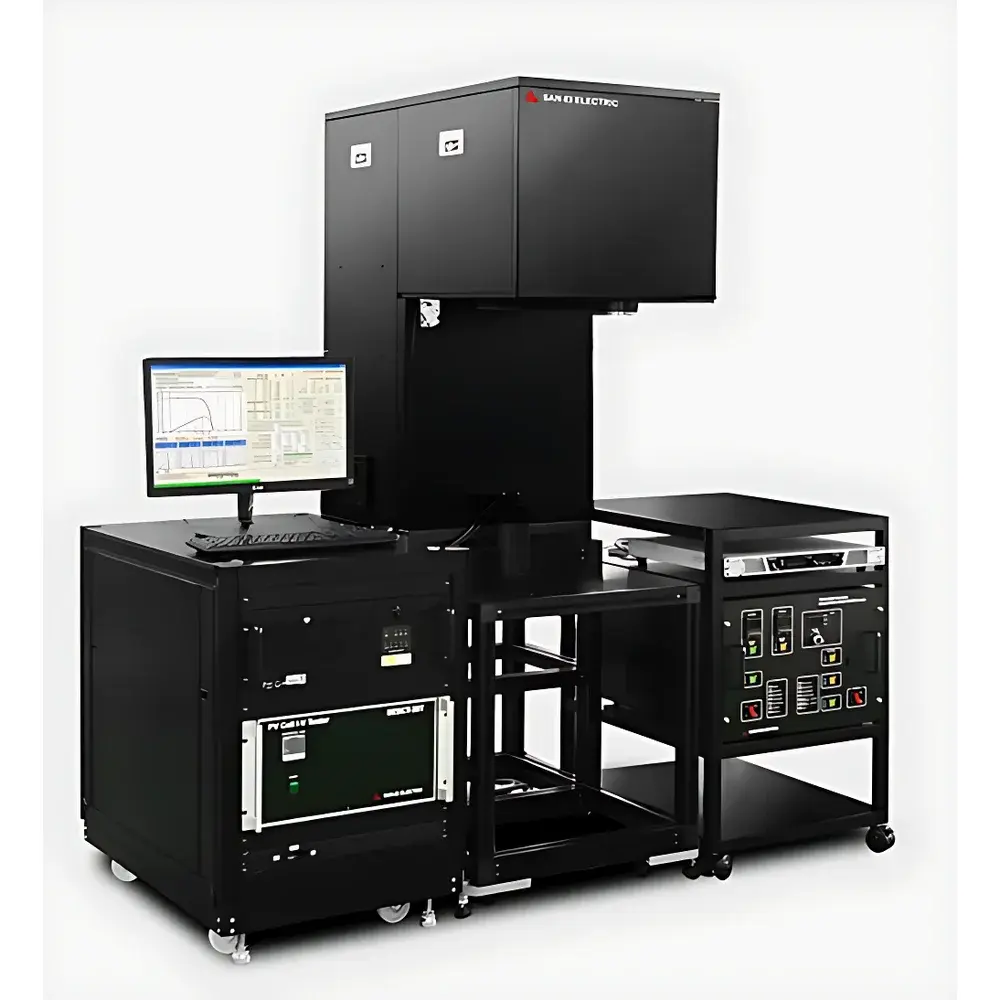
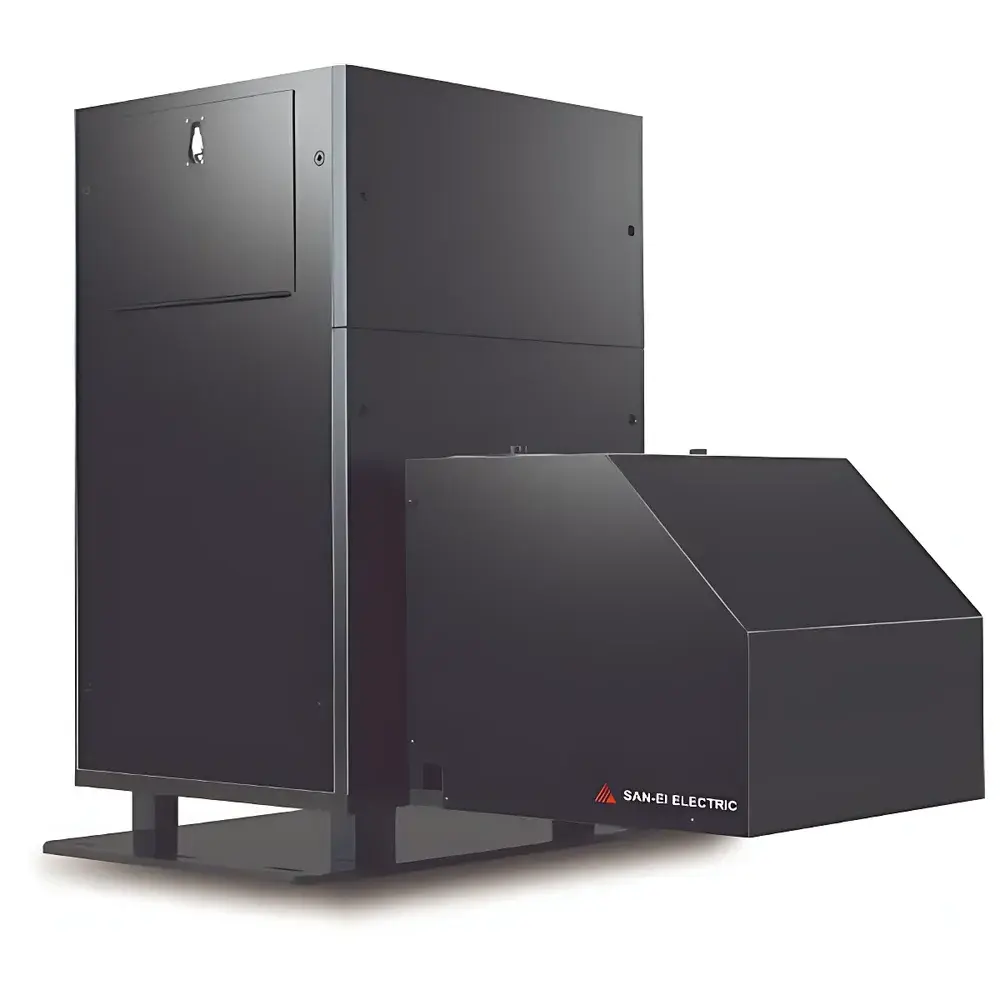
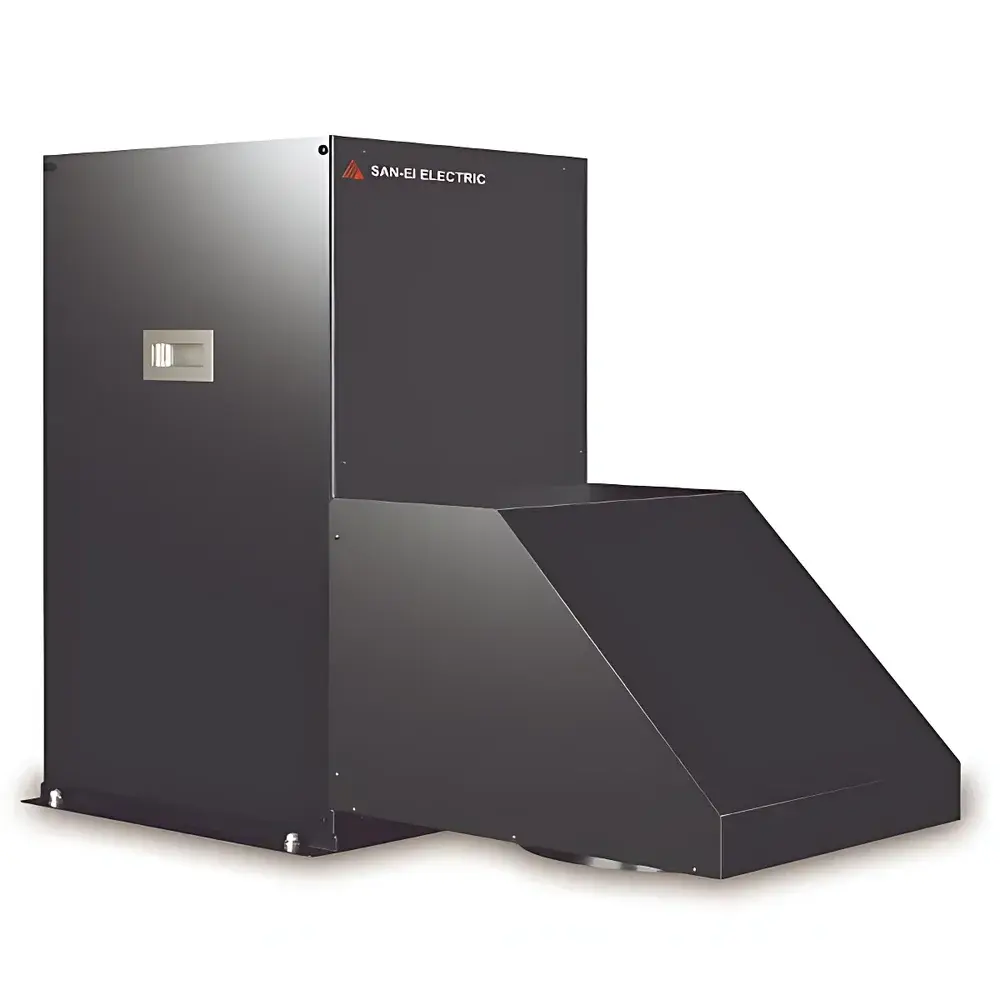
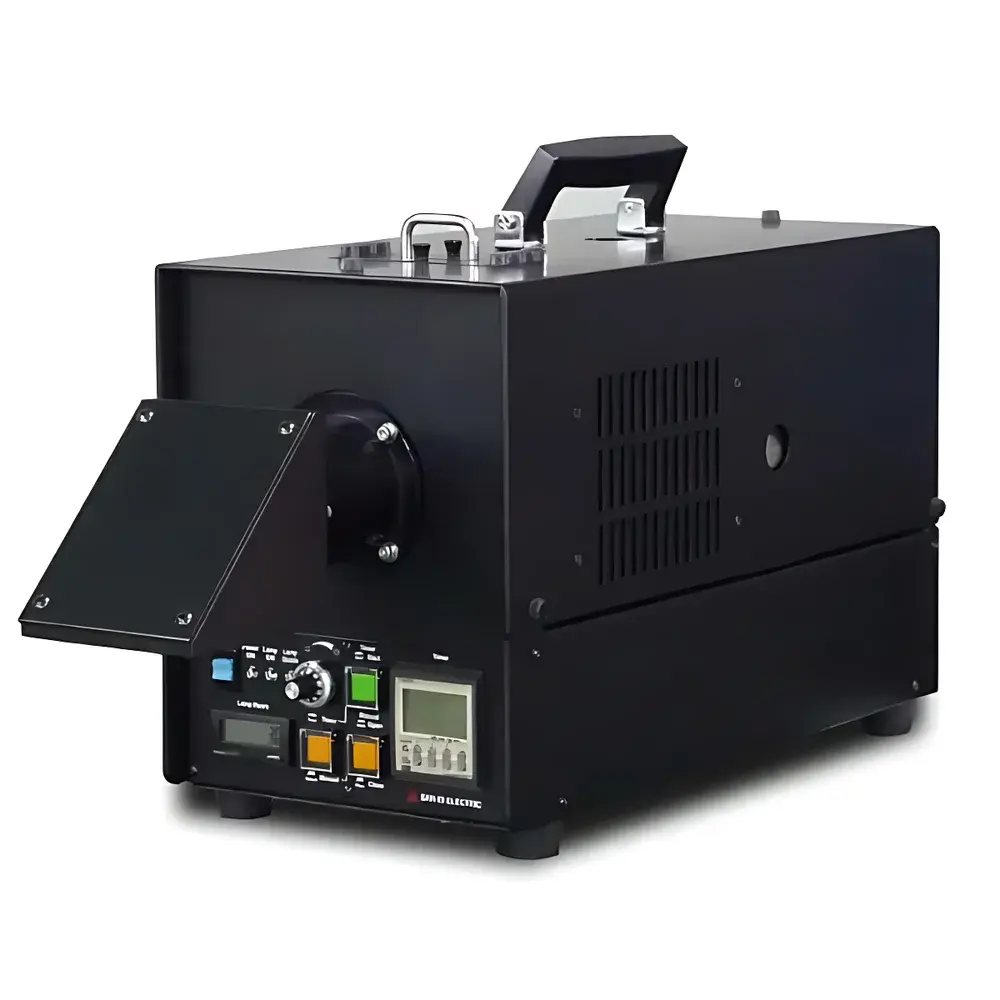
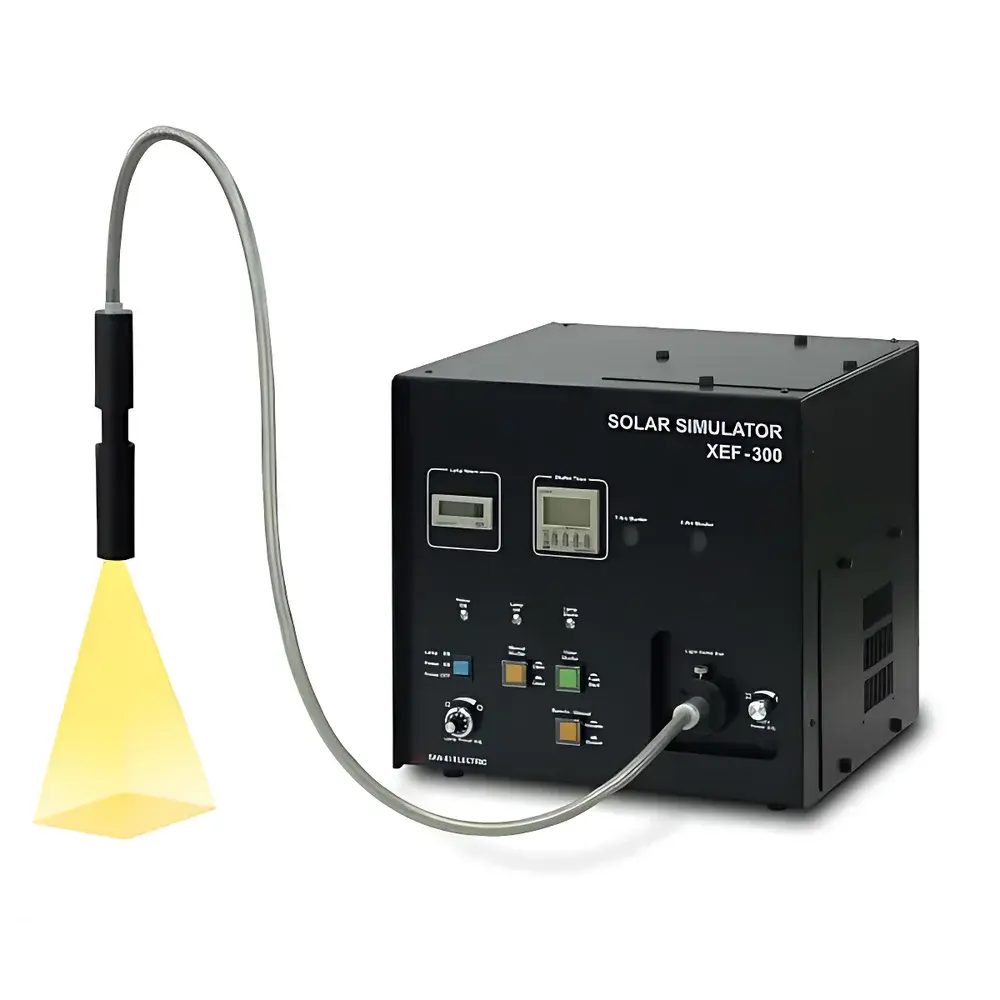
SAN-EI XES Series Solar Cell I-V Characterization System
| Brand | SAN-EI |
|---|---|
| Origin | Japan |
| Model | XES Series |
| Light Source | Xenon + Halogen |
| Spectral Class | AAA (A+A+A) per JIS C 8912, IEC 60904-9:2007, ASTM E927-05 |
| Effective Illumination Area | 40 mm × 40 mm to 300 mm × 300 mm (customizable) |
| Voltage Measurement Resolution | 10 µV |
| Current Measurement Resolution | 10 pA |
| Light Intensity Range | 70–130% of 1000 W/m² |
| Temporal Instability (≥1 h) | <1% (A+ class) |
| Spatial Non-uniformity | <2% (Class A) |
| Spectral Mismatch | <±12.5% (A+ class, AM1.5G or AM0) |
| Shutter Timing Range | 0.1 s – 9990 h |
| Remote Control | Yes |
| Safety Interlock & Auto-Cooling | Yes |
Overview
The SAN-EI XES Series Solar Cell I-V Characterization System is a fully integrated, standards-compliant photovoltaic (PV) testing platform engineered for high-fidelity current–voltage (I-V) characterization under simulated solar illumination. It operates on the principle of controlled illumination using a spectrally matched light source combined with precision source-measure unit (SMU) instrumentation to extract fundamental device parameters—including short-circuit current (Isc), open-circuit voltage (Voc), maximum power point (Pmax), fill factor (FF), series resistance (Rs), shunt resistance (Rsh), and power conversion efficiency (PCE). The system conforms to international calibration and performance standards including IEC 60904-9:2007 (Edition 3), JIS C 8912, and ASTM E927-05—ensuring traceable, repeatable, and metrologically sound measurements required for R&D validation, quality assurance, and inter-laboratory comparison.
Key Features
- AAA-class (A+A+A) solar simulator: Simultaneous compliance with spectral match (±12.5%), spatial uniformity (<2%), and temporal stability (<1% over ≥1 h) per IEC 60904-9:2007.
- Multi-source optical architecture: Configurable xenon (150–3000 W) and halogen lamp modules with AM1.5G or AM0 spectral filtering options; real-time spectral output data available upon request.
- Adjustable irradiance: Continuously tunable from 70% to 130% of 1000 W/m² with calibrated feedback control.
- Intelligent thermal management: Integrated overheat protection, auto-cooling post-shutdown, and xenon lamp hour counter for predictive maintenance.
- Programmable shutter: Exposure timing resolution from 0.1 s to 9990 h, supporting both transient and steady-state measurement protocols.
- Modular SMU integration: Compatible with Keithley 2400/2600-series source-measure units or high-power SMUs for low-noise sub-picoampere current resolution and microvolt-level voltage resolution.
- Full safety architecture: Hardware-enforced interlock, emergency stop, and directional beam adjustment for alignment flexibility and user protection.
Sample Compatibility & Compliance
The XES Series accommodates a broad range of PV technologies across research and production environments—including silicon (c-Si, mc-Si), thin-film (CIGS, CdTe, a-Si), perovskite, organic photovoltaics (OPV), and multi-junction cells. Its modular sample stage supports custom fixtures: probe-bar carriers for wafer-level screening, vacuum-assisted temperature-controlled stages (−40°C to +120°C), and motorized translation platforms for automated mapping. All standard reference cells are certified by accredited PV calibration laboratories (e.g., NIM China, PTB Germany, NREL USA) and supplied with ISO/IEC 17025 traceable calibration certificates. The system’s optical and electrical architecture satisfies GLP audit requirements and supports FDA 21 CFR Part 11-compliant electronic records when deployed with validated software configurations.
Software & Data Management
The proprietary I-V analysis software provides full instrument control, real-time curve visualization (I-V, P-V, I-t), and parameter extraction in accordance with IEC 60904-1 and IEC 61215. Key capabilities include forward/reverse sweep modes, bias-stability monitoring, maximum power point tracking (MPPT), repeatability assessment (n ≥ 5), and automatic light intensity recalibration using certified reference cells. Data export is supported in CSV, XML, and HDF5 formats; metadata tagging includes timestamp, environmental conditions (optional sensor input), lamp hours, and operator ID. Audit trails record all parameter changes, measurement triggers, and file modifications—enabling full traceability for ISO 17025 or GMP-aligned workflows.
Applications
- Research-grade efficiency benchmarking of emerging PV materials (e.g., perovskites, tandem structures).
- Process development and yield analysis in pilot-line fabrication facilities.
- Stability testing under controlled illumination and temperature stress (ISOS-L-1, ISOS-D-1 protocols).
- Calibration and verification of secondary reference cells and field sensors.
- Interlaboratory round-robin studies coordinated by national metrology institutes (e.g., NIM, NPL, NIST).
- Teaching laboratories requiring pedagogically structured I-V acquisition and parameter derivation.
FAQ
What standards does the XES Series solar simulator comply with?
It meets AAA classification per IEC 60904-9:2007, JIS C 8912, and ASTM E927-05—covering spectral mismatch, spatial non-uniformity, and temporal instability simultaneously.
Can the system measure dark I-V characteristics?
Yes—full dark-mode operation is supported via programmable shutter closure and shielded chamber configuration (optional enclosure recommended for ultra-low-current measurements).
Is remote operation possible?
The system supports Ethernet- and USB-based remote control via SCPI commands and native API integration for LabVIEW, Python, and MATLAB.
What reference cell options are available?
Certified Si, GaAs, and Ge reference cells are offered with NIST-traceable calibration certificates; window materials include KG5, KG2, and fused silica.
How is light intensity calibrated?
Using a factory-calibrated reference cell and built-in photodiode feedback loop; users may perform periodic recalibration following IEC 60904-2 procedures.
Does the software support automated reporting?
Yes—customizable report templates generate PDF or Excel outputs with embedded curves, statistical summaries, and pass/fail flags against user-defined specification limits.