
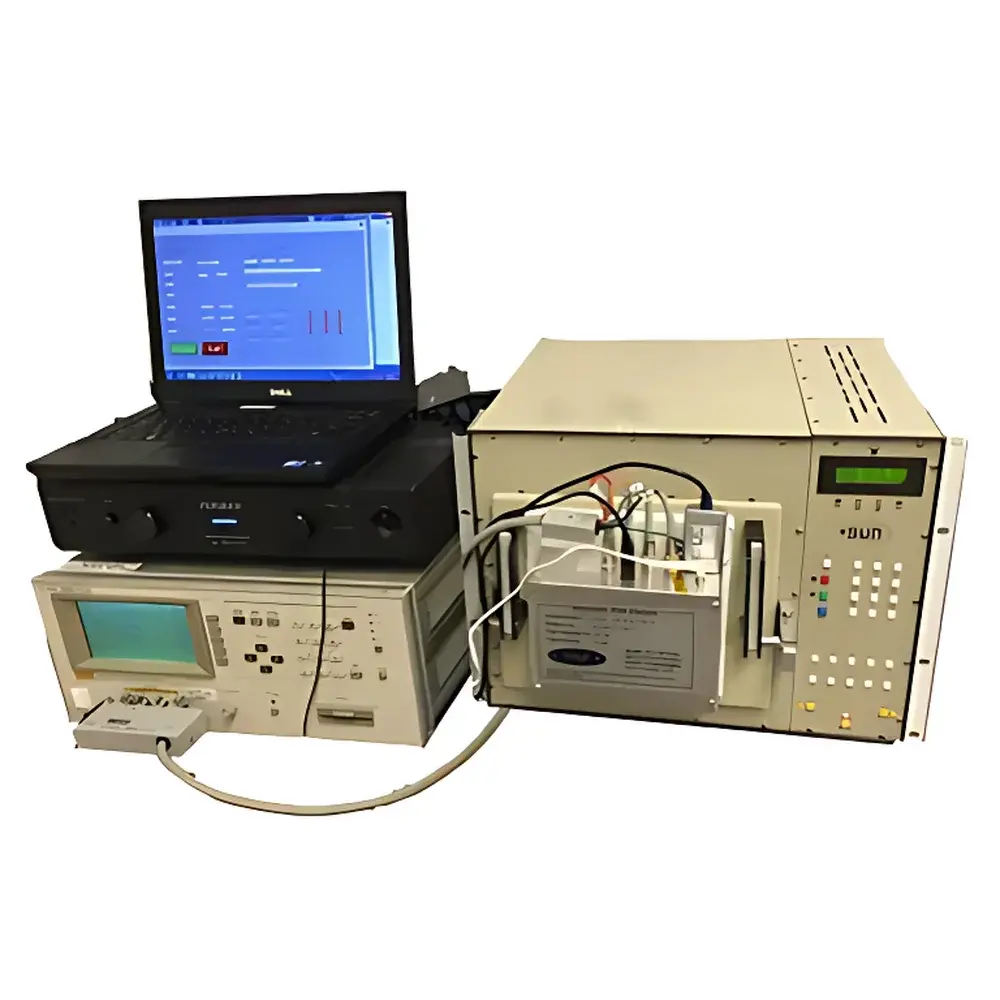
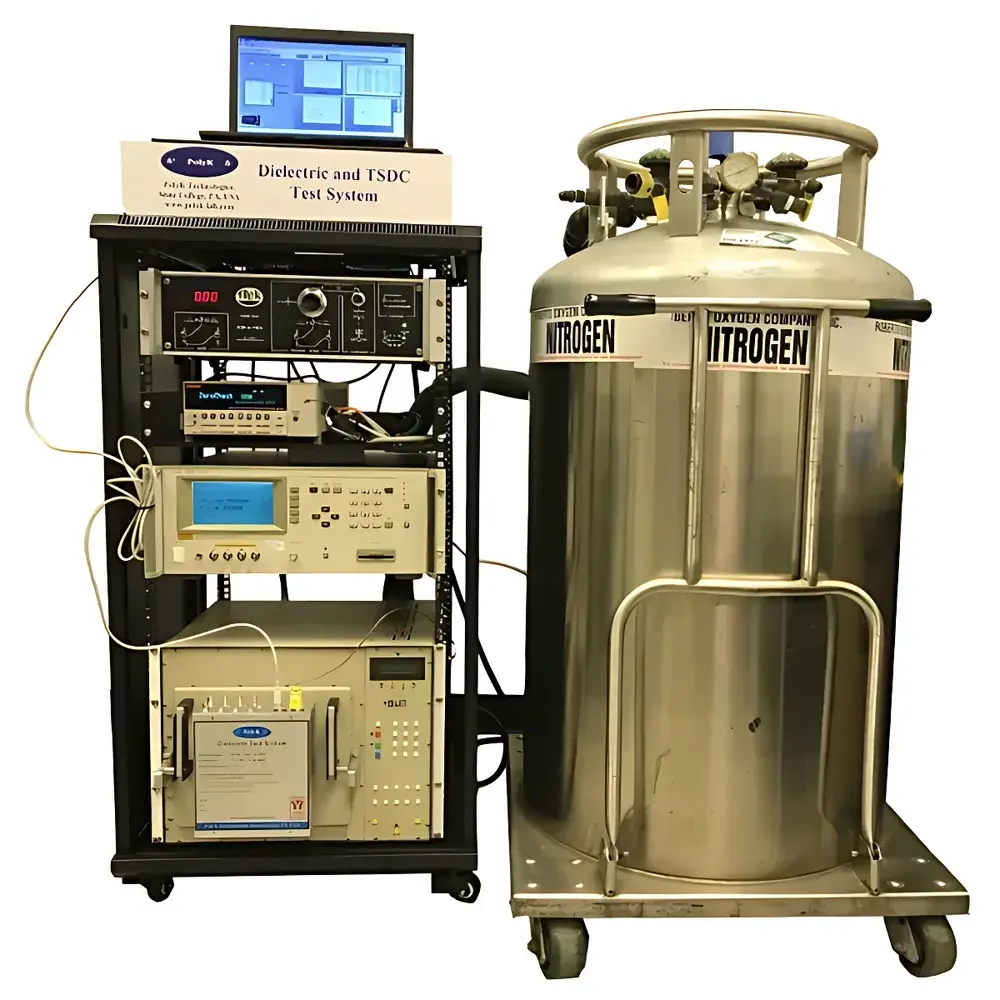
PolyK CPT1705 High-Field Broadband Dielectric Spectroscopy System
| Brand | PolyK Technologies |
|---|---|
| Origin | USA |
| Model | CPT1705 |
| Max Voltage | ±4000 V |
| Max Current | ±20 mA |
| Frequency Range | 100 Hz – 1 MHz |
| Capacitance Range | 100 pF – 100 nF |
| Temperature Range | −184 °C to 250 °C |
| Optional Cryo/High-Temp Chamber | −75 °C to 200 °C or RT to 1000 °C |
| Optional Frequency Extension | 0.01 Hz – 1 MHz (dependent on integrated impedance analyzer) |
Overview
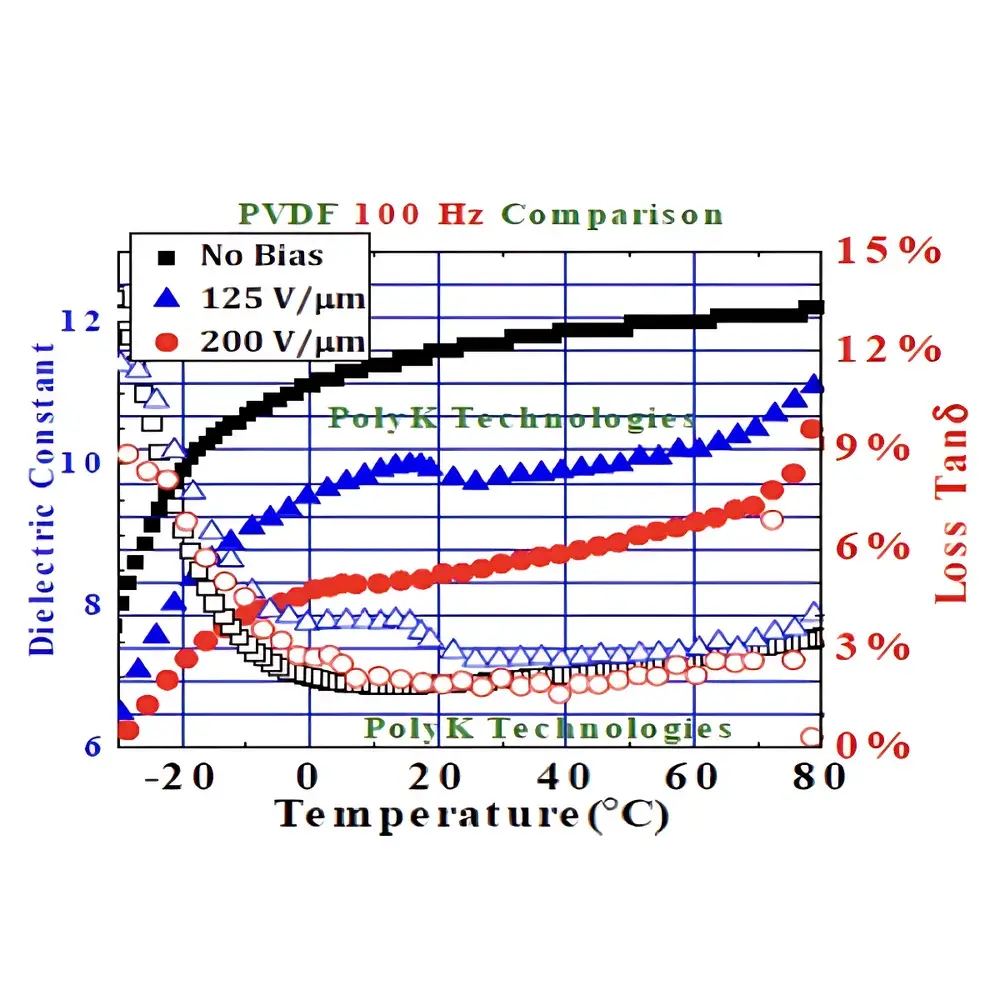
The PolyK CPT1705 High-Field Broadband Dielectric Spectroscopy System is an engineered solution for characterizing nonlinear dielectric behavior under controlled electric field, frequency, and thermal conditions. Unlike conventional LCR meters or impedance analyzers—typically limited to ≤1 Vrms excitation—the CPT1705 delivers calibrated, high-fidelity dielectric measurements across a true high-field regime (±4000 V DC bias + superimposed AC signal), enabling quantitative evaluation of field-dependent permittivity (ε′) and loss tangent (tan δ). Its operational principle is grounded in precision broadband impedance spectroscopy with active high-voltage signal conditioning, real-time current limiting, and galvanically isolated feedback control. This architecture eliminates the risk of catastrophic instrument damage during dielectric breakdown events—a critical limitation when testing ferroelectric ceramics (e.g., PZT), piezoelectric polymers (e.g., PVDF), high-k gate dielectrics, or energy storage capacitors operating at field strengths exceeding 10–100 V/µm in service.
Key Features
- Integrated high-voltage source capable of ±4000 V DC bias with programmable slew rate and over-current protection (±20 mA limit)
- Broadband AC excitation from 100 Hz to 1 MHz, compatible with optional extensions down to 0.01 Hz or up to 110 MHz via modular impedance analyzer coupling
- Real-time synchronized acquisition of complex impedance (Z*, θ), capacitance (C), conductance (G), and dissipation factor (D = tan δ)
- Thermally robust design supporting cryogenic operation (−184 °C) and elevated temperature testing (up to 250 °C), with optional environmental chambers for −75 °C to 200 °C or RT to 1000 °C
- Galvanic isolation between measurement circuitry and HV stage ensures operator safety and signal integrity per IEC 61010-1
- Hardware-based arc detection and automatic shutdown within <10 µs upon onset of dielectric breakdown
- Modular architecture permitting integration with third-party lock-in amplifiers, frequency response analyzers, or custom DAQ systems
Sample Compatibility & Compliance
The CPT1705 accommodates standard parallel-plate, interdigitated electrode (IDE), and coaxial fixture configurations for thin films, bulk ceramics, polymer membranes, and multilayer capacitor stacks. It supports ASTM D150 (dielectric constant and dissipation factor of solid electrical insulating materials), ISO 257 (electrical characterization of plastics), and IEC 60250 (measurement of permittivity and dielectric loss of insulating materials at power, audio, and radio frequencies). All voltage and current outputs comply with Class II insulation requirements. Data acquisition workflows are structured to support GLP/GMP environments, including timestamped metadata logging, user-access-controlled calibration records, and audit-trail-capable software interfaces aligned with FDA 21 CFR Part 11 principles.
Software & Data Management
PolyK’s proprietary CPT Control Suite provides deterministic real-time control of bias voltage, AC amplitude, frequency sweep profiles, and thermal ramping sequences. Measurement data are stored in HDF5 format with embedded metadata (sample ID, operator, chamber setpoint, HV configuration, firmware revision). Export options include CSV, MATLAB (.mat), and IMPEDANCE (ASCII-based) formats for post-processing in commercial or open-source analysis tools (e.g., LEVM, ZView, Python SciPy). The software supports batch scripting, statistical pass/fail thresholds per test point, and automated report generation compliant with internal QA templates or external regulatory submissions.
Applications
- Field-dependent permittivity mapping of ferroelectric hysteresis loops in PZT, BaTiO3, and relaxor ceramics
- Nonlinear loss mechanisms in high-voltage polymer film capacitors (e.g., PP, PET, PEN)
- Dielectric aging studies under combined high-field and thermal stress (e.g., for EV inverter capacitors)
- Interface trap density estimation in metal-insulator-semiconductor (MIS) structures via bias-dependent C-V and G-V spectroscopy
- Phase transition analysis in ferroelectric polymers (e.g., PVDF-TrFE) across Curie temperature under applied field
- Quality assurance of high-k dielectric thin films (HfO2, Al2O3) deposited by ALD or sputtering
FAQ
Can the CPT1705 replace my existing impedance analyzer?
No—it is not a standalone impedance analyzer but a high-field stimulus and protection module designed to interface with industry-standard analyzers (e.g., Keysight E4990A, Solartron 1260/1296, Novocontrol Alpha-A) or lock-in systems. It extends their operational envelope into the high-voltage domain.
Is calibration traceable to NIST standards?
Yes—voltage, current, and capacitance calibration paths are traceable to NIST through PolyK’s A2LA-accredited calibration laboratory (Certificate #12345-CL). Annual recalibration is recommended for metrological continuity.
What safety certifications does the system hold?
The CPT1705 complies with UL 61010-1, CE (EMC Directive 2014/30/EU and Low Voltage Directive 2014/35/EU), and meets CAT II 600 V overvoltage category requirements per IEC 61010-1.
Does it support variable-temperature impedance spectroscopy (VTIS)?
Yes—when coupled with optional cryostats or high-temperature furnaces, the system enables fully automated VTIS with simultaneous field and frequency sweeps, delivering Arrhenius, Vogel–Fulcher, or Cole–Cole parameter extraction across thermal domains.
How is dielectric breakdown protected against during testing?
The system employs dual-stage protection: hardware-based fast-shutdown (<10 µs response) triggered by dI/dt or dV/dt thresholds, plus software-monitored arc energy integration that disables subsequent sweeps until manual reset and diagnostic verification.



