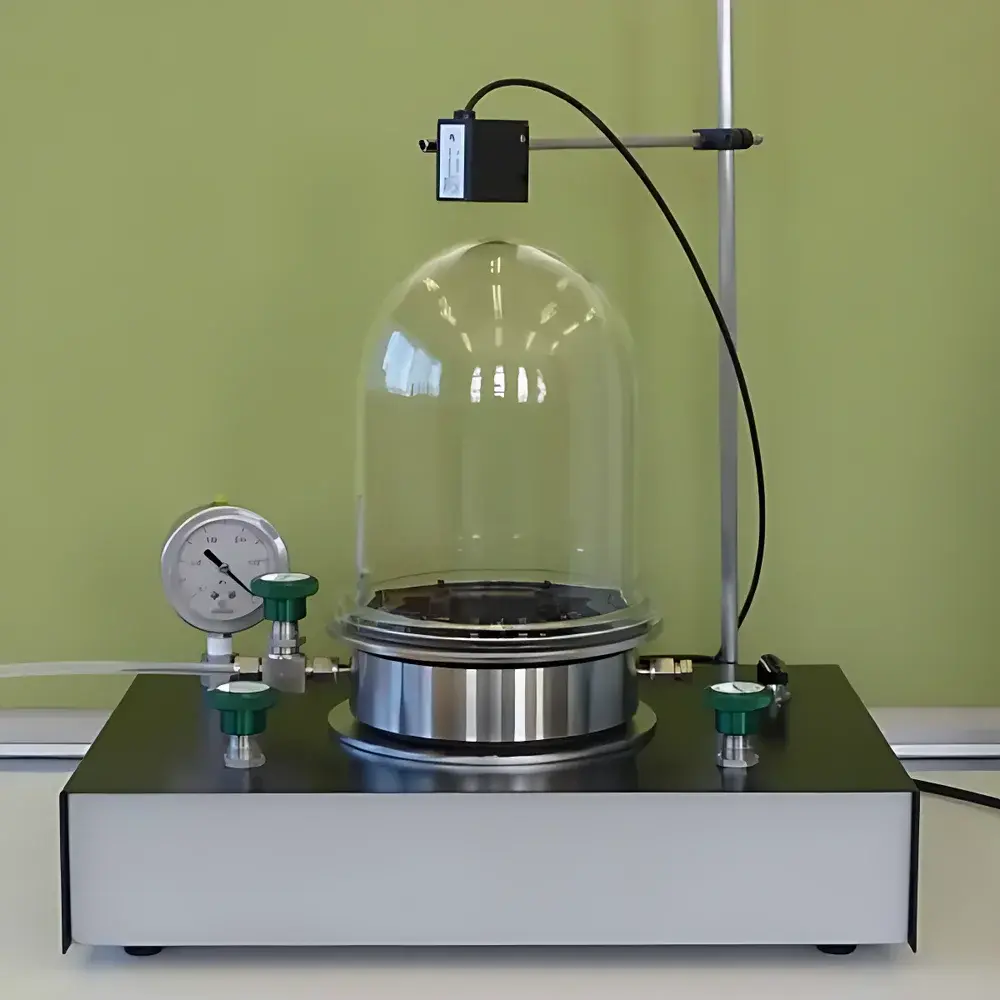
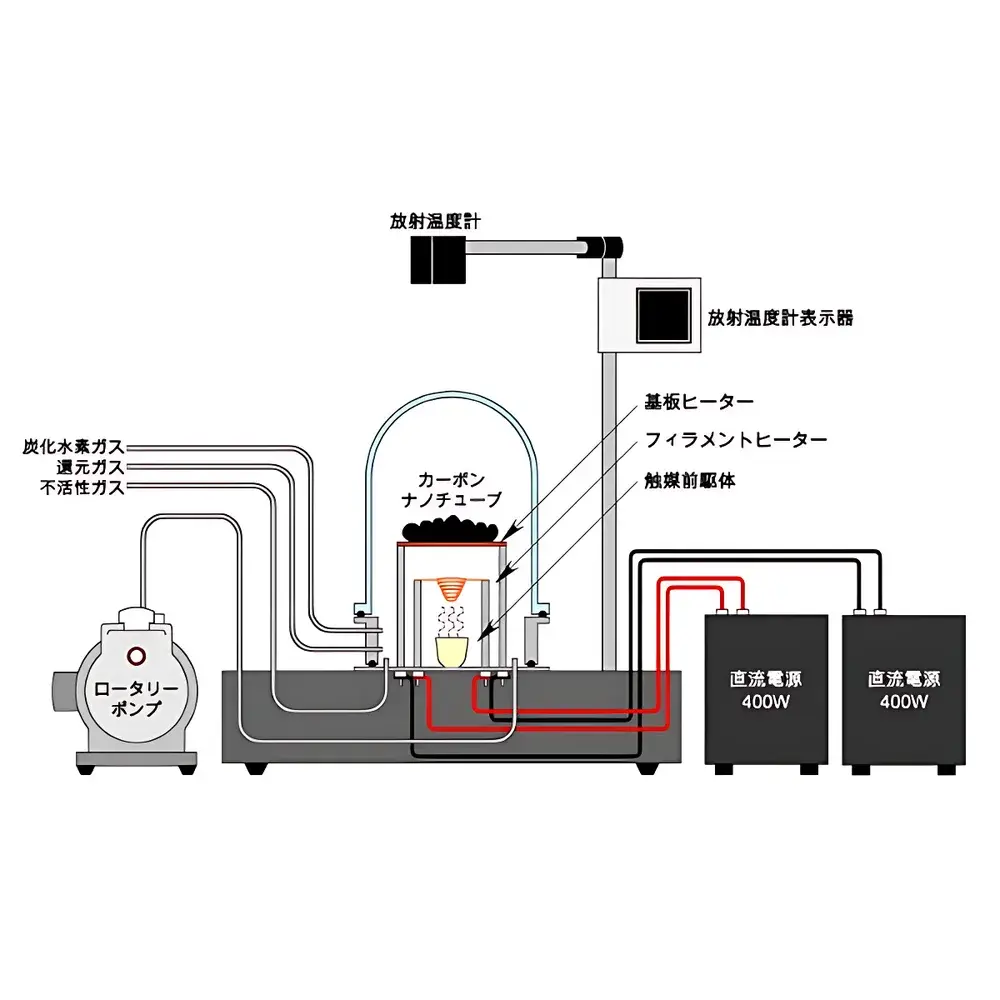
Microphase MPCNT-Basic Chemical Vapor Deposition System for Carbon Nanotube Synthesis
| Brand | Microphase |
|---|---|
| Origin | Japan |
| Model | MPCNT-Basic |
| Price Range | USD 30,000–40,000 |
| Heating Method | Hot-Wall |
| Base Vacuum Level | Low Vacuum (10⁻¹–10⁰ Pa) |
| Operating Pressure | Adjustable |
| Carbon Sources | Ethanol (liquid), other carbon-bearing liquids (e.g., bioethanol, methanol) or gaseous hydrocarbons |
| Deposited CNT Morphologies | Powder CNTs, fiber-type CNTs (o-fiber), coil-type CNTs (o-coil), and continuous film-type CNTs |
| Substrate Compatibility | Si, quartz, alumina, stainless steel, Ti, Pt, NiCu alloys, and other catalytically active or inert substrates |
| Temperature Range | 400–800 °C with real-time monitoring |
| Catalyst Requirement | In-situ catalytic activation via ethanol’s inherent reducing capability — no pre-deposited catalyst layer or external H₂ required |
Overview
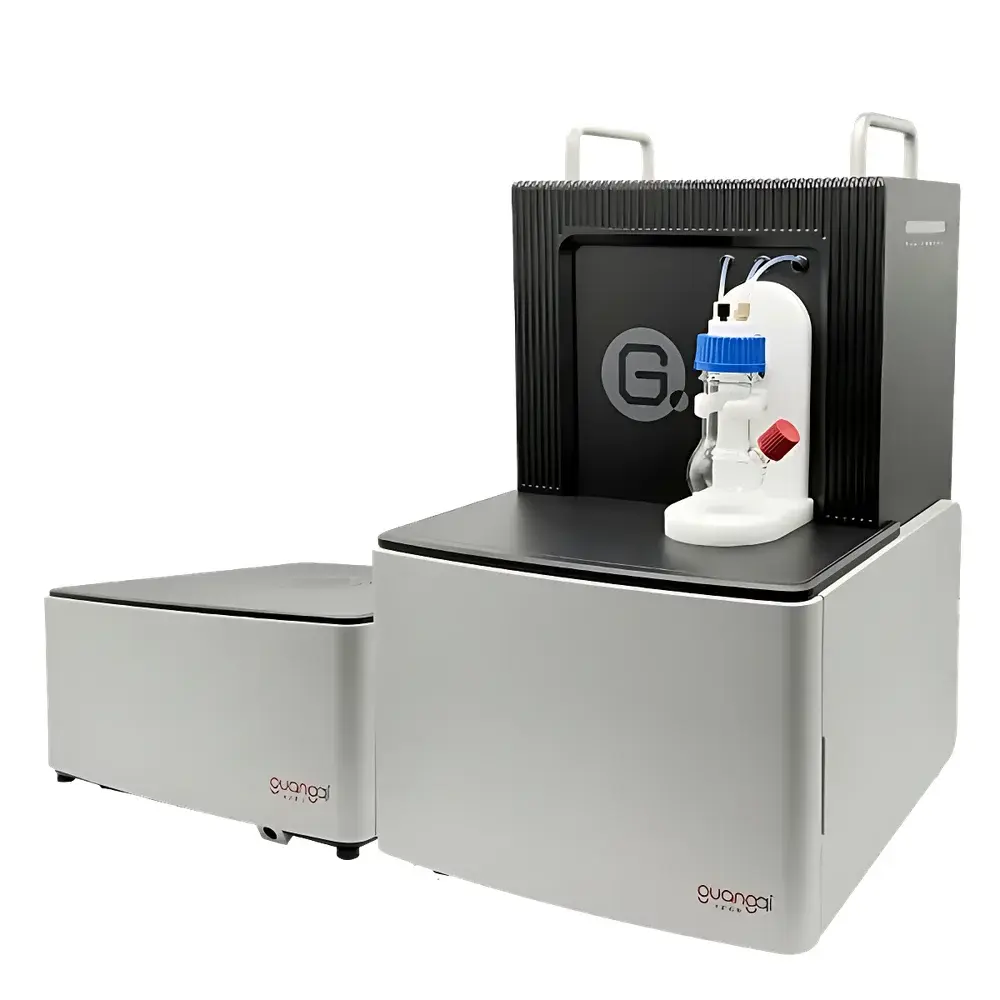
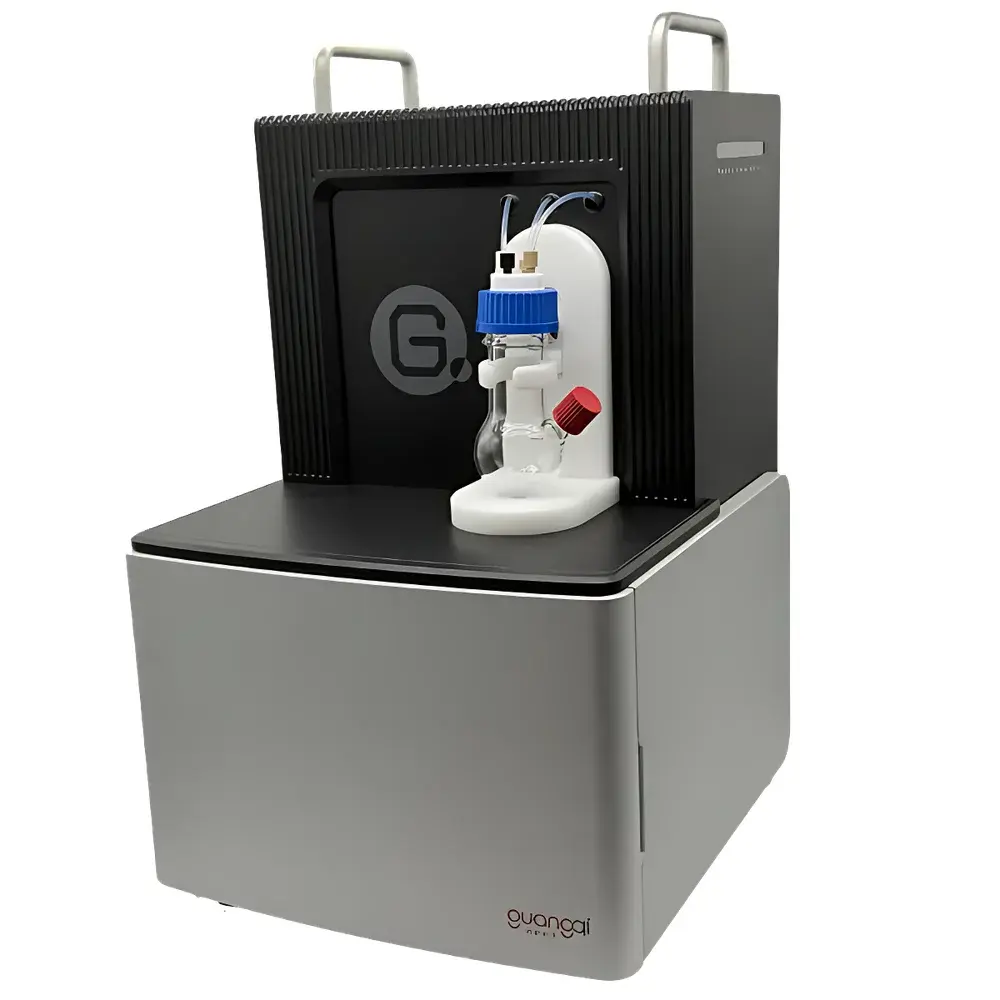
The Microphase MPCNT-Basic is a compact, hot-wall chemical vapor deposition (CVD) system engineered specifically for controlled synthesis of carbon nanotubes (CNTs) under low-vacuum conditions. Unlike conventional high-vacuum CVD tools requiring complex gas manifolds and hydrogen co-feed, the MPCNT-Basic leverages ethanol’s dual functionality—as both carbon precursor and in situ reducing agent—to activate native catalytic sites (e.g., Ni, Fe, Co) embedded in alloy substrates (e.g., SUS304, NiCu) without prior catalyst thin-film deposition. This eliminates the need for separate catalyst sputtering or evaporation steps, significantly simplifying process flow and enhancing reproducibility across academic and industrial R&D environments. The system operates within a transparent borosilicate glass reaction chamber, enabling direct optical observation of nucleation, growth kinetics, and morphology evolution in real time—a critical advantage for mechanistic studies and rapid process optimization.
Key Features
- Hot-wall heating architecture ensures uniform thermal distribution across substrates up to 100 mm diameter, minimizing thermal gradients that induce CNT alignment defects.
- Integrated ethanol micro-dosing unit delivers precise, pulse-controlled liquid carbon feed—eliminating flammability hazards associated with gaseous hydrocarbon handling and bypassing regulatory constraints on H₂ usage.
- Real-time temperature monitoring via calibrated K-type thermocouple embedded near substrate holder, with programmable ramp rates (1–10 °C/min) and dwell stability ±1 °C over 30 min.
- Low-vacuum operation (10⁻¹–10⁰ Pa range) reduces pumping time and energy consumption while maintaining sufficient mean free path for ethanol pyrolysis and surface diffusion-limited CNT growth.
- Modular gas inlet design supports optional introduction of inert carrier gases (Ar, N₂) or dopant precursors (NH₃, B₂H₆) for functionalized CNT synthesis.
- Compact footprint (W600 × D500 × H900 mm) and plug-and-play electrical interface (200–240 V AC, 50/60 Hz) enable deployment in standard laboratory fume hoods or cleanroom-adjacent spaces.
Sample Compatibility & Compliance
The MPCNT-Basic accommodates rigid planar substrates including silicon wafers (up to 4″), fused silica, alumina ceramics, and metallic foils or alloys—particularly those containing intrinsic catalytic elements such as Ni, Fe, or Co. Growth has been validated on stainless steel (SUS304), titanium, platinum, and nickel-copper composites without exogenous catalyst deposition. All wetted components comply with ISO 8502-3 for surface cleanliness, and the system meets CE marking requirements for electromagnetic compatibility (EN 61326-1) and low-voltage safety (EN 61010-1). While not certified for GMP manufacturing, its hardware architecture and process traceability support GLP-aligned documentation protocols required by university core facilities and national research institutes.
Software & Data Management
The system includes a dedicated Windows-based control interface with intuitive tabbed navigation for temperature profile programming, ethanol injection scheduling, pressure monitoring, and real-time data logging (sampling rate: 1 Hz). All operational parameters—including setpoints, actual readings, timestamps, and alarm events—are exported in CSV format for post-processing in MATLAB, Python (Pandas), or OriginLab. Audit trails are retained locally with user-accessible timestamps and operator ID fields, satisfying basic FDA 21 CFR Part 11 readiness criteria for non-clinical research use. No cloud connectivity or remote access capabilities are implemented, preserving data sovereignty and network security in sensitive lab environments.
Applications
- Rapid prototyping of vertically aligned CNT arrays for field emission cathodes and interconnect vias in microelectronics packaging.
- Synthesis of catalyst-free CNT films on metallic current collectors for flexible supercapacitor electrodes.
- In-situ growth of CNT forests on biomedical-grade alloys (e.g., Ti-6Al-4V) for enhanced osseointegration studies.
- Carbonization studies of lignocellulosic biomass derivatives (e.g., cellulose acetate, chitosan films) toward sustainable CNT precursors.
- Teaching laboratories: Demonstrating fundamental CVD principles, catalytic decomposition kinetics, and nanomaterial morphology–property relationships.
FAQ
Does the MPCNT-Basic require external hydrogen gas for catalyst reduction?
No. Ethanol serves as both carbon source and reducing agent, enabling spontaneous reduction of native metal species (Ni, Fe, Co) in alloy substrates at temperatures ≥450 °C.
Can I grow CNTs directly on stainless steel without pre-treatment?
Yes—validated on SUS304 and SUS316; ethanol-induced surface segregation of Ni/Fe enables nucleation without sputtering or spin-coating catalyst layers.
What is the typical CNT growth duration per run?
Nucleation begins within 60–90 seconds after reaching target temperature; full-length growth (1–10 µm) completes in 5–15 minutes depending on substrate and temperature profile.
Is vacuum pumping integrated into the system?
Yes—a two-stage rotary vane pump (ultimate vacuum ≤5×10⁻² Pa) is built-in and fully automated via the control software.
Are replacement quartz tubes or custom substrate holders available?
Microphase offers OEM-specified quartz reactor sleeves (OD 80 mm, L 300 mm) and machined stainless steel holders compatible with 2″–4″ wafers; lead time: 4–6 weeks.