
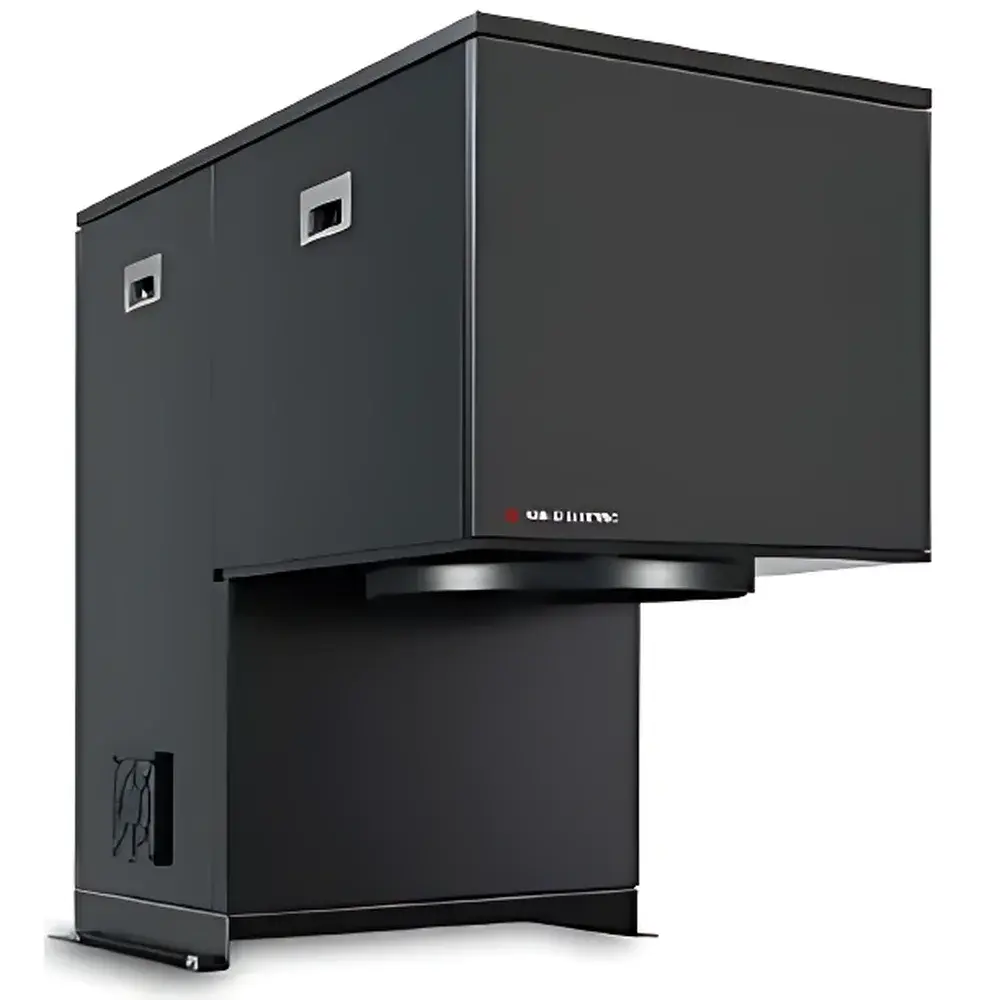
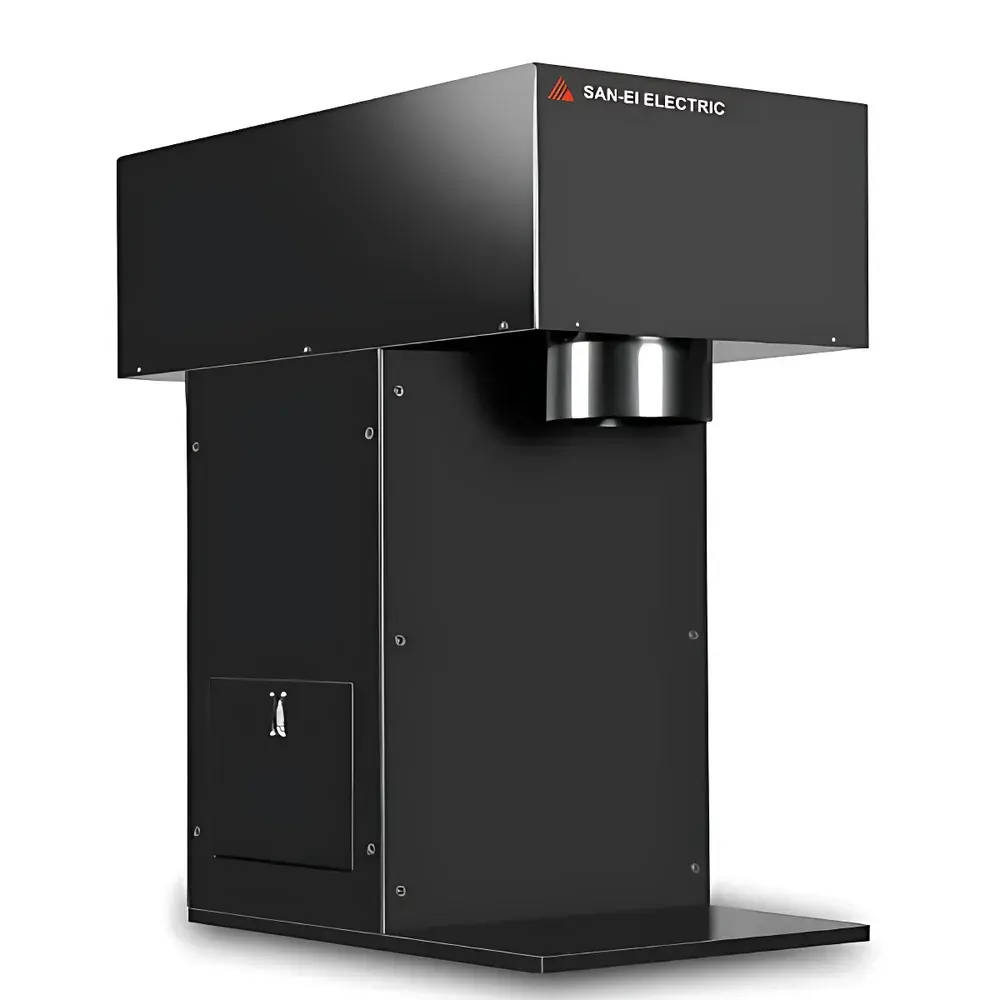
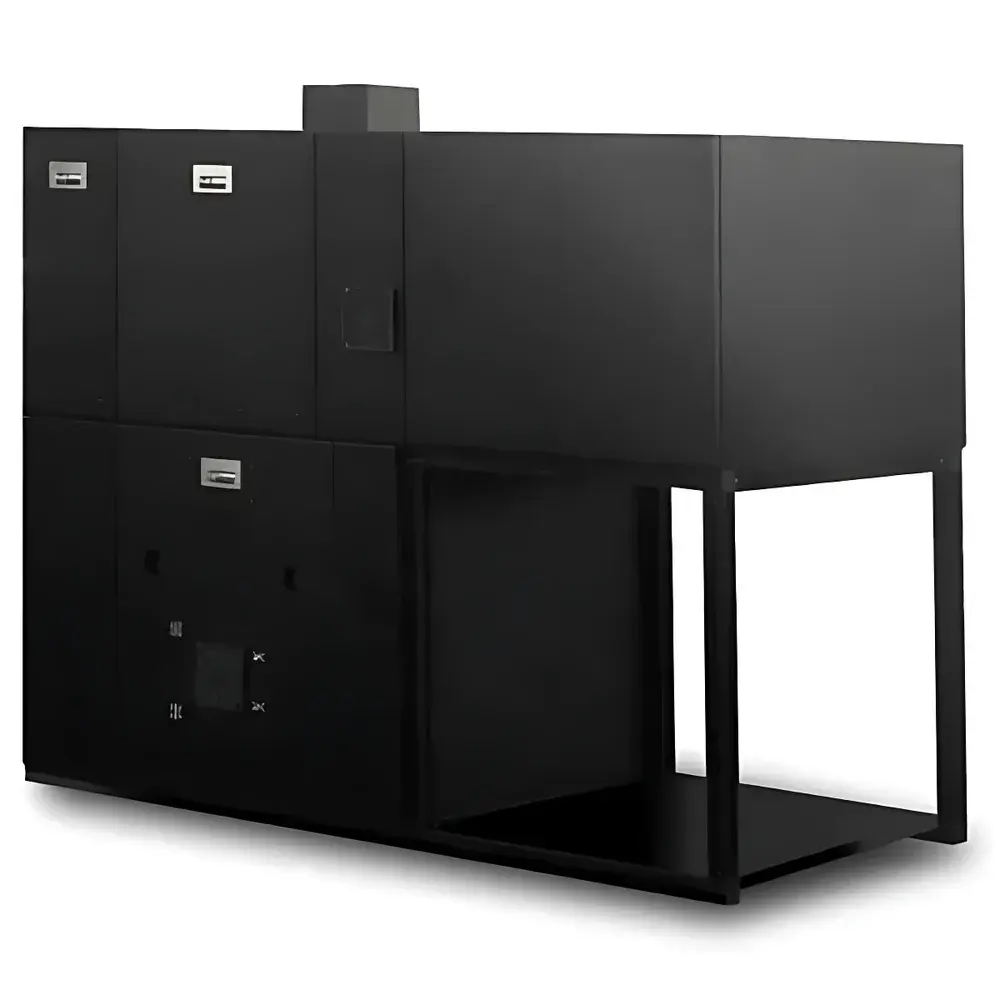
SAN-EI XHS Series Dual-Lamp Solar Simulator
| Brand | SAN-EI |
|---|---|
| Origin | Japan |
| Model | XHS Series |
| Illumination Mode | Steady-State |
| Spectral Range | 300–1800 nm |
| Spectral Mismatch | < ±10% (Factory Standard ≤ ±5%) |
| Spatial Non-Uniformity | < 2% (Class A) |
| Temporal Instability | < 1% (Class A+) |
| Effective Irradiation Area Options | 50×50 mm, 80×80 mm, 100×100 mm, 220×220 mm, 300×300 mm |
| Spectral Tunability | Yes |
| Intensity Adjustment Range | ±30% |
| Compliance | IEC 60904-9:2020, JIS C 8912:2005, ASTM E927-05 |
Overview
The SAN-EI XHS Series Dual-Lamp Solar Simulator is an engineered solution for high-fidelity photovoltaic (PV) device characterization under standardized terrestrial and extraterrestrial illumination conditions. Unlike conventional single-source simulators, the XHS platform employs a dual-lamp, dual-optical-path architecture—typically combining a xenon arc lamp with a halogen or tungsten-halogen source—to achieve spectrally balanced irradiance across the full 300–1800 nm range. This design directly addresses the fundamental limitation of spectral mismatch in multi-junction PV testing, where individual subcells (e.g., top perovskite, middle Si, bottom CIGS or Ge) absorb distinct wavelength bands. By independently optimizing short-wavelength (UV–VIS) and long-wavelength (NIR–SWIR) contributions, the XHS system delivers AM1.5G spectral fidelity with ≤ ±5% factory-calibrated mismatch—exceeding IEC 60904-9:2020 Class A+ requirements—and enables traceable, inter-laboratory comparable measurements essential for R&D validation and certification workflows.
Key Features
- Dual-lamp optical architecture with independent spectral control over UV–VIS (300–700 nm) and NIR–SWIR (700–1800 nm) domains
- AM1.5G spectral match ≤ ±5% (typical), certified to IEC 60904-9:2020, JIS C 8912:2005, and ASTM E927-05
- Spatial non-uniformity < 2% across all standard irradiation areas (50×50 mm to 300×300 mm)
- Temporal stability < 1% over 30 s (Class A+), validated per IEC 60904-9 Annex D
- Adjustable irradiance intensity ±30% relative to 1-sun (1000 W/m²), enabling controlled stress and degradation studies
- Optional AM0 spectral extension for space-cell qualification per ECSS-E-ST-20-07C
- Modular beam delivery: collimated or divergent output configurable via interchangeable optics
- Integrated thermal management to suppress lamp drift and maintain spectral stability during extended operation
Sample Compatibility & Compliance
The XHS Series supports characterization of all mainstream and emerging PV technologies—including perovskite single-junction, tandem (2T/4T), triple-junction, and multi-terminal architectures—as well as thin-film devices (a-Si, nc-Si, CdTe, CIGS, DSSC, OPV). Its broad spectral coverage and low mismatch are critical for accurate current matching analysis in mechanically stacked or monolithically integrated tandems. The system meets ISO/IEC 17025-compliant calibration traceability when paired with NIST-traceable reference cells (e.g., KG5-encapsulated Si standards, certified per IEC 60904-2). All configurations support GLP/GMP-aligned documentation protocols, including audit-ready calibration logs, lamp-hour tracking, and spectral verification reports aligned with FDA 21 CFR Part 11 data integrity principles.
Software & Data Management
The optional IVPro™ measurement suite provides full compliance with IEC 61215-1 and IEC 62108 test sequences. It supports bidirectional I–V sweeps (forward/reverse), dynamic MPPT tracking, bias-stability monitoring, and time-resolved I–t acquisition at user-defined intervals. Raw data export is available in CSV, HDF5, and MAT formats; metadata embedding includes timestamp, lamp hours, spectral verification ID, and environmental sensor readings (ambient T/RH). Software modules integrate seamlessly with Keithley 2400/2600 SourceMeter® instruments and support automated calibration routines per IEC 60904-4. Audit trails record all parameter changes, user logins, and data exports—fully compliant with 21 CFR Part 11 electronic signature and record retention requirements.
Applications
- Perovskite–silicon tandem cell efficiency validation and subcell photocurrent quantification
- Multi-junction solar cell spectral response mapping (QE/IPCE) under calibrated AM1.5G illumination
- Light-soaking and operational stability testing (ISOS-L-1/L-2 protocols)
- Reference cell calibration labs requiring Class A+ spectral fidelity and spatial uniformity
- Material-level photoresponse screening of novel absorbers (e.g., Sn-based perovskites, organic semiconductors)
- Space PV qualification under AM0 spectra with spectral fidelity verified per ECSS-E-ST-20-07C
- Accelerated aging studies using programmable irradiance profiles and temperature coupling
FAQ
Why is a dual-lamp configuration essential for perovskite/silicon tandem testing?
Single-source xenon simulators exhibit strong NIR overshoot (>750 nm) and VIS troughs, causing significant overestimation of bottom-cell current in tandems. The XHS dual-lamp system decouples UV–VIS and NIR spectral contributions, enabling precise current matching without empirical correction factors.
Does the XHS Series support automated spectral recalibration?
Yes—integrated spectroradiometer ports allow periodic in-situ verification against NIST-traceable standards; calibration certificates include spectral deviation maps and uncertainty budgets per GUM (JCGM 100:2008).
Can the system be integrated into a Class 100 cleanroom environment?
All optical enclosures meet ISO 14644-1 Class 5 compatibility; optional HEPA-filtered purge gas inlets and vibration-isolated optical tables are available for semiconductor-grade integration.
What reference cells are recommended for XHS calibration?
Certified KG5-encapsulated crystalline silicon reference cells (20×20 mm), calibrated by accredited labs per IEC 60904-2, with uncertainty ≤ ±0.5% (k=2). Quartz-window variants available for UV-sensitive applications.
Is remote operation and monitoring supported?
Full Ethernet (TCP/IP) and USB-C control interfaces enable LabVIEW, Python (PyVISA), and MATLAB integration; real-time spectral and irradiance telemetry is accessible via RESTful API with TLS 1.2 encryption.





