
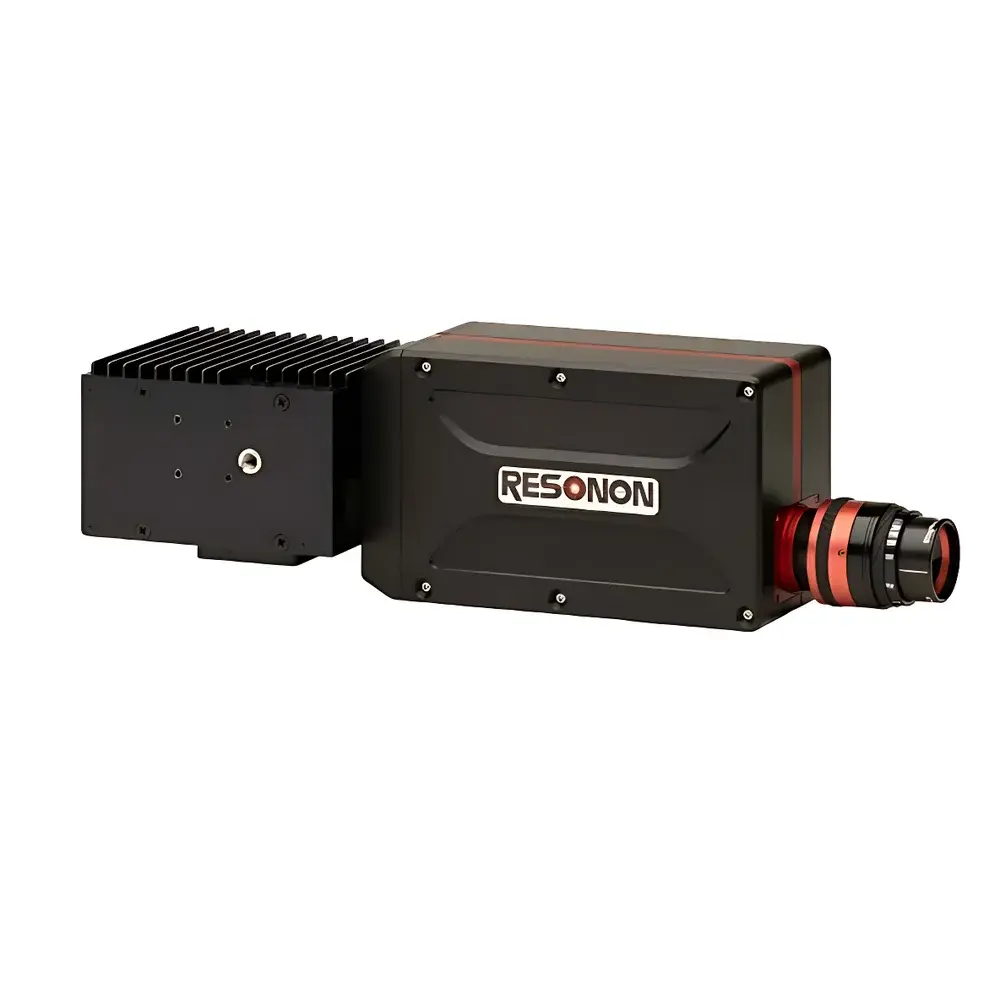
Resonon PIKA SWIR Hyperspectral Imaging Instrument
| Brand | Resonon |
|---|---|
| Origin | USA |
| Manufacturer Type | Authorized Distributor |
| Product Origin | Imported |
| Model | PIKA SWIR |
| Spectral Range | 1000–2500 nm |
| Spectral Resolution (FWHM) | 11.0 nm |
| Spatial Pixels | 640 |
| Spectral Bands | 245 |
| Platform Compatibility | Ground-based and Airborne Deployment |
| Pricing | Available Upon Request |
Overview
The Resonon PIKA SWIR Hyperspectral Imaging Instrument is a compact, push-broom scanning spectrometer engineered for high-fidelity spectral data acquisition in the short-wave infrared (SWIR) region. Operating on the principle of spatial-spectral scanning, the system captures contiguous, narrowband spectral information across a two-dimensional scene by synchronizing linear array detection with platform motion. Its optical design employs a transmissive diffraction grating and optimized InGaAs focal plane array to deliver calibrated radiance and reflectance data with high signal-to-noise ratio (SNR) in the 1000–2500 nm range — a critical window for detecting fundamental molecular vibrations (e.g., C–H, O–H, N–H overtones and combination bands). This enables robust material identification and quantification where visible and NIR modalities lack sufficient chemical specificity. The instrument is designed for integration into both laboratory-grade stationary setups and dynamic field platforms—including unmanned aerial systems (UAS), manned aircraft, ground vehicles, and conveyor-based industrial inspection lines—without requiring cryogenic cooling or complex optical alignment.
Key Features
- Optimized InGaAs detector array with 640 spatial pixels and 245 spectral channels, delivering consistent spatial-spectral sampling across the full 1000–2500 nm range
- Nominal spectral resolution of 11.0 nm (FWHM), enabling discrimination of subtle absorption features associated with mineralogical composition, polymer crystallinity, and organic functional groups
- Modular mechanical interface and standardized electrical connectors (e.g., Camera Link or GigE Vision options) for rapid integration with third-party gimbals, motion control stages, and embedded computing units
- Onboard non-uniformity correction (NUC) and dark current compensation algorithms, supporting stable operation across ambient temperature fluctuations (−10 °C to +50 °C)
- Factory-calibrated radiometric and spectral response, traceable to NIST-traceable standards, ensuring measurement repeatability across instruments and time
- Low-power consumption (<12 W typical) and lightweight construction (<1.8 kg), facilitating deployment on resource-constrained airborne and portable platforms
Sample Compatibility & Compliance
The PIKA SWIR is compatible with heterogeneous, non-contact sample interrogation under ambient lighting or controlled illumination (e.g., halogen or quartz-tungsten-halogen sources). It supports analysis of solid, granular, and semi-solid materials—including geological core samples, pharmaceutical tablets, agricultural produce, recycled plastics, and contaminated soils—without physical contact or sample preparation. Data acquisition complies with foundational spectral metrology practices defined in ASTM E131 (Standard Terminology Relating to Molecular Spectroscopy) and ISO 18566 (Imaging spectroscopy — Vocabulary and performance parameters). When deployed in regulated environments (e.g., pharmaceutical QC labs), raw and processed hyperspectral cubes may be archived with metadata (wavelength, exposure time, gain, GPS/IMU stamps) to support auditability under FDA 21 CFR Part 11 and GLP/GMP documentation requirements.
Software & Data Management
Resonon’s proprietary Spectronon Pro software provides end-to-end workflow support—from real-time preview and hardware configuration to spectral library generation, pixel-level unmixing (e.g., constrained least-squares, MCR-ALS), and georeferenced mosaic stitching. Export formats include ENVI .hdr/.dat, GeoTIFF, HDF5, and MATLAB-compatible structures, ensuring interoperability with open-source tools (e.g., scikit-learn, HySpex, Python-based spectral libraries). All processing steps are logged with timestamps and user identifiers; optional database integration supports version-controlled spectral signature repositories aligned with ISO/IEC 17025 quality management frameworks.
Applications
- Mineral exploration and lithological mapping via identification of clay species (e.g., kaolinite, smectite), carbonates, sulfates, and hydroxides using diagnostic SWIR absorption features
- Pharmaceutical solid dosage form analysis, including API distribution homogeneity, coating thickness estimation, and counterfeit detection through spectral fingerprint matching
- Agricultural soil characterization—organic matter content, moisture status, and heavy metal contamination proxies derived from spectral indices (e.g., Normalized Difference Clay Index)
- Industrial waste sorting: discrimination of PET, HDPE, PVC, and other polymers based on overtone absorption differences at ~1210 nm, ~1380 nm, and ~1730 nm
- Forensic document analysis and pigment identification in cultural heritage objects, leveraging SWIR penetration through surface varnishes and thin overpaint layers
FAQ
What calibration standards are used for factory radiometric calibration?
Radiometric calibration is performed using NIST-traceable integrating sphere sources across the full 1000–2500 nm range, with uncertainty budgets documented per ISO/IEC 17025 requirements.
Is the PIKA SWIR compatible with UAVs weighing less than 2.5 kg?
Yes — its mass, power draw, and vibration tolerance meet Class I UAV payload specifications per ASTM F3322-21 guidelines for small unmanned aircraft systems.
Can spectral data be exported in formats compliant with FAIR data principles?
Yes — metadata-rich HDF5 exports include embedded provenance, sensor geometry, illumination conditions, and processing history, satisfying Findable, Accessible, Interoperable, and Reusable (FAIR) criteria.
Does the system support real-time onboard processing?
Basic preprocessing (dark subtraction, flat-field correction, spectral resampling) is handled in real time; advanced analytics (e.g., classification, unmixing) require post-acquisition computation on external workstations or edge servers.
How is spectral stability maintained during extended outdoor deployments?
Thermal stabilization is achieved via passive heat sinking and internal temperature monitoring; spectral drift is corrected using reference spectra acquired before/after each flight or scan sequence.




