
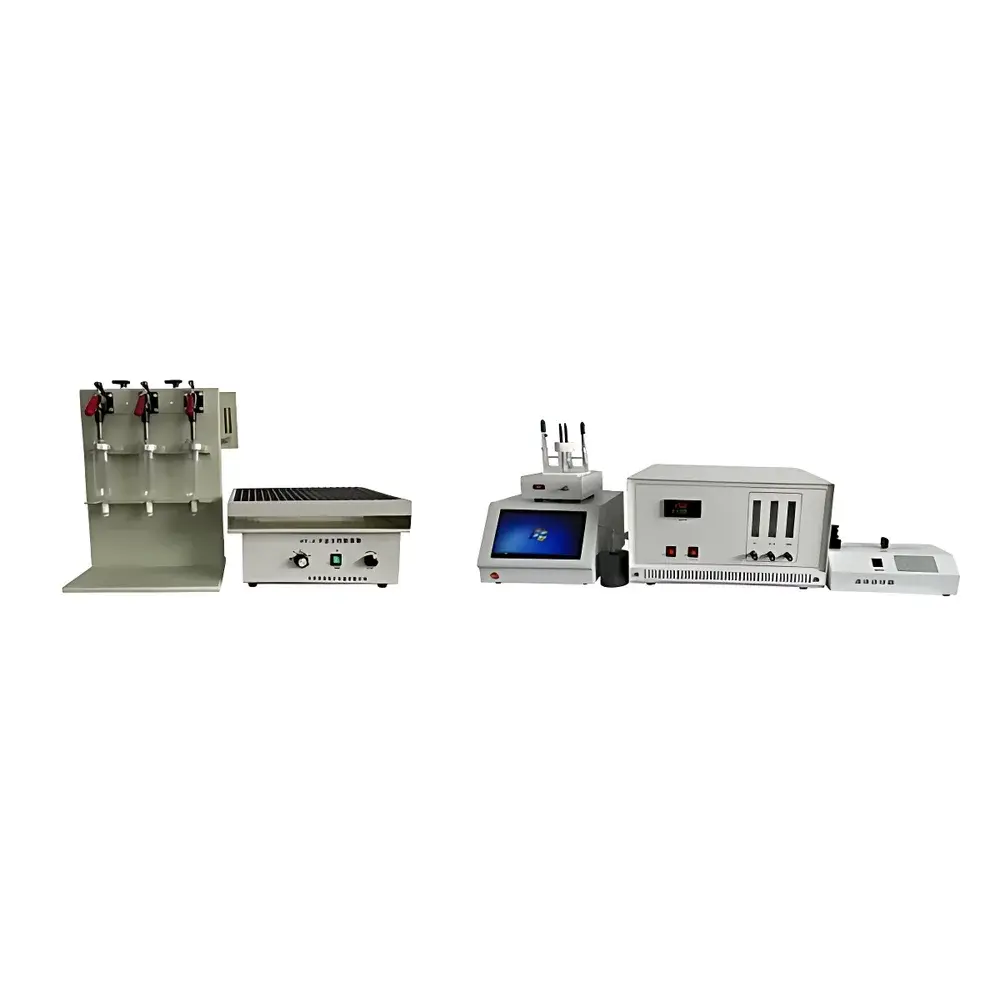
Kyoyuan KY-200AOX Adsorbable Organic Halogens (AOX) Analyzer
| Brand | Kyoyuan |
|---|---|
| Model | KY-200AOX |
| Origin | Jiangsu, China |
| Manufacturer Type | Direct Manufacturer |
| Compliance | HJ 1214–2021, GB/T 22904–2008 |
| Temperature Range | 100–1150 °C |
| Temperature Control Accuracy | ±1 °C |
| Detection Range | 0.028–1000 mg/L (100 mL sample volume) |
| LOD | 0.007 mg/L as Cl⁻ |
| Analysis Time | 3–10 min (excluding sample pretreatment) |
| Carrier Gas | O₂ ≥99.9% |
| Sample Introduction | Modified quartz boat with direct liquid/solid injection capability |
| Sample Mass | 50 mg |
| Power Consumption | 1.5 kW |
| Electrical Supply | 220 V, 50 Hz |
| Net Weight | ~15 kg |
Overview
The Kyoyuan KY-200AOX Adsorbable Organic Halogens (AOX) Analyzer is a dedicated laboratory instrument engineered for the quantitative determination of adsorbable organic halogen compounds—including chlorinated, brominated, and iodinated organics—in aqueous and solid environmental matrices. It operates in strict accordance with the Chinese national standard HJ 1214–2021: Water Quality—Determination of Adsorbable Organic Halogens (AOX)—Microcoulometric Method, and is also validated for application under GB/T 22904–2008: Pulps, Papers and Boards—Determination of Total Chlorine and Organic Chlorine. The analytical principle is based on activated carbon column adsorption followed by high-temperature catalytic combustion (900–1150 °C), conversion of organohalogens to hydrogen halides, absorption in aqueous solution, and subsequent quantification via microcoulometric titration. Results are reported as chloride-equivalent mass concentration (mg/L Cl⁻), ensuring trace-level sensitivity and metrological traceability to primary standards.
Key Features
- Ceramic fiber-insulated dual-zone furnace with rapid heating/cooling capability (0–1150 °C in <15 min); split-body design enables manual access for maintenance and ash removal
- LTDE programmable temperature controller with PID + SSR regulation, enabling precise ramp rate definition, multi-step hold profiles, and automatic shutdown upon completion or thermal fault
- Integrated dual-stage overtemperature protection (mechanical and electronic), compliant with IEC 61000-4-5 surge immunity and EN 61010-1 safety requirements for laboratory equipment
- Optimized quartz sample boat with integrated inlet port—supports direct injection of liquid samples (e.g., filtered wastewater) or weighed solid extracts (e.g., paper pulp digests)
- High-efficiency gas handling system with O₂ purification train, moisture trap, and calibrated flow control to ensure stoichiometric combustion and minimize interferences from NOₓ or SO₂
- Microcoulometric detection cell featuring Ag/Ag⁺ reference electrode, Pt working electrode, and real-time charge integration with digital signal processing (DSP) filtering
- Front-panel LCD interface with intuitive menu navigation, parameter logging, and error-code diagnostics—no external PC required for routine operation
Sample Compatibility & Compliance
The KY-200AOX accommodates a broad range of sample types per HJ 1214–2021: surface water, groundwater, domestic sewage, industrial effluents, leachates, and solid-phase materials such as sludge, sediments, and cellulose-based products. Sample preparation follows standardized procedures—including acidification, filtration (0.45 µm), and adsorption onto activated carbon columns under controlled flow conditions. Instrument performance meets the method-defined precision criteria: relative standard deviation (RSD) ≤10% for replicate analyses at 10 µg/L AOX, and recovery rates of 85–115% across spiked matrixes. The system supports audit-ready documentation for GLP-compliant laboratories and is compatible with internal QA/QC protocols including method blanks, matrix spikes, and duplicate analyses.
Software & Data Management
Data acquisition and reporting are managed through embedded firmware with non-volatile memory storage (≥1000 test records). Each analysis entry includes timestamp, operator ID, sample ID, temperature profile, combustion duration, coulometric charge integral (µC), calculated AOX concentration (mg/L Cl⁻), and QC flags. Export options include USB-stick transfer of CSV-formatted datasets for integration into LIMS or statistical analysis platforms. While no proprietary PC software is bundled, the device’s serial output (RS-232) supports custom scripting for automated data ingestion. All calibration and validation records—including daily system suitability checks per HJ 1214–2021 Section 8.3—can be printed or archived locally. The firmware architecture complies with basic data integrity principles aligned with FDA 21 CFR Part 11 expectations for electronic records in regulated environments.
Applications
- Environmental monitoring labs conducting regulatory compliance testing for wastewater discharge permits (e.g., textile, pulp & paper, pharmaceutical manufacturing effluents)
- Research institutions studying halogenated organic pollutant formation pathways during disinfection, bleaching, or advanced oxidation processes
- Quality control in paper mills verifying chlorine-free bleaching efficacy per ISO 14001 environmental management systems
- Third-party certification bodies performing accredited AOX testing under CNAS accreditation criteria (CNAS-CL01:2018)
- Academic laboratories investigating sorption-desorption kinetics of persistent halogenated compounds in soil-water systems
FAQ
What sample volume is required for analysis?
A standard 100 mL water sample is recommended for optimal sensitivity within the 0.028–1000 mg/L range; smaller volumes may be used with proportional adjustment of detection limits.
Is the instrument suitable for solid samples?
Yes—solid matrices (e.g., paper, sludge, sediment) must first undergo solvent extraction or alkaline digestion; the resulting extract is then processed identically to aqueous samples.
Does the KY-200AOX require external gas purification?
Oxygen gas must meet ≥99.9% purity; an in-line moisture trap and hydrocarbon scrubber are strongly recommended to prevent microcoulometric cell fouling.
How often must the microcoulometric cell be maintained?
Electrode cleaning and electrolyte replacement are advised every 50–100 analyses or when baseline drift exceeds ±2 µA for >30 s; full cell recalibration is performed using certified KCl standards.
Can the instrument be integrated into a laboratory information management system (LIMS)?
Yes—via RS-232 serial output with configurable ASCII protocol; custom drivers or middleware may be developed for seamless LIMS ingestion.







