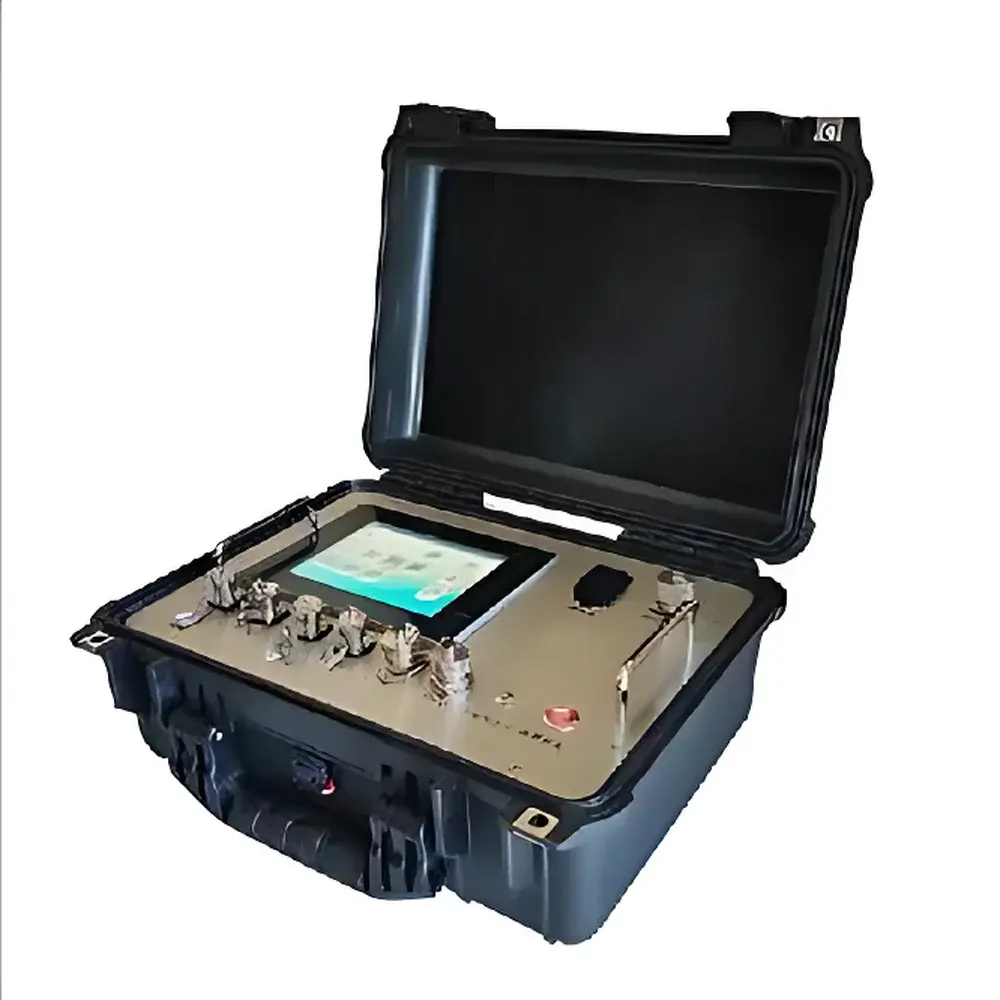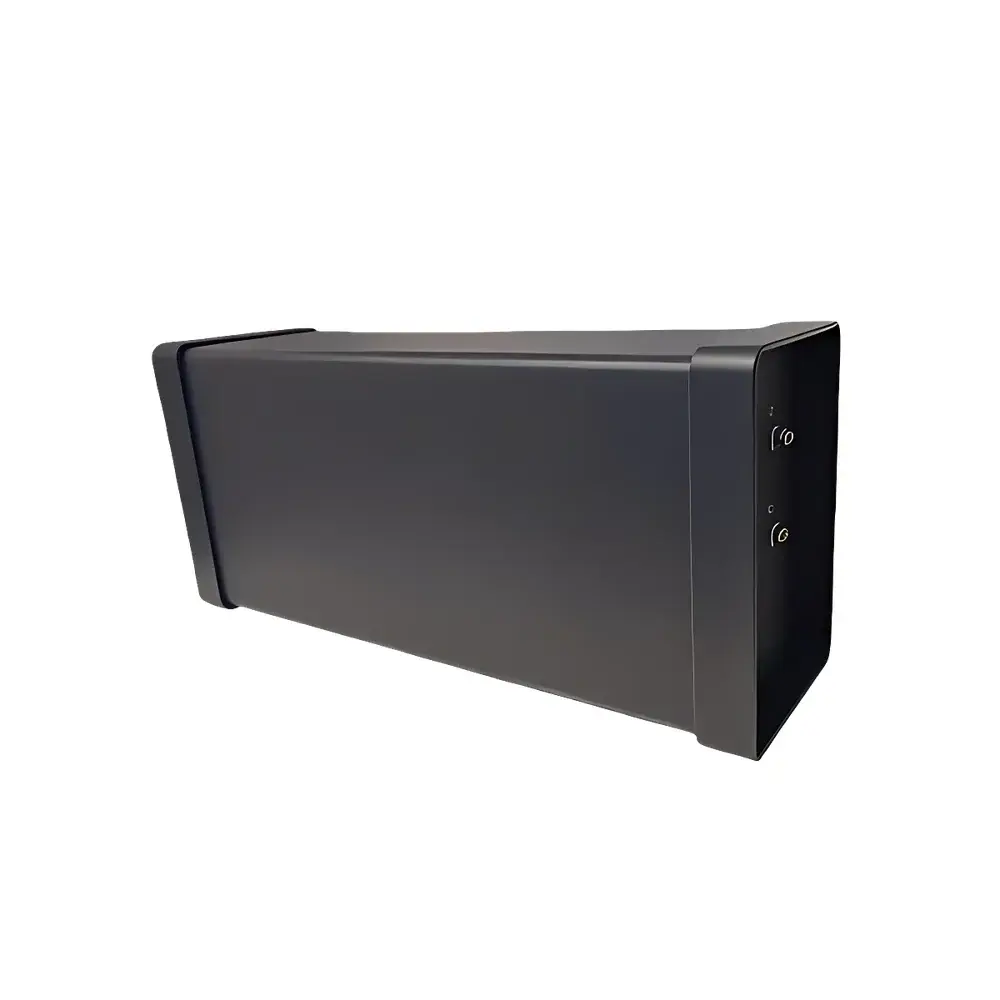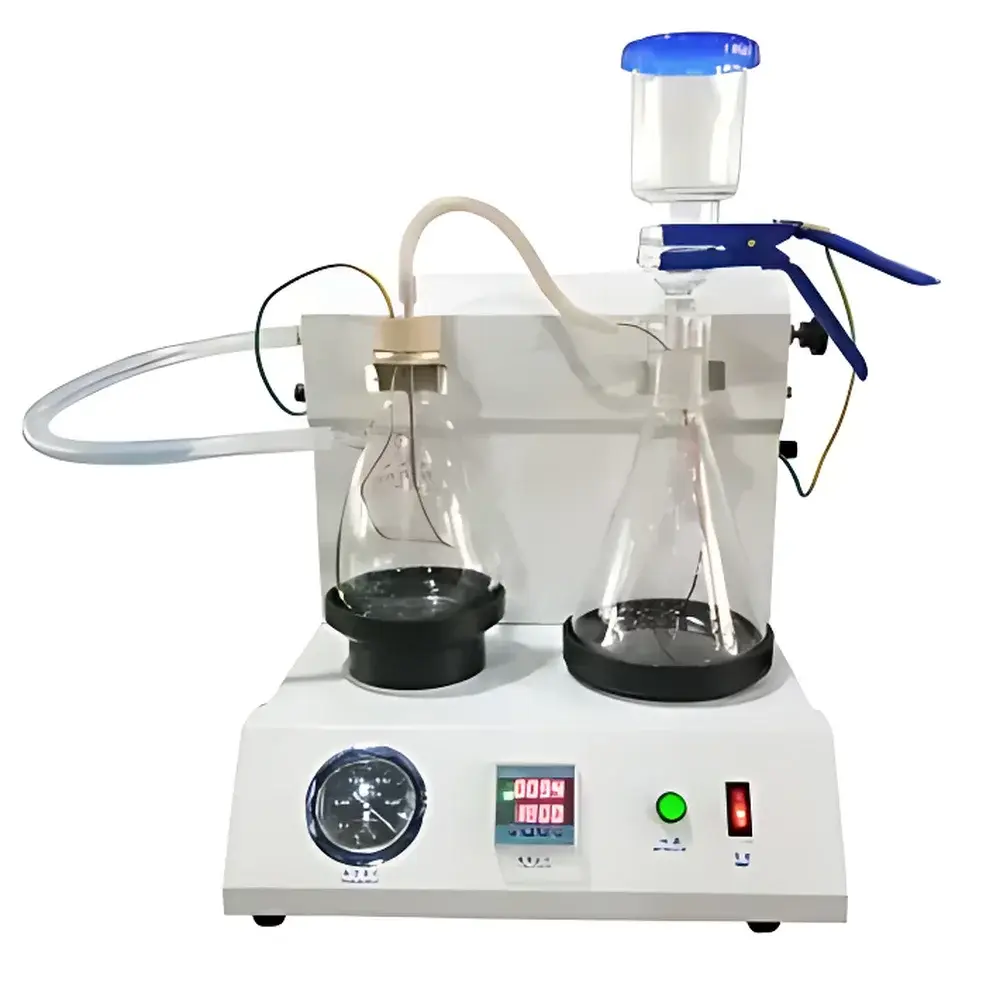
KeYuan Instruments DP-2 Emulsion Breaker Evaluation System
| Brand | KeYuan Instruments |
|---|---|
| Origin | Jiangsu, China |
| Manufacturer Type | Manufacturer |
| Origin Category | Domestic (China) |
| Model | DP-2 |
| Pricing | Available Upon Request |
| Input Voltage | AC 220 V ±10%, 50 Hz |
| Output Voltage | DC 0–2500 V (continuously adjustable) |
| Heating Power | 240 W |
| Total Power Consumption | <300 W |
| Temperature Uniformity | ±0.25 °C across six electrode chamber positions |
| Dielectric Withstand | <6000 V between electrodes |
Overview
The KeYuan Instruments DP-2 Emulsion Breaker Evaluation System is an engineered laboratory-scale platform designed to replicate industrial electrostatic desalting conditions for the quantitative assessment of demulsifier performance and optimization of operational parameters—including voltage gradient, residence time, temperature, and water-cut. Based on the principle of electrocoalescence under controlled DC electric fields, the system subjects stabilized oil-in-water (O/W) or water-in-oil (W/O) emulsions to precisely regulated high-voltage fields while maintaining thermally uniform separation zones. This enables reproducible measurement of key desalting outcomes: water separation rate, sediment volume, interfacial stability, conductivity decay kinetics, and residual salt concentration (as determined by post-test titration or ion chromatography). The DP-2 serves as a critical bridge between bench-scale formulation screening and pilot-plant validation, supporting method development in accordance with ASTM D4007 (Standard Test Method for Water and Sediment in Crude Oil by Centrifuge), ISO 3733 (Petroleum products — Determination of water — Distillation method), and internal refinery QC protocols.
Key Features
- Modular architecture integrating emulsification, electrostatic separation, thermal regulation, and safety interlocking in a single compact unit
- Six independent electrode chambers with aluminum-sheathed heating elements ensuring ±0.25 °C thermal uniformity—critical for comparative testing under identical thermal boundary conditions
- Continuously adjustable DC high-voltage output (0–2500 V) with digital readout and current-limiting protection to prevent arcing and electrode degradation
- Integrated thermal control system with PID-regulated heating (max 240 W per zone) and real-time temperature monitoring at each chamber
- Robust dielectric design: electrode assemblies rated for ≤6000 V withstand voltage, compliant with IEC 61000-4-5 surge immunity requirements for lab instrumentation
- Fail-safe interlocks including overvoltage cutoff, overtemperature shutdown, and grounded enclosure monitoring per IEC 61010-1 safety standards
Sample Compatibility & Compliance
The DP-2 accommodates standard 50 mL glass centrifuge tubes (or equivalent cylindrical vessels) and supports crude oils, condensates, heavy fuel oils, and synthetic emulsions with API gravities ranging from 10° to 45°. It is compatible with both low- and high-conductivity brines (0.1–10 S/m), enabling evaluation across diverse field conditions—from offshore low-salinity feeds to high-TDS inland crudes. All wetted components are chemically resistant to hydrocarbons, organic solvents, and chloride-rich aqueous phases. The system meets essential requirements for GLP-compliant testing environments: hardware-level audit trails (via optional RS-485 logging interface), traceable calibration of voltage and temperature sensors (NIST-traceable reference standards), and documentation support for ISO/IEC 17025 accreditation of test methods.
Software & Data Management
While the base DP-2 operates via front-panel controls, an optional PC-based data acquisition module (DP-2-DAQ v2.1) provides time-synchronized logging of voltage, current, temperature, and elapsed separation time at 1 Hz resolution. Export formats include CSV and Excel-compatible .xlsx, facilitating integration with LIMS platforms and statistical analysis tools (e.g., JMP, Minitab). The software supports multi-run comparative reporting, automatic calculation of water separation efficiency (% vol/vol), and generation of compliance-ready test reports aligned with refinery internal SOPs and ASTM D96 (Standard Test Method for Water in Petroleum Products by Distillation).
Applications
- High-throughput screening of commercial and proprietary demulsifier formulations under simulated field electrostatic desalters
- Determination of optimal operating voltage gradients for specific crude blends and water cuts
- Thermal sensitivity profiling of emulsion stability across 30–90 °C ranges
- Residual salt content correlation studies linking electrical parameters to downstream corrosion risk indicators
- Training and competency verification for refinery process engineers and laboratory analysts
- Supporting regulatory submissions requiring documented demulsifier qualification per API RP 100 (Recommended Practice for Demulsifier Testing)
FAQ
Can the DP-2 be used for both oil-in-water and water-in-oil emulsions?
Yes—the system’s electrode geometry and voltage control range support coalescence-driven separation in both O/W and W/O systems, provided appropriate emulsifier selection and phase continuity are maintained.
Is third-party calibration certification available?
Yes—KeYuan Instruments offers optional factory calibration certificates traceable to national metrology institutes (NIM, China), including uncertainty budgets for voltage and temperature channels.
What safety certifications does the instrument carry?
The DP-2 complies with IEC 61010-1:2010 for electrical safety in laboratory equipment and includes CE marking for EMC (EN 61326-1) and low-voltage directive (2014/35/EU) conformity.
Does the system support automated data export to LIMS?
With the DP-2-DAQ module installed, raw sensor data and calculated metrics can be streamed via TCP/IP or exported to flat files compatible with major LIMS vendors (e.g., LabVantage, Thermo Fisher SampleManager).
How is temperature uniformity verified across the six chambers?
Each aluminum heating block is equipped with a calibrated PT100 sensor; uniformity is validated during factory acceptance testing using a NIST-traceable multi-channel thermometer and documented in the Certificate of Conformance.
Related Products