
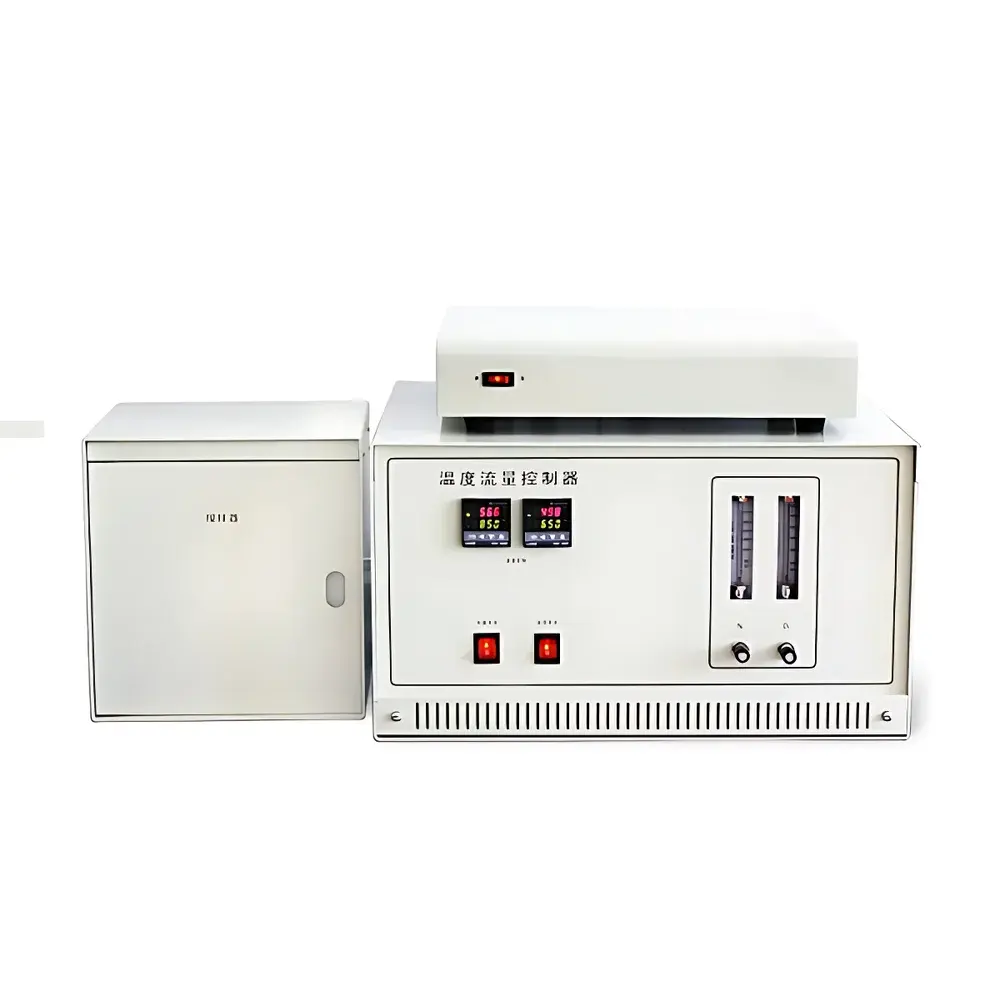
Koyuan KY-200 Microcoulometric Sulfur Analyzer
| Brand | Koyuan |
|---|---|
| Origin | Jiangsu, China |
| Manufacturer Type | Manufacturer |
| Country of Origin | China |
| Model | KY-200 Microcoulometric Sulfur Analyzer |
| Price Range | USD 4,200 – 7,000 (FOB) |
| Analyte | Total Sulfur |
| Measurement Principle | Microcoulometric Titration (ASTM D3229 / SH/T 0253-92 / GB/T 11061-1997 / SH/T 0222-1992) |
| Sample Forms | Liquid, Solid, Gas (with optional injectors) |
| Detection Range | 0.2–10,000 mg/L S |
| LOD | 0.2 mg/L S |
| Repeatability | ±0.1 mg/L (0.5–1.0 mg/L) |
| Furnace Temp Control | Ambient to 1100 °C, ±1 °C |
| Carrier Gases | Technical-grade O₂ and N₂ |
| Cooling | Air-cooled裂解 furnace with auto-start/stop fan |
| Power Requirement | 1500 W |
Overview
The Koyuan KY-200 Microcoulometric Sulfur Analyzer is a dedicated benchtop instrument engineered for precise, trace-level quantification of total sulfur in petroleum-derived matrices—including gasoline, diesel, jet fuel, naphtha, liquefied petroleum gas (LPG), natural gas condensates, and refinery intermediates. It operates on the fundamental principle of microcoulometric titration: samples are combusted in a high-temperature quartz furnace under controlled oxygen/nitrogen atmosphere, converting all sulfur species (e.g., mercaptans, sulfides, thiophenes, sulfoxides) quantitatively to sulfur dioxide (SO₂). The SO₂ is swept into an electrolytic titration cell where it reacts stoichiometrically with electrogenerated iodine (I₂), produced in situ via constant-current electrolysis of potassium iodide. The instrument’s embedded microprocessor integrates the charge consumed during iodine regeneration—per Faraday’s law—and calculates sulfur mass concentration directly in mg/L or µg/g. This method delivers inherent linearity, high specificity for sulfur, and minimal matrix interference, making it compliant with internationally recognized standard test methods including ASTM D3229, SH/T 0253–1992, GB/T 11061–1997, and SH/T 0222–1992.
Key Features
- Digital microcoulometric architecture with real-time charge integration and adaptive baseline correction for enhanced low-level accuracy.
- Programmable high-temperature combustion zone (ambient to 1100 °C, ±1 °C stability) with air-cooled quartz furnace and intelligent fan control—no external water chiller required.
- Modular sample introduction system supporting liquid syringes (1–100 µL), solid boat autosampler (for catalysts, coke, or polymers), and gas loop injection (for LPG or natural gas).
- Integrated Windows-based control software enabling method setup, real-time signal monitoring, calibration curve generation (linear or quadratic), and automated report export (PDF/CSV/XLS).
- Self-diagnostic routines for cell voltage, electrolyte conductivity, gas flow integrity, and furnace thermocouple drift—flagging deviations before data acquisition.
- Compliant with GLP documentation requirements: full audit trail, user access levels, electronic signature support, and 21 CFR Part 11–ready data archiving (optional).
Sample Compatibility & Compliance
The KY-200 accommodates diverse physical states without method revalidation: volatile liquids (e.g., gasoline per ASTM D3229), viscous residues (e.g., bunker fuel per ISO 8754), solid hydrocarbon catalysts (via ceramic boat), and gaseous streams (using heated gas sampling valve and calibrated loop). Its detection range spans 0.2–10,000 mg/L sulfur, with validated precision across regulatory thresholds (e.g., <10 mg/kg for ultra-low-sulfur diesel per EN 590:2021). All operational protocols align with ISO/IEC 17025 quality management principles. Instrument qualification includes factory-installed IQ/OQ documentation, and users may execute PQ using certified reference materials (CRMs) traceable to NIST SRM 2723a (diesel sulfur) or CRM-114 (gasoline sulfur).
Software & Data Management
The KY-200 is operated via Koyuan SulfurControl v3.x—a validated Windows application supporting multi-user environments. It records raw coulometric current vs. time profiles, stores calibration history with date/time stamps and operator ID, and applies automatic dilution factor compensation when high-concentration samples exceed the 5000 mg/L upper limit. Data files are saved in encrypted binary format with SHA-256 checksums; export options include ANSI-compliant CSV for LIMS integration and PDF reports featuring instrument ID, method version, calibration status, and uncertainty estimation per GUM (JCGM 100:2008). Optional 21 CFR Part 11 compliance package adds role-based permissions, electronic signatures, and immutable audit logs meeting FDA and EMA expectations for regulated laboratories.
Applications
- Refinery QC labs: Monitoring sulfur content in hydrotreated naphtha, kerosene, and FCC gasoline to ensure compliance with pipeline specifications (e.g., API RP 14E).
- Fuel certification bodies: Verifying conformity of marine distillate fuels (ISO 8217:2024) and automotive gasoline (EN 228:2023) against mandated sulfur caps.
- Petrochemical R&D: Quantifying sulfur poisoning effects on catalytic reforming catalysts or evaluating sulfur removal efficiency in amine scrubbers.
- Environmental testing labs: Measuring sulfur in crude oil fractions prior to refining, or in stack emissions simulants per EPA Method 1664.
- Academic research: Studying sulfur speciation kinetics in model compounds (e.g., dibenzothiophene oxidation pathways) via controlled pyrolysis-coupled analysis.
FAQ
What sample types can be analyzed without hardware modification?
Liquid fuels (gasoline, diesel), light hydrocarbons (LPG, CNG), and solid catalysts—all supported via interchangeable injectors included in base configuration.
Is the instrument compatible with existing laboratory information management systems (LIMS)?
Yes. Native CSV export and optional OPC UA server module enable bidirectional communication with major LIMS platforms (e.g., LabWare, Thermo Fisher SampleManager, STARLIMS).
How often must the titration cell electrolyte be replaced?
Under routine use (≤20 injections/day), the KI/KBr/H₂O-based electrolyte requires replacement every 7–10 days; cell cleaning with ultrasonic methanol is recommended weekly.
Does the system support simultaneous sulfur and chlorine analysis?
No. The KY-200 is optimized exclusively for sulfur. For halogen analysis, Koyuan offers the KY-300 dual-channel microcoulometer with independent SO₂ and Ag⁺ titration cells.
What electrical and gas utilities are required for installation?
Standard 220 VAC ±5%, 50/60 Hz, 1500 W; two independent gas lines—technical-grade O₂ (≥99.5%) and N₂ (≥99.99%)—each equipped with dual-stage stainless-steel regulators and particulate filters.
Related Products






