
Greatcell HYPIV Series A+A+A+ Class LED Solar Simulator
| Brand | Greatcell |
|---|---|
| Origin | Italy |
| Model | HYPIV10 / HYPIV20 (A+A+A+ Class) |
| Illumination Mode | Steady-State |
| Spectral Range | 360–1100 nm |
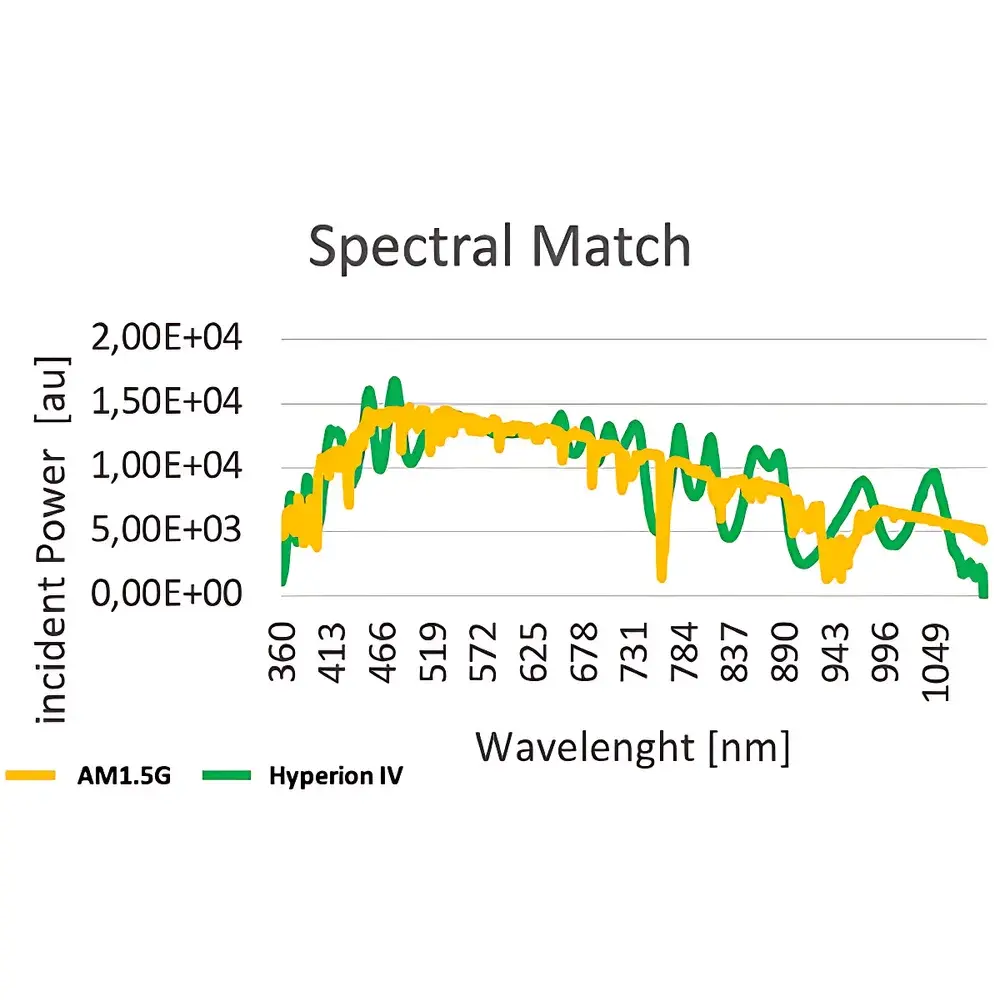
| Spectral Mismatch | < ±12.5% (AM1.5G, A+ Class) |
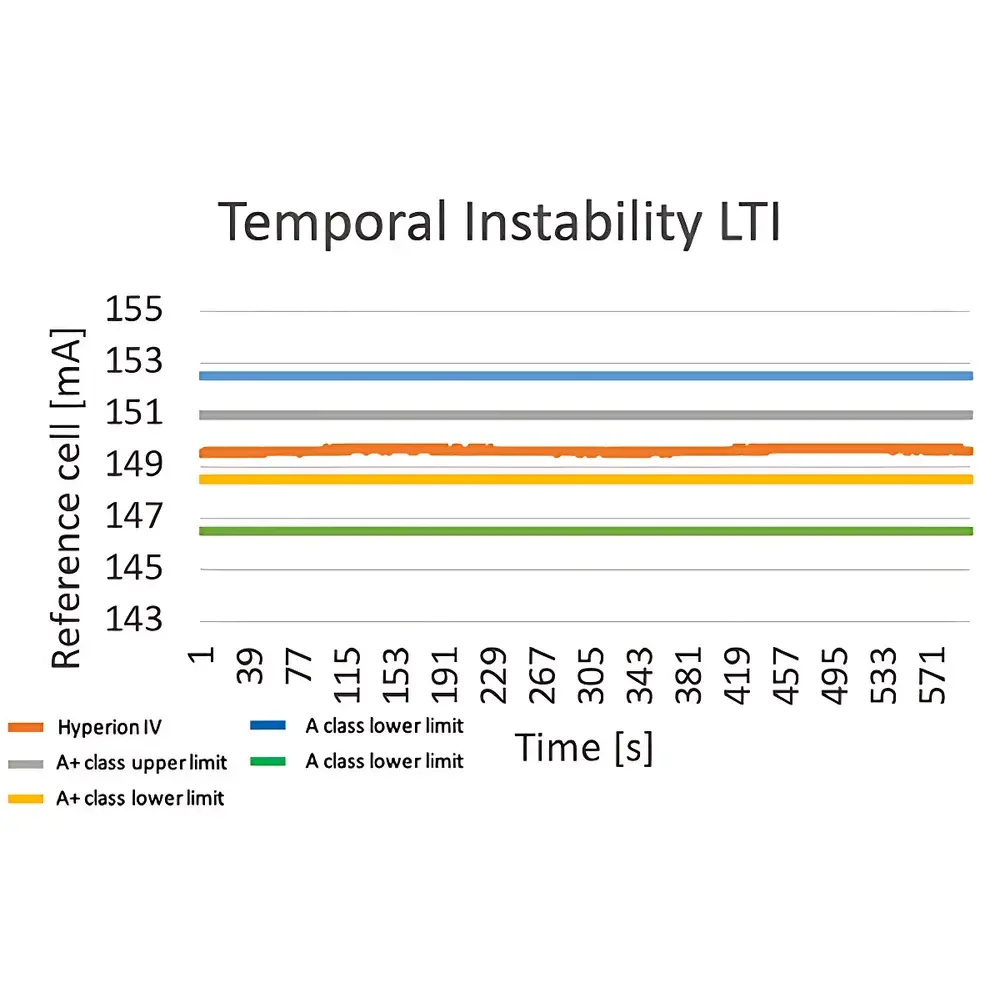
| Irradiance Instability | < 1% (A+ Class) |
| Irradiance Non-Uniformity | < 1% (A+ Class) |
| Adjustable Irradiance | 0.1–1.0 sun (1% step resolution) |
| Light Spot Size | 10×10 cm (HYPIV10), 20×20 cm (HYPIV20), 30×30 cm (custom) |
| LED Array | 20 independently controlled spectral channels |
| Lifetime | >20,000 h |
| Working Distance | 8.5 cm (HYPIV10), 9.5 cm (HYPIV20) |
| Housing Dimensions | L22×W22×H12 cm (HYPIV10), L42×W42×H20 cm (HYPIV20) |
| Mounting Arm Length | 20 cm (HYPIV10), 35 cm (HYPIV20) |
| Compliance | ASTM E927-05, IEC 60904-9:2020 (AAA & A+A+A+), JIS C 8912, TÜV Rheinland PV Certification Requirements |
Overview
The Greatcell HYPIV Series A+A+A+ Class LED Solar Simulator is an engineered photometric instrument designed for high-fidelity solar cell characterization under laboratory and industrial R&D conditions. It operates on the principle of spectrally resolved, digitally addressable LED illumination—replacing traditional xenon or metal-halide arc lamps with a modular array of 20 independently controllable narrowband LED channels spanning 360–1100 nm. This architecture enables precise replication of the AM1.5G reference spectrum (IEC 60904-3) with proportional intensity scaling across the entire spectral band, supporting both absolute quantum efficiency mapping and stabilized power output testing. Unlike broadband sources, the HYPIV’s segmented LED design allows real-time spectral tuning—facilitating studies of spectral response, degradation mechanisms under non-standard irradiance conditions, and multi-junction device optimization. Its steady-state operation mode ensures continuous, low-noise irradiance delivery essential for current–voltage (I–V), maximum power point tracking (MPPT), and long-term stability assessment (e.g., ISOS-L-1/L-3 protocols).
Key Features
- A+A+A+ classification per IEC 60904-9:2020—meeting the most stringent requirements for spectral mismatch (<±12.5%), irradiance non-uniformity (<1%), and temporal instability (<1%)
- 20-channel LED spectral engine enabling granular, software-defined adjustment of individual wavelength bands—critical for spectral sensitivity analysis and custom irradiance profiles
- Full AM1.5G spectrum intensity scaling from 0.1 to 1.0 sun in 1% increments, traceable to NIST-calibrated reference cells
- Compact optical housing with integrated thermal management—designed for benchtop integration without external cooling or exhaust ducting
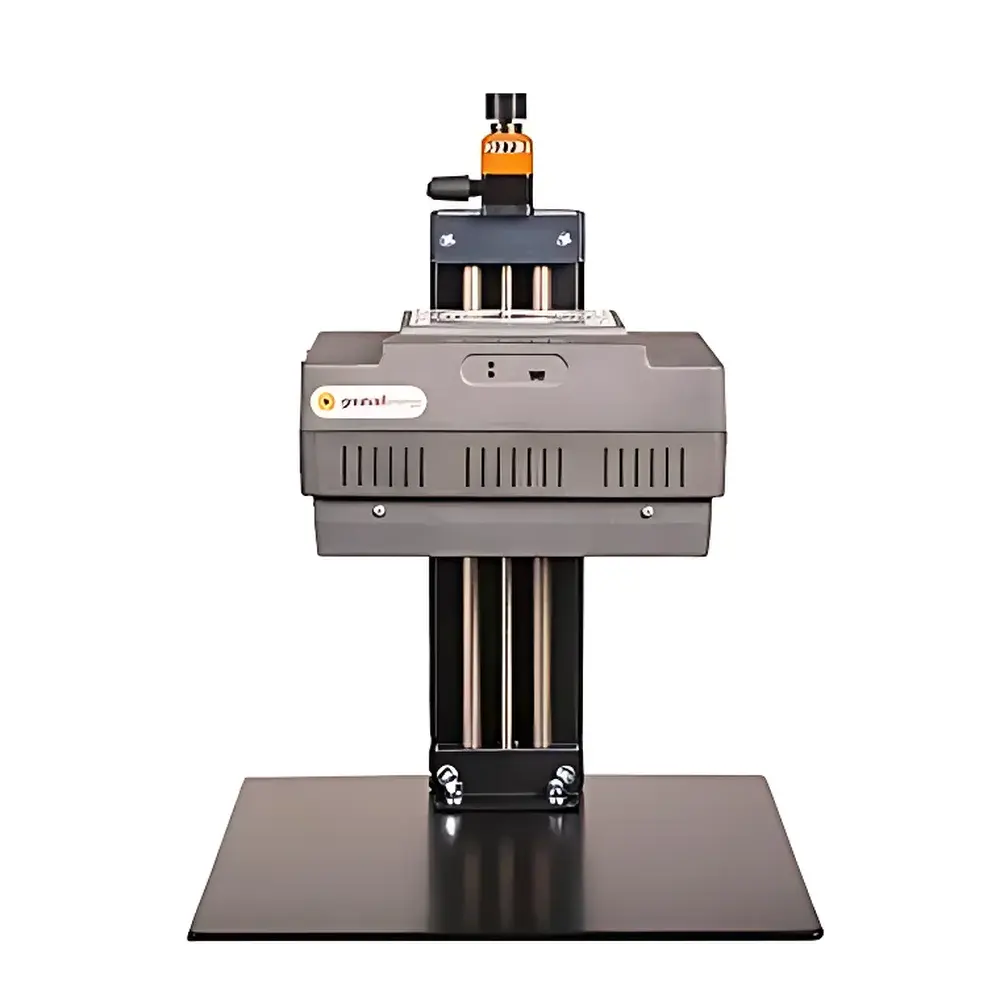
- Motorized height-adjustable mounting arm (20 cm for HYPIV10; 35 cm for HYPIV20) enabling precise working distance control (8.5 cm or 9.5 cm) to optimize collimation and uniformity at target plane
- Wi-Fi-enabled remote operation via secure HTTPS interface—supporting scheduled irradiance sequences, firmware updates, and real-time logging without physical access
- Optimized for compatibility with standard IV test stations, electroluminescence (EL) imaging rigs, and environmental chambers (temperature/humidity controlled)
Sample Compatibility & Compliance
The HYPIV simulator accommodates standard photovoltaic samples up to 30×30 cm (with optional extended optics), including silicon wafers, perovskite mini-modules, organic PV cells, and tandem architectures. Its collimated output beam meets spatial coherence requirements for accurate short-circuit current density (Jsc) measurement per ISO 18577 and IEC 61215-2 MQT 12.1. All units are supplied with factory calibration certificates traceable to PTB (Physikalisch-Technische Bundesanstalt) and include spectral irradiance data files compliant with ASTM E2527 Annex A1. The system satisfies audit-ready documentation requirements for GLP-compliant laboratories and supports 21 CFR Part 11–compliant electronic records when integrated with validated LIMS platforms.
Software & Data Management
Control is executed through Greatcell’s SolarSim Pro v3.x application—available for Windows and Linux—providing GUI- and script-based operation (Python API included). The software logs irradiance setpoints, spectral channel outputs, chamber temperature, and user annotations with ISO/IEC 17025–aligned metadata tagging. Audit trails record all parameter modifications, user logins, and calibration events with immutable timestamps. Export formats include CSV, HDF5, and XML-compatible spectral irradiance reports conforming to IEC 60904-9 Annex D. Optional integration with Keysight B2900 series SMUs and Keithley 2450 sourcemeters enables synchronized IV sweep acquisition with sub-millisecond trigger alignment.
Applications
- Primary calibration of reference solar cells and pyranometers against AM1.5G standard
- Quantum efficiency (QE) and external quantum efficiency (EQE) spectral response mapping
- Light-soaking and operational stability testing (e.g., ISOS-D-1, ISOS-L-2)
- Multi-junction PV device characterization requiring tunable sub-bandgap illumination
- Accelerated aging studies under spectrally shifted irradiance (e.g., UV-enhanced or NIR-deficient conditions)
- Validation of anti-reflective coatings and light-trapping structures via angular irradiance profiling
- Teaching and training labs requiring repeatable, maintenance-free illumination sources
FAQ
What standards does the HYPIV Series comply with?
It conforms to IEC 60904-9:2020 (A+A+A+ class), ASTM E927-05, JIS C 8912, and TÜV Rheinland’s PV module testing specification for Class AAA simulators.
Can the spectral output be customized beyond AM1.5G?
Yes—the 20-channel LED architecture supports user-defined spectra, including AM0 (space), AM1.0 (high-altitude), and custom profiles generated from measured outdoor irradiance datasets.
Is radiometric recalibration required annually?
Factory calibration is valid for 12 months under normal operating conditions; annual recalibration using NIST-traceable reference cells is recommended for ISO/IEC 17025 accreditation.
Does the system support synchronization with external measurement hardware?
Yes—TTL trigger input/output ports and IEEE-488 (GPIB) option enable hardware-level synchronization with source meters, lock-in amplifiers, and high-speed cameras.
What is the expected lifetime of the LED array under continuous operation?
Rated for >20,000 hours at full output (L70, per IES LM-80), with gradual lumen depreciation compensated via closed-loop feedback in SolarSim Pro v3.x.






