
LaVision SprayMaster Geometry Spray Plume Morphology and Pattern Analysis System
| Brand | LaVision GmbH |
|---|---|
| Origin | Germany |
| Model | SprayMaster-Geometry |
| Dispersion Method | Dry & Wet |
| Measurement Range | 5–3500 µm |
| Repeatability | <1% |
| Measurement Time | 10–15 seconds per acquisition |
| Optical Configuration | Backlighting, Light Sheet Imaging (Radial & Axial Cuts) |
| Software | Spray Geometry v5.x |
Overview
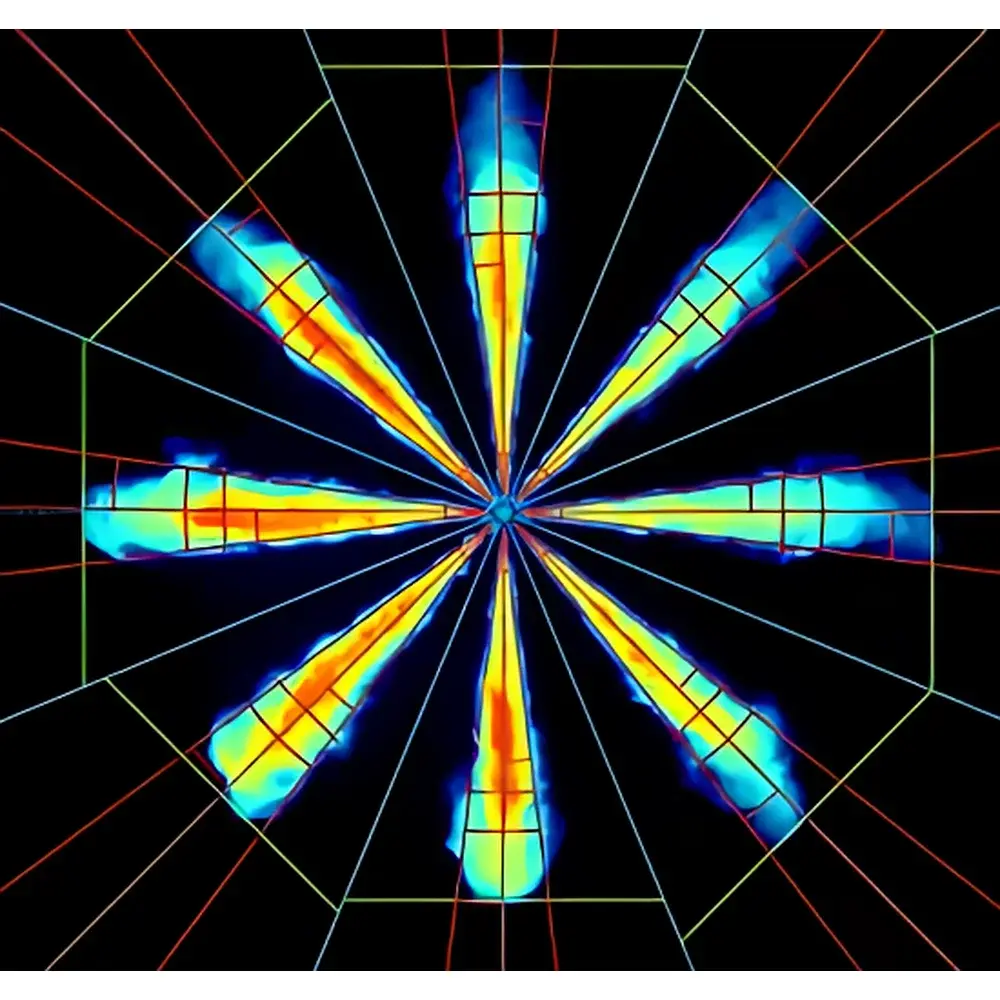
The LaVision SprayMaster Geometry Spray Plume Morphology and Pattern Analysis System is a high-resolution, non-intrusive optical metrology platform engineered for quantitative characterization of liquid spray structures in research and industrial development environments. Unlike conventional laser diffraction particle sizing instruments, SprayMaster Geometry does not measure droplet size distributions; instead, it extracts geometric, morphological, and spatial propagation parameters directly from calibrated 2D intensity images—acquired via backlight illumination or planar laser light sheet imaging—of transient or quasi-steady sprays. The system operates on the principle of silhouette-based image analysis combined with sub-pixel centroiding, radial projection, and angular histogramming to derive reproducible metrics of spray patternation, plume asymmetry, cone divergence, and axial penetration. It is widely deployed in fuel injection R&D (e.g., gasoline direct injection, diesel common-rail, and alternative fuel systems), pharmaceutical inhaler development, agricultural nozzle calibration, and combustion chamber design validation where deterministic knowledge of spray geometry—not just Sauter mean diameter—is critical for predictive modeling and regulatory compliance.
Key Features
- Multi-modal optical acquisition: supports backlight imaging for global pattern analysis and orthogonal light sheet illumination for slice-resolved radial or axial cross-sections
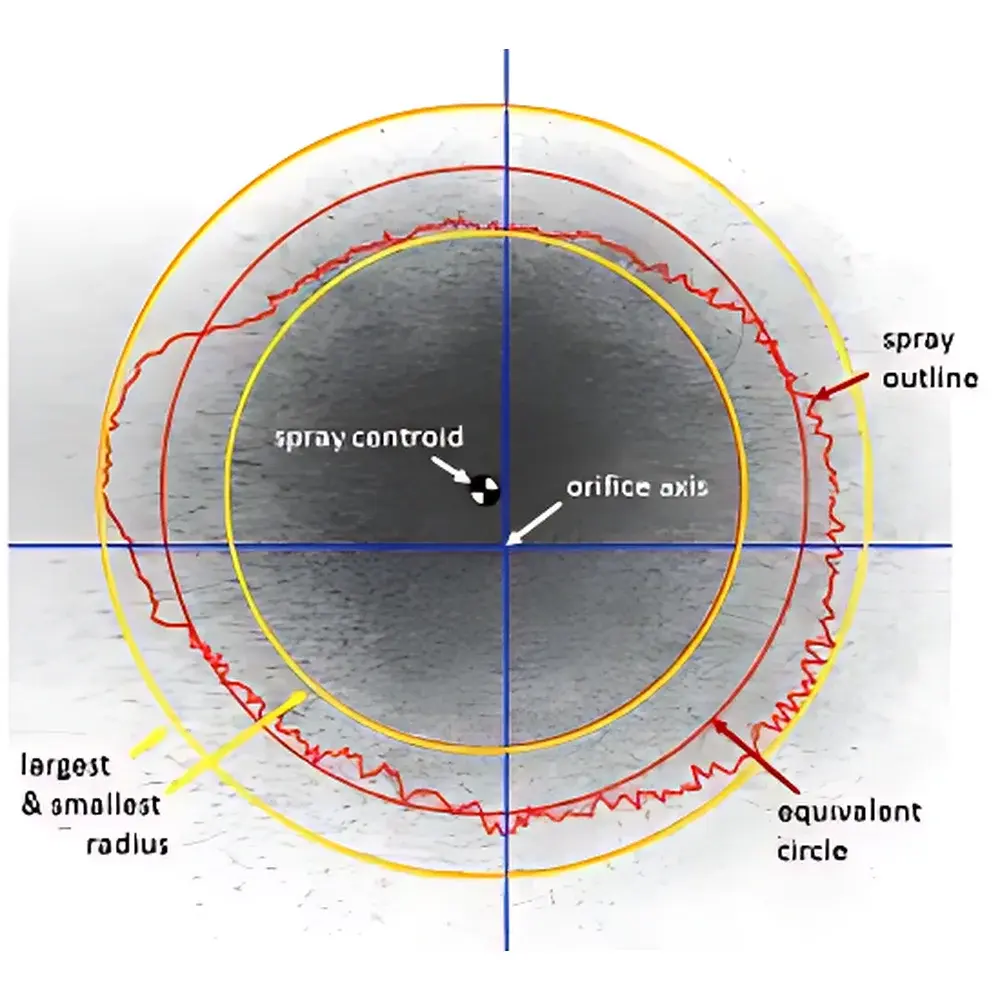
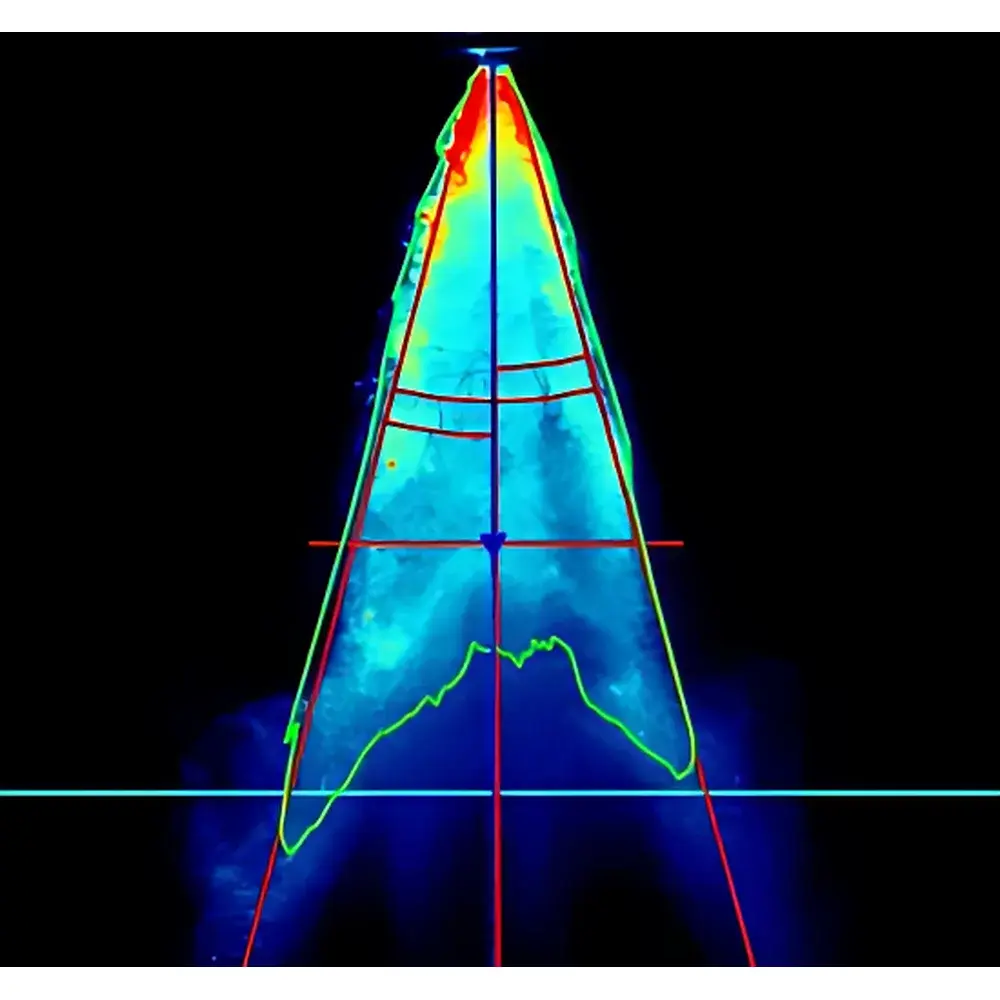
- Dual-cut analysis mode: Radial cuts (perpendicular to spray axis) quantify spray pattern area, equivalent diameter, mass-weighted circle diameters (SAE J2715 compliant), centroid displacement, and angular distribution; Axial cuts (parallel to spray axis) extract cone angle, bent angle, half-angle asymmetry, tip penetration length, and angular density profiles
- Sub-pixel intensity centroiding algorithm for centroid position accuracy better than ±0.3 pixels under optimal SNR conditions
- Real-time image preprocessing pipeline including background subtraction, contrast normalization, adaptive thresholding, and noise filtering
- Calibration traceability to NIST-traceable targets; supports both pixel-to-length and depth-of-field correction for out-of-plane spray distortion
- Engineered for integration with high-speed cameras (up to 100 kHz frame rates) and synchronization with external triggers (e.g., injector solenoid signals)
Sample Compatibility & Compliance
The SprayMaster Geometry system accommodates a broad range of spray sources without physical contact—including single-hole and multi-hole injectors, pressure-swirl nozzles, ultrasonic atomizers, and pneumatic nebulizers. It supports both continuous and pulsed injection regimes, with temporal resolution governed by camera framing rate and laser pulse duration. The software enforces ISO 13322-2 (image analysis particle sizing) best practices for binary segmentation and edge detection, while radial and axial metrics align with SAE J2715 (Fuel Injector Spray Pattern Characterization) and ASTM D7489 (Standard Test Method for Spray Pattern Evaluation of Fuel Injectors). Data export formats (CSV, HDF5, TIFF stacks) are compatible with third-party CFD post-processing tools (e.g., CONVERGE, STAR-CD, OpenFOAM). All measurement workflows support GLP-compliant audit trails, user access control, and electronic signature functionality when operated under FDA 21 CFR Part 11–enabled configurations.
Software & Data Management
Spray Geometry v5.x is a modular, Windows-based application built on Qt and optimized for multi-core CPU execution. It provides synchronized acquisition control, real-time preview, batch processing of image sequences, and automated report generation (PDF/HTML). Each analysis session stores full metadata—including camera settings, lens focal length, working distance, lighting configuration, and timestamped trigger logs—in an embedded SQLite database. Raw images and derived parameters are archived with SHA-256 checksums to ensure data integrity. The software supports scripting via Python API (PySprayGeom) for custom metric development and integration into automated test benches. Exported datasets include standardized column headers compliant with ASAM MCD-2 MC and ISO 26262 toolchain requirements for functional safety validation.
Applications
- Fuel injection system development: quantification of spray cone angle variation across injection pulses, detection of asymmetric plume deviation due to manufacturing tolerances or coking
- Combustion chamber optimization: correlation of spray geometry metrics (e.g., tip penetration vs. ambient density) with ignition delay and soot formation thresholds
- Inhaler and nasal spray device qualification: verification of actuation consistency, plume symmetry, and dose uniformity per USP & Ph. Eur. guidelines
- Nozzle wear monitoring: longitudinal tracking of pattern area shrinkage, centroid drift, or cone angle narrowing as indicators of orifice erosion
- CFD model validation: provision of boundary-condition-relevant ground-truth geometry inputs (e.g., time-resolved cone angle, angular density maps) for Lagrangian droplet tracking initialization
FAQ
Does SprayMaster Geometry measure droplet size distributions?
No. It is purpose-built for spray morphology and geometric parameter extraction—not particle sizing. For simultaneous droplet sizing and geometry analysis, LaVision recommends coupling SprayMaster Geometry with SprayMaster Droplet or SprayMaster Dynamics modules.
Can the system analyze transient sprays with high temporal resolution?
Yes. When integrated with high-speed cameras (e.g., Phantom v2512 or PCO.dimax HS4) and pulsed lasers, it achieves frame rates up to 100 kHz, enabling cycle-resolved analysis of start-up transients and needle lift dynamics.
Is calibration required before each measurement session?
A one-time spatial calibration per optical setup is sufficient; however, background subtraction and intensity normalization are applied automatically per image sequence to compensate for ambient drift or lamp aging.
What file formats does the software support for import and export?
Imports: 8/12/16-bit TIFF, BMP, PNG, RAW (camera-specific), HDF5. Exports: CSV (tabular metrics), TIFF stacks (processed masks), PDF/HTML reports, HDF5 (full metadata + images).
How is measurement repeatability ensured across laboratories?
Through standardized calibration protocols, open-source reference image sets, and version-controlled analysis algorithms—documented in LaVision’s Application Note AN-GEO-003 and aligned with ISO/IEC 17025 interlaboratory comparison frameworks.



