
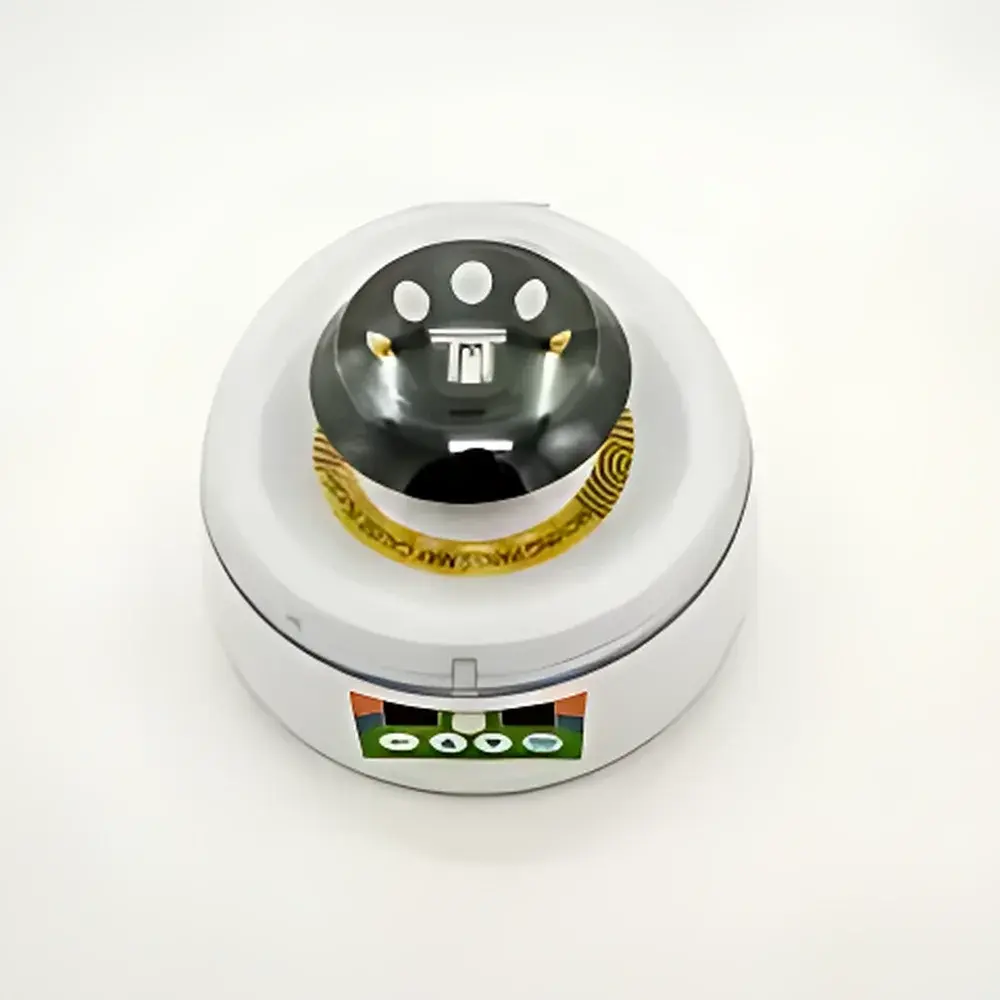
Hanuo Mini-10K+ Portable Benchtop Centrifuge
| Brand | Hanuo |
|---|---|
| Model | Mini-10K+ |
| Type | Palm-Sized Microcentrifuge |
| Max Speed | 10,000 rpm |
| Max RCF | ~7,500 × g |
| Capacity | 8 × 1.5 mL tubes (also compatible with 0.2–0.5 mL PCR strips and microtubes) |
| Dimensions | 175 × 156 × 125 mm |
| Weight | ≤1.5 kg |
| Power Supply | 110–220 V, 50–60 Hz |
| Noise Level | ≤45 dB(A) |
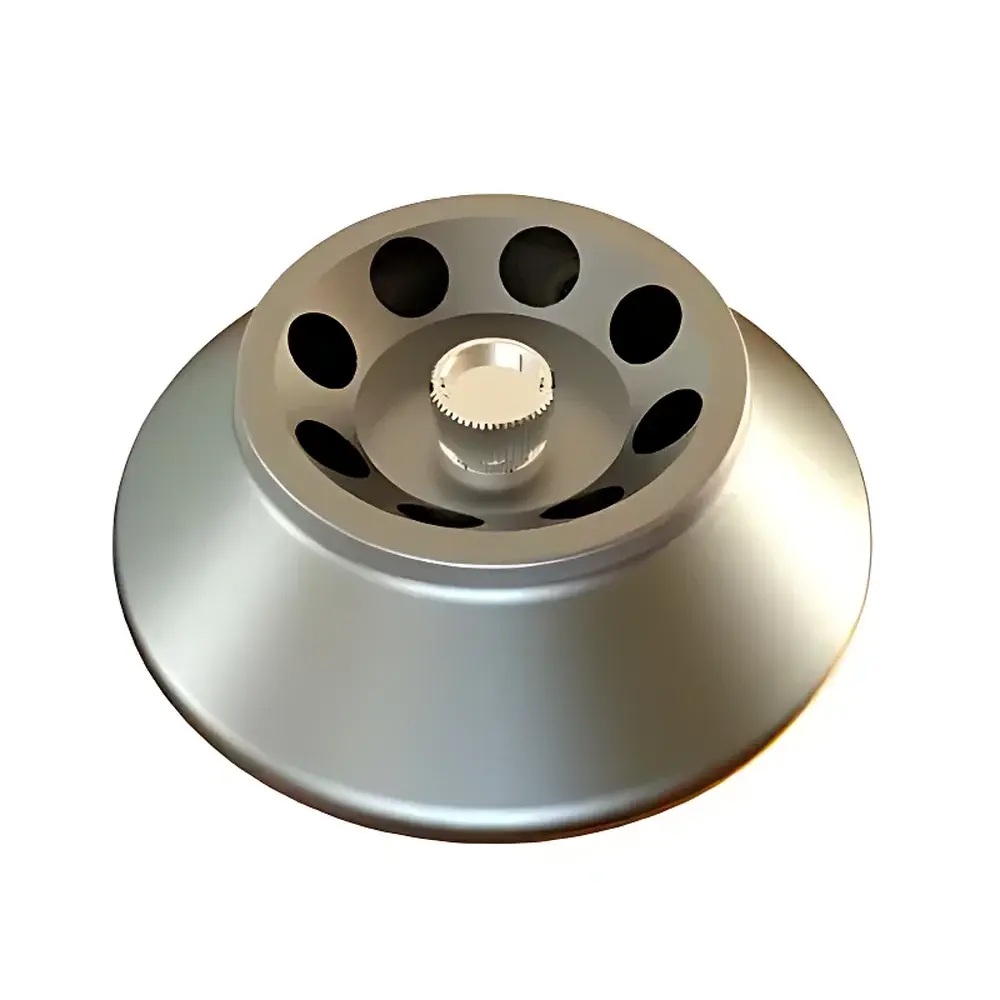
| Rotor Type | Fixed-angle aluminum rotor |
| Display | LED digital display for speed and timer |
| Timer Range | 0–99 min (adjustable in 1-sec increments) |
| Compliance | CE, RoHS, ISO 9001-manufactured facility |
| Safety Features | Automatic lid lock, over-speed protection, imbalance detection, brushless DC motor |
Overview
The Hanuo Mini-10K+ Portable Benchtop Centrifuge is an engineered solution for rapid, reliable microscale separation in resource-constrained or space-limited laboratory environments—including biosafety cabinets, laminar flow hoods, point-of-care testing stations, and field-deployable mobile labs. Utilizing a fixed-angle rotor geometry and brushless DC motor architecture, it delivers consistent centrifugal force generation across its operational range of 3,000–10,000 rpm, achieving a maximum relative centrifugal force (RCF) of approximately 7,500 × g at full speed. Its compact footprint (175 × 156 × 125 mm) and sub-1.5 kg mass enable stable placement on narrow work surfaces without vibration transmission—critical for sensitive downstream assays such as qPCR setup or RNA extraction workflows where sample integrity must be preserved during pre-analytical processing.
Key Features
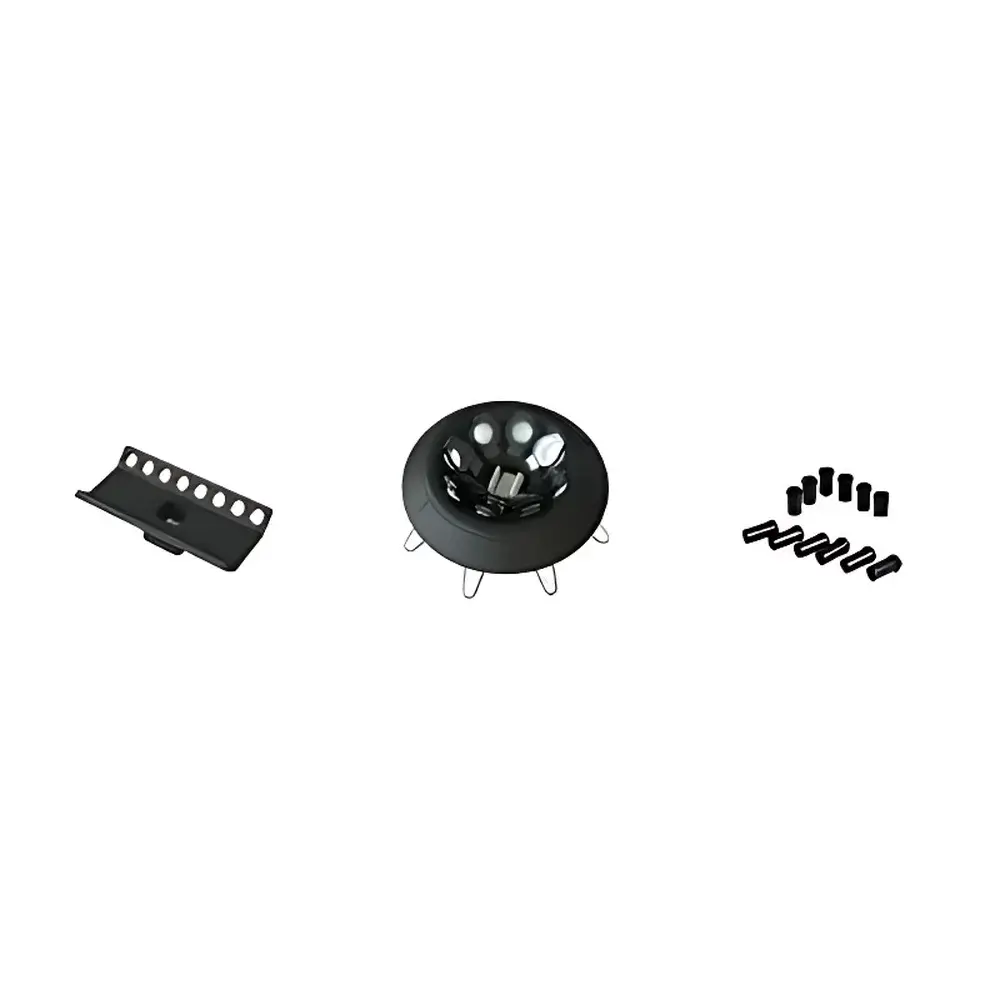
- Optimized 8-position fixed-angle aluminum rotor with extended radius design—enhances RCF output per rpm compared to standard microcentrifuge rotors of equivalent size.
- Ergonomic lid actuation system: externally protruding tactile switch enables one-handed 95° automatic lid opening, minimizing cross-contamination risk during high-throughput sample handling.
- Tool-free rotor retention mechanism with positive-locking cam latches—ensures secure rotor seating while permitting rapid rotor exchange between protocols (e.g., switching from 1.5 mL tube mode to dual 8-strip PCR configuration).
- Digital LED interface displaying real-time rotational speed (rpm), elapsed/remaining time, and programmable countdown timer (0–99 minutes, 1-second resolution).
- Ultra-low acoustic signature (≤45 dB[A] at 1 m distance) achieved via precision-balanced rotor assembly, vibration-damping housing, and electronically commutated motor control—ideal for open-plan labs and quiet-zone installations.
- Integrated safety architecture including automatic lid interlock, dynamic imbalance sensing, electronic overspeed cutoff, and thermal overload protection compliant with IEC 61010-1 safety standards.
Sample Compatibility & Compliance
The Mini-10K+ accommodates standard microcentrifuge formats: 0.2 mL PCR strips (2 × 8-well configuration), 0.5 mL and 1.5 mL conical polypropylene tubes, and low-retention variants used in nucleic acid purification. It supports common biological matrices including whole blood (serum separation), bacterial cell pellets, yeast lysates, tissue homogenates, and clarified supernatants from immunoassay preparations. All materials contacting samples comply with USP Class VI biocompatibility requirements. The device is manufactured in an ISO 9001-certified facility and conforms to CE marking directives (2014/30/EU EMC, 2014/35/EU LVD), RoHS 2011/65/EU, and meets essential performance criteria outlined in ISO 13485 for in vitro diagnostic support equipment.
Software & Data Management
As a stand-alone benchtop instrument, the Mini-10K+ operates without proprietary software or network connectivity—eliminating validation overhead for regulated environments. All operational parameters are set locally via front-panel controls; no firmware updates or driver installation are required. For laboratories operating under GLP or GMP frameworks, the absence of electronic data storage aligns with ALCOA+ principles by removing audit trail dependencies—user-defined run conditions (speed, duration) are recorded manually in lab notebooks or integrated into ELN systems via procedural documentation. Optional calibration certificates traceable to NIST standards are available upon request for IQ/OQ documentation packages.
Applications
- Serum/plasma isolation from capillary or venous whole blood specimens (e.g., point-of-care diagnostics, veterinary field sampling).
- Rapid pelleting of microbial cultures prior to DNA/RNA extraction or antibiotic susceptibility testing.
- Clarification of crude lysates in molecular biology workflows—particularly for spin-column-based kits requiring brief pre-clearance steps.
- Microcentrifugation of PCR master mixes to eliminate air bubbles and ensure uniform distribution across reaction wells.
- Separation of lipid layers in chloroform/methanol extractions (e.g., Folch method) when scaled to microliter volumes.
- Centrifugal concentration of dilute protein or antibody solutions using ultrafiltration devices rated for ≤10,000 × g loading.
FAQ
Is the Mini-10K+ suitable for clinical diagnostic use under CLIA or CAP guidelines?
Yes—its mechanical design, absence of embedded software, and compliance with IEC 61010-1 make it appropriate for use in CLIA-waived and moderate-complexity testing environments when operated per manufacturer-specified protocols.
Can the rotor accommodate 0.2 mL PCR strips without adapters?
Yes—the rotor includes dedicated grooves for two 8-well PCR strips, eliminating need for accessory adapters and reducing contamination pathways.
What maintenance is required for long-term reliability?
No routine lubrication or bearing service is needed due to the brushless DC motor design; periodic cleaning of rotor chamber with 70% ethanol and visual inspection of lid seal integrity are recommended every 6 months.
Does the unit support variable acceleration/deceleration profiles?
No—it employs fixed-rate ramp-up and coast-down kinetics optimized for microtube integrity; this simplifies validation and ensures reproducible pellet morphology across users.
Is the power supply auto-ranging for global voltage inputs?
Yes—the internal switching power supply accepts 100–240 V AC, 50–60 Hz, enabling seamless deployment across North America, EU, APAC, and Latin American laboratories without external transformers.
Related Products



