
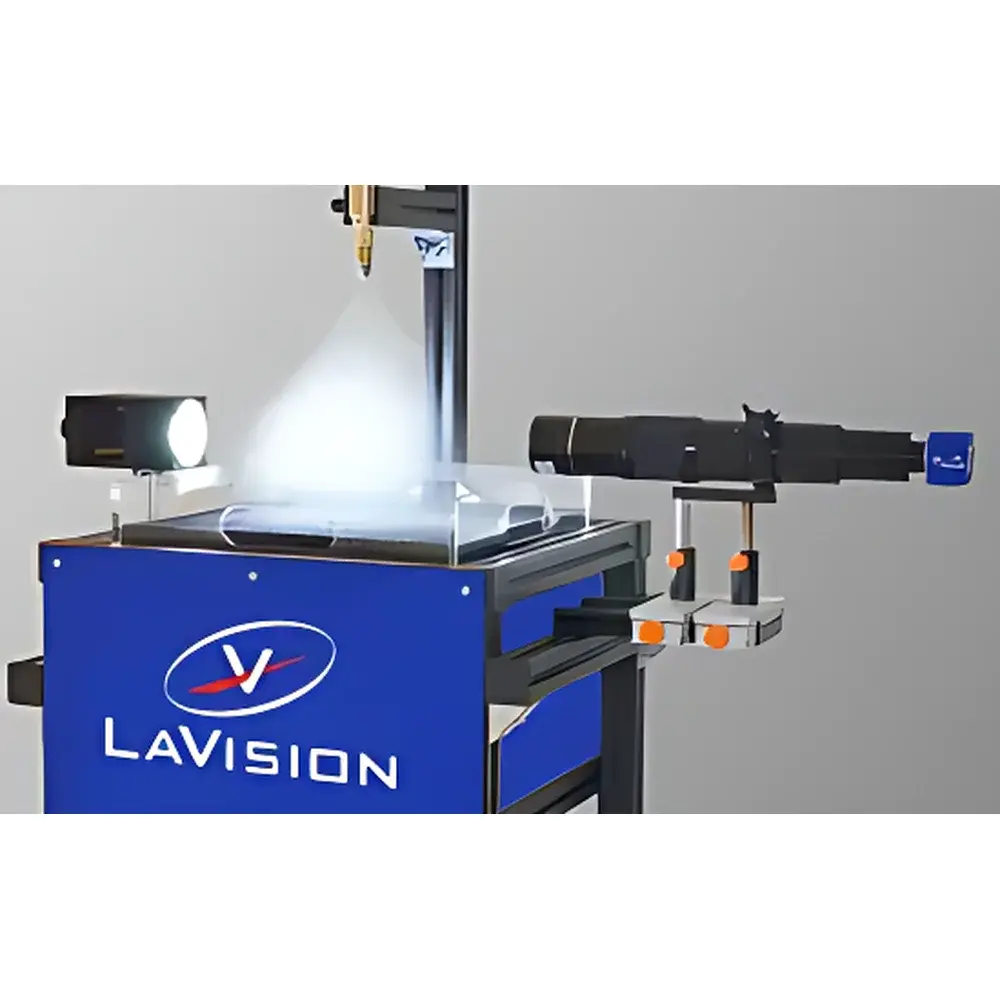
LaVision ParticleMaster-Shadow Shadow Imaging Particle Size and Shape Analyzer
| Brand | LaVision GmbH |
|---|---|
| Origin | Germany |
| Model | ParticleMaster-Shadow |
| Dispersion Method | Dry & Wet |
| Measurement Range | 5–3500 µm |
| Repeatability | <1% |
| Measurement Time | 10–15 s |
Overview
The LaVision ParticleMaster-Shadow is a high-resolution shadow imaging system engineered for non-invasive, real-time particle size, shape, and dynamic property analysis in gas–liquid, liquid–liquid, and solid–liquid multiphase flows. Unlike laser diffraction or dynamic light scattering techniques, shadowgraphy relies on broadband backlight illumination and high-speed digital imaging to capture two-dimensional silhouettes (shadows) of particles, droplets, or bubbles against a uniform background. This optical principle imposes no requirement for particle sphericity, transparency, or refractive index homogeneity—making it uniquely suited for irregular, opaque, or optically heterogeneous samples such as metal powders, coal ash, polymer agglomerates, or fuel spray ligaments. The system operates on the physical basis of geometric projection: each particle’s shadow area, aspect ratio, convexity, and Feret diameters are extracted directly from pixel-resolved binary images, enabling traceable, calibration-free size quantification within the 5–3500 µm range. Its sub-millisecond temporal resolution supports transient phenomena analysis—including breakup, coalescence, and acceleration—in single- or multi-camera configurations.
Key Features
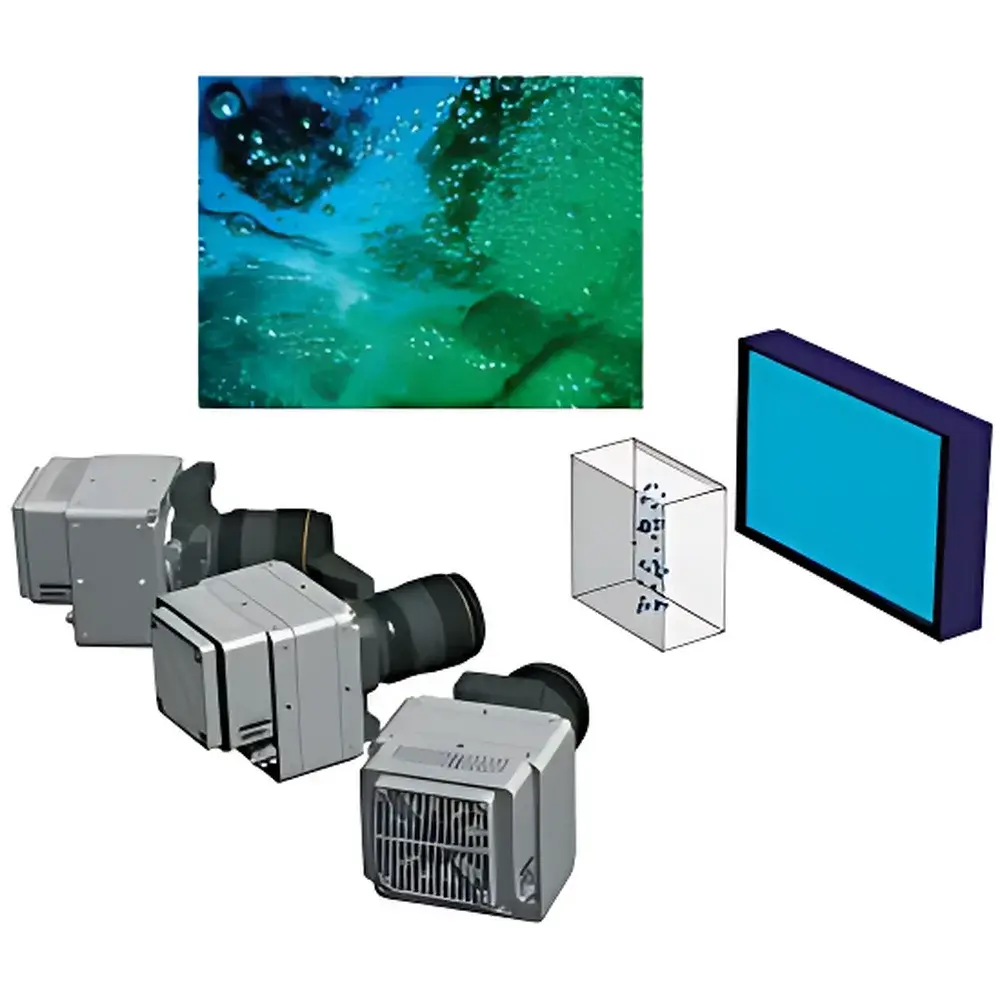
- High-resolution monochrome CMOS imaging with adjustable magnification optics (macro to telecentric lenses) for optimal depth-of-field and edge fidelity across the full measurement range
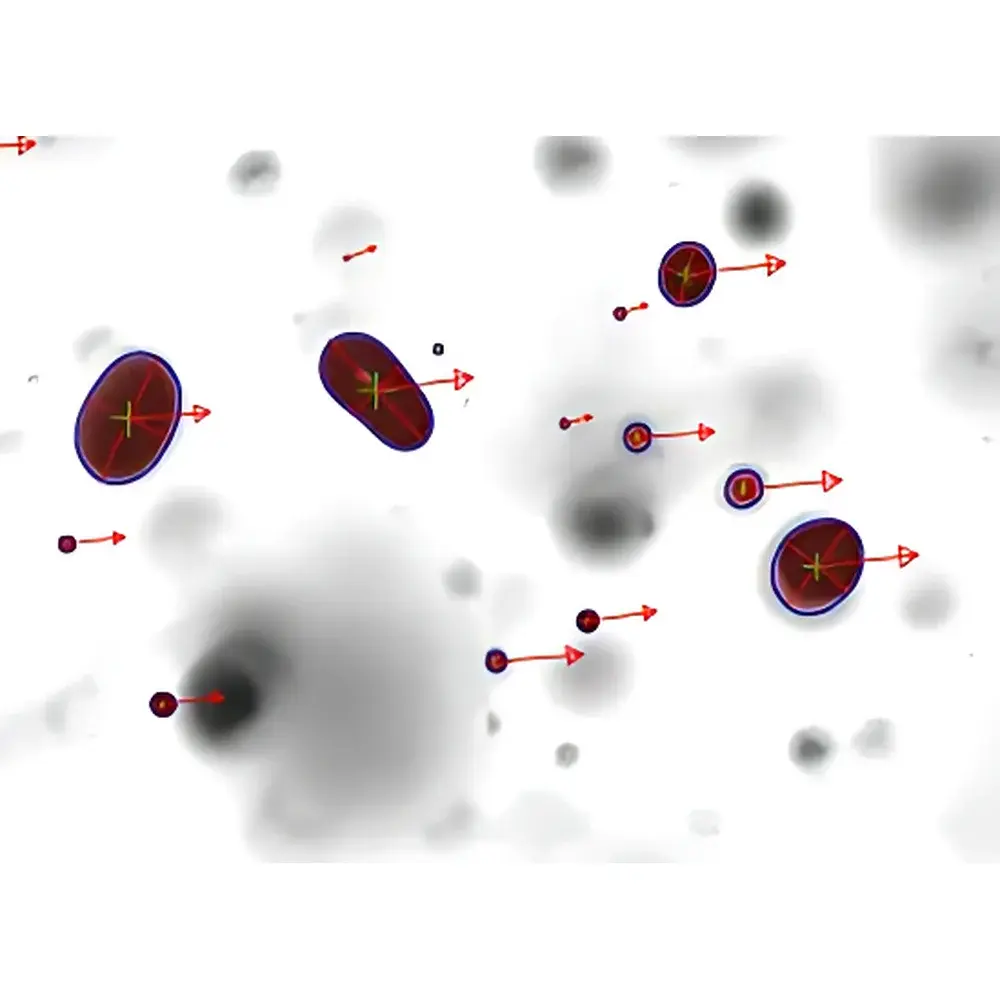
- Dual-frame double-pulse LED backlighting synchronized with camera exposure for precise velocity vector derivation via particle displacement analysis
- Real-time particle detection and classification using adaptive thresholding, morphological filtering, and machine learning–assisted validation algorithms
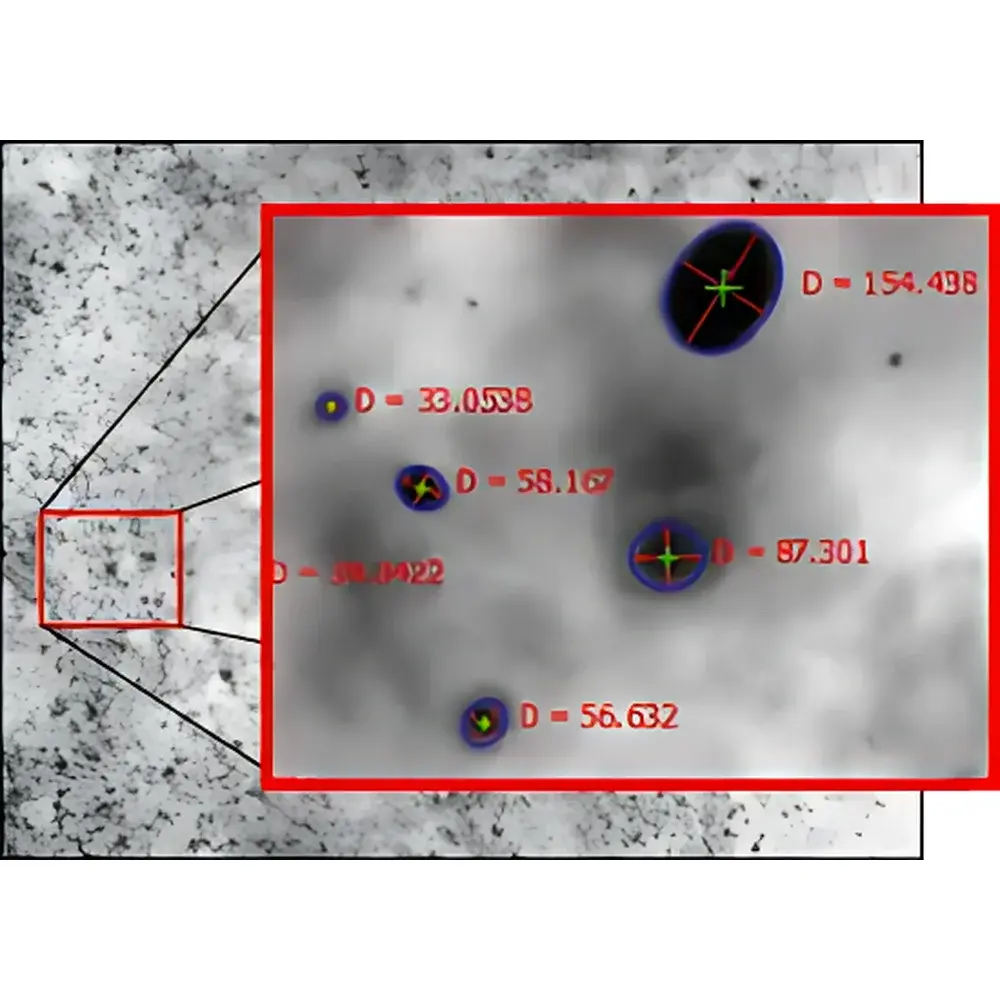
- Simultaneous extraction of >20 morphological descriptors per particle: equivalent circular diameter (ECD), maximum Feret length, aspect ratio, circularity, solidity, convexity, and bounding box orientation
- Integrated volumetric correction for particle number density based on optical depth, camera field-of-view, and sampling volume geometry
- Native compatibility with LaVision’s DaVis software platform for synchronized acquisition, tomographic reconstruction (in 3D variants), and post-processing workflows
Sample Compatibility & Compliance
The ParticleMaster-Shadow accommodates a broad spectrum of particulate systems without sample preparation constraints typical of ensemble-averaging methods. It is routinely deployed for characterization of abrasive powders, thermally unstable emulsions, high-viscosity slurries, and reactive sprays where dilution or dispersion may alter native morphology. The system complies with ISO 9276-2:2014 (representation of particle size distributions) for image-based sizing, and its measurement traceability aligns with VDI 3245 Part 1 (optical measurement of droplet and particle size in sprays). For regulated environments, DaVis software supports audit-trail logging, user access control, and electronic signature functionality compliant with FDA 21 CFR Part 11 requirements when configured with validated installation protocols.
Software & Data Management
ParticleMaster software—fully integrated into the DaVis 10.x environment—provides end-to-end workflow automation: from hardware synchronization and image preprocessing to statistical reporting and export-ready visualization. All particle data are stored in HDF5 format, ensuring metadata-rich, self-describing datasets compatible with Python (NumPy/Pandas), MATLAB, and third-party analytics tools. Batch processing enables automated analysis of thousands of image pairs; time-series exports include per-particle trajectories, size–velocity correlations, mass flux histograms, and phase-resolved spatial distributions. Customizable report templates support GLP/GMP documentation standards, including operator ID, instrument calibration status, environmental conditions, and uncertainty annotations derived from pixel resolution and optical magnification uncertainty budgets.
Applications
- Quantitative analysis of fuel injector spray atomization, including ligament formation, primary/secondary breakup regimes, and Sauter mean diameter (SMD) evolution along the spray axis
- 3D bubble dynamics in electrolytic reactors and nuclear boiling channels, leveraging tomographic shadow imaging with ≥4 orthogonal projections
- In-process monitoring of pharmaceutical dry powder inhalers (DPIs), capturing aerodynamic diameter distribution and aggregation state under simulated inhalation flow
- Characterization of wear debris in lubricating oils to assess mechanical degradation modes (e.g., cutting vs. fatigue particles)
- Validation of CFD–DEM coupling models by providing experimental ground truth for local particle concentration, shape anisotropy, and interphase momentum transfer
FAQ
Does the ParticleMaster-Shadow require calibration standards like PSUs or NIST-traceable beads?
Calibration is performed optically using certified stage micrometers and focal plane verification procedures—not with particle standards—because shadowgraphy measures geometric projection, not scattered intensity. Magnification and depth-of-field parameters are verified prior to each experiment.
Can the system resolve overlapping particles in dense sprays?
Yes—advanced deconvolution algorithms and focus-stacking modules in DaVis enable partial separation of occluded particles, particularly when combined with multi-angle illumination or z-stack acquisitions.
Is wet dispersion mandatory for liquid-phase measurements?
No. The system operates in native flow conditions: inline measurements in pipes, nozzles, or wind tunnels eliminate dispersion artifacts associated with recirculation loops or ultrasonication.
What is the minimum detectable particle size under standard configuration?
At 10× magnification with 4.5 µm pixel pitch, the theoretical limit is ~5 µm (3–4 pixels across); practical lower limit depends on contrast, illumination uniformity, and particle opacity.
How does shadowgraphy compare to dynamic image analysis (DIA) systems?
Unlike conventional DIA, ParticleMaster-Shadow uses pulsed, collimated backlighting optimized for high signal-to-noise ratio in fast-moving flows, coupled with deterministic particle segmentation—not threshold-based blob detection—ensuring robustness in low-contrast or turbulent environments.



