
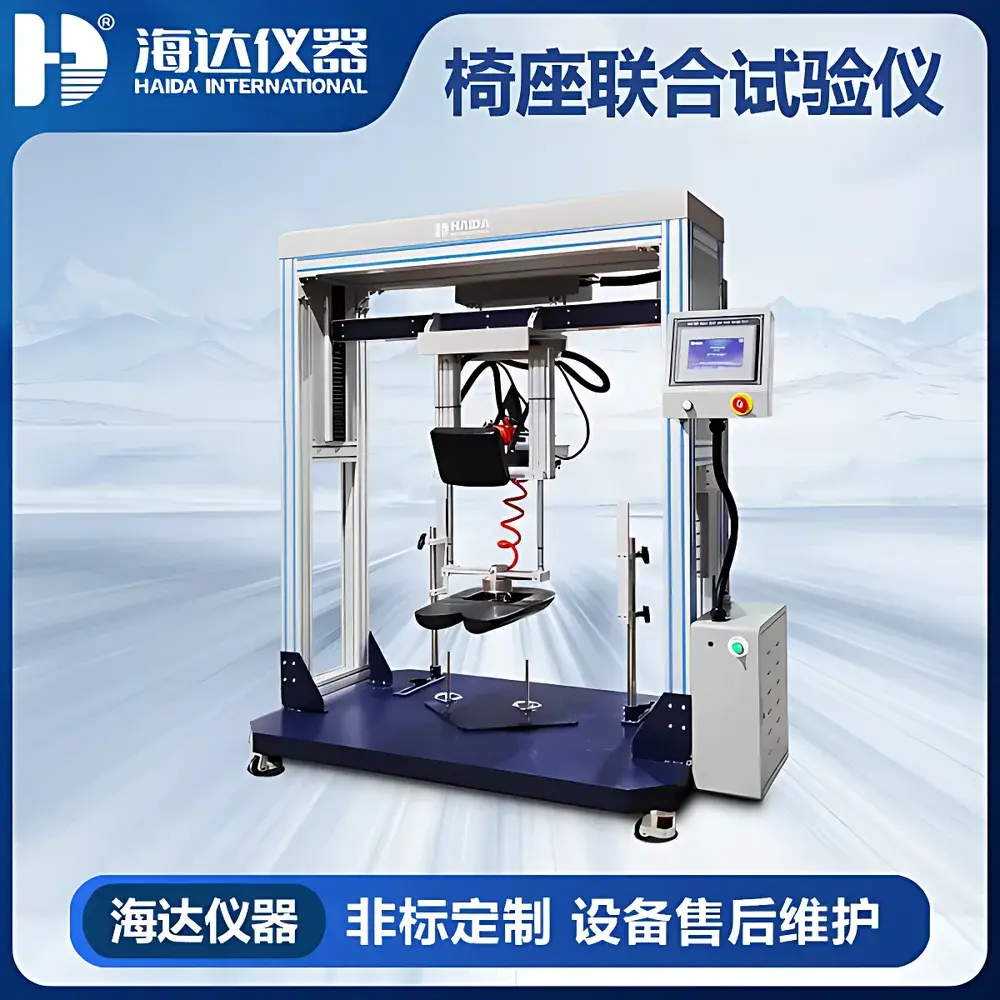
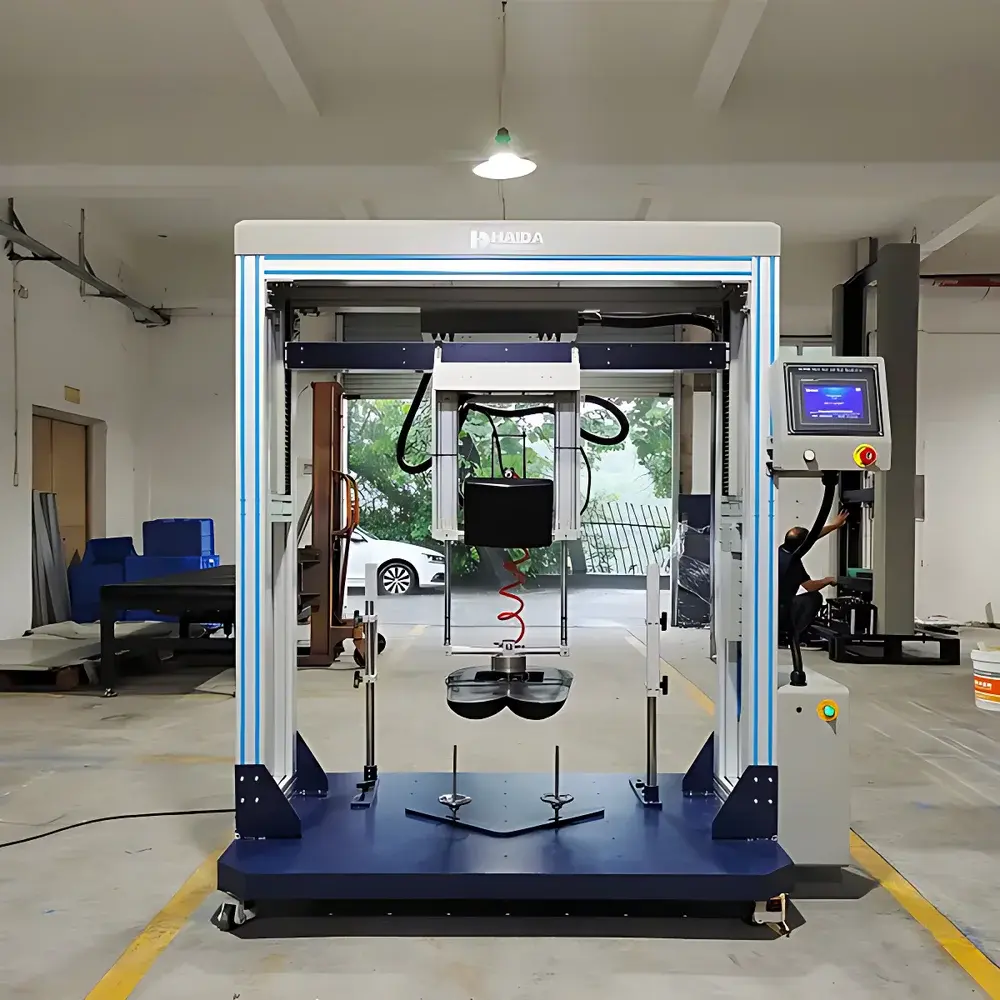
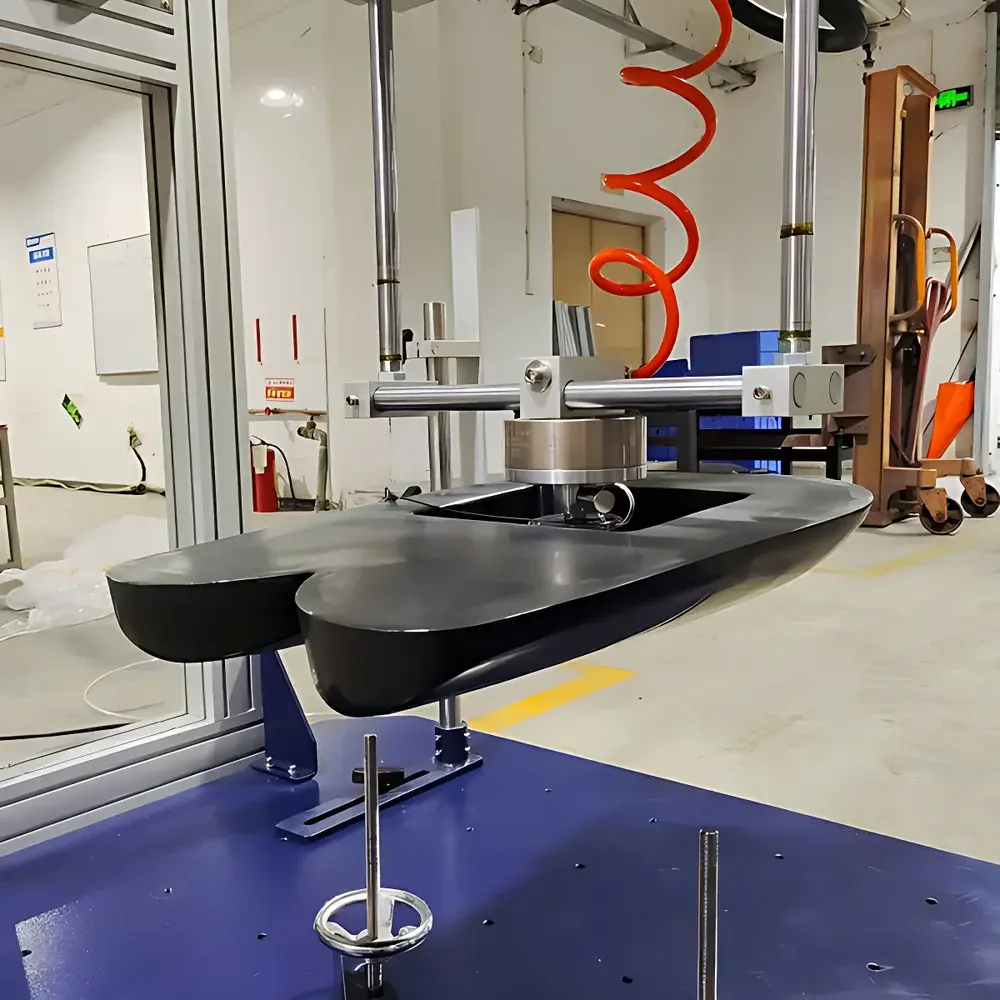
HAIDA HD-F780 Integrated Seat-and-Back Durability Tester
| Brand | HAIDA INTERNATIONAL |
|---|---|
| Origin | Guangdong, China |
| Manufacturer Type | OEM/ODM Manufacturer |
| Country of Origin | China |
| Model | HD-F780 |
| Force Capacity | 5 kN (combined) |
| Seat Load Sensor | 2 kN |
| Backrest Load Sensor | 2 kN |
| Static Load Range (Backrest) | 410–700 N (GB), 450 N (EN) |
| Static Load Range (Seat) | 1200–2000 N (GB), 1300 N (EN) |
| Durability Load Range (Backrest) | 330 N (GB), 300 N (EN) |
| Durability Load Range (Seat) | 950–1000 N |
| Test Speed | 1–20 cycles/min |
| Stroke Count Range | 1–999,999 cycles (user-defined) |
| Seat Height Adjustment | 300–600 mm |
| Sample Max. Dimensions | 1000 × 1000 mm (L×W) |
| Frame Dimensions | 1700 × 1000 × 1900 mm (L×W×H) |
| Weight | ~650 kg |
| Power Supply | 1∮ AC 220 V |
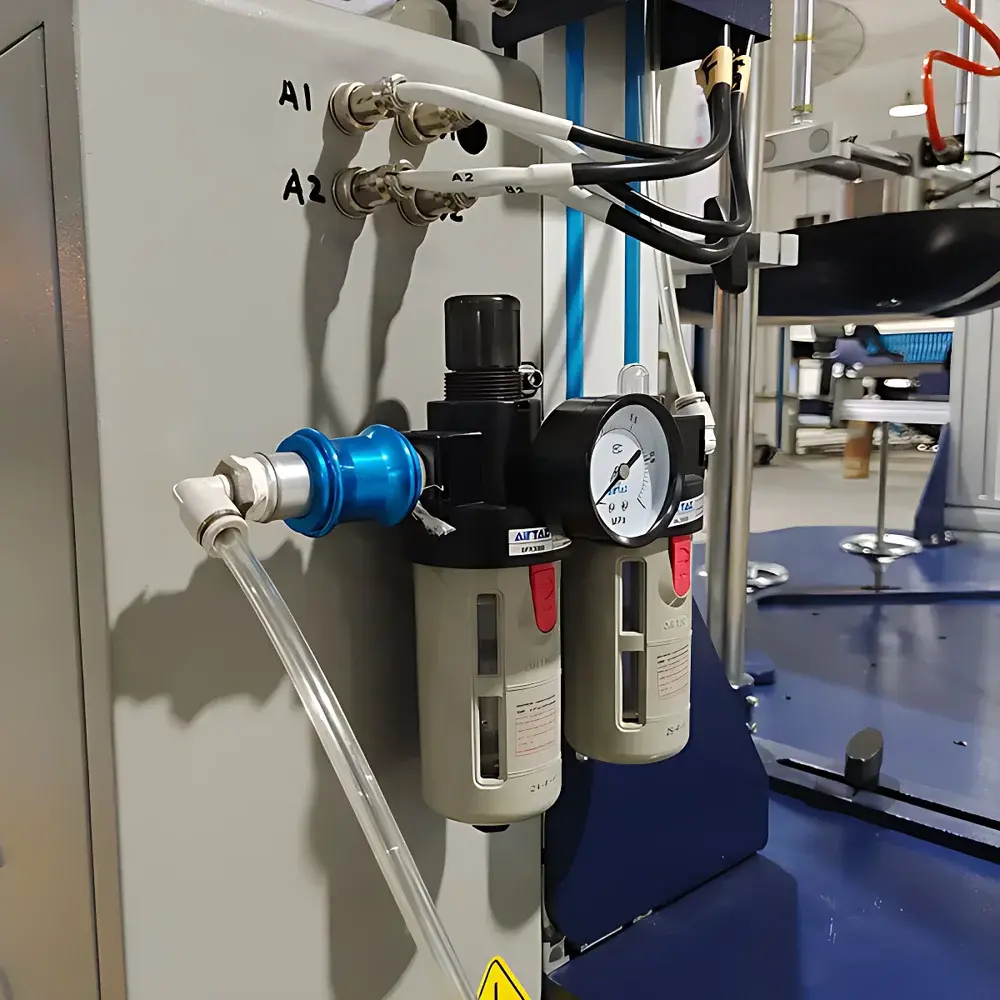
| Compressed Air Requirement | ≥0.6 MPa |
| Total Power Consumption | ~200 W |
| Display | Touchscreen HMI |
| Control System | PLC-based |
| Data Output | USB interface |
| Compliance Standards | BS EN 1335-3:2009, EN 1728:2012, QB/T 2280-2016, GB 10357.3-2013 |
Overview
The HAIDA HD-F780 Integrated Seat-and-Back Durability Tester is an electromechanical fatigue and static load testing system engineered for rigorous mechanical validation of seating furniture—specifically office chairs, ergonomic stools, and institutional seating. It replicates real-world user interaction by applying synchronized, programmable cyclic loads to both the seat pan and backrest simultaneously or independently, simulating repetitive sitting, reclining, and sustained postural loading. The system operates on a dual-actuator pneumatic architecture with precision servo-proportional pressure control, enabling stable, repeatable force application across defined test profiles. Its structural design adheres to industrial-grade durability requirements, incorporating reinforced aluminum extrusion framing, heavy-duty castor-free leveling feet with vibration-damping capability, and integrated electrical safety features including short-circuit protection and emergency force-limiting sensor cutoff.
Key Features
- Modular dual-load architecture: Independent 2 kN load cells for seat and backrest measurement, with combined system capacity up to 5 kN—enabling simultaneous or isolated testing per ISO/EN/QB standard requirements.
- Precision pneumatic actuation: Servo-proportional valve control ensures high reproducibility in force delivery across the full operational range (50–2000 N), minimizing drift during extended durability runs.
- Full-cycle programmability: Touchscreen HMI interface allows direct configuration of cycle count (1–999,999), dwell time, stroke frequency (1–20 cpm), and load profile sequencing—supporting both static hold and dynamic endurance protocols.
- Intelligent fault monitoring: Real-time diagnostics detect and log anomalies including cylinder extension/retraction failure, motor stall, power interruption, and over-force events—with automatic shutdown and on-screen alert generation.
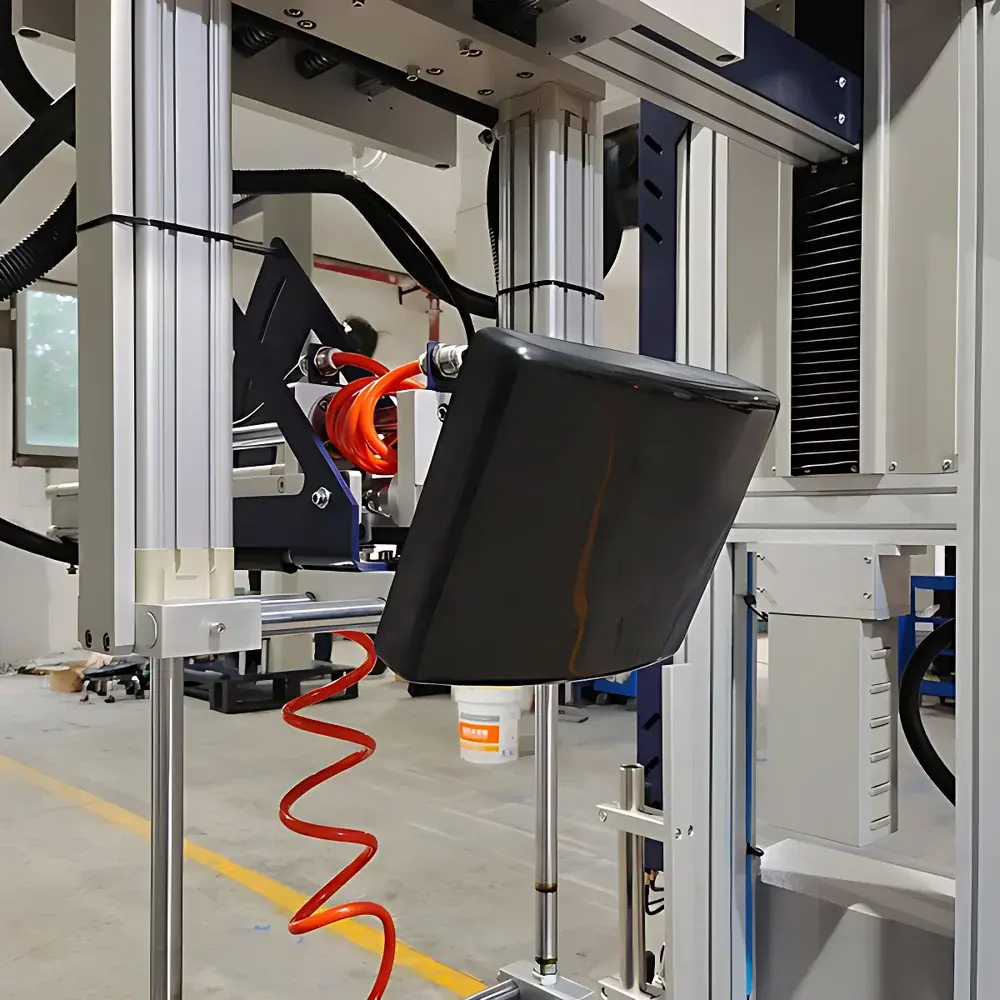
- Robust mechanical platform: Aluminum frame construction provides rigidity and corrosion resistance; adjustable fixtures—including foot clamps, armrest anchors, L-brackets, and anatomically contoured loading pads—accommodate diverse chair geometries up to 1000 mm × 1000 mm footprint.
- Data integrity safeguards: Power-loss recovery function retains current test state and cumulative cycle count; all session data exportable via USB in CSV-compatible format for traceability and audit readiness.
Sample Compatibility & Compliance
The HD-F780 accommodates a broad spectrum of commercial and residential seating products, including mesh-back executive chairs, task chairs with synchronous tilt mechanisms, stacking stools, and educational furniture. Its height-adjustable loading modules (300–600 mm vertical range) and modular fixture set ensure compatibility with varying seat-to-floor heights and backrest pivot points. The system is validated against internationally recognized standards for furniture mechanical testing, including BS EN 1335-3:2009 (Clause 7.2.2 & 7.3.1 for combined seat/backrest durability), EN 1728:2012 (Clauses 6.4, 6.17, 7.3, 7.9), QB/T 2280-2016 (Sections 6.6.8 & 6.6.9), and GB 10357.3-2013 (Sections 4.3.1, 4.3.2, 4.7, 4.8). All test parameters—including static load magnitudes, cycle counts, and dwell durations—are configurable to meet specific clause requirements without hardware modification.
Software & Data Management
Control and operation are managed through an embedded PLC-based automation system interfaced with a 7-inch capacitive touchscreen HMI. The firmware supports multi-step test sequences, user-defined pass/fail thresholds, and real-time graphical display of applied load versus time. All test logs—including start/stop timestamps, total cycles completed, peak force values, and fault events—are stored locally and exportable via USB to external storage devices. The system does not require external PC software for basic operation but supports integration into laboratory information management systems (LIMS) via standardized serial or USB virtual COM port protocols. Audit trail functionality complies with GLP-aligned documentation practices, ensuring data integrity for internal QA review and third-party certification audits.
Applications
This tester serves critical roles in R&D validation, incoming quality inspection, and regulatory compliance verification for seating manufacturers, contract furniture suppliers, and independent testing laboratories. Typical use cases include: qualification of new chair designs against EN 1728 durability thresholds; verification of component-level performance (e.g., gas lift cylinders, tilt mechanisms, foam compression resilience); comparative analysis of material substitutions (e.g., polypropylene vs. nylon seat pans); and production-line sampling for batch release per ISO 2859-1 AQL plans. Its ability to execute long-duration tests (>100,000 cycles) under controlled environmental conditions makes it suitable for accelerated life modeling and failure mode analysis.
FAQ
What standards does the HD-F780 support out-of-the-box?
It is pre-configured to execute test routines aligned with BS EN 1335-3:2009, EN 1728:2012, QB/T 2280-2016, and GB 10357.3-2013—including static load verification and cyclic endurance protocols.
Can the system perform seat-only or backrest-only testing?
Yes—the dual-sensor architecture and independent actuator control allow fully decoupled testing of either component, as required by clauses such as EN 1728 Section 6.4 (seat static) and Section 7.3 (backrest static).
Is compressed air supply included with the instrument?
No—an external oil-free air compressor rated ≥3 HP (≥2.2 kW) and capable of delivering ≥0.6 MPa at ≥100 L/min is required and must be sourced separately.
Does the HD-F780 comply with FDA 21 CFR Part 11 or similar electronic record regulations?
While the system provides audit-ready data logging and electronic signature-capable export workflows, formal Part 11 compliance requires site-specific validation documentation and administrative controls—not inherent to the base unit.
What maintenance intervals are recommended for long-term reliability?
Daily visual inspection of pneumatic lines and fixtures; monthly calibration verification of load sensors using traceable deadweight standards; annual preventive servicing of proportional valves and PLC firmware updates per HAIDA’s technical bulletin schedule.



