
LLG Ultimate UV Sub-Picosecond Ultraviolet Laser System
| Brand | Laser-Laboratorium Göttingen e.V. |
|---|---|
| Origin | Germany |
| Manufacturer Type | Authorized Distributor |
| Origin Category | Imported |
| Model | LLG-Ultimate UV |
| Core Components | Liquid Dye-Based Ultrafast Laser System |
| Wavelength | 248.5 nm |
| Pulse Duration | <1 ps |
| Pulse Energy | ≥100 mJ (at optimal gas fill & optics condition) |
| Repetition Rate | 0–10 Hz |
| Timing Jitter | ±3 ns (relative to trigger) |
| Beam Dimensions | ~35 mm × 25 mm (near-field) |
| Near-Field Uniformity | <10% (over 90% beam area) |
| Beam Divergence | <3× diffraction limit |
| Trigger Output | >10 V @ 50 Ω, jitter <30 ps, fixed ~30 ns lead time relative to laser pulse |
Overview
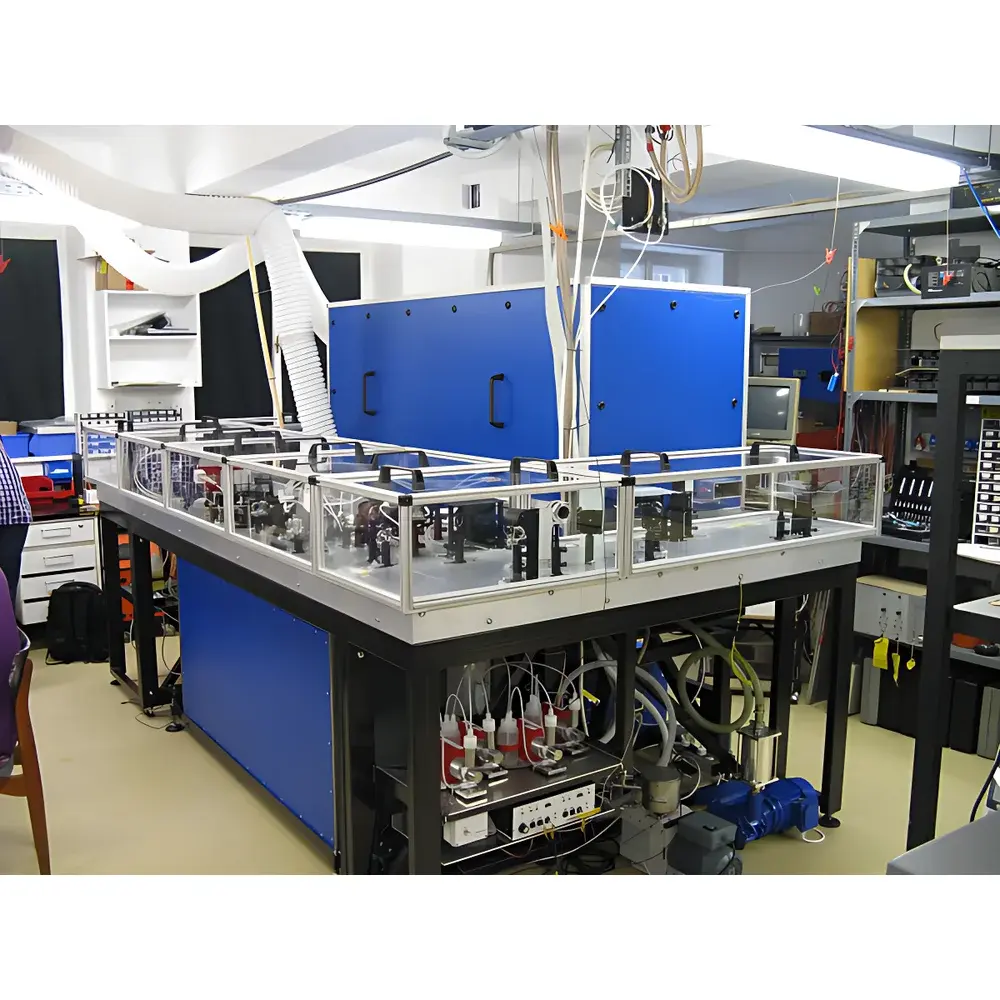
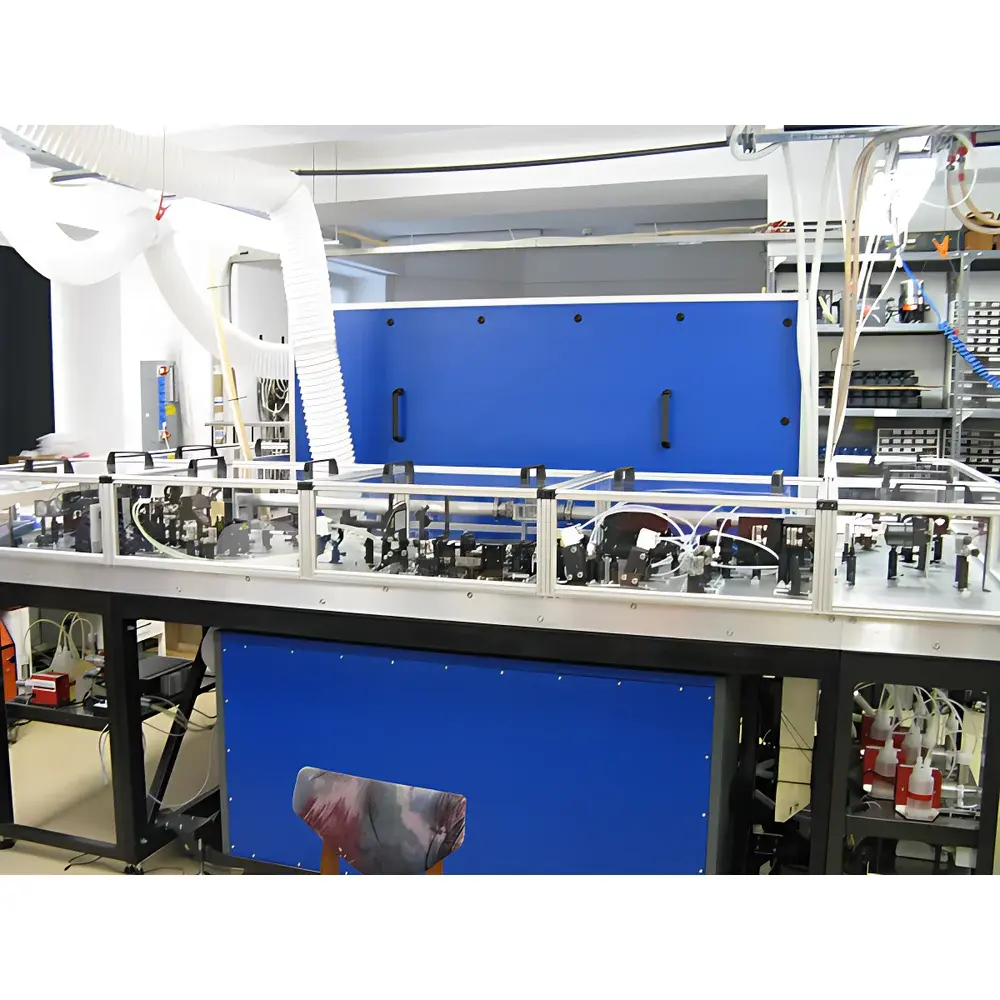
The LLG Ultimate UV Sub-Picosecond Ultraviolet Laser System is a turnkey, research-grade ultrafast laser platform engineered for high-intensity, short-pulse UV generation in fundamental and applied physics laboratories. Based on a master oscillator–power amplifier architecture, the system integrates a XeCl excimer pump laser (308 nm), a custom-designed femtosecond dye laser oscillator, a KrF amplifier chain (248 nm), and a BBO-based frequency-doubling and pulse-compression stage. It delivers Fourier-transform-limited ultraviolet pulses at 248.5 nm with sub-picosecond duration (1012 W/cm² at focus).
Key Features
- Sub-1 ps ultraviolet pulses at 248.5 nm, optimized for high temporal resolution in pump-probe spectroscopy and ultrafast dynamics studies.
- Integrated KrF amplifier chain (LLG-100 Pro) delivering >100 mJ pulse energy under nominal operating conditions (fresh gas fill, clean optics).
- Custom femtosecond dye laser subsystem—including quenched-dye cavity, short-cavity oscillator, and gated saturable-absorber distributed-feedback (DFB) oscillator—designed and manufactured in-house by Laser-Laboratorium Göttingen e.V.
- Interferometric pulse width reconstruction module ensuring transform-limited temporal profiles and minimal chirp.
- Optimized beam quality: near-field uniformity <10% over 90% of beam area; divergence <3× diffraction limit; rectangular beam profile (~35 mm × 25 mm) compatible with large-aperture UV optics and plasma diagnostics.
- Precise electronic synchronization: low-jitter (<30 ps) TTL-compatible trigger output, fixed 30 ns lead time relative to laser pulse onset—essential for time-of-flight measurements and multi-instrument triggering in complex experimental setups.
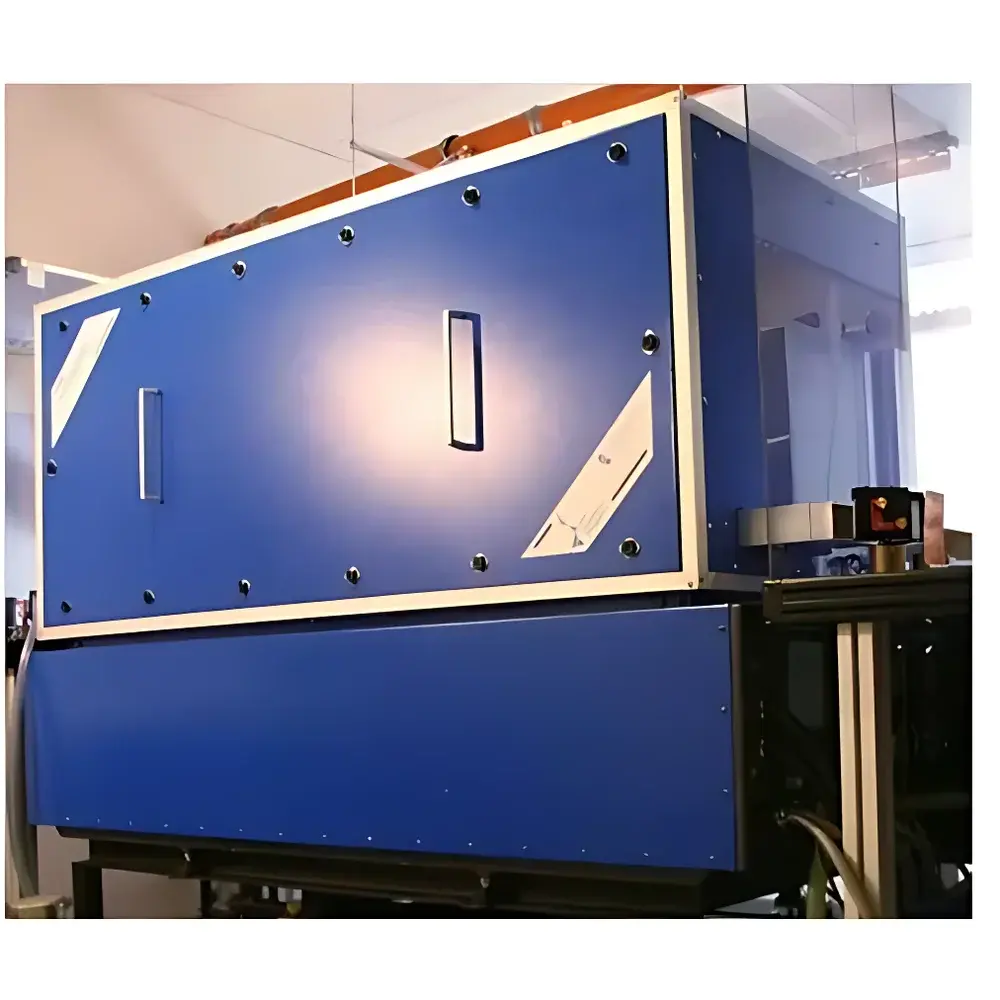
- Modular optical bench integration: all critical subassemblies—including dye circulation pumps, alignment mounts, harmonic generation crystals, and amplifier stages—are pre-aligned and mechanically stabilized on a rigid optical platform designed for excimer-class pump source integration.
Sample Compatibility & Compliance
The LLG Ultimate UV system is intended exclusively for laboratory-based scientific research and does not interface directly with samples in a consumable or process-control context. Its output is compatible with vacuum-compatible UV optics (MgF₂, CaF₂, fused silica), high-damage-threshold reflective coatings, and standard UV photodetectors (e.g., calibrated photodiodes, streak cameras, MCP detectors). The system conforms to IEC 60825-1:2014 (Laser Product Safety) Class 4 requirements, with integrated interlock circuits, beam shuttering, and visible alignment lasers. All electrical components meet CE/EMC Directive 2014/30/EU standards. While not certified for industrial process validation, its timing stability and pulse-to-pulse reproducibility support GLP-aligned experimental protocols in academic and national laboratory environments.
Software & Data Management
The system operates via a dedicated LabVIEW-based control interface running on an embedded industrial PC. This software provides real-time monitoring of pump laser discharge voltage, dye flow rate, cavity alignment status, amplifier gain stabilization, and pulse energy feedback (via calibrated pyroelectric sensor). All operational parameters—including repetition rate, trigger delay, shutter state, and diagnostic camera snapshots—are timestamped and logged in HDF5 format with metadata compliant with FAIR principles (Findable, Accessible, Interoperable, Reusable). Audit trails record user login sessions, parameter changes, and hardware fault events—supporting traceability in multi-user facilities. No cloud connectivity or remote access capabilities are included; data export is restricted to local USB/NFS storage to maintain experimental integrity and network security.
Applications
- Ultrafast plasma diagnostics: seeding and probing dense, transient plasmas via UV shadowgraphy, interferometry, or Thomson scattering.
- Shockwave generation in solids and gases: single-shot, high-energy UV ablation for controlled stress-wave propagation studies.
- Extreme ultraviolet (EUV) and soft X-ray source development: driving high-harmonic generation (HHG) in gas jets or laser-produced plasmas.
- Nuclear physics experiments: photo-fission initiation, isomer excitation, and nuclear resonance fluorescence spectroscopy.
- Calibration of UV-sensitive instrumentation: radiometric validation of EUV spectrometers, UV photomultiplier tubes, and synchrotron beamline monitors.
- Time-resolved photoelectron spectroscopy (TR-PES): serving as a tunable, high-brightness UV pump source for angle-resolved measurements in solid-state and molecular systems.
FAQ
What is the typical maintenance schedule for the dye laser subsystem?
Dye solution replacement is recommended every 106 shots or after 200 hours of cumulative operation, whichever occurs first. Optical components (dye cell windows, BBO crystals, amplifier mirrors) require inspection and cleaning every 500 hours under standard lab humidity conditions.
Is the system compatible with vacuum chamber integration?
Yes—the output beam path is designed for UHV compatibility (≤10−7 mbar) using all-metal seals and bakeable flanges. Optional differential pumping stages and UV-transparent viewports (MgF₂) are available upon request.
Can the repetition rate be synchronized to an external RF source?
The system accepts external TTL triggers within 0–10 Hz range with programmable delay (0–100 ms resolution). Phase-locking to RF references is not supported natively but can be implemented externally via custom timing electronics.
Does the system include beam diagnostics?
Standard configuration includes a calibrated pyroelectric energy meter, fast photodiode for pulse timing, and IR/UV CCD camera for near-field beam profiling. Far-field divergence measurement requires optional scanning-slit profiler or Hartmann sensor.
Are service contracts and extended warranties available?
Laser-Laboratorium Göttingen e.V. offers 2-year comprehensive technical support and on-site calibration services through authorized regional partners. Spare parts inventory is maintained in Germany and the United States.





