
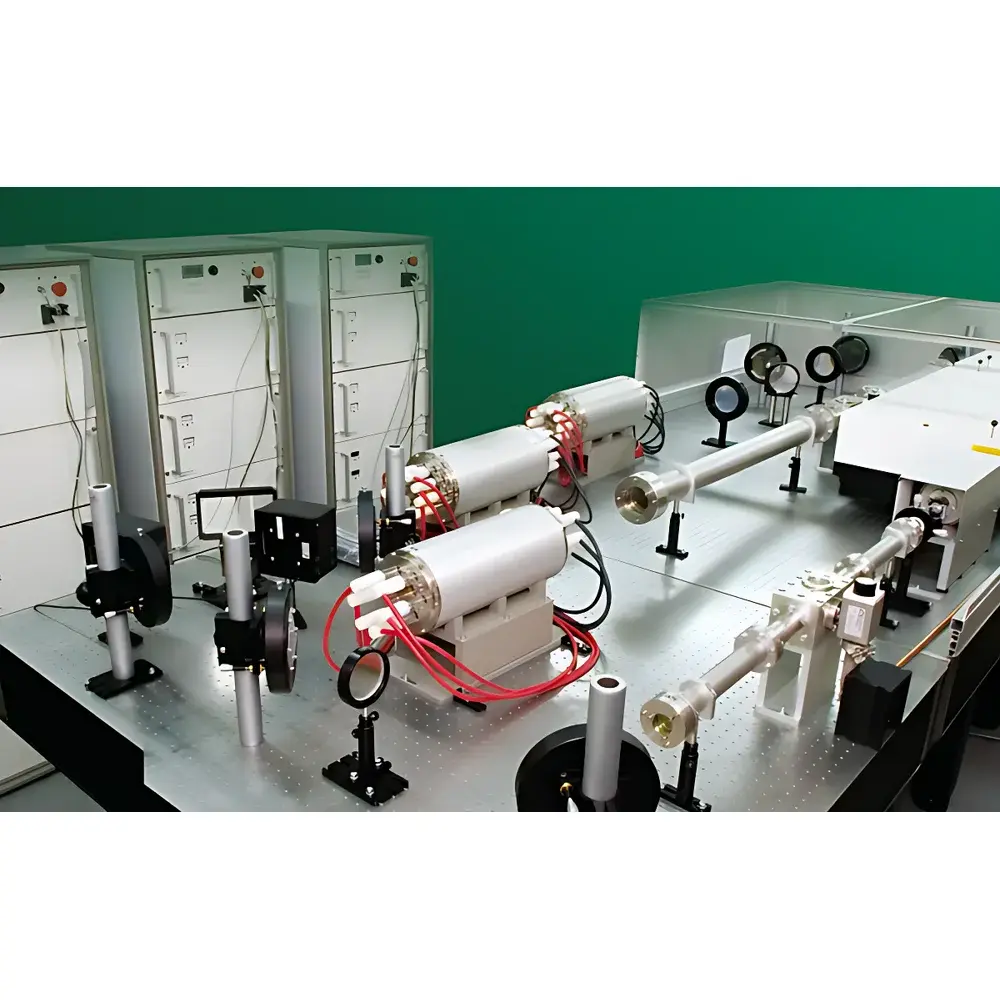
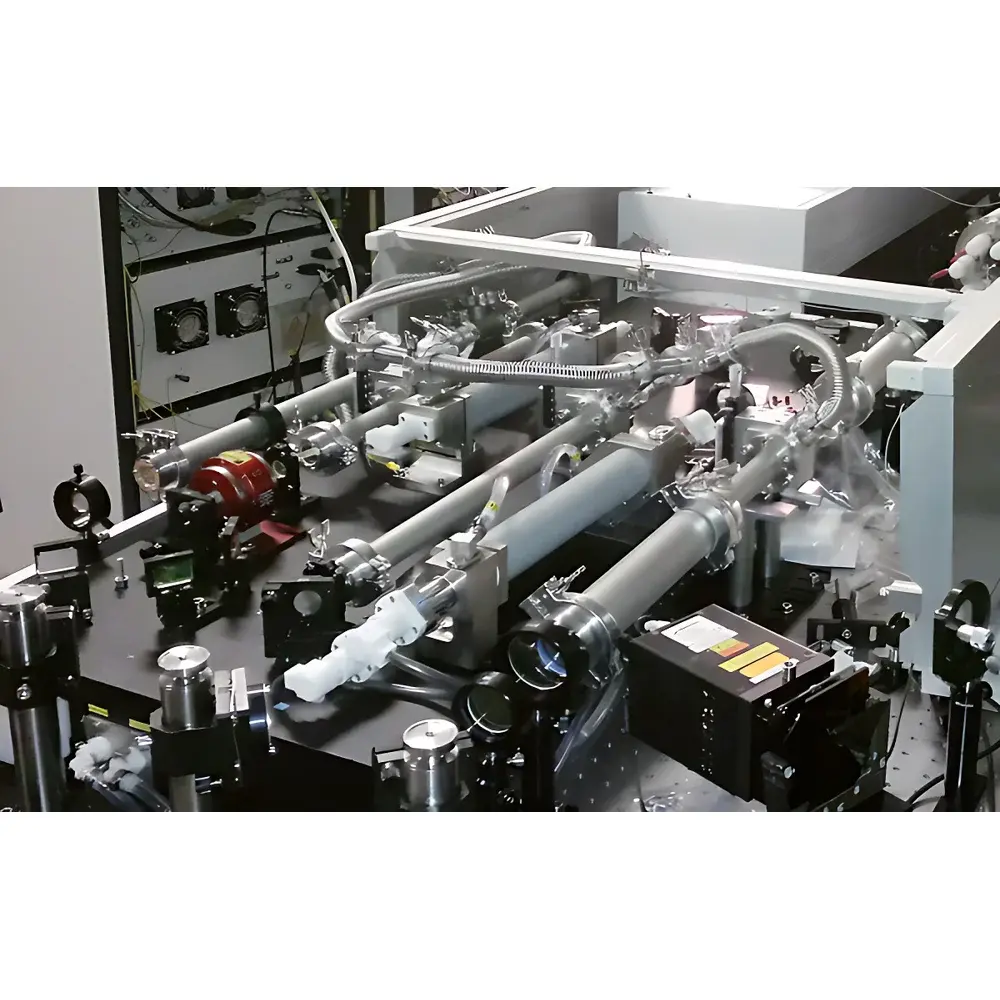
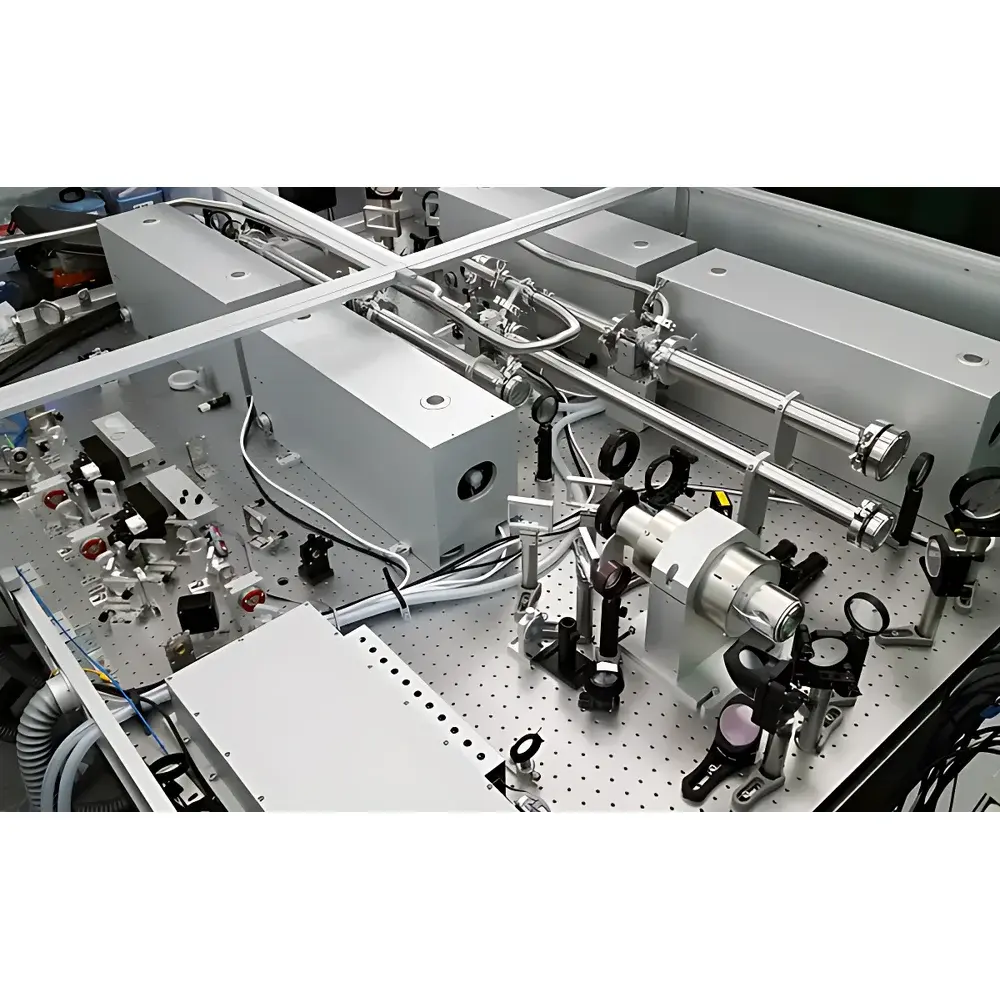
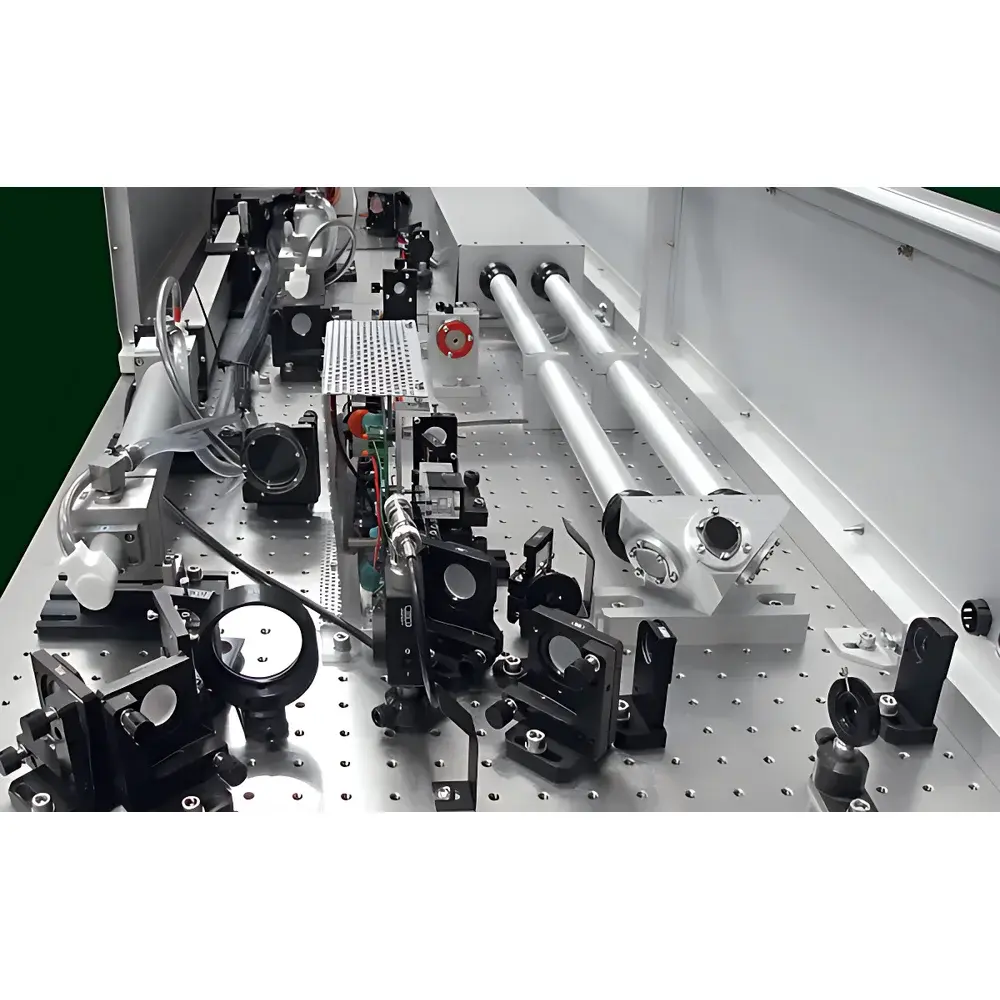
Ekspla Nd:Glass Nanosecond High-Energy Solid-State Laser System
| Brand | Ekspla |
|---|---|
| Origin | Lithuania |
| Manufacturer Type | Original Equipment Manufacturer (OEM) |
| Product Category | Imported High-Energy Pulsed Solid-State Laser |
| Model | Nd:Glass |
| Output Pulse Duration | Nanosecond (ns) Range |
| Gain Medium | Neodymium-Doped Phosphate Glass (Nd:Glass) |
| Oscillator Architecture | Diode-Pumped Single-Longitudinal-Mode (SLM) or Multi-Mode (MM) Master Oscillator |
| Amplifier Configuration | Flashlamp- or Laser-Diode-Pumped Pre-Amplifier + Final Flashlamp-Pumped Power Amplifier |
| Max Aperture | 60 mm |
| Beam Wavefront Correction | Deformable Mirror-Based Adaptive Optics |
| Optional Pulse Compression | Stimulated Brillouin Scattering (SBS) Compressor |
| Harmonic Generation Options | Second-Harmonic (532 nm) and Third-Harmonic (355 nm) Modules Available |
| Control System | Microprocessor-Based with Diagnostic GUI Software |
| Compliance | CE Marked, RoHS Compliant, Designed for ISO/IEC 17025 Laboratory Environments |
Overview
The Ekspla Nd:Glass Nanosecond High-Energy Solid-State Laser System is a precision-engineered, flashlamp-pumped pulsed laser platform optimized for applications requiring high peak power, excellent temporal stability, and scalable pulse energy in the nanosecond domain. Built upon a master oscillator–power amplifier (MOPA) architecture, the system integrates a diode-pumped single-longitudinal-mode (SLM) or multi-mode (MM) seed oscillator with cascaded pre-amplifiers and a final-stage large-aperture (up to 60 mm) Nd:glass power amplifier. The neodymium-doped phosphate glass gain medium delivers broad emission bandwidth (~24 nm FWHM at 1053 nm), enabling flexible pulse shaping and robust amplification under high-energy pumping conditions. Unlike Nd:YAG systems, Nd:glass offers superior energy storage capacity and lower thermal lensing—critical for high-energy, low-repetition-rate operation (typically 1–10 Hz). The laser emits fundamental radiation at 1053 nm, with optional harmonic generation modules supporting frequency doubling (532 nm) and tripling (355 nm) for UV–visible applications in laser-induced breakdown spectroscopy (LIBS), inertial confinement fusion (ICF) research, optical parametric chirped-pulse amplification (OPCPA) seeding, and materials ablation.
Key Features
- Diode-pumped SLM/MM master oscillator ensures exceptional temporal coherence, long-term amplitude stability (<±0.5% RMS over 8 hours), and maintenance-free operation exceeding 10⁹ shots.
- Regenerative and multi-pass pre-amplifier stages enable precise temporal pulse shaping—including flat-top profile generation—via active seed modulation and gain saturation control.
- Large-bore (60 mm aperture) flashlamp-pumped Nd:glass final amplifier delivers scalable pulse energies up to several joules per pulse with high beam quality (M² < 2.5).
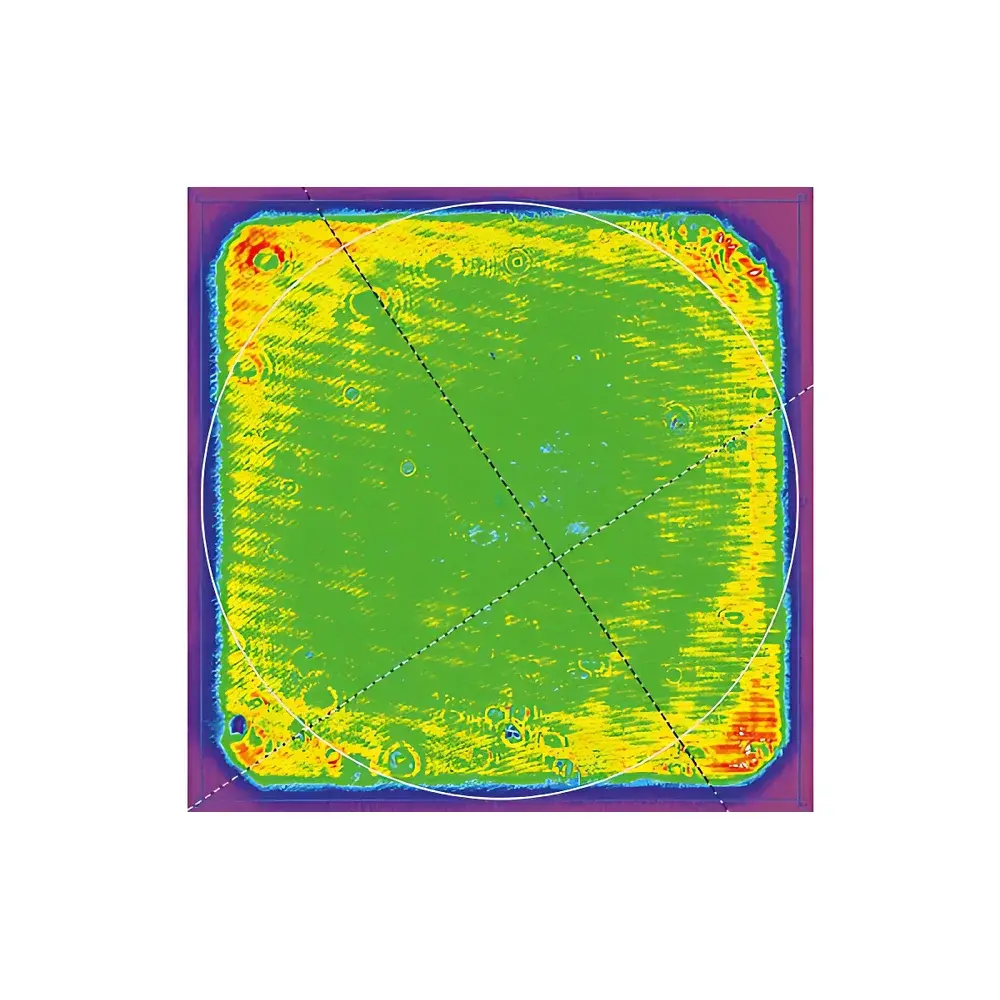
- Integrated adaptive optics subsystem featuring a piezoelectric deformable mirror enables real-time wavefront correction, improving focusability and spatial homogeneity across the output beam.
- Stimulated Brillouin Scattering (SBS) pulse compressor option enhances temporal contrast ratio (>10⁸) and compresses pulse width to sub-nanosecond levels while preserving energy efficiency.
- Faraday isolators at all amplifier interfaces prevent back-reflected light from damaging gain media or pump sources—essential for long-term reliability in high-power configurations.
- Each flashlamp is driven by an independent pulse-forming network (PFN), allowing individual timing, voltage, and current optimization for uniform pump deposition and minimized thermal stress.
- Embedded microprocessor-based controller provides comprehensive system diagnostics, including lamp lifetime tracking, coolant temperature monitoring, cavity alignment status, and interlock verification.
Sample Compatibility & Compliance
The Ekspla Nd:Glass laser system is designed for integration into controlled laboratory and industrial R&D environments where regulatory traceability and operational integrity are required. It conforms to CE marking directives (2014/35/EU Low Voltage Directive and 2014/30/EU EMC Directive) and complies with RoHS 2011/65/EU restrictions on hazardous substances. Its mechanical and electrical architecture supports installation in ISO/IEC 17025-accredited calibration laboratories. While not inherently FDA 21 CFR Part 11 compliant, the system’s diagnostic software logs timestamped operational parameters (pulse energy, repetition rate, cavity alignment flags) in ASCII-readable format—facilitating integration into GLP/GMP-compliant data management workflows when paired with validated third-party LIMS platforms.
Software & Data Management
System operation and diagnostics are managed via Ekspla’s proprietary Windows-based GUI software, which guides users through step-by-step startup, alignment validation, and performance verification routines. The interface displays real-time oscilloscope traces of photodiode signals, lamp firing synchronization, and harmonic conversion efficiency metrics. All diagnostic logs—including PFN voltage profiles, thermal sensor readings, and Faraday isolator transmission history—are stored in structured CSV files with ISO 8601 timestamps. Remote monitoring and scripting (via TCP/IP or RS-232) support automated test sequences in metrology and production environments. No proprietary runtime or license dongles are required; software updates are distributed as signed installers with SHA-256 checksums.
Applications
- Laser-induced breakdown spectroscopy (LIBS) for elemental analysis of solids, liquids, and aerosols in geochemical and nuclear forensics labs.
- Optical pumping of Ti:sapphire or dye amplifiers in ultrafast laser systems requiring stable, high-energy ns seeds.
- Plasma generation and equation-of-state studies in high-energy-density physics (HEDP) facilities.
- Calibration of fast photodetectors, streak cameras, and transient digitizers due to precisely defined pulse duration and jitter (<100 ps RMS).
- Surface texturing, thin-film ablation, and shock peening of aerospace alloys where controlled ns-scale energy deposition minimizes heat-affected zones.
- Development and testing of optical components (e.g., coatings, gratings, polarizers) under high-fluence irradiation per ISO 21254 standards.
FAQ
What is the typical pulse duration range for this Nd:Glass laser system?
Standard configuration delivers pulses between 1.5 ns and 6 ns FWHM at 1053 nm; optional SBS compression reduces this to sub-500 ps.
Can the system operate at variable repetition rates?
Yes—repetition rate is user-selectable from single-shot mode up to 10 Hz, with full energy retention at ≤5 Hz and derated output above that threshold.
Is harmonic generation integrated or externally mounted?
Harmonic modules (SHG/THG) are modular add-ons mounted on kinematic bases adjacent to the main beam path; they include motorized crystal angle adjustment and vacuum-compatible housing options.
Does the system support external triggering and synchronization?
Yes—TTL-compatible trigger input (BNC) accepts rising-edge signals with adjustable delay (0–100 ms, 10 ns resolution); auxiliary sync outputs provide timing references for pump-probe experiments.
What cooling requirements apply?
The system requires closed-loop deionized water cooling at 18–22 °C, flow rate ≥12 L/min, and pressure drop <2.5 bar across the amplifier head; chiller unit is supplied separately.



