
LaVision AIS Automotive Imaging System
| Brand | LaVision GmbH |
|---|---|
| Origin | Germany |
| Model | AIS |
| Price Range | USD 42,000 – 70,000 |
| Application Domain | Automotive Optical Metrology & ADAS Validation |
Overview
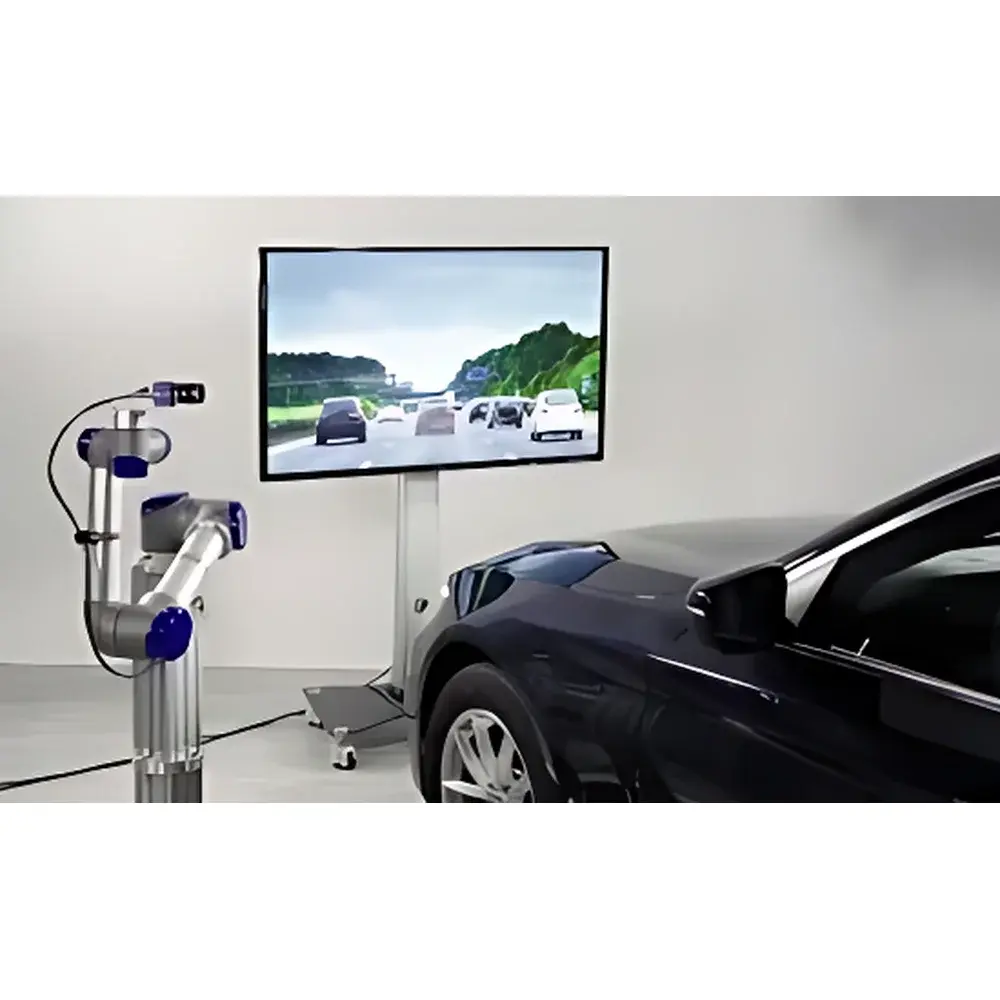
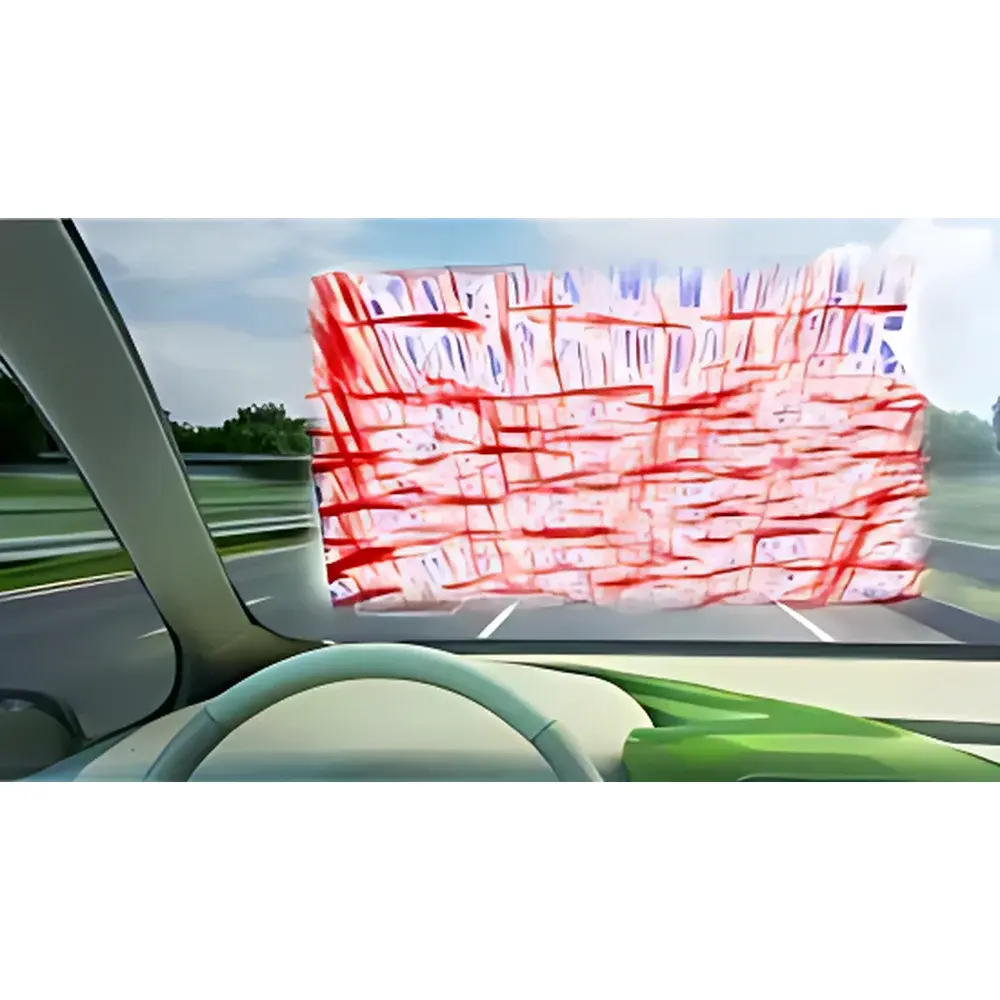
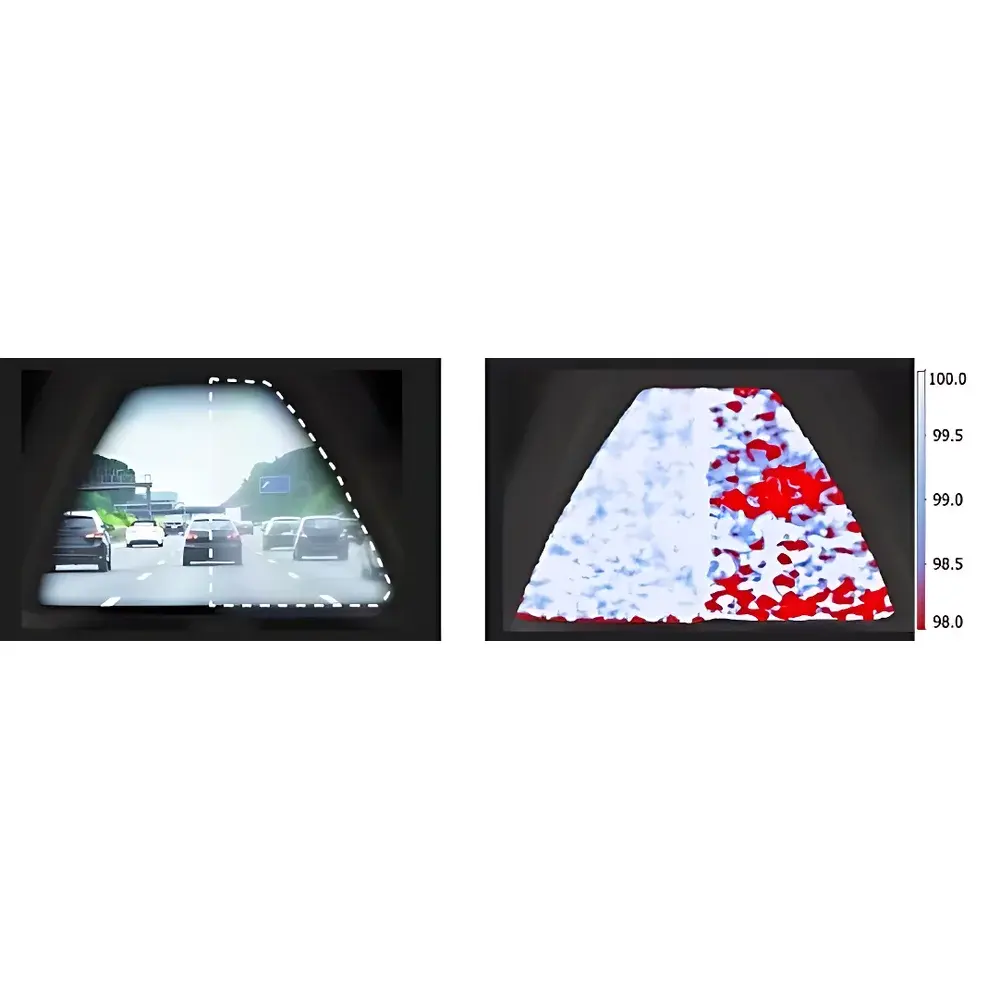
The LaVision AIS Automotive Imaging System is a high-precision optical metrology platform engineered for quantitative evaluation of automotive glazing and Advanced Driver Assistance Systems (ADAS) imaging performance. Based on calibrated digital imaging photogrammetry and modulation transfer function (MTF) analysis, the AIS enables traceable, spatially resolved characterization of optical distortion (diopter mapping) and image quality degradation introduced by windshields, camera housings, or environmental contaminants. Unlike conventional subjective visual inspection or single-point diopter testers, the AIS captures full-field optical deviation data across user-defined regions—from the entire windshield surface to localized ADAS viewport zones—using a standardized calibration pattern, high-resolution CMOS sensor, and geometrically referenced imaging geometry. Its dual-mode architecture supports both laboratory-grade test-bench validation and in-vehicle deployment, ensuring measurement consistency under real-world mounting conditions and thermal environments.
Key Features
- Simultaneous diopter mapping and ADAS image quality assessment using identical hardware and software infrastructure
- Full-field 2D MTF calculation per ISO 12233 and ISO 16505 standards, including contrast transfer at multiple spatial frequencies (e.g., 10–100 lp/mm)
- Automated distortion field reconstruction via sub-pixel pattern displacement analysis with <0.01 D spatial resolution
- Flexible field-of-view configuration: adjustable camera-to-windshield distance and lateral positioning to target OEM-specified ADAS zones (e.g., A-pillar region, HUD projection area, forward-facing camera FOV)
- In-vehicle operation mode enabling non-invasive measurement of installed windshields from driver or passenger cabin positions
- Native integration with vehicle CAN bus for synchronized trigger acquisition during dynamic maneuvers (e.g., steering angle, speed, ambient light level)
- Modular software architecture compliant with ASTM E3083-21 guidelines for optical test system validation
Sample Compatibility & Compliance
The AIS accommodates curved laminated glass substrates (including heated, hydrophobic, and HUD-integrated windshields), polycarbonate glazing, and multi-layer coated optics typical of modern automotive platforms. It supports measurement of both flat reference samples and production-installed components without disassembly. The system meets functional requirements outlined in ECE R43 (for secondary image separation), ISO 16505 (for ADAS camera performance), and SAE J2945/1 (for vision system verification). All calibration procedures are documented per ISO/IEC 17025:2017 principles, and raw image datasets include embedded EXIF metadata for auditability in GLP-compliant development workflows.
Software & Data Management
LaVision’s AIS Control Suite provides a unified interface for experiment definition, real-time image acquisition, distortion correction modeling, and MTF reporting. Each measurement session generates timestamped HDF5 files containing calibrated intensity maps, displacement vectors, MTF curves, contrast histograms, and transmission ratios—all exportable in CSV, XML, or JSON formats for integration into PLM or MES systems. The software includes built-in FDA 21 CFR Part 11-compliant electronic signature support, role-based access control, and immutable audit trails for all parameter changes and result exports. Batch processing scripts enable automated regression analysis across prototype iterations or supplier lots.
Applications
- Quantification of optical distortion in windshield design validation (OEM Tier-1 supplier qualification)
- Root-cause analysis of ADAS perception errors linked to glazing-induced aberrations or condensation artifacts
- Verification of camera-lens-windshield alignment tolerances in autonomous vehicle integration
- Thermal drift assessment of optical performance across -40°C to +85°C environmental chambers
- Regulatory compliance testing for NCAP vision system scoring protocols (e.g., Euro NCAP 2023 Vision Assist requirements)
- Optimization of anti-reflective and hydrophobic coating uniformity via localized transmission and flare analysis
FAQ
Does the AIS require removal of the windshield for testing?
No. The system is designed for both bench-mounted samples and in-situ measurements on fully assembled vehicles.
Can the AIS evaluate camera modules other than forward-facing ADAS units?
Yes. With appropriate pattern placement and FOV alignment, it supports surround-view, rearview, and interior monitoring camera validation.
Is MTF analysis limited to monochrome imaging?
No. The system performs chromatic MTF analysis using RGB channel decomposition and weighted luminance synthesis per CIE 1931 colorimetric standards.
How is traceability maintained across different laboratories?
Each AIS unit ships with NIST-traceable calibration certificates for lens distortion, sensor response, and display luminance; inter-laboratory correlation studies are supported via LaVision’s global reference dataset program.
What computing resources are required for real-time MTF computation?
A dedicated workstation with Intel Xeon W-2200 series CPU, 64 GB RAM, and NVIDIA RTX A5000 GPU is recommended for sub-second MTF map generation at 12 MP resolution.




