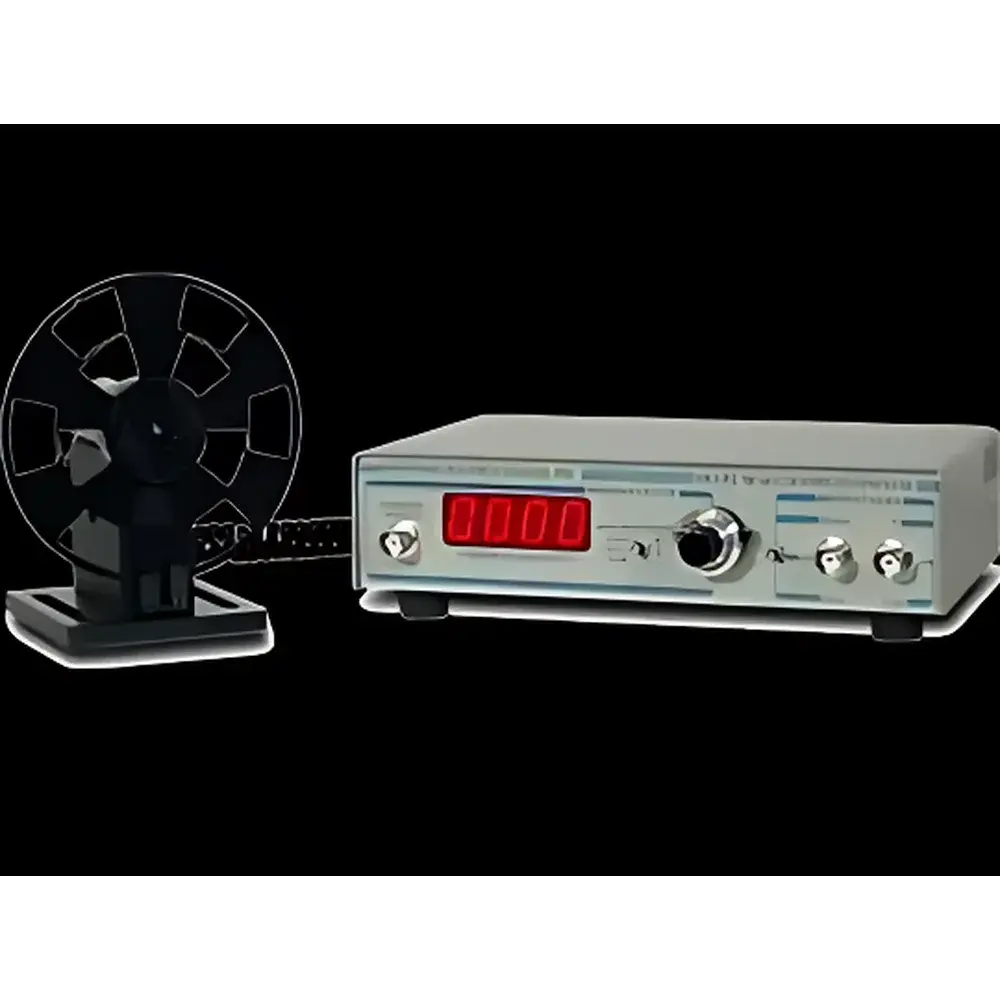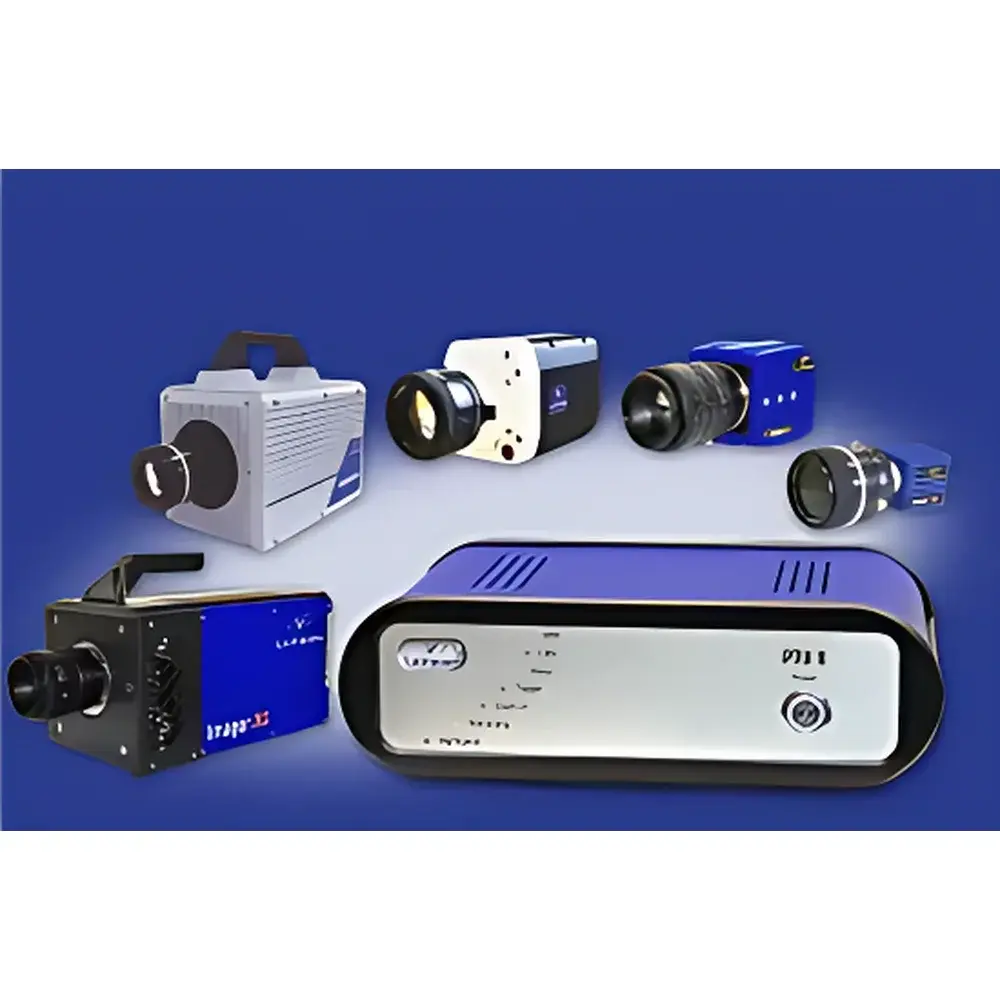
LaVision PTUx Programmable Timing Unit
| Brand | LaVision GmbH |
|---|---|
| Origin | Germany |
| Model | PTUx |
| Form Factor | PCI board or standalone USB device |
| Timing Jitter | ≤ 0.05 ns |
| Firmware | Internally stored, model-optimized |
| Compatibility | Fully integrated with DaVis software |
| Trigger Outputs | Multiple synchronized TTL/CMOS outputs |
| Application Scope | Multi-camera synchronization, laser pulse sequencing, PIV-dt scans, hypersampling, phase-resolved imaging |
Overview
The LaVision PTUx Programmable Timing Unit is a high-precision, field-proven timing controller engineered for demanding optical diagnostics and multi-sensor experimental setups. Operating as the central synchronization hub in LaVision’s intelligent imaging ecosystem, the PTUx implements deterministic, sub-nanosecond timing control using hardware-based real-time scheduling—eliminating software-induced latency and jitter inherent in host-CPU–driven triggering. Its architecture is grounded in deterministic finite-state machine logic, enabling reproducible, cycle-accurate coordination of cameras (both standard-speed and ultra-high-speed), pulsed lasers (e.g., Nd:YAG, diode-pumped solid-state), Q-switches, Pockels cells, and auxiliary actuators. Designed explicitly for time-resolved laser imaging applications—including Particle Image Velocimetry (PIV), Planar Laser-Induced Fluorescence (PLIF), Schlieren, and thermographic phosphor imaging—the PTUx ensures temporal fidelity across distributed hardware nodes, making it indispensable in transient flow analysis, combustion research, and plasma diagnostics.
Key Features
- Hardware-synchronized multi-channel trigger generation with ≤ 0.05 ns RMS jitter across all outputs—guaranteeing phase coherence in time-critical experiments.
- Native integration with LaVision’s DaVis acquisition and analysis platform: timing sequences are defined, validated, and executed directly within the DaVis workflow without external scripting.
- Dual form factor options: PCIe-based PTUx-PCI for embedded lab PCs and PTUx-USB for flexible benchtop deployment—both sharing identical firmware and timing engine architecture.
- Onboard storage of multiple pre-compiled, camera-specific firmware profiles—enabling seamless switching between high-speed (e.g., Phantom v3220) and low-speed (e.g., LaVision Imager sCMOS) models within a single multi-camera configuration.
- Programmable parameter recording for dynamic timing modulation: supports user-defined time-varying intervals (e.g., PIV-dt ramping), hypersampling bursts (sub-frame exposure stacking), and phase-scanned laser illumination sequences for lock-in or frequency-domain analysis.
- Eight independently configurable TTL/CMOS-compatible outputs with programmable polarity, pulse width (10 ns–10 s range), and delay resolution down to 100 ps.
Sample Compatibility & Compliance
The PTUx is compatible with all LaVision camera systems (Imager, HighSpeed, and SprayCam series), third-party high-speed cameras supporting external trigger input (e.g., Photron SA-Z, IDT Y4), and industry-standard laser controllers (e.g., Quantel, Continuum, Litron). It conforms to IEC 61000-6-3 (EMC emission standards) and IEC 61000-6-2 (immunity), ensuring robust operation in electromagnetically noisy laboratory and industrial test environments. While not a safety-certified device per se, its TTL-level outputs comply with IEEE 1184-1995 for digital interface interoperability. For regulated R&D environments, timing logs generated via DaVis include full audit trails (timestamped sequence execution, firmware version, user ID), supporting GLP-compliant documentation requirements.
Software & Data Management
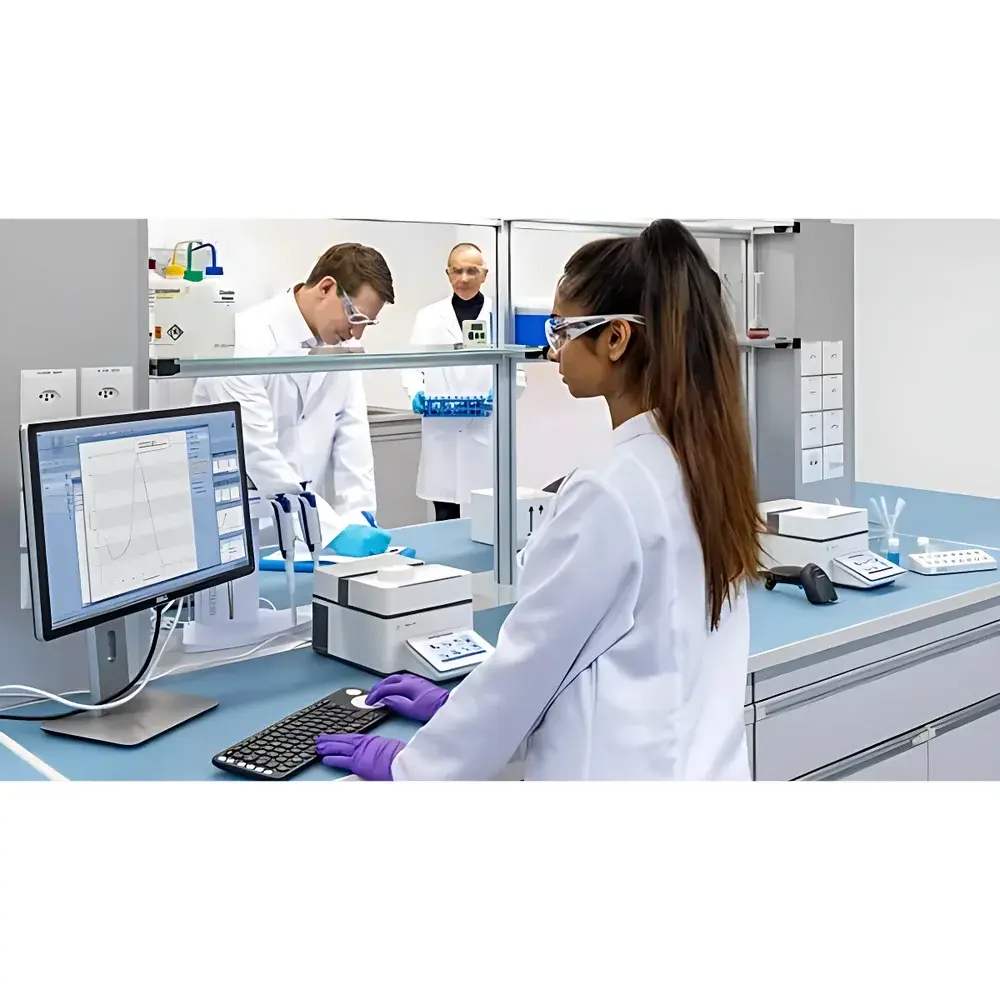
Timing configuration occurs exclusively through DaVis v10.2 or later, leveraging a graphical timing editor with drag-and-drop event sequencing, real-time jitter simulation, and hardware validation prior to acquisition. All timing definitions are saved as XML-based .tim files—human-readable, version-controllable, and fully reproducible across installations. DaVis enforces strict metadata embedding: each acquired image set carries embedded timing provenance (e.g., exact laser–camera delay, inter-frame interval, phase offset), enabling traceable correlation between raw data and temporal parameters. Exported datasets retain timing metadata in HDF5 and TIFF+XML formats, facilitating post-hoc synchronization validation and cross-platform analysis in MATLAB, Python (via h5py), or LabVIEW.
Applications
- Time-resolved PIV with variable dt scanning for acceleration-resolved velocity gradient analysis in unsteady flows.
- Multi-laser, multi-camera PLIF for simultaneous OH/CH₂O/NO detection with phase-locked excitation timing.
- Hypersampling of transient combustion events using burst-mode camera triggering synchronized to crank-angle or pressure signals.
- Phase-averaged thermographic phosphor imaging in rotating machinery, requiring precise angular-position–referenced laser pulsing.
- Multi-modal particle sizing and velocity mapping combining Mie scattering, fluorescence, and shadowgraphy under shared timing control.
FAQ
Can the PTUx operate independently of DaVis?
No—the PTUx requires DaVis for configuration, firmware loading, and runtime command execution; it does not support standalone scripting or external API control.
Is firmware upgrade supported in the field?
Yes—firmware updates are delivered via DaVis service packs and applied automatically during device initialization; no hardware reprogramming tools are required.
Does the PTUx support analog voltage-triggered devices?
No—it provides only digital TTL/CMOS level outputs; interfacing with analog-triggered equipment requires external level-shifting or opto-isolated converter modules.
What is the maximum number of cameras the PTUx can synchronize simultaneously?
There is no fixed camera limit—the constraint is determined by the number of available trigger outputs (8) and the timing complexity of the sequence; cascading via external fan-out or daisy-chained triggers is possible but not officially supported.
How is timing accuracy verified and calibrated?
LaVision performs factory calibration using a Keysight DSAZ real-time oscilloscope and WRG-2000 waveform reference generator; users may validate jitter performance using an oscilloscope connected to any output channel with ≥ 20 GHz bandwidth.