
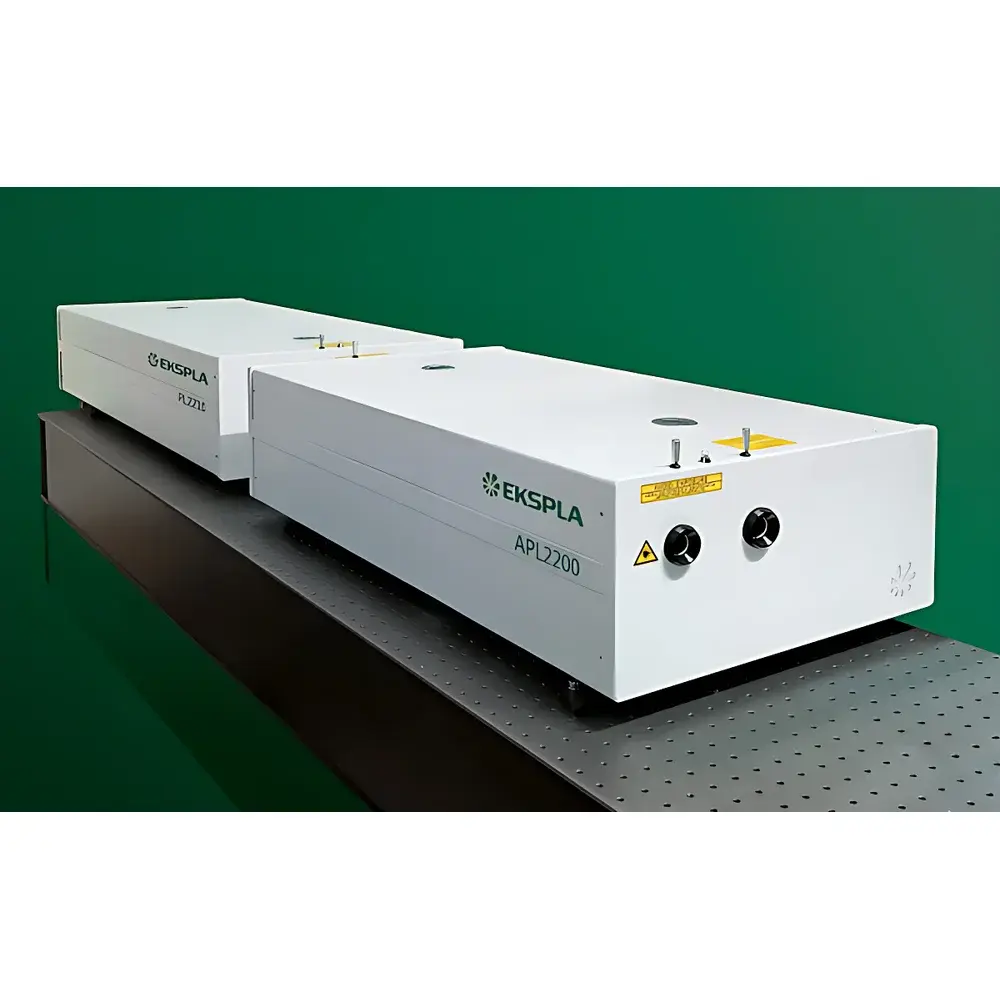
Ekspla APL2200 High-Energy Kilohertz Picosecond Amplifier
| Brand | Ekspla |
|---|---|
| Origin | Lithuania |
| Manufacturer Type | Original Equipment Manufacturer (OEM) |
| Product Category | Imported Scientific Laser System |
| Model | APL2200 |
| Core Technology | Diode-Pumped Solid-State (DPSS) Picosecond Amplifier |
| Repetition Rate | Up to 1 kHz |
| Pulse Duration | <15 ps (FWHM) |
| Output Energy | Up to 3.5 mJ @ 1064 nm |
| Harmonic Options | Optional Temperature-Stabilized 2ω, 3ω, and 4ω Modules |
| Control Interface | USB with LabVIEW™ Drivers |
| Cooling | Integrated Thermo-Electric Cooler (TEC), No External Water Required |
| Compliance | CE, RoHS, IEC 60825-1:2014 Class 4 Laser Safety |
Overview
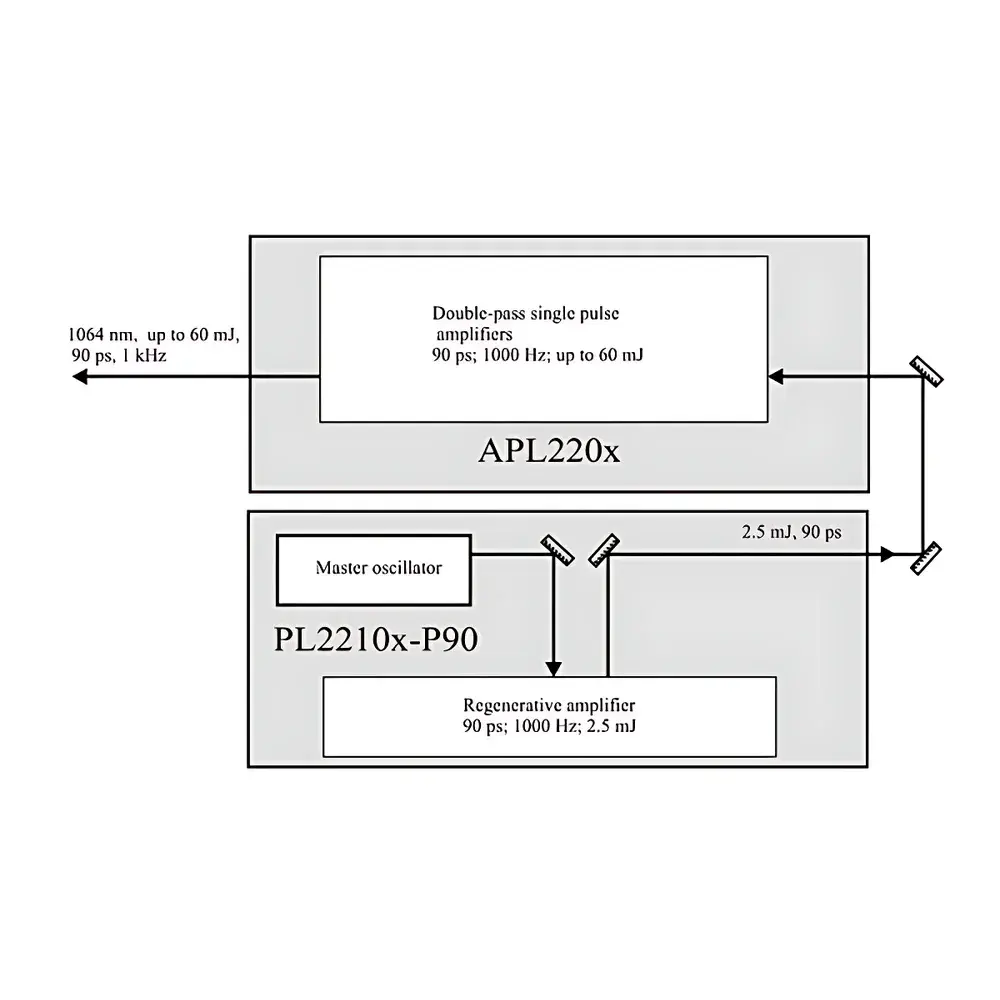
The Ekspla APL2200 is a high-energy, kilohertz-repetition-rate picosecond amplifier engineered for demanding ultrafast science applications requiring robust temporal fidelity, pulse-to-pulse stability, and scalable harmonic output. Based on a master oscillator–power amplifier (MOPA) architecture, it employs a diode-pumped solid-state (DPSS) Nd:YVO4 oscillator followed by regenerative and multi-pass amplification stages, all integrated into a monolithic, vibration-insensitive platform. The system delivers sub-15 ps pulses at 1064 nm with energies up to 3.5 mJ at 1 kHz—enabling efficient optical parametric generation (OPG), optical parametric amplification (OPA), and optical parametric chirped-pulse amplification (OPCPA) pumping without compromising beam quality (M² < 1.3). Its fully sealed, air-cooled design eliminates dependence on external water chillers, reducing infrastructure requirements and long-term operational overhead while maintaining thermal stability critical for shot-to-shot reproducibility in pump-probe spectroscopy and time-resolved nonlinear experiments.
Key Features
- Diode-pumped solid-state architecture with all-solid-state gain media—no flashlamps or liquid dyes—ensuring >10,000 hours of diode lifetime and minimal maintenance intervals.
- Integrated thermo-electric cooling (TEC) system with closed-loop temperature stabilization (±0.1 °C), enabling consistent pulse energy and spectral profile over extended acquisition periods.
- Dedicated handheld control unit with real-time status feedback, adjustable repetition rate (1–1000 Hz), and pulse energy monitoring via internal photodiode calibration traceable to NIST standards.
- USB 2.0 interface with native LabVIEW™ drivers and SCPI-compatible command set, supporting seamless integration into automated measurement sequences under Windows/Linux environments.
- Optional harmonics generation modules—2ω (532 nm), 3ω (355 nm), and 4ω (266 nm)—feature active temperature stabilization and motorized alignment, delivering >25% conversion efficiency with RMS pulse energy stability <1.5% (1σ, 1 hr).
- Compliant with IEC 60825-1:2014 Class 4 laser safety requirements; includes interlocked shutter, emission indicator, key switch, and emergency stop circuitry for laboratory-grade hazard mitigation.
Sample Compatibility & Compliance
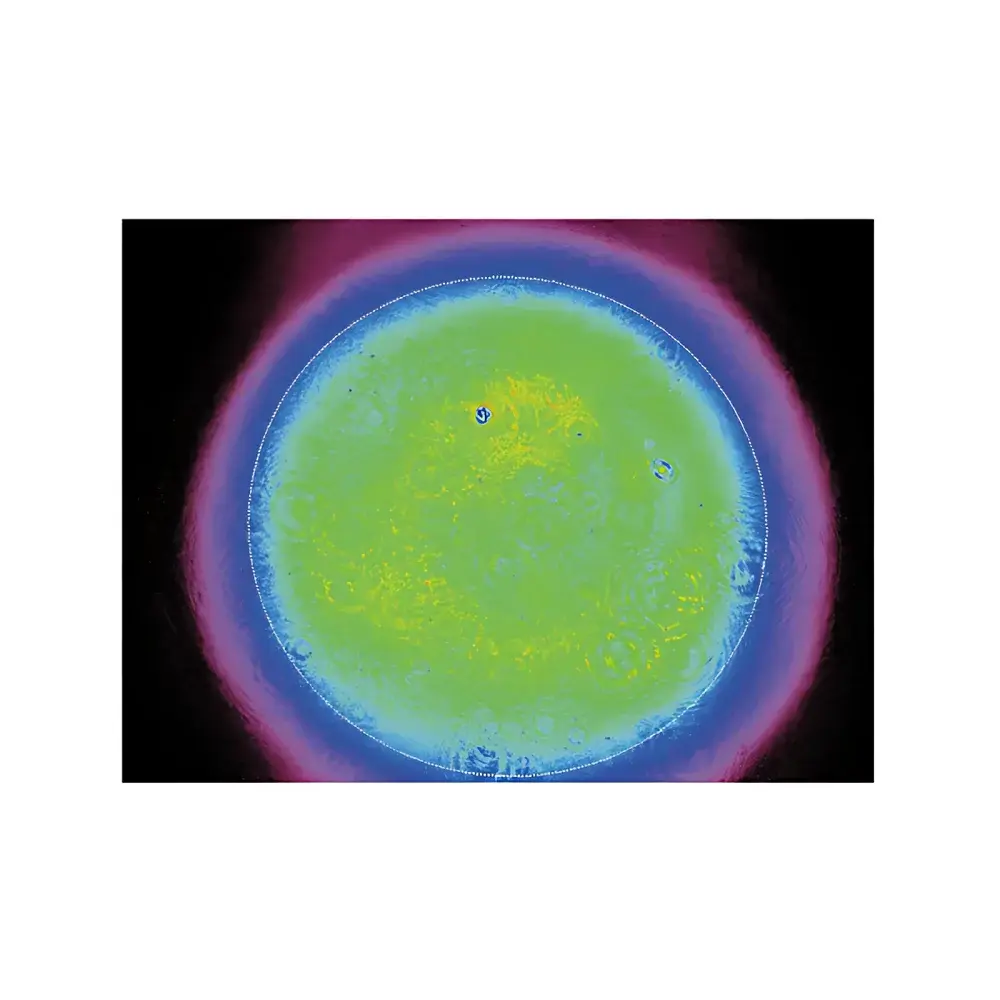
The APL2200 is designed for use with standard ultrafast optics—including BBO, LBO, and KDP crystals for OPA/OPCPA stages—as well as broadband dielectric mirrors (350–2000 nm), reflective beam expanders, and vacuum-compatible delay lines. Its TEM00 Gaussian spatial profile and low wavefront distortion (<λ/8 PV) ensure high coupling efficiency into single-mode fibers and tight focusing objectives (NA ≥ 0.5). From a regulatory standpoint, the system conforms to EU Directive 2014/30/EU (EMC), 2014/35/EU (LVD), and RoHS 2011/65/EU. It supports GLP-compliant operation through configurable audit trails in its control software and meets essential traceability requirements for ISO/IEC 17025-accredited laboratories performing laser-based material characterization.
Software & Data Management
Control and diagnostics are managed via Ekspla’s proprietary APL Control Suite, a cross-platform application offering real-time oscilloscope-style pulse monitoring, automated warm-up routines, and calibration logging. All USB communication adheres to USB Implementers Forum (USB-IF) compliance standards and supports plug-and-play enumeration. The included LabVIEW™ driver package provides VI libraries for energy normalization, trigger synchronization (TTL/PECL), and external hardware handshaking—enabling synchronized data acquisition with spectrometers (e.g., Andor Shamrock), streak cameras (e.g., Hamamatsu C5680), or lock-in amplifiers (e.g., Zurich Instruments HF2LI). Export formats include CSV, HDF5, and MATLAB .mat for downstream analysis in Igor Pro, Python (NumPy/SciPy), or OriginLab.
Applications
- Pumping broadband OPA systems for tunable IR generation (1.1–16 µm) in time-resolved vibrational spectroscopy.
- Driving OPCPA front-ends in few-cycle pulse compression setups targeting carrier-envelope phase (CEP)-stable attosecond pulse generation.
- Multi-photon excitation in time-resolved fluorescence lifetime imaging (FLIM) and coherent anti-Stokes Raman scattering (CARS) microscopy.
- Ultrafast transient absorption spectroscopy of perovskite photovoltaics, 2D materials, and molecular photocatalysts.
- Laser-induced breakdown spectroscopy (LIBS) with enhanced signal-to-noise ratio due to high peak power (>200 GW) and reduced plasma shielding effects.
- Nonlinear frequency conversion metrology, including absolute frequency comb referencing and dual-comb spectroscopy alignment.
FAQ
What is the maximum pulse energy available at 532 nm?
Up to 1.2 mJ at 532 nm (2ω) with the optional temperature-stabilized harmonic module, measured at 1 kHz repetition rate and verified with calibrated pyroelectric sensor (Ophir PE50-C).
Does the APL2200 support external triggering and synchronization?
Yes—the system accepts TTL or PECL-level external triggers with jitter <100 ps RMS and provides programmable delay (0–10 ms, 10 ps resolution) between trigger input and pulse emission.
Is remote operation possible over Ethernet or GPIB?
No—control is exclusively via USB 2.0. However, USB-over-IP solutions (e.g., VirtualHere USB Server) are validated for networked lab environments with latency <2 ms.
What maintenance is required during routine operation?
Annual verification of TEC performance and optical alignment; no consumables or periodic gas refills. Diode pump sources are rated for >10,000 operating hours with automatic current derating to extend lifetime.
Can the APL2200 be integrated into a cleanroom or UHV environment?
The base unit is not UHV-rated, but the laser head may be mounted externally via optical feedthroughs. Optional bake-out compatible harmonic modules (up to 120 °C) are available upon request for integration with vacuum chambers.




