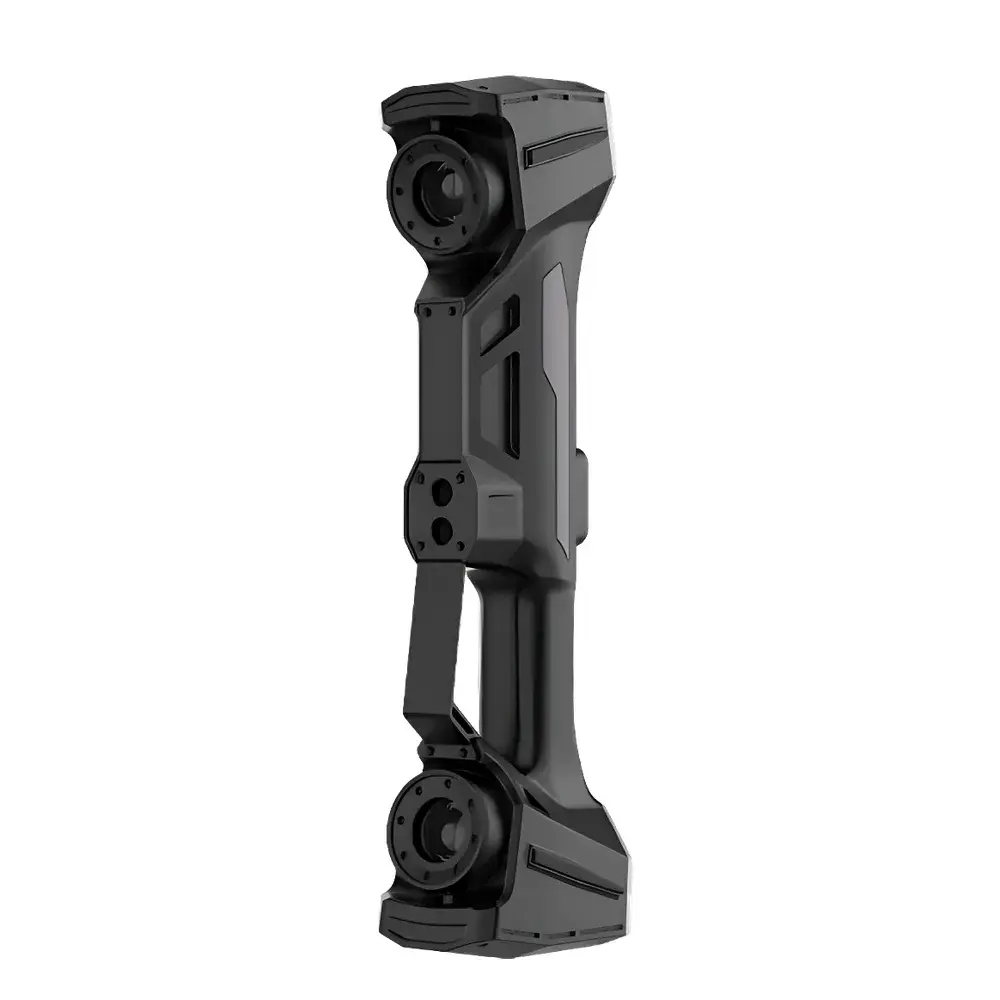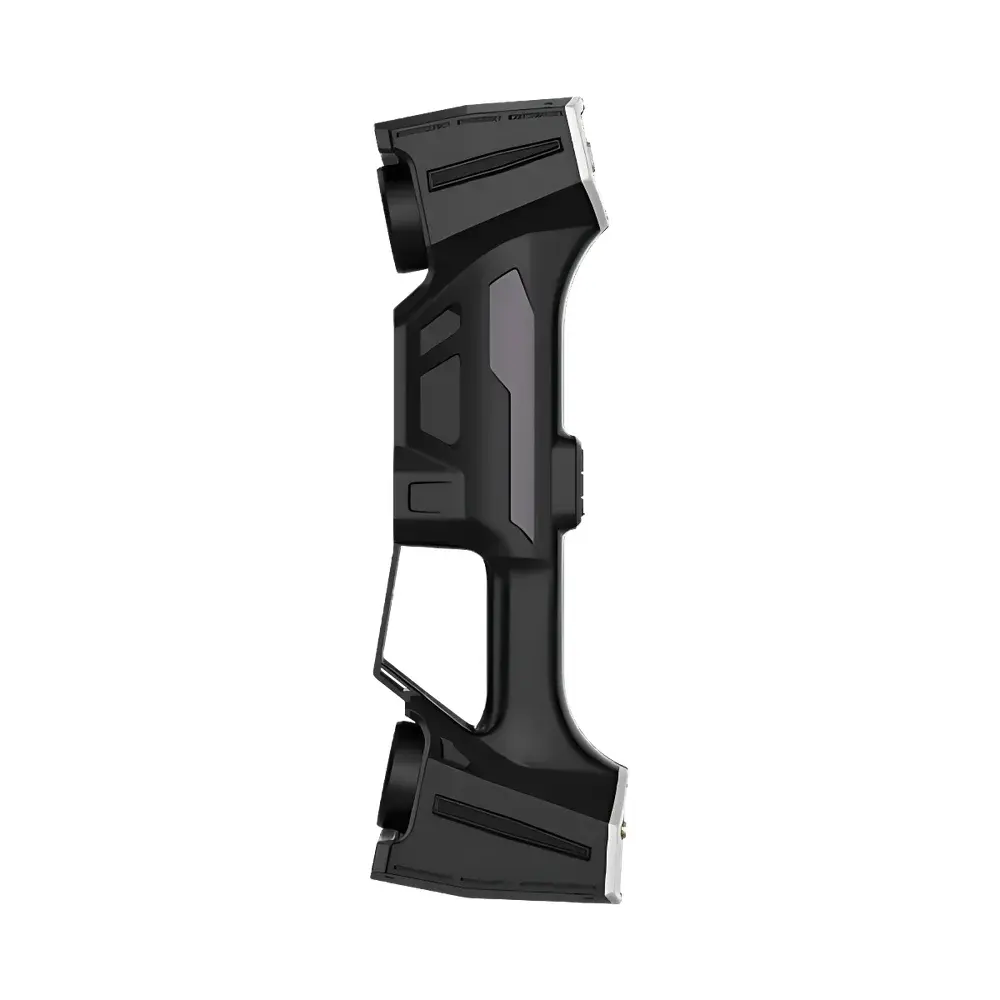
LaVision FlowMaster®-Dual Dual-Plane Stereoscopic Particle Image Velocimetry System
| Brand | LaVision GmbH |
|---|---|
| Origin | Germany |
| Manufacturer Type | Authorized Distributor |
| Origin Category | Imported |
| Model | FlowMaster®-Dual |
| Measurement Capability | 3D3C (Three-Dimensional, Three-Component) |
| Measurement Frequency | Low-Frequency Operation (Typical Repetition Rates: 1–15 Hz for Dual-Plane Acquisition) |
| Velocity Range | 0–2,000 m/s |
| Accuracy | ±1% of Measured Velocity Magnitude |
| Measurement Field of View | Up to 1.0 m × 1.0 m (Configurable via Lens and Laser Sheet Geometry) |
Overview
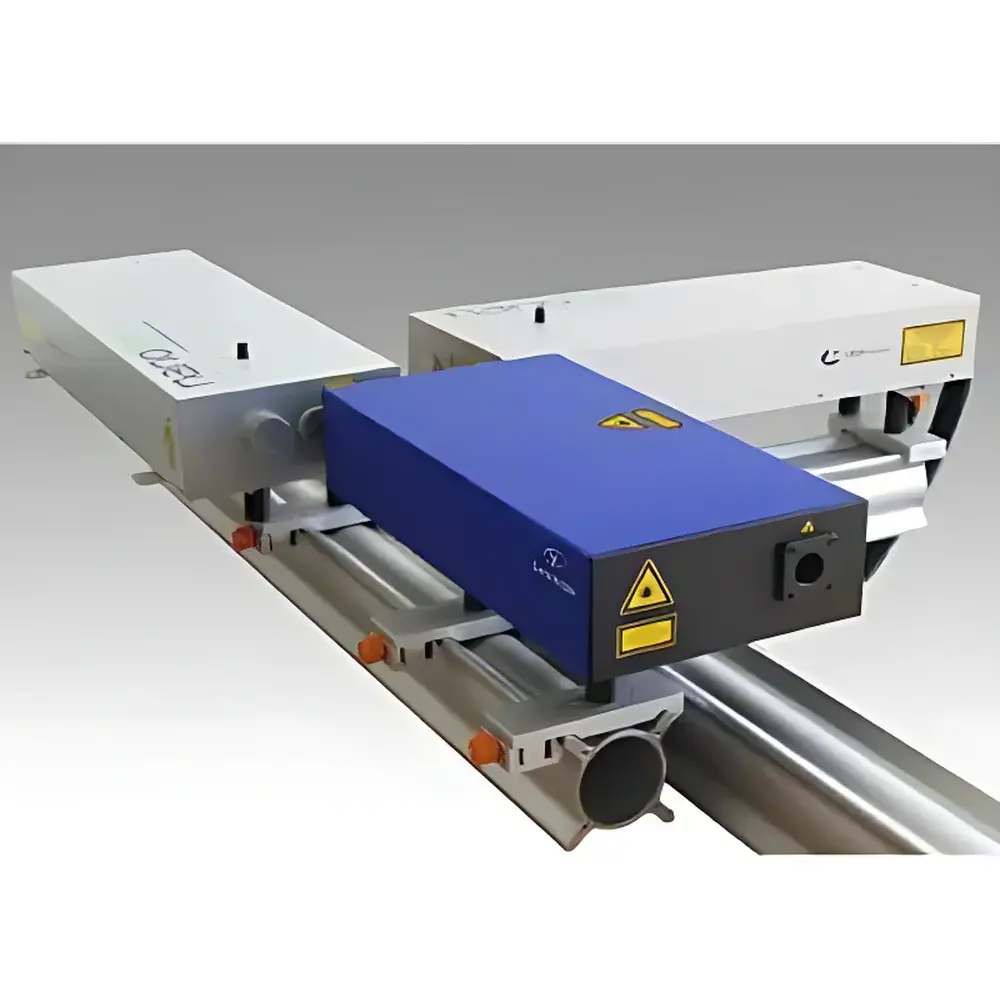
The LaVision FlowMaster®-Dual Dual-Plane Stereoscopic Particle Image Velocimetry (PIV) System is an advanced optical diagnostic platform engineered for quantitative, non-intrusive measurement of three-dimensional, three-component (3D3C) velocity fields in fluid flows. Unlike conventional single-plane or stereo-PIV configurations, the FlowMaster®-Dual employs two precisely synchronized, spatially registered laser light sheets—either temporally offset for acceleration field reconstruction or spatially separated (parallel and adjacent) for direct gradient tensor estimation. This dual-plane architecture enables simultaneous acquisition of two orthogonal or co-planar interrogation volumes, allowing computation of spatial derivatives (e.g., vorticity, strain rate, material acceleration) with high spatiotemporal consistency. The system is built upon LaVision’s industry-proven hardware ecosystem—including high-resolution sCMOS cameras, Nd:YAG pulsed lasers (typically 200–500 mJ/pulse at 532 nm), and precision optical alignment stages—and is calibrated using traceable volumetric calibration targets compliant with ISO 17025-accredited procedures.
Key Features
- Dual-laser-sheet illumination with independent timing control: supports both time-resolved acceleration mapping (Δt = 1–100 µs adjustable) and spatial-gradient acquisition (inter-sheet separation Δz = 0.5–5 mm, configurable via beam steering optics)
- 3D3C vector field reconstruction via stereoscopic camera pairs (two matched high-sensitivity sCMOS sensors, ≥4 MP resolution, ≤1.5 e⁻ read noise, global shutter)
- Full-field uncertainty quantification integrated into DaVis® software, including pixel displacement error propagation and triangulation-based 3D uncertainty mapping
- Modular optical layout: compatible with macro-, micro-, and micro-tomographic PIV configurations; adaptable to wind tunnels, combustion chambers, water channels, and plasma facilities
- Rugged mechanical design with kinematic mirror mounts, temperature-stabilized laser cavity, and vibration-isolated optical table integration support
Sample Compatibility & Compliance
The FlowMaster®-Dual accommodates a broad range of seeding media—including TiO₂, Al₂O₃, SiO₂, and polymer-based particles (0.5–10 µm diameter)—optimized for Mie scattering efficiency across visible and near-UV wavelengths. It supports both gaseous (air, He, N₂, combustion mixtures) and liquid-phase (water, oils, glycerol-water solutions) flow environments. All optical components meet DIN EN ISO 9001 manufacturing standards; laser safety compliance adheres to IEC 60825-1:2014 Class IV requirements, with interlocked enclosures and beam path containment. System validation protocols align with ASTM F3051-14 (Standard Guide for PIV Uncertainty Quantification) and support GLP-compliant experimental documentation workflows.
Software & Data Management
Acquisition, preprocessing, and analysis are managed through LaVision’s DaVis® 10.2+ software suite—a modular, scriptable platform supporting Python and MATLAB APIs. Key capabilities include: real-time particle image preprocessing (background subtraction, contrast enhancement, adaptive filtering), multi-pass iterative cross-correlation with sub-pixel interpolation (Gaussian, Fourier-based), 3D volume reconstruction via triangulation, and post-processing modules for vorticity, Q-criterion, λ₂, and Reynolds stress tensor derivation. Audit trails, electronic signatures, and user-access controls satisfy FDA 21 CFR Part 11 requirements for regulated environments. Raw image data is stored in HDF5 format with embedded metadata (timestamp, calibration ID, pulse delay, lens focal length), ensuring full traceability and reproducibility.
Applications
- Aerodynamic development: boundary layer transition studies, wake dynamics behind bluff bodies, jet mixing characterization
- Combustion research: flame-vortex interactions, turbulent premixed and diffusion flame structure, soot particle transport
- Biomedical fluid mechanics: pulsatile blood flow in anatomically accurate phantoms, intracranial aneurysm hemodynamics
- Energy systems: turbine blade tip leakage flow, cavitation inception mapping in pump impellers, supersonic nozzle expansion flows
- Fundamental turbulence research: Lagrangian acceleration statistics, pressure Hessian estimation, scale-resolved energy transfer analysis
FAQ
What distinguishes dual-plane PIV from conventional stereo-PIV?
Dual-plane PIV acquires two distinct, spatially separated or temporally offset light sheet planes simultaneously—enabling direct computation of spatial gradients or temporal accelerations—whereas stereo-PIV uses two cameras viewing a single light sheet to reconstruct 3D2C (or 3D3C with third component inferred) velocity vectors.
Can the FlowMaster®-Dual operate in high-speed mode?
The system is optimized for low-frequency operation (1–15 Hz repetition rate per plane) to ensure sufficient laser energy and camera exposure control; high-speed variants (≥1 kHz) require alternative configurations (e.g., high-repetition-rate diode-pumped lasers and CMOS cameras) not included in the standard FlowMaster®-Dual package.
Is volumetric (tomographic) PIV supported?
While the FlowMaster®-Dual is fundamentally a planar dual-sheet system, it can be upgraded to tomographic PIV (Tomo-PIV) via integration of four or more synchronized cameras and a volumetric laser illumination unit—available as an optional module under LaVision’s FlowMaster®-Tomo product line.
How is calibration performed for 3D3C accuracy?
Calibration employs a precisely manufactured 3D target with known spherical marker coordinates, imaged from both camera viewpoints; DaVis® applies bundle adjustment algorithms to minimize re-projection error, yielding typical 3D spatial uncertainties below 0.05 pixels RMS across the full FOV.
Does the system support automated experiment sequencing?
Yes—DaVis® includes experiment scripting (via Lua or Python) for automated parameter sweeps (e.g., varying Δt, laser energy, or seeding concentration), trigger synchronization with external devices (pressure transducers, hot-wire anemometers), and scheduled data archiving to network storage with checksum verification.