
Ekspla PT403 Tunable Picosecond Laser System
| Brand | Ekspla |
|---|---|
| Origin | Imported |
| Model | PT403 |
| Output Wavelength Range | 210–2300 nm |
| Repetition Rate | 1 kHz |
| Pulse Width | 15 ps (typ.) |
| Linewidth | <8 cm⁻¹ |
| Beam Divergence | <2 mrad |
| Tuning Step (SH/Signal/Idler) | 0.05/0.1/1 nm |
| Compliance | CE, RoHS, IEC 60825-1 Class 4 Laser Product |
Overview
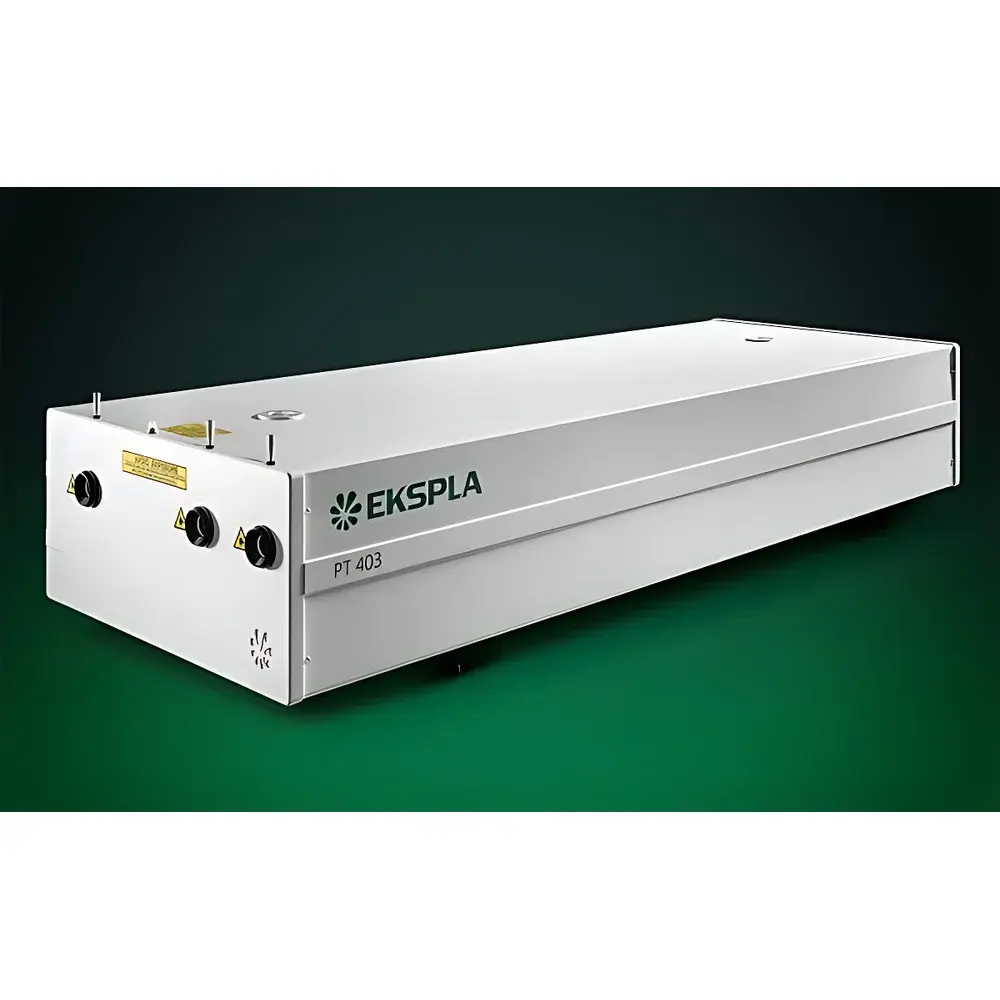
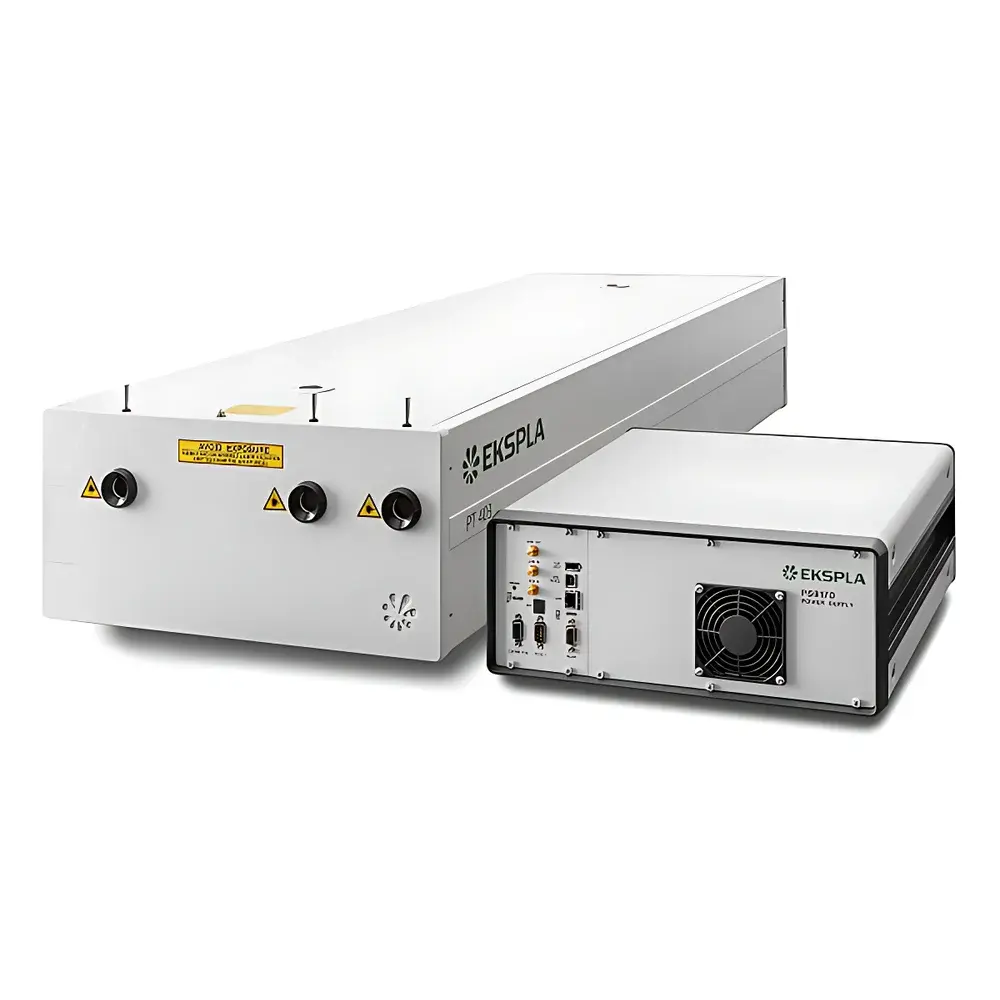
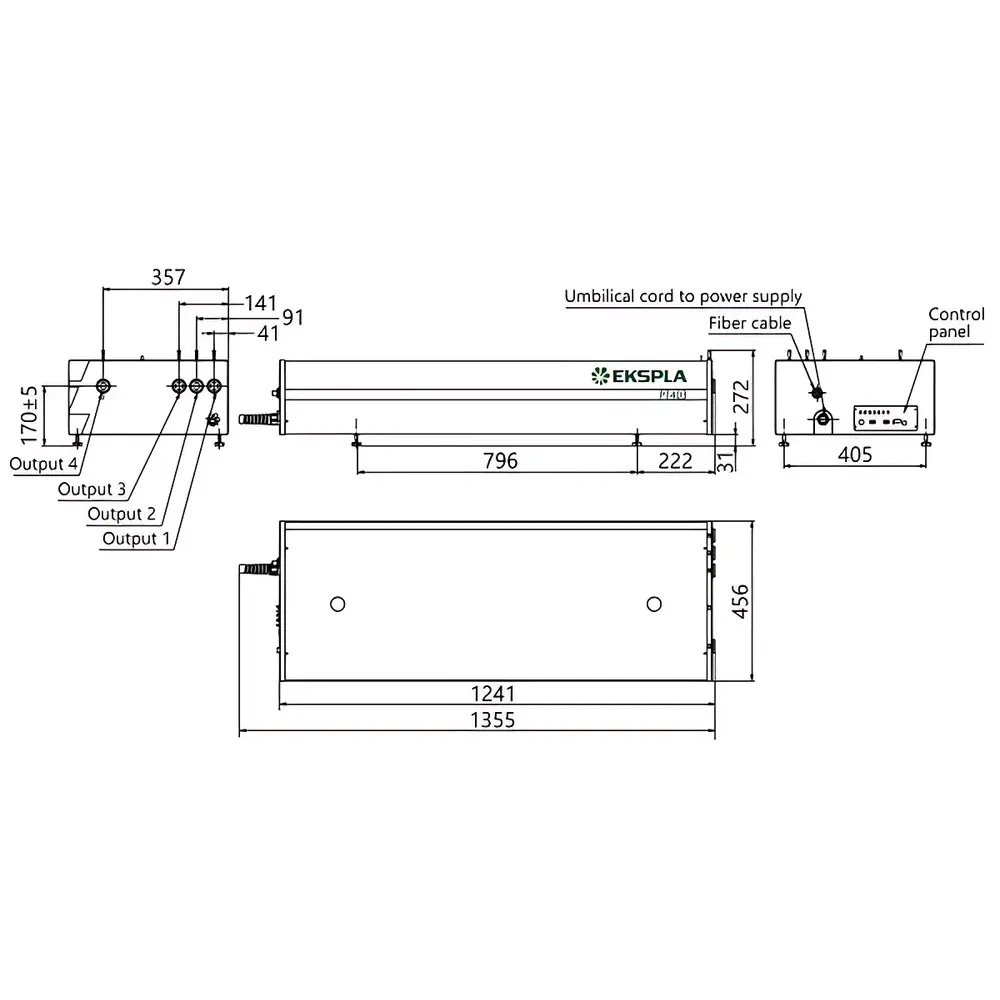
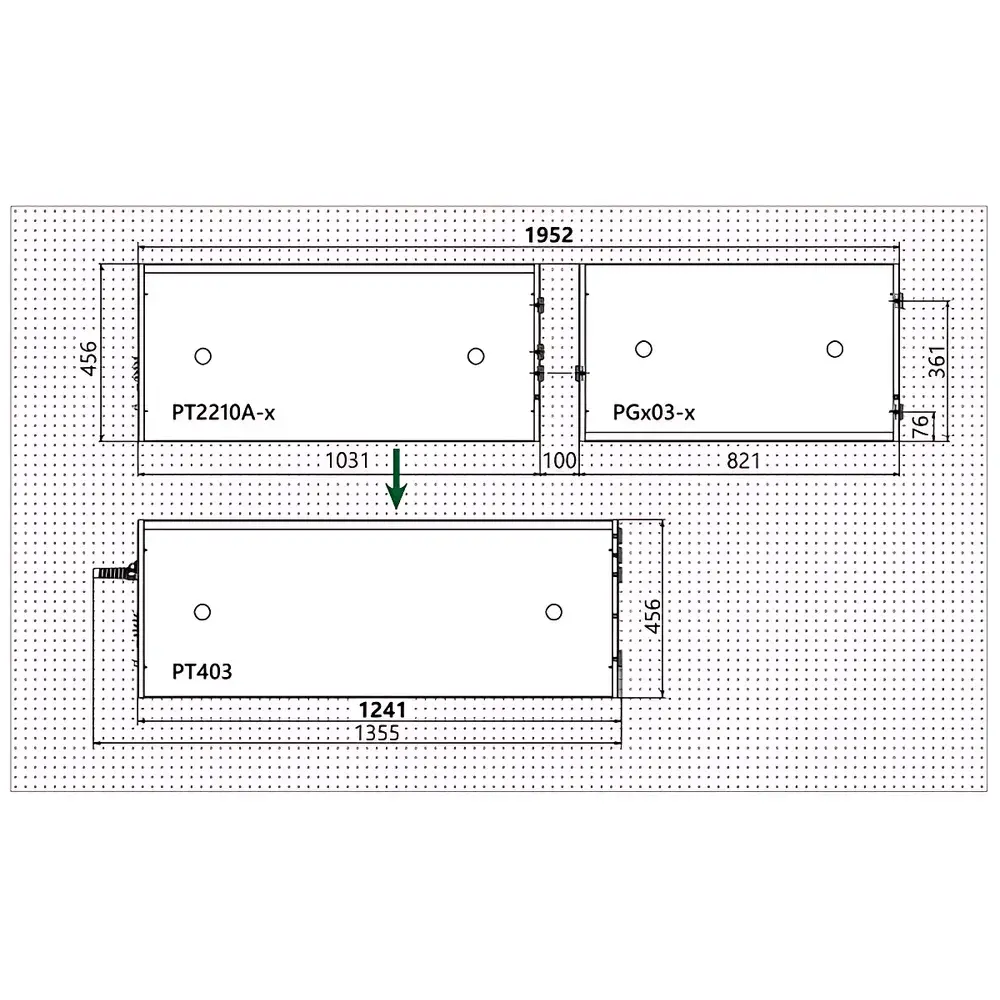
The Ekspla PT403 Tunable Picosecond Laser System is an integrated, turn-key optical source engineered for ultrafast spectroscopy and nonlinear optics applications requiring precise, stable, and broadly tunable picosecond pulses. Unlike conventional configurations where the pump laser and optical parametric oscillator (OPO) are housed in separate units, the PT403 consolidates a diode-pumped solid-state (DPSS) picosecond master oscillator (based on the industry-proven Ekspla PL2210 platform) and a synchronized PGX03-class picosecond OPO into a single, compact, air-cooled chassis. This monolithic architecture eliminates inter-unit beam path instability, thermal drift, and mechanical misalignment—key sources of long-term parameter degradation in distributed systems. The system delivers tunable output across three spectral regions: second harmonic (SH: 210–410 nm), signal (410–709 nm), and idler (710–2300 nm), with pulse energies up to 10 µJ (SH), 70 µJ (signal), and 15 µJ (idler) at 1 kHz repetition rate. Its 15 ps pulse duration (typ.), narrow linewidth (<8 cm⁻¹), low beam divergence (<2 mrad), and horizontal (SH/signal) or vertical (idler) linear polarization ensure high spatiotemporal fidelity for time-resolved measurements.
Key Features
- Monolithic integration of DPSS pump laser and picosecond OPO in one chassis—reducing footprint by nearly 50% versus dual-unit layouts
- Full hands-free wavelength tuning via microprocessor-controlled motorized gratings and crystal angle adjustment
- Air-cooled operation: no external chiller or water supply required—ideal for lab environments with limited infrastructure
- Diode-pumped solid-state design ensures high reliability, low maintenance, and improved long-term amplitude stability
- Optional low-jitter (<10 ps RMS) electrical trigger output for synchronization with streak cameras or time-correlated single-photon counting (TCSPC) systems
- USB-based PC interface with LabVIEW™ drivers and remote control panel support—enabling automated experiment scripting and integration into larger measurement platforms
- Compliance with IEC 60825-1 Class 4 laser safety standards; all beam paths fully enclosed within the unit
Sample Compatibility & Compliance
The PT403 is designed for use with standard optical table-mounted spectroscopic setups, including transient absorption spectrometers, fluorescence lifetime imaging (FLIM) workstations, and Z-scan nonlinear characterization systems. Its broadband tunability enables direct excitation of diverse chromophores—from UV-absorbing aromatic compounds (e.g., tryptophan at 280 nm) to mid-IR vibrational modes (e.g., C–H stretch near 2200 nm). All optical components—including nonlinear crystals, harmonic separators, and beam delivery optics—are selected for high damage threshold and low group delay dispersion (GDD) across the tuning range. The system meets CE marking requirements and conforms to RoHS directives. It supports GLP/GMP-aligned workflows through audit-trail-capable software logging (when used with compatible third-party data acquisition suites), and its stable output facilitates traceable calibration against NIST-traceable reference standards per ISO/IEC 17025 guidelines.
Software & Data Management
Control is implemented via Ekspla’s proprietary Windows-based GUI, which provides real-time monitoring of pump energy, OPO crystal temperature, wavelength position, and pulse energy estimation. The software supports scripting via COM/ActiveX interfaces and includes native LabVIEW™ VIs for seamless integration into custom automation frameworks. All wavelength settings, scan sequences, and hardware state logs are timestamped and exportable in CSV or HDF5 format. While the PT403 itself does not implement FDA 21 CFR Part 11 electronic signature functionality, its deterministic control architecture and deterministic timing enable full compliance when deployed within validated laboratory information management systems (LIMS) or electronic lab notebooks (ELN) that enforce user authentication, audit trails, and data integrity protocols.
Applications
- Time-resolved fluorescence spectroscopy—resolving sub-nanosecond decay kinetics in biological macromolecules and quantum dots
- Pump-probe transient absorption—mapping excited-state dynamics in photovoltaic materials and photocatalysts
- Laser-induced fluorescence (LIF)—species-selective detection in combustion diagnostics and plasma chemistry
- Infrared vibrational spectroscopy—probing fundamental molecular vibrations without thermal broadening artifacts
- Nonlinear optical characterization—Z-scan for nonlinear refractive index (n₂), surface second-harmonic generation (SHG) imaging of non-centrosymmetric interfaces
- Coherent anti-Stokes Raman scattering (CARS) precursor development—leveraging narrow linewidth and precise wavelength matching
FAQ
Is external water cooling required?
No—the PT403 is fully air-cooled and requires no chiller or external water supply.
What is the typical warm-up time after power interruption?
If mains power is disconnected for more than one hour, a 3–4 hour thermal stabilization period is recommended prior to operation.
Can the system be operated in continuous wavelength scanning mode?
Yes—software supports automated step-and-hold or continuous sweep modes with user-defined step resolution and dwell time.
Does the PT403 meet laser safety standards for Class 4 operation?
Yes—it complies with IEC 60825-1:2014 and carries CE marking for Class 4 laser product classification.
Are calibration certificates provided with the system?
Factory calibration reports—including wavelength accuracy verification and pulse energy linearity checks—are supplied with each unit; NIST-traceable calibration is available as an optional service.



