
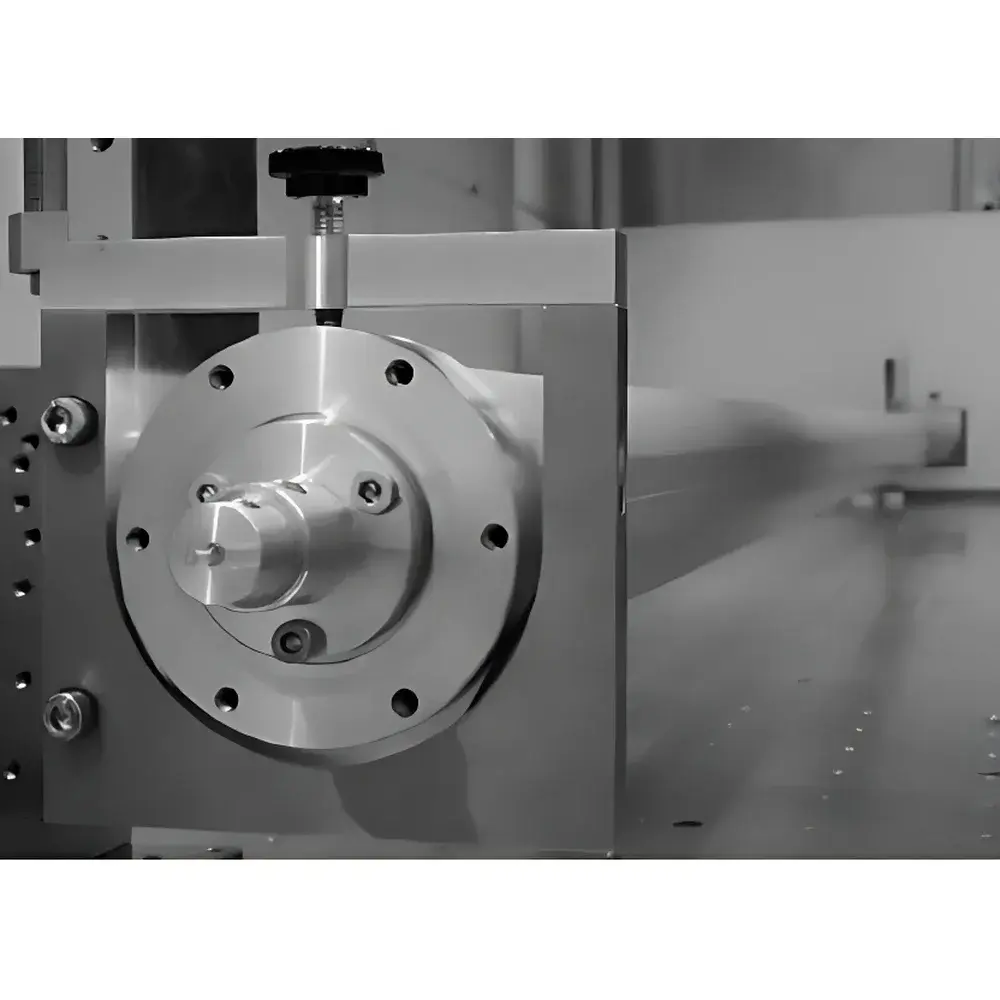
LLG Stretched-Fiber Pulse Compressor
| Brand | Laser-Laboratorium Göttingen e.V. |
|---|---|
| Origin | Germany |
| Model | LLG-fiber |
| Cooling | Water-cooled |
| Core Technology | Noble-gas-filled hollow-core fiber with controlled self-phase modulation (SPM) |
| Length Options | Up to 3 m (customizable) |
| Input Pulse Compatibility | Sub-100-fs, mJ-level ultrafast pulses (e.g., Ti:sapphire, Yb-based amplifiers) |
| Spectral Broadening Factor | >20× at ~60% transmission |
| Output Stability | CEP-stable down to 4 fs |
| Compliance | Designed for integration into ISO 10110-compliant optical beamlines and GLP-aligned ultrafast labs |
Overview
The LLG Stretched-Fiber Pulse Compressor is an engineered solution for post-compression of high-energy, ultrashort laser pulses in the femtosecond regime. Based on well-controlled self-phase modulation (SPM) within noble-gas-filled hollow-core capillary fibers, this device enables extreme spectral broadening while preserving spatial mode quality and temporal coherence. Unlike conventional grating- or prism-based compressors, the LLG-fiber architecture eliminates angular dispersion and higher-order phase distortions—making it especially suitable for carrier-envelope phase (CEP)-sensitive applications such as attosecond science, high-harmonic generation (HHG), and strong-field physics experiments. The patented stretched-flexible capillary layout ensures mechanical stability and exceptional straightness over arbitrary lengths up to 3 meters, enabling scalable pulse compression without compromising waveguide integrity.
Key Features
- Gas-filled hollow-core fiber platform optimized for SPM-driven spectral broadening in Ar, Ne, or Kr at pressures up to 5 bar.
- Stretched-capillary geometry ensures sub-microradian beam deviation and minimal transverse mode distortion across full aperture.
- Integrated input protection module withstands peak intensities exceeding 1014 W/cm²—compatible with amplified Ti:sapphire and Yb:YAG/Yb:fiber systems delivering ≥1.1 mJ, ≤70 fs pulses.
- Active water cooling maintains thermal equilibrium during sustained operation at repetition rates up to 1 kHz and average powers >10 W.
- No moving parts; alignment-free integration into existing beam paths via standard kinematic mounts (e.g., SM1-threaded flanges).
- Designed for long-term vacuum compatibility and UHV-compatible variants available upon request.
Sample Compatibility & Compliance
The LLG-fiber compressor supports input pulses from commercial and custom-built ultrafast amplifier systems—including chirped-pulse amplification (CPA) and optical parametric chirped-pulse amplification (OPCPA) architectures. It accommodates central wavelengths from 750 nm to 1050 nm and is routinely deployed with systems compliant with ISO 14644-1 Class 5 cleanroom environments. All optical interfaces meet ISO 10110 surface quality standards (scratch-dig 10–5). The system design adheres to IEC 60825-1:2014 safety requirements for Class 4 laser products and integrates seamlessly into laboratories operating under GLP and preclinical GMP frameworks where traceable pulse characterization is required.
Software & Data Management
While the LLG-fiber compressor is a passive optical element requiring no embedded firmware or real-time control, its performance validation and integration are supported by vendor-provided characterization protocols compatible with industry-standard metrology tools—including FROG (Frequency-Resolved Optical Gating), SPIDER (Spectral Phase Interferometry for Direct Electric-field Reconstruction), and single-shot D-scan systems. Experimental datasets generated using this compressor have been published in peer-reviewed journals (e.g., Optics Letters, Laser Physics Letters) with full metadata reporting aligned with FAIR (Findable, Accessible, Interoperable, Reusable) data principles. Users may export calibrated spectral and temporal profiles directly into MATLAB, Python (via PyFROG or LightPipes), or LabVIEW environments for automated alignment feedback loops.
Applications
- Post-compression of CPA/OPCPA output for generation of sub-5-fs CEP-stable pulses at multi-mJ energy levels.
- Spectral broadening stage prior to hollow-core fiber compression or multipass cell post-compression.
- Seed source conditioning for high-repetition-rate HHG beamlines targeting water-window soft X-ray generation.
- Nonlinear spectroscopy setups requiring octave-spanning spectra with high spatial homogeneity and shot-to-shot stability.
- Development of next-generation petawatt-class laser drivers where dispersion management and damage resistance are critical.
FAQ
What gases are typically used inside the hollow fiber?
Argon, neon, and krypton are the most commonly employed noble gases, selected based on desired nonlinear coefficient, ionization threshold, and dispersion profile at the target wavelength.
Can the LLG-fiber be retrofitted into an existing laser beamline?
Yes—the modular flange-mount design allows direct integration into standard optical tables using SM1- or CF100-compatible vacuum feedthroughs; no realignment of upstream optics is required.
Is pressure tuning supported during operation?
Yes—the fiber is equipped with sealed gas inlets/outlets compatible with mass flow controllers and pressure regulators, enabling dynamic pressure gradient schemes for adaptive spectral shaping.
Does the system require periodic recalibration?
No—being a passive, all-optical component, the LLG-fiber exhibits no drift in transmission or phase response under stable environmental conditions; however, periodic spectral interferometric verification is recommended per ISO/IEC 17025 guidelines for accredited labs.
Are custom fiber lengths available beyond 3 meters?
Yes—lengths up to 5 meters can be manufactured upon request, subject to mechanical stability validation and gas-fill optimization studies.




