
EKSMA FP1/MP1/UP1 Pockels Cell Pulse Picker Kit
| Brand | EKSMA |
|---|---|
| Origin | Imported (Lithuania) |
| Model | FP1 / MP1 / UP1 |
| Crystal Options | DKDP (FP1), BBO (MP1, UP1), KTP (FP1, MP1, UP1) |
| Max Repetition Rate Support (with pMaster 4.0) | 20 MHz (FP1), 30 MHz (MP1), 1 MHz (UP1 with fs synchronization) |
| Max Pulse Selection Frequency | 1 kHz (FP1), 600 kHz (MP1), fs-level gating via dual-crystal architecture (UP1) |
| Compliance | CE-marked, RoHS-compliant |
| Mounting | Kinematic optical breadboard compatible, Ø25.4 mm or Ø50.8 mm lens tube interfaces |
| Driver Compatibility | Designed for integration with EKSMA pMaster 4.0 and pMaster 4.0H digital pulse generators |
Overview
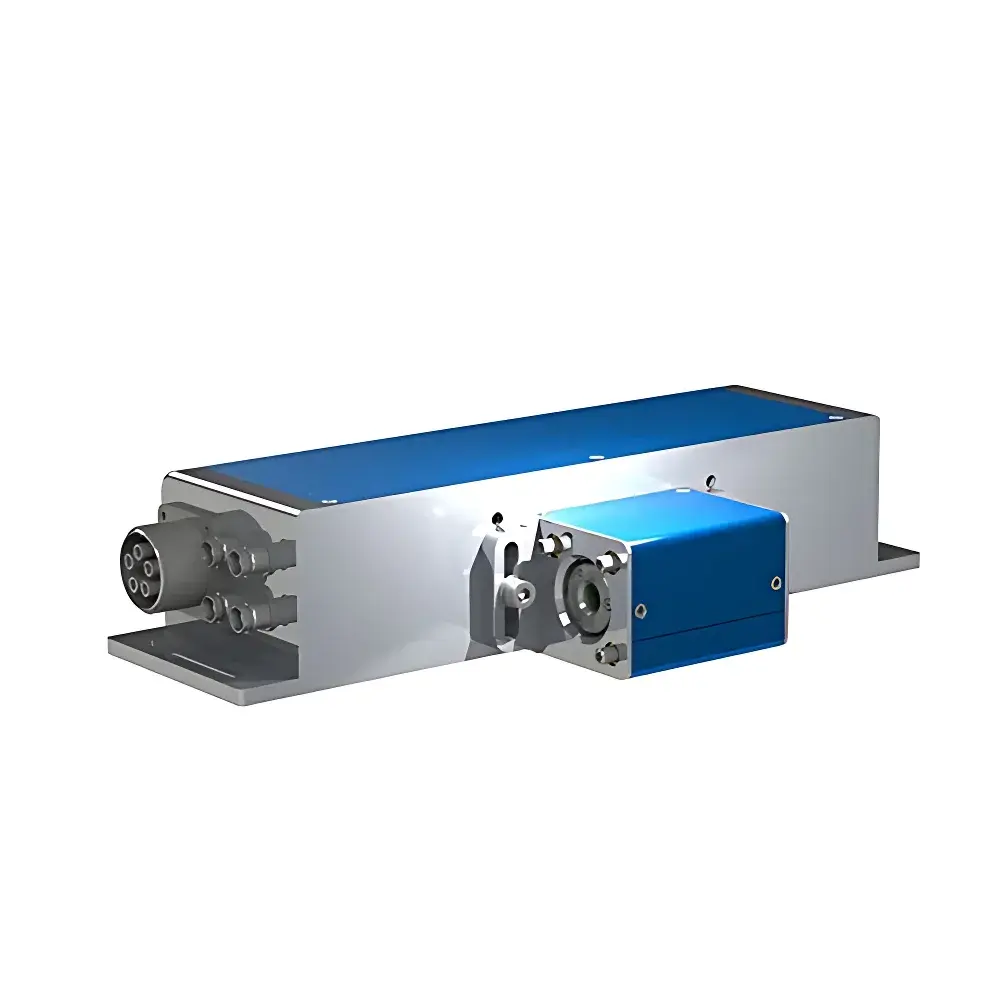
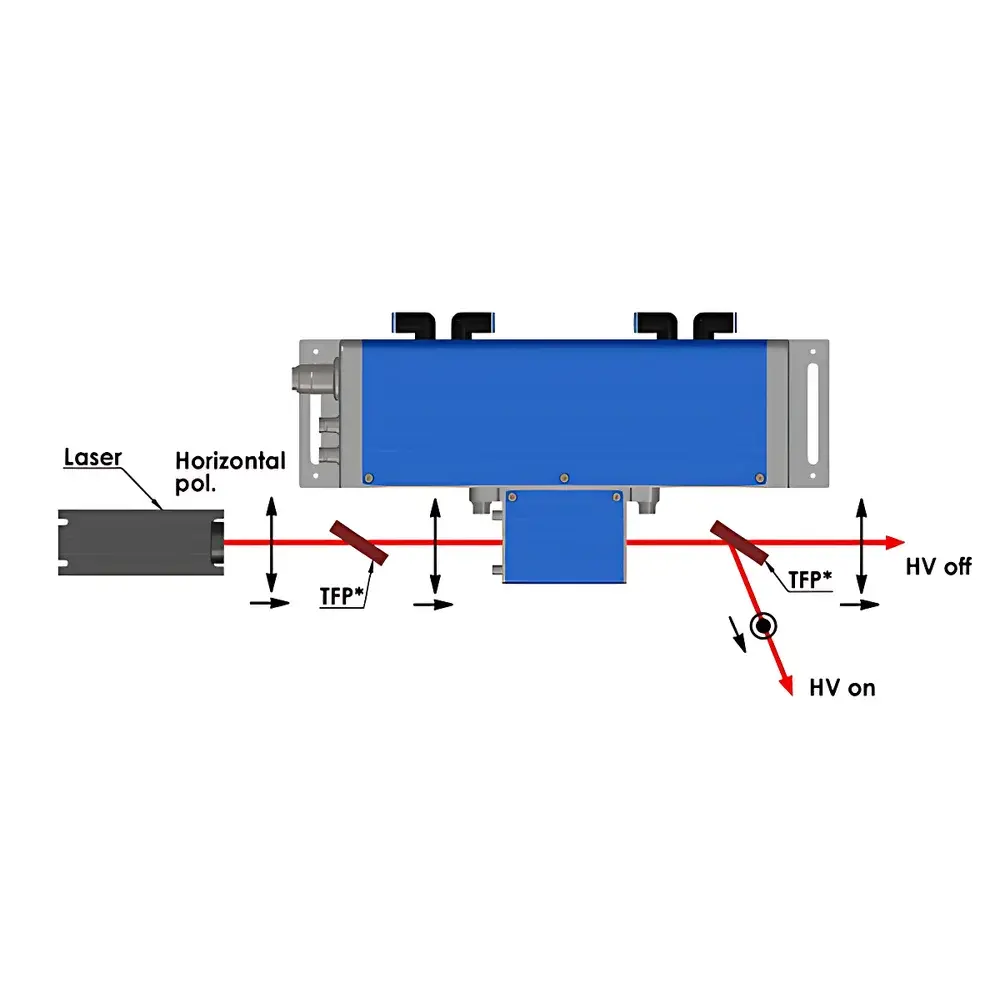
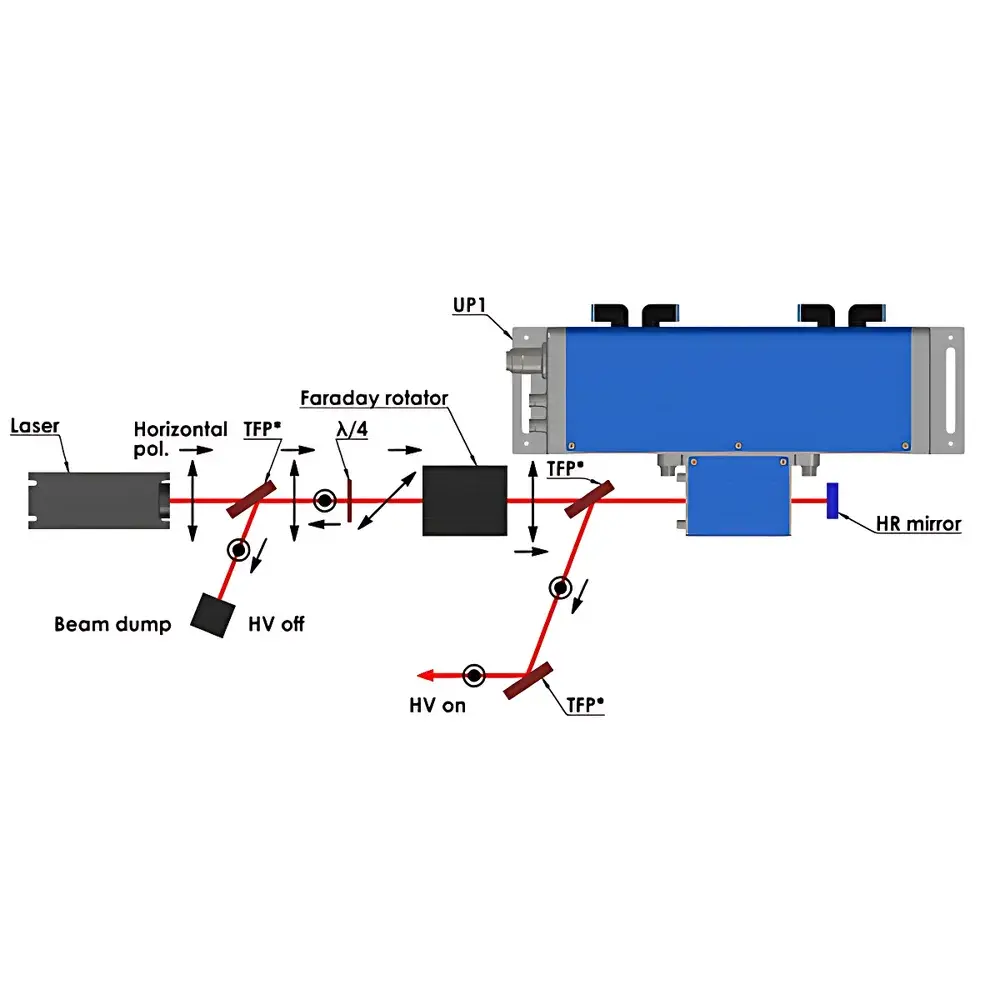
The EKSMA FP1/MP1/UP1 Pockels Cell Pulse Picker Kit is a modular, high-voltage electro-optic system engineered for precise temporal selection of individual pulses from high-repetition-rate laser sources. Based on the Pockels effect—linear birefringence induced by an applied electric field across non-centrosymmetric crystals—the kit enables deterministic, nanosecond- to femtosecond-gated optical switching. Each variant (FP1, MP1, UP1) integrates a custom-designed Pockels cell mounted in a kinematically stable, shielded housing with low-inductance HV connectors and AR-coated optical windows (R 1000:1 when paired with high-quality polarizers. Unlike mechanical choppers or acousto-optic modulators, this electro-optic solution offers jitter-free, repetition-rate-transparent gating—critical for pump-probe spectroscopy, regenerative amplifier seeding, cavity dumping, and ultrafast diagnostics.
Key Features
- Three scalable architectures: FP1 (DKDP-based, optimized for UV–NIR stability), MP1 (single-BBO, higher bandwidth up to 600 kHz selection), and UP1 (dual-crystal BBO or KTP configuration enabling sub-100 fs temporal resolution and synchronized gating)
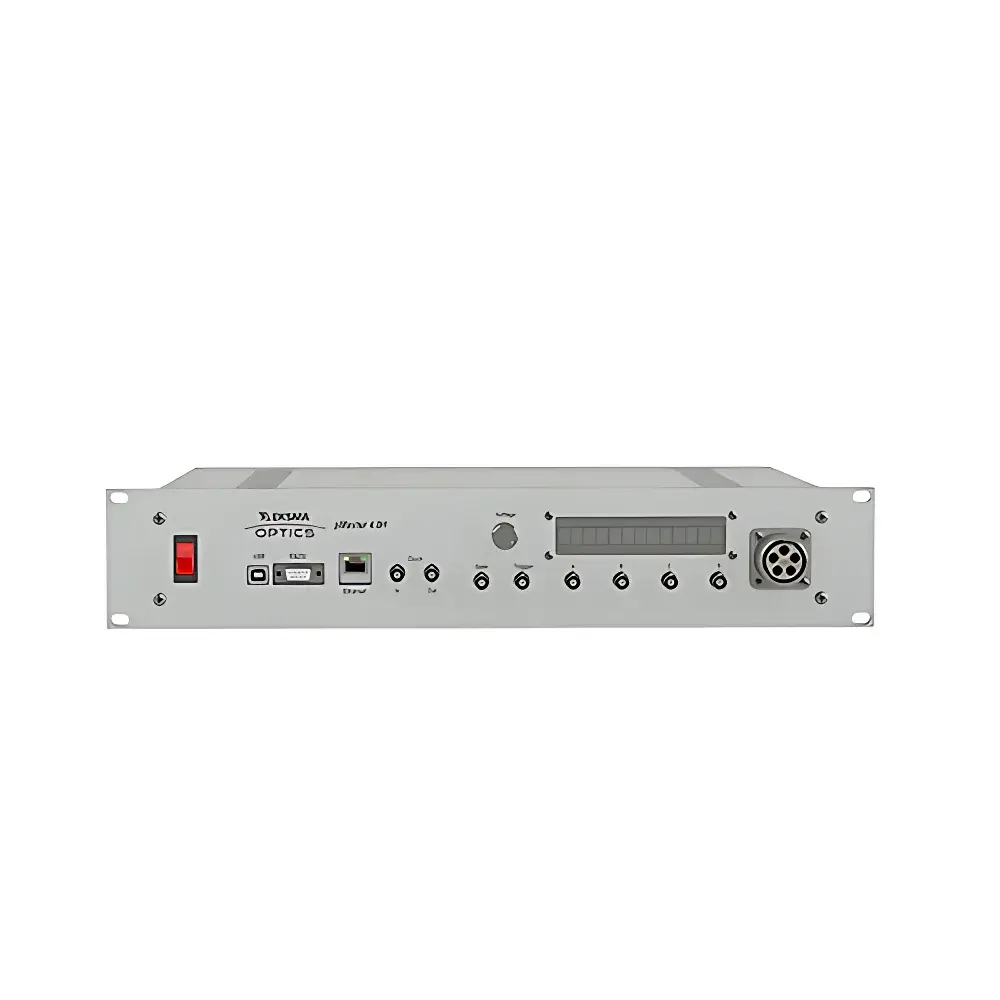
- Integrated high-voltage driver interface compliant with EKSMA pMaster 4.0 (20 MHz sync capability) and pMaster 4.0H (high-precision delay resolution ≤10 ps, jitter <25 ps RMS)
- Crystal-specific anti-reflection coatings matched to common ultrafast laser wavelengths (e.g., 266 nm, 532 nm, 800 nm, 1030 nm, 1550 nm)
- Thermally stabilized crystal mounts with passive heat-sinking; operational temperature range: 15–30 °C ambient, <±0.5 °C drift over 8 h
- Optical clear aperture ≥9 mm (FP1/MP1), ≥12 mm (UP1); wavefront distortion <λ/8 @ 633 nm
- CE-certified electromagnetic compatibility (EN 61326-1) and RoHS-conformant materials sourcing
Sample Compatibility & Compliance
The kit supports linearly polarized input beams with M² < 1.3 and peak intensities up to 500 MW/cm² (for BBO) or 1 GW/cm² (for DKDP/KTP), ensuring compatibility with Ti:sapphire, Yb-fiber, Nd:YAG, and OPA systems. All variants meet ISO 10110-7 surface quality standards (scratch-dig 10-5) and are calibrated per ISO 11146 for beam propagation fidelity. For regulated environments—including GLP-compliant laser laboratories and ISO/IEC 17025-accredited metrology facilities—the system supports traceable calibration documentation and optional factory verification reports aligned with ISO/IEC 17025 requirements. No firmware or embedded software requires FDA 21 CFR Part 11 validation, as the device functions purely as an analog electro-optic actuator without data storage or user-modifiable parameters.
Software & Data Management
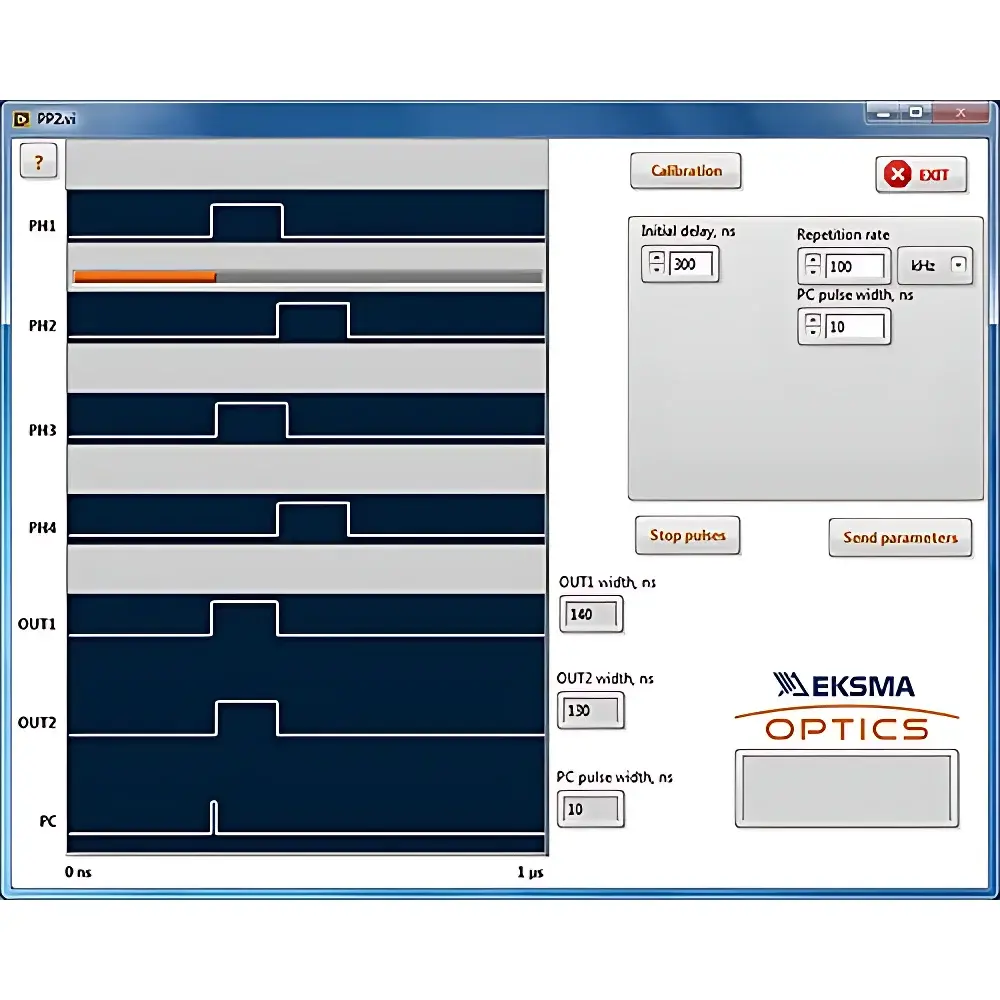
The pulse picker operates as a hardware-peripheral device: no onboard firmware or GUI is included. Timing coordination is fully delegated to the external pMaster 4.0 or pMaster 4.0H controller, which provides USB 2.0 and TTL-triggered I/O interfaces. The pMaster software suite (Windows/Linux) enables scripting via Python API, waveform definition (arbitrary gate profiles), multi-channel synchronization (up to 8 independent delay channels), and audit-trail logging compliant with ALCOA+ principles (Attributable, Legible, Contemporaneous, Original, Accurate, Complete, Consistent, Enduring, Available). Export formats include CSV, HDF5, and XML for integration into LabVIEW, MATLAB, or custom DAQ platforms.
Applications
- Regenerative amplifier injection seeding with pulse-to-pulse energy stabilization
- Pump-probe experiments requiring <200 fs timing precision between gated probe and unperturbed pump
- Cavity-dumped oscillator output control for tunable pulse energy scaling
- Time-resolved fluorescence lifetime imaging (FLIM) excitation gating
- Ultrafast electron diffraction (UED) and X-ray free-electron laser (XFEL) timing distribution
- Quantum optics setups involving heralded single-photon source triggering
FAQ
What is the maximum optical damage threshold for the UP1-BBO configuration?
BBO crystals in the UP1 module sustain peak fluences up to 0.5 J/cm² at 1030 nm, 100 fs, 1 kHz (measured per ISO 21254-2).
Can the FP1 be used with 266 nm UV pulses?
Yes—DKDP exhibits high transmission (>90%) and low photorefractive degradation at 266 nm when operated below 1.5 kV and with controlled humidity (<30% RH).
Is thermal drift compensated in real time?
No active compensation is implemented; however, the mechanical design minimizes thermal lensing, and long-term drift remains within ±0.05° polarization rotation over 4 hours under stable lab conditions.
Does the kit include alignment tools or collimation optics?
Alignment is performed using standard optomechanics; the kit includes kinematic mirror mounts and SM1-threaded housings—but no lenses, irises, or alignment lasers.
How is synchronization achieved between the pMaster 4.0H and a femtosecond oscillator?
Via low-jitter RF reference input (10 MHz or harmonic), phase-locked to the oscillator’s repetition rate; internal PLL ensures sub-5 ps residual timing error after lock acquisition.



