
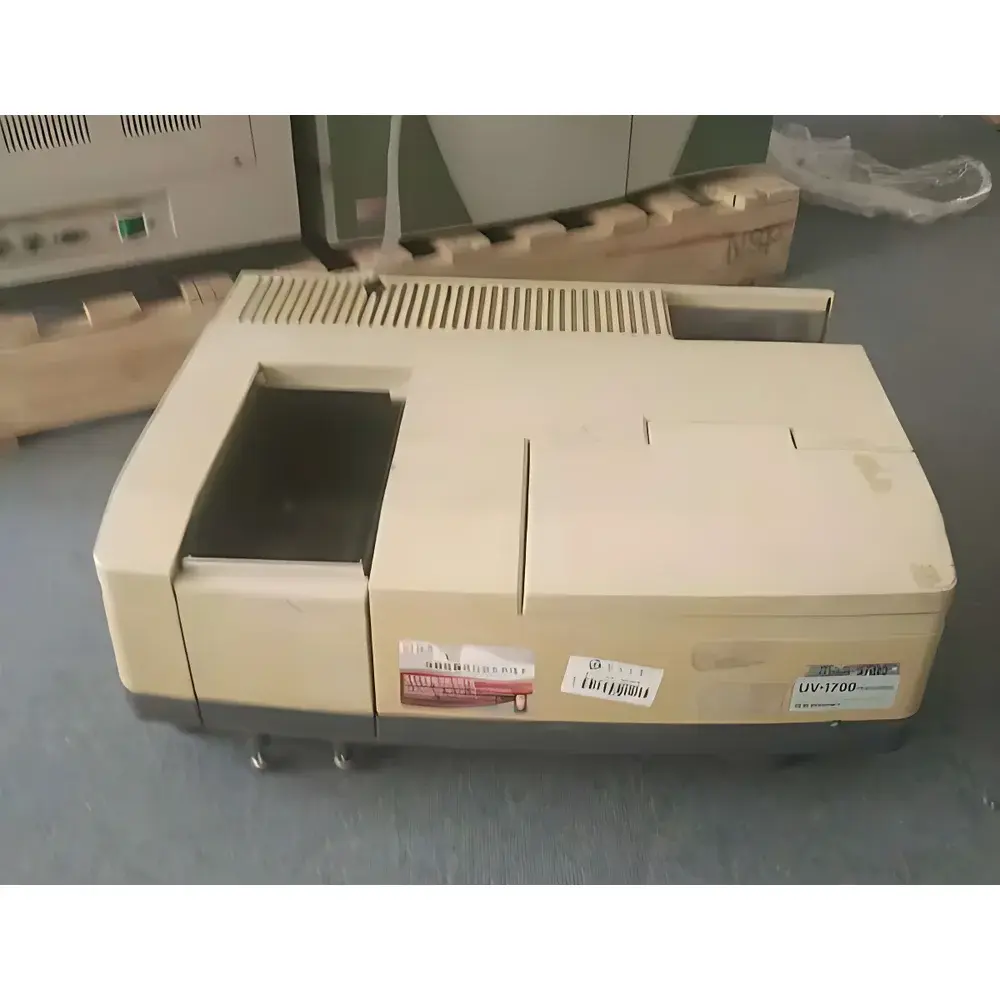
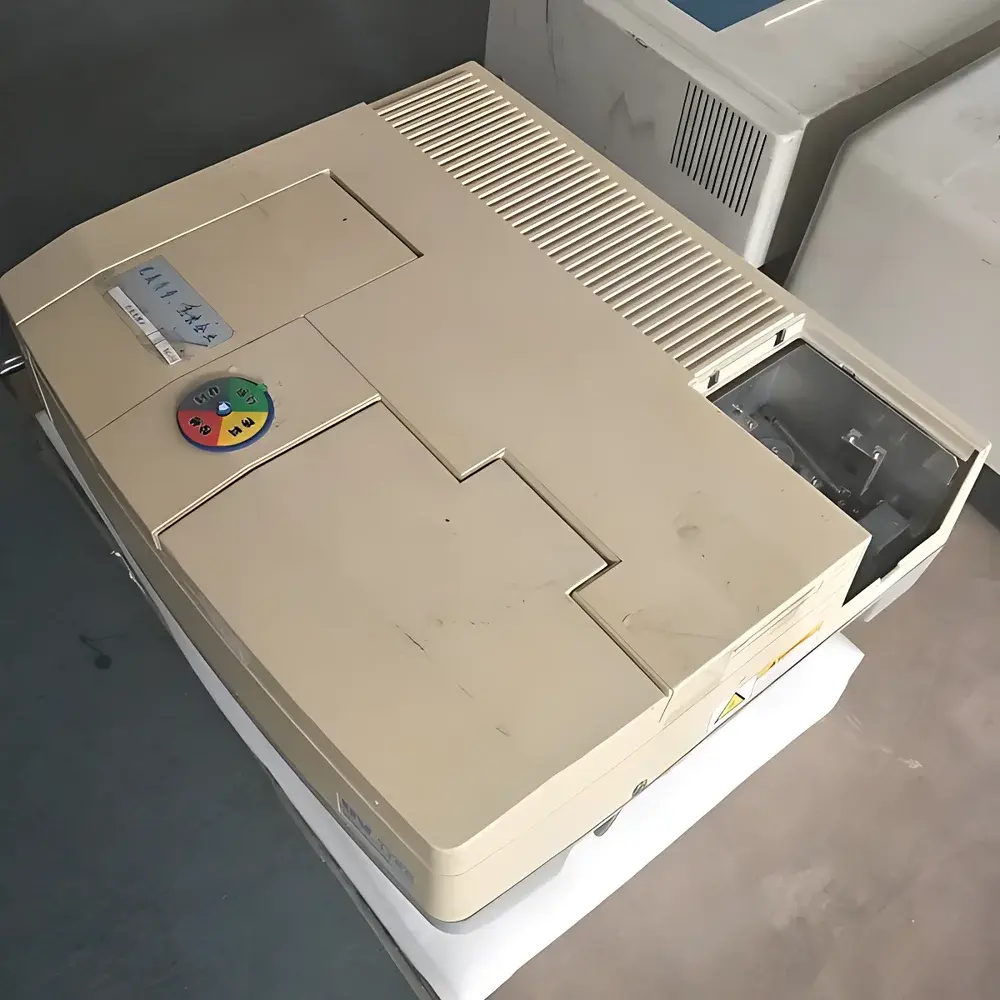
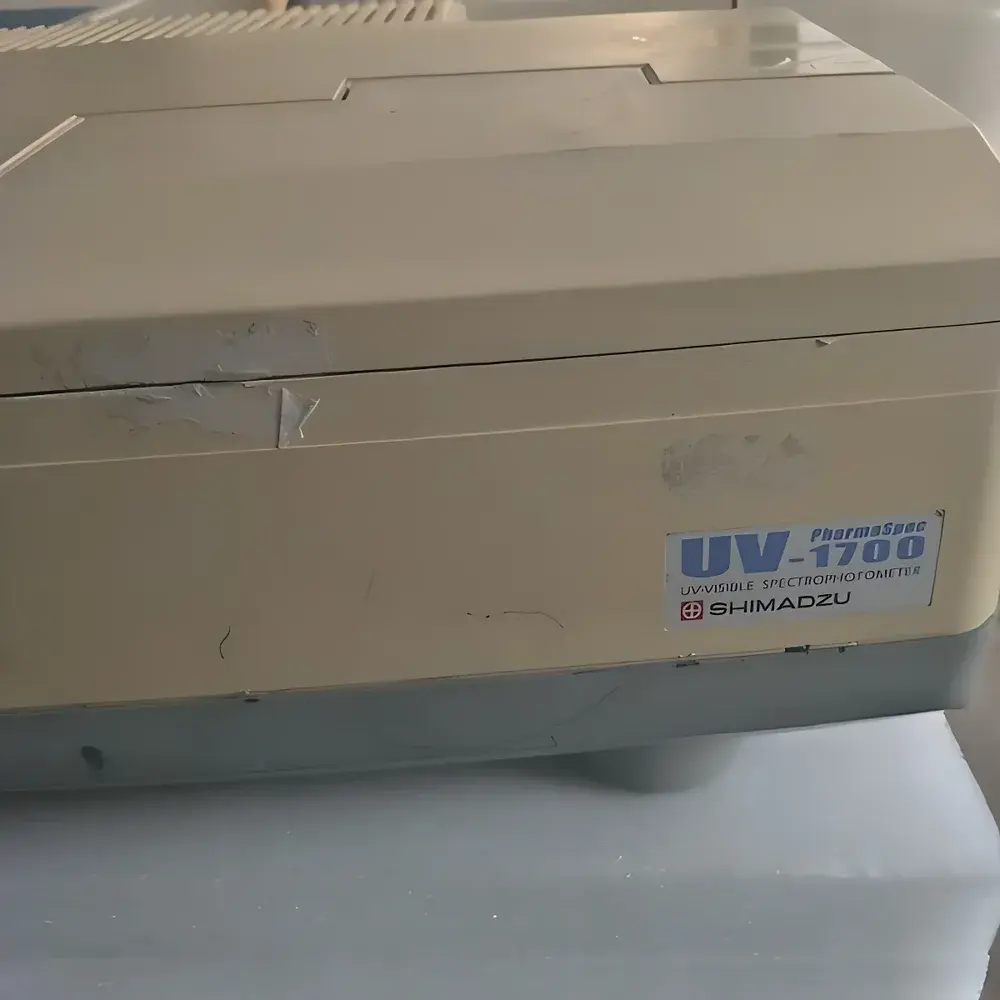
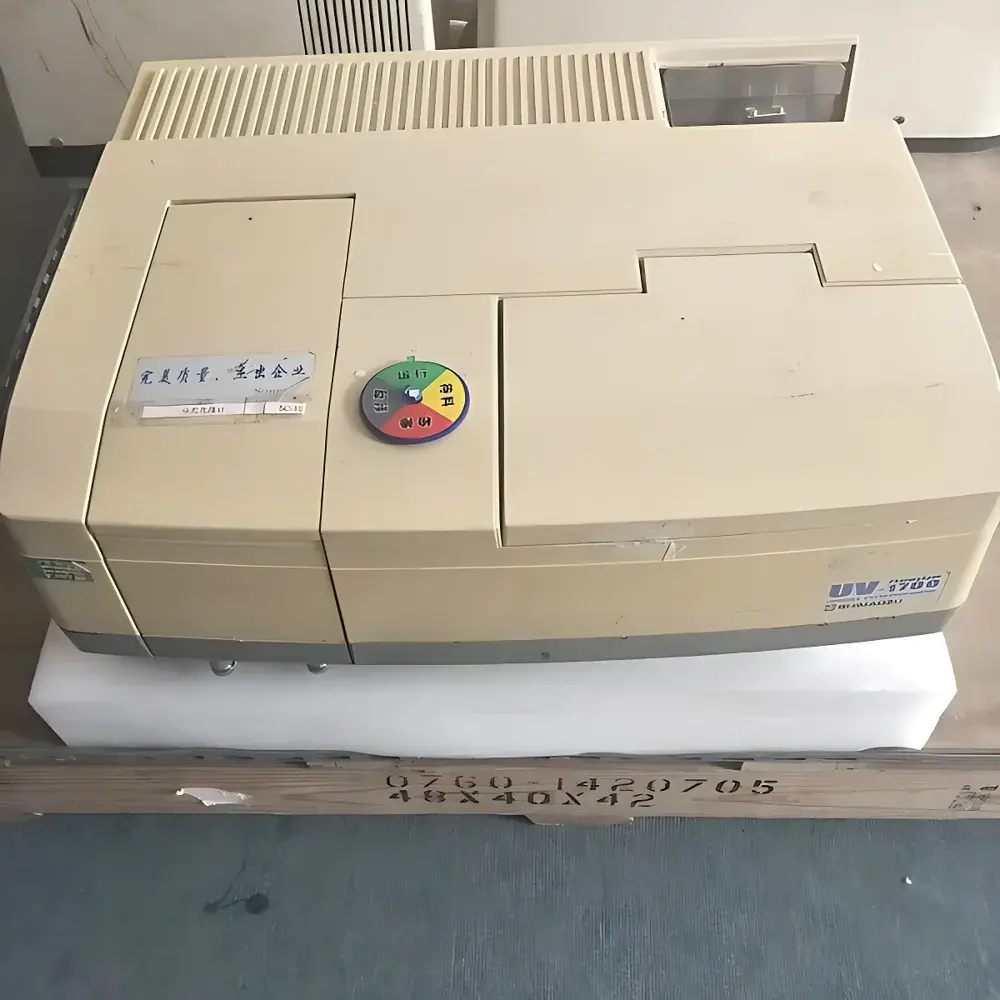
Shimadzu UV-1700 Used Double-Beam Ultraviolet-Visible Spectrophotometer
| Brand | Shimadzu |
|---|---|
| Origin | Japan |
| Model | UV-1700 |
| Optical System | Double-beam |
| Detector Type | Photocell |
| Wavelength Range | 190.0–1100.0 nm |
| Wavelength Accuracy | ±0.3 nm |
| Spectral Bandwidth | 1 nm |
| Stray Light | ≤0.04% (at 220.0 nm and 340.0 nm) |
| Wavelength Repeatability | ±0.1 nm |
| Grating Type | Aberration-Corrected Holographic Blazed Grating |
| Automation Level | Automatic Wavelength Scanning |
| Compliance Support | IQ/OQ Documentation Available |
| Dimensions | A2 footprint (~420 × 594 mm), Weight: 17 kg |
Overview
The Shimadzu UV-1700 is a precision-engineered double-beam ultraviolet-visible (UV-Vis) spectrophotometer originally introduced in 2008 as part of Shimadzu’s industrial-grade analytical instrumentation platform. Designed explicitly for compliance-critical environments—including pharmaceutical quality control, clinical research, and regulatory laboratories—the UV-1700 implements classical photometric measurement principles based on Beer-Lambert law quantification across a broad spectral range (190.0–1100.0 nm). Its optical architecture employs an aberration-corrected holographic blazed grating for high-efficiency dispersion and minimal wavelength-dependent intensity distortion. The double-beam configuration ensures real-time reference compensation, significantly enhancing baseline stability and long-term photometric reproducibility—especially critical during extended kinetic or multi-sample batch analyses. As a pre-UV-1800 generation instrument, the UV-1700 maintains full functional equivalence with its successor in core metrological performance while retaining proven mechanical robustness and simplified serviceability.
Key Features
- 1 nm spectral bandwidth optimized for resolution-sensitive applications such as assay validation and impurity profiling in active pharmaceutical ingredients (APIs)
- Wavelength accuracy of ±0.3 nm and repeatability of ±0.1 nm—certified to meet USP , EP 2.2.25, and JP 17 requirements for spectrophotometric system suitability
- Stray light performance ≤0.04% at 220.0 nm and 340.0 nm, enabling reliable low-transmittance measurements essential for high-concentration or highly absorbing samples
- Compact A2-form factor (420 × 594 mm base footprint) and lightweight design (17 kg) facilitate integration into space-constrained QC labs or mobile testing units
- Integrated LCD interface supports intuitive menu-driven operation without external computing hardware; optional UVProbe software enables full PC-based method development, data archiving, and report generation
- Dedicated IQ/OQ support package includes traceable calibration certificates, installation verification protocols, operational qualification checklists, and standardized maintenance logs aligned with GLP and GMP audit expectations
Sample Compatibility & Compliance
The UV-1700 accommodates standard 10 mm pathlength cuvettes (quartz, glass, or plastic) and supports optional accessories including variable-pathlength cells, microvolume adapters, and temperature-controlled holders. Its optical design ensures compatibility with both aqueous and organic solvent systems across the full UV-Vis range. From a regulatory standpoint, the instrument meets foundational requirements of ISO/IEC 17025:2017 for testing laboratories, supports 21 CFR Part 11-compliant data integrity when used with UVProbe and appropriate IT infrastructure, and provides documentation pathways for FDA, EMA, and PMDA inspections. All factory-calibrated parameters—including photometric linearity, wavelength scale, and stray light—are verifiable using NIST-traceable reference standards (e.g., Holmium oxide filters, potassium dichromate solutions).
Software & Data Management
While standalone operation is fully functional via the front-panel LCD, the UV-1700 achieves maximum utility when paired with Shimadzu’s UVProbe software (v3.x or later). UVProbe delivers comprehensive method management—including spectral scanning, quantitative analysis (single/multi-point calibration, equation-based concentration calculation), kinetics monitoring, and derivative spectroscopy. Data export formats include CSV, ASCII, and native .uvp files; audit trails record user actions, parameter changes, and calibration events. When deployed in validated environments, UVProbe configurations can be locked, electronic signatures enabled, and raw data stored with immutable timestamps—fulfilling ALCOA+ principles (Attributable, Legible, Contemporaneous, Original, Accurate, Complete, Consistent, Enduring, Available).
Applications
- Pharmaceutical QC: Dissolution testing, content uniformity, excipient interference assessment, and stability-indicating assays per ICH Q5C guidelines
- Environmental analysis: Nitrate/nitrite quantification in water matrices, COD determination, and heavy metal complexation studies
- Life sciences: Protein quantification (A280), nucleic acid purity evaluation (A260/A280 ratio), enzyme kinetics (e.g., LDH, ALP), and cell culture density monitoring
- Materials science: Thin-film transmittance/absorbance mapping, dye degradation kinetics, and semiconductor bandgap estimation
- Educational laboratories: Teaching fundamental spectroscopic concepts including Lambert-Beer law derivation, spectral deconvolution, and calibration curve construction
FAQ
Is the UV-1700 compliant with current pharmacopeial requirements?
Yes—the UV-1700 satisfies all essential system suitability criteria defined in USP , EP 2.2.25, and JP 17, including wavelength accuracy, photometric accuracy, stray light limits, and resolution verification.
Can this instrument be qualified under GMP/GLP conditions?
Absolutely. Shimadzu-supplied IQ/OQ documentation packages, combined with third-party calibration services and UVProbe’s audit trail functionality, provide a complete foundation for formal qualification and routine requalification.
What maintenance is required for long-term reliability?
Routine maintenance includes periodic cleaning of the sample compartment, verification of lamp output intensity (deuterium and tungsten), and annual alignment checks by certified service engineers. No user-serviceable optical components are present.
Is UVProbe software included with the instrument?
UVProbe is optional and must be licensed separately; however, the UV-1700’s RS-232 interface and command protocol are fully compatible with third-party LIMS and data acquisition platforms.
Does the UV-1700 support automated sample handling?
No—sample introduction is manual. However, its RS-232 port allows integration with external autosamplers via custom scripting or OEM-compatible controllers.




