
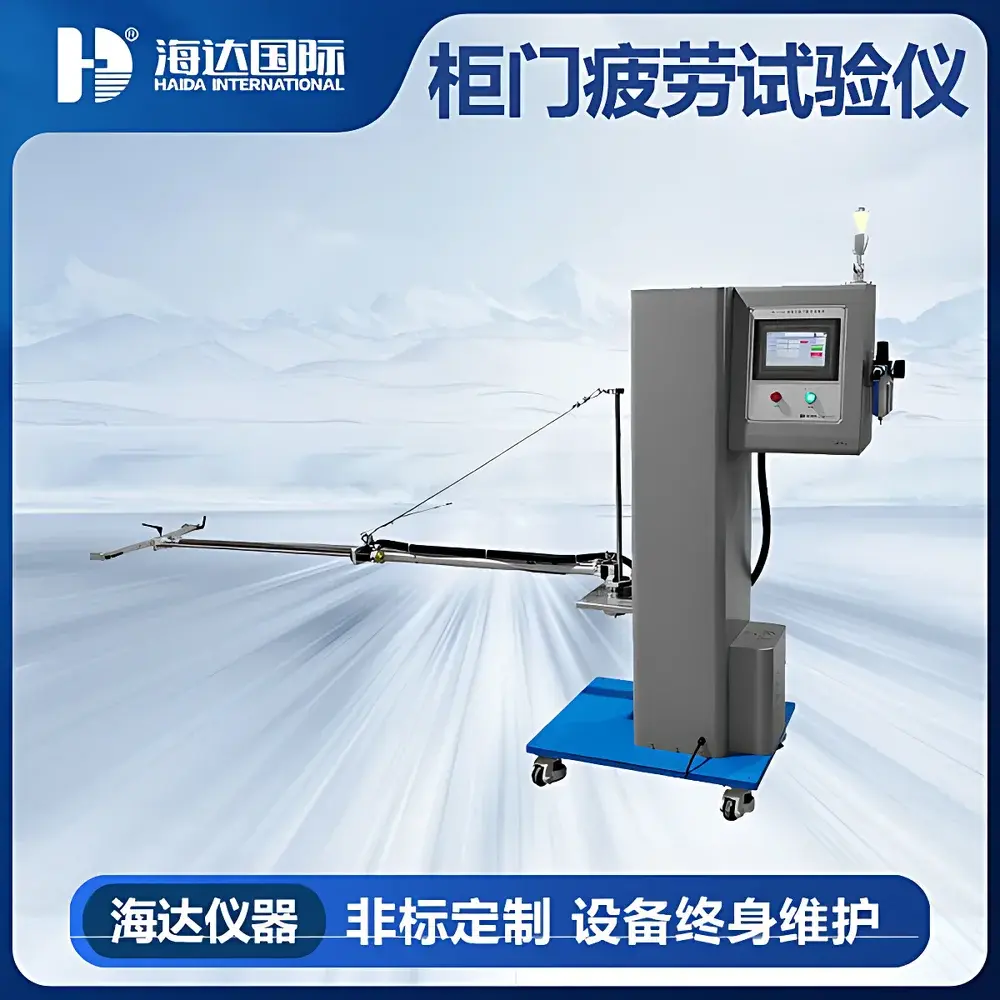
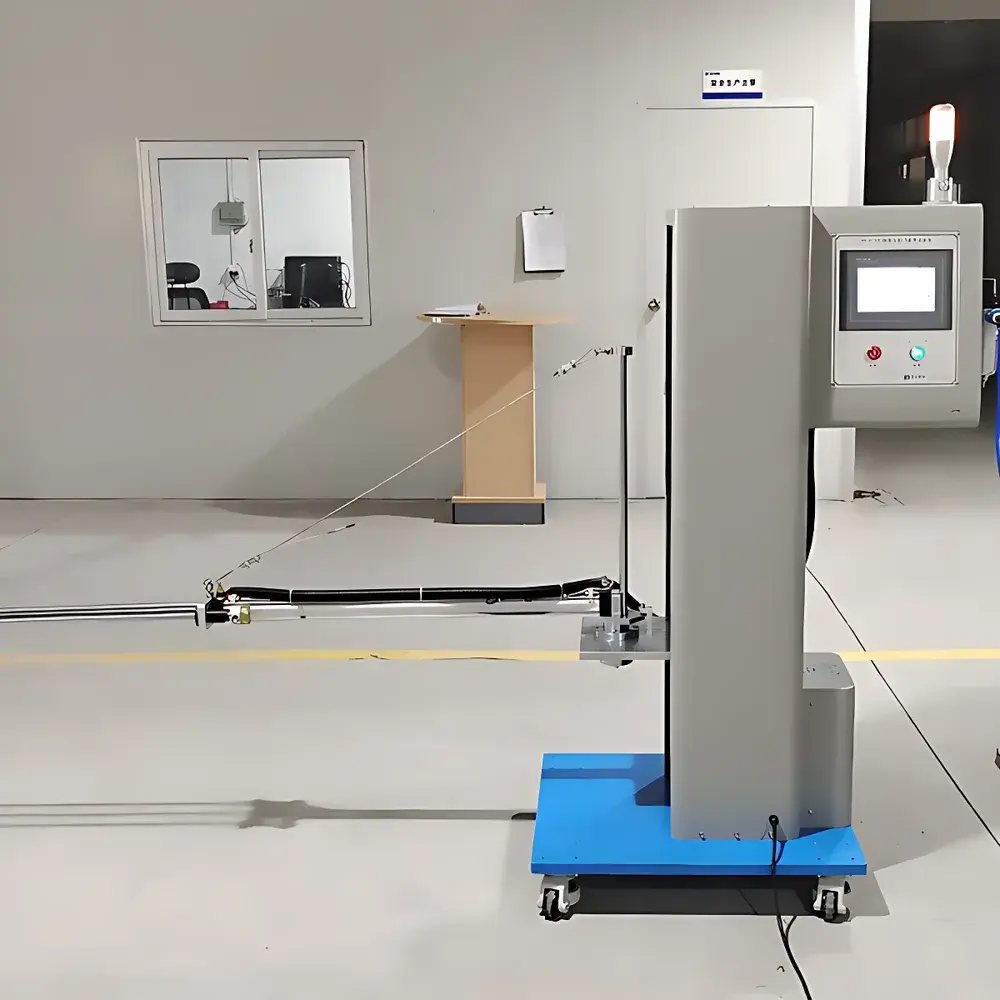
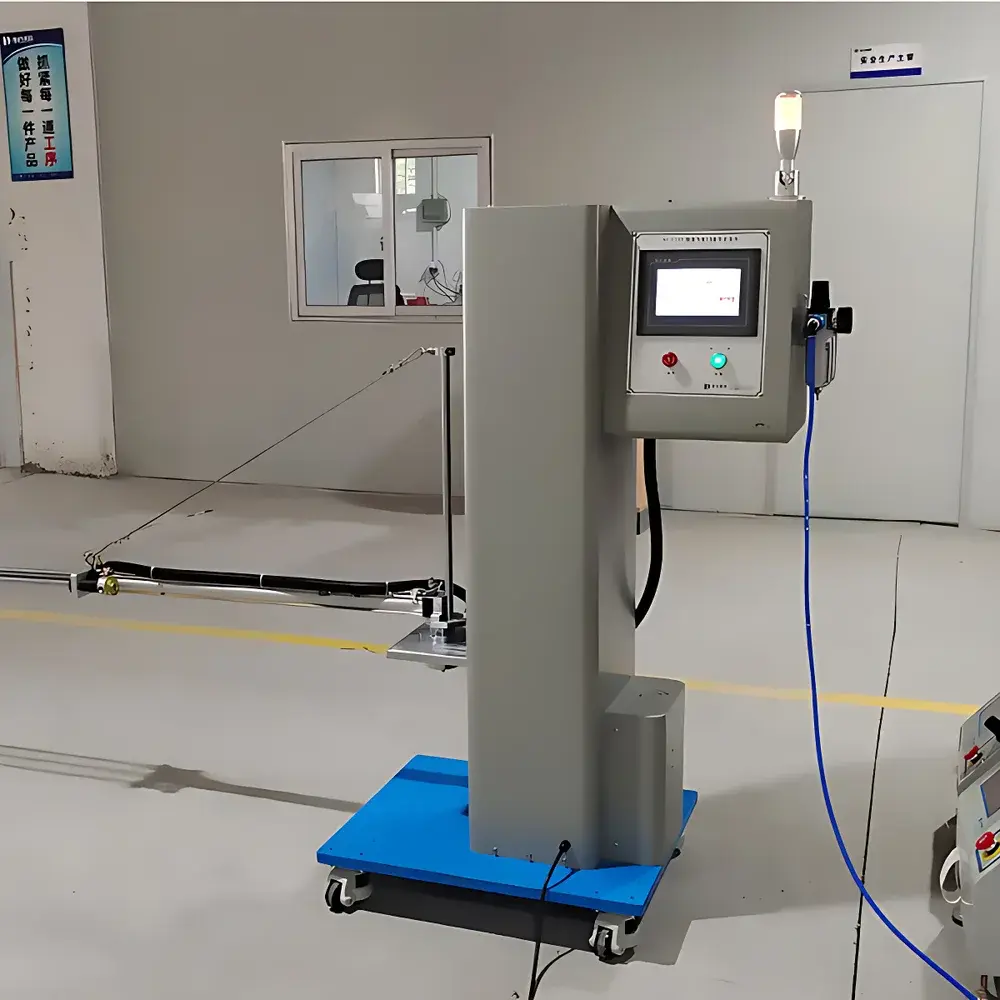
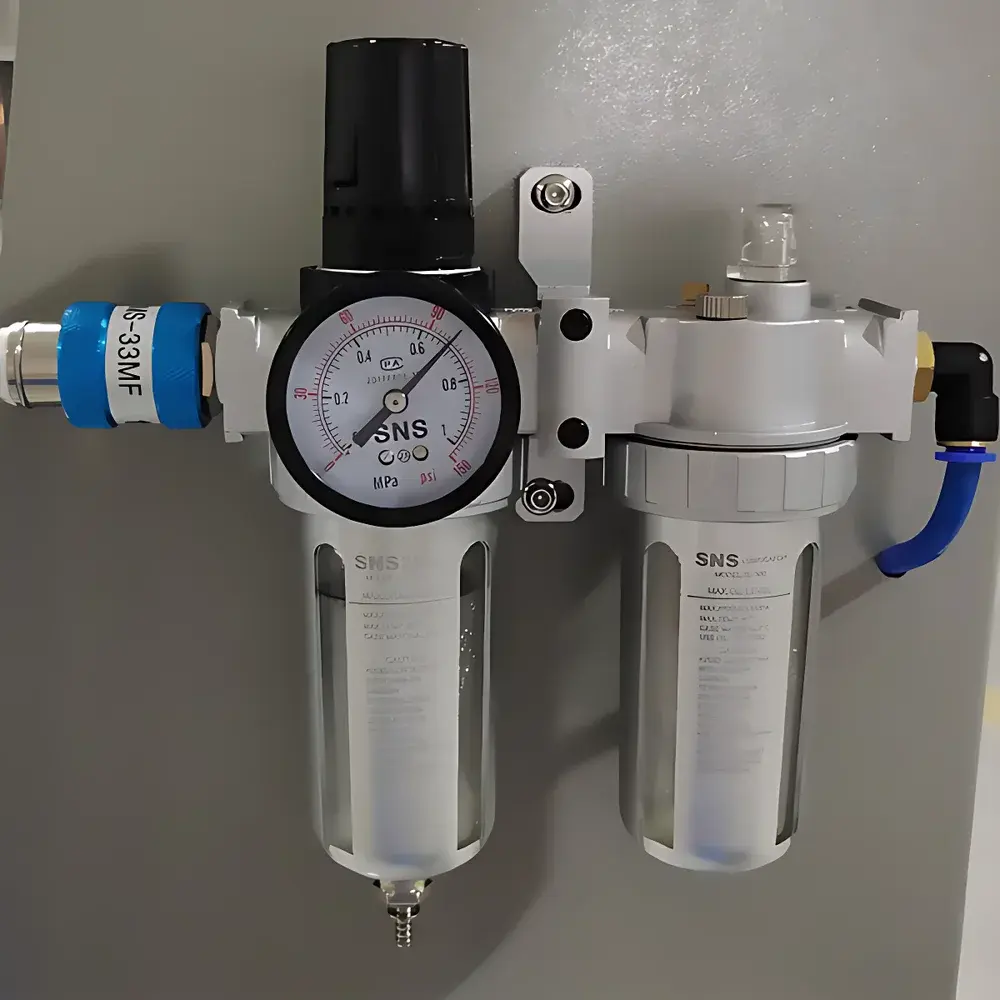
HAIDA HD-F749 Drawer and Cabinet Door Fatigue Tester (Pneumatic Cylinder)
| Brand | HAIDA INTERNATIONAL |
|---|---|
| Origin | Guangdong, China |
| Manufacturer Type | Direct Manufacturer |
| Product Origin | Domestic (China) |
| Model | HAIDA HD-F749 Drawer and Cabinet Door Fatigue Tester (Pneumatic Cylinder) |
| Actuation | Pneumatic cylinder with servo-assisted vertical positioning |
| Motor | 90 W induction motor |
| Control System | PLC-based embedded controller |
| Display | 7-inch color touchscreen HMI |
| Cylinder Stroke | 800 mm |
| Cycle Frequency | Adjustable 5–20 cycles/min |
| Vertical Travel Range | 150–1000 mm (motorized height adjustment) |
| Drawer Extension Limit | 1/3 of internal rail length or ≥100 mm residual insertion |
| Cabinet Door Opening Angle | 0–130° (adjustable via angular stop mechanism) |
| Max Test Cycles | 1–999,999 (programmable) |
| Power Supply | 1∮ AC 220 V, ~120 W |
| Weight | ~200 kg |
| Overall Dimensions (L×W×H) | ~2000 × 600 × 1600 mm |
| Data Interface | USB 2.0 for test log export |
| Compliance | GB/T 10357.5-2013 (Furniture — Strength and Durability Tests — Part 5: Drawers and Sliding Doors) |
Overview
The HAIDA HD-F749 Drawer and Cabinet Door Fatigue Tester (Pneumatic Cylinder) is an industrial-grade mechanical endurance testing system engineered for objective, repeatable evaluation of linear and rotational motion durability in residential and commercial furniture components. It operates on a dual-actuation principle: a high-stroke pneumatic cylinder provides primary reciprocating force for drawer extension/retraction and door swing cycles, while a precision-guided motorized vertical positioning stage ensures consistent alignment across varying sample heights. The system replicates real-world usage profiles—such as repeated drawer opening under load or cabinet door cycling through full angular range—under controlled ambient conditions (23 ± 5 °C). Designed to meet the functional verification requirements of structural hardware suppliers, OEM furniture manufacturers, and third-party certification laboratories, the HD-F749 delivers traceable, audit-ready fatigue data aligned with internationally referenced mechanical durability benchmarks.
Key Features
- Precision Pneumatic Actuation: Integrated 800 mm stroke double-acting cylinder delivers stable, controllable force output across the full 5–20 cycle/min range, minimizing inertial overshoot and ensuring uniform dwell time at end positions.
- Motorized Height Adjustment: A ball-screw-driven vertical platform (150–1000 mm travel) enables rapid setup for diverse cabinet depths and countertop heights without manual re-leveling—critical for multi-sample batch testing.
- Modular Fixture Architecture: Standardized mounting interfaces support interchangeable clamping assemblies: dual drawer-pull fixtures with adjustable jaw depth, and angular door-grip fixtures with calibrated 0–130° rotation stops—each designed to replicate OEM mounting geometry and load application points.
- Robust Structural Framework: A3 carbon steel frame with electrostatic powder coating provides torsional rigidity during high-cycle operation; heavy-duty castor wheels with locking swivel heads and built-in leveling feet ensure stability on non-uniform laboratory floors.
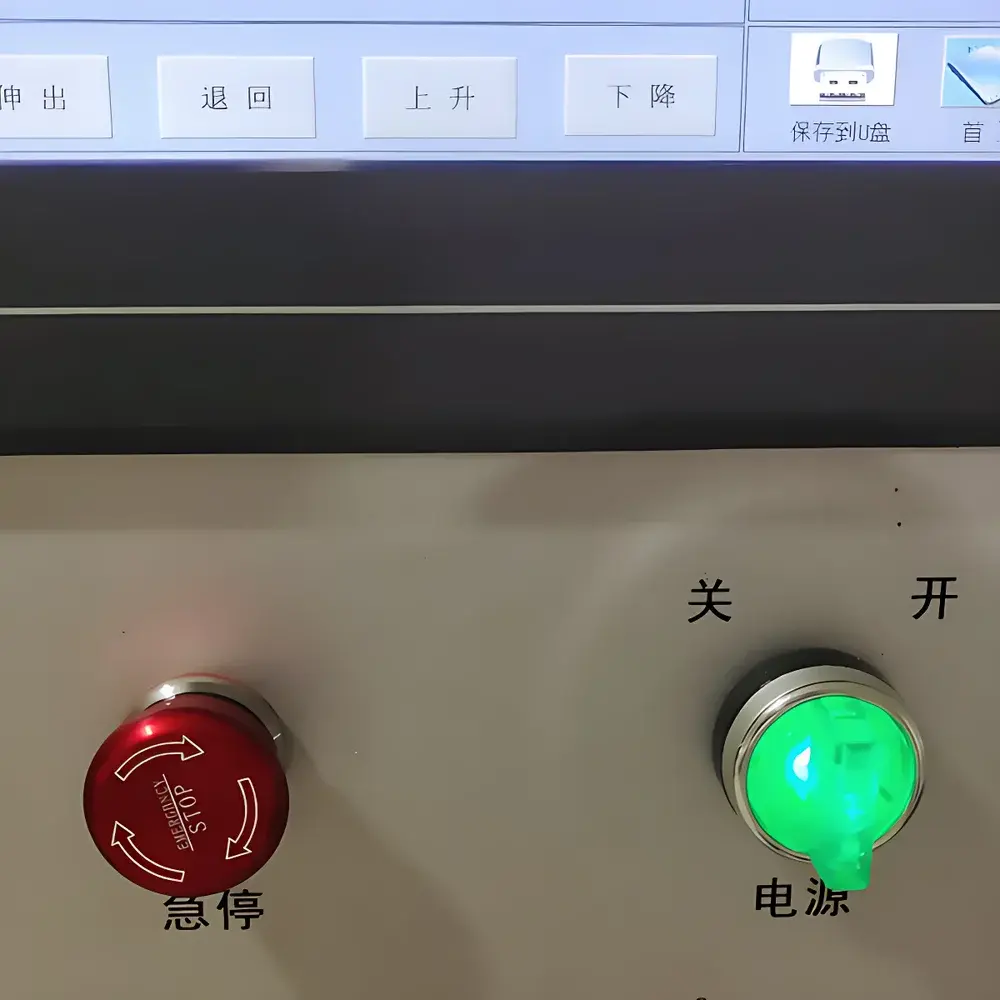
- Fail-Safe Operational Logic: Embedded PLC firmware enforces hardware interlocks—including emergency stop circuitry, power-loss memory retention, short-circuit protection, and automatic cycle halt upon exceeding preset counts—ensuring compliance with IEC 61000-6-2 EMC and IEC 60204-1 safety directives.
Sample Compatibility & Compliance
The HD-F749 accommodates a broad spectrum of furniture configurations: standard side-mount and undermount drawer slides (12–24 inch rails), soft-close mechanisms, pivot-hinge and cam-lock cabinet doors, and sliding bypass systems. Sample mounting requires no permanent modification—the fixture system engages factory-installed mounting holes or rail ends using non-marring aluminum jaws. All test protocols adhere strictly to GB/T 10357.5–2013 Furniture — Strength and Durability Tests — Part 5: Drawers and Sliding Doors, which defines minimum cycle counts (e.g., 50,000 cycles for domestic drawers), displacement tolerances (±2 mm), and pass/fail criteria based on functional integrity (e.g., no jamming, no audible wear noise, ≤0.5 mm positional drift after testing). While GB/T 10357.5 is the primary reference, the instrument’s programmable parameters allow adaptation to supplementary specifications including ANSI/BIFMA X5.4 (U.S.), EN 15372:2019 (EU), and JIS S 1021 (Japan) via user-defined test templates.
Software & Data Management
Control and monitoring are executed via a proprietary embedded HMI running on a real-time PLC kernel—not a PC-based OS—ensuring deterministic response and immunity to software crashes. The 7-inch resistive touchscreen displays live cycle count, elapsed time, current position (mm/°), and operational status (e.g., “Running”, “Paused”, “Completed”). All test parameters—including cycle count, frequency, dwell time, and angular limits—are stored in non-volatile memory and survive power interruption. Post-test data exports via USB 2.0 port generate CSV-formatted logs containing timestamped cycle index, position feedback, and error flags (e.g., “Overtravel”, “Timeout”). These files are compatible with Excel, MATLAB, and LIMS platforms. For regulated environments, optional firmware upgrade supports 21 CFR Part 11-compliant electronic signatures, audit trails, and role-based access control—enabling use in GLP/GMP-aligned quality assurance workflows.
Applications
- Validation of drawer slide service life under static loading (e.g., 25–50 kg simulated contents)
- Assessment of soft-close damper consistency across 10,000+ cycles
- Endurance screening of concealed hinge mechanisms subjected to repeated angular stress
- Comparative benchmarking of OEM vs. aftermarket rail systems per BIFMA load cycles
- Root cause analysis of premature failure modes—e.g., rail deformation, roller detachment, or gear tooth wear—in accelerated life testing scenarios
- Pre-certification testing for ISO 9001 internal audits and third-party certifications (e.g., TÜV, SGS, Intertek)
FAQ
What standards does the HD-F749 directly support out-of-the-box?
The system is pre-configured for GB/T 10357.5–2013. Default test templates include all required parameters (cycle count, speed, extension ratio, angle limits) per Clause 6.2 (Drawers) and Clause 7.2 (Sliding Doors).
Can the HD-F749 test soft-close mechanisms with variable damping profiles?
Yes—its programmable dwell timing allows independent definition of open/close phase durations, enabling simulation of asymmetric damping behavior observed in hydraulic or cam-based soft-close systems.
Is air supply included with the base configuration?
No. A clean, dry compressed air source (minimum 0.6 MPa, 10 L/min flow) must be provided externally. Optional HAIDA-branded oil-free compressors (≥3 HP) are available as add-on accessories.
How is positional accuracy verified during calibration?
The system includes traceable calibration certificates for both the linear potentiometer (±0.5 mm full-scale) and rotary encoder (±0.3° full-scale), issued against NIST-traceable references. Annual recalibration is recommended.
Does the HD-F749 support remote monitoring or network integration?
Standard configuration uses isolated USB and local HMI only. Ethernet or RS-485 communication modules can be integrated upon request for SCADA or MES connectivity, subject to custom firmware development and validation.



